Choosing the 2026 best Distillation Column Internals requires more than comparing product brochures. The correct choice depends on vapor load, liquid distribution, pressure drop, fouling risk, corrosion, and maintenance access. A tray that performs well in a clean solvent service may struggle with polymers, salts, or foaming feed. Small details matter. No single internal suits every column.
Field experience shows that selection should begin with reliable operating data. Review the column diameter, feed condition, turndown range, flooding margin, and required separation efficiency. Then compare trays, structured packing, random packing, distributors, demisters, and support grids. Check hydraulic capacity and mechanical strength together. Ignoring either one can create expensive problems.
Henry Z. Kister, a widely recognized distillation authority, stated, “Distillation is the most widely used separation process in the chemical industry.” His observation explains why internal design deserves careful engineering attention. A practical review should include inspection photographs, historical pressure-drop trends, and actual shutdown findings. Clean calculations are useful. Plant evidence is better.
The “best” solution may be less efficient on paper. It may offer easier cleaning, stronger support, or safer access. That trade-off deserves honest discussion. We should also admit uncertainty when feed properties are incomplete. Pilot testing or a vendor comparison may prevent overconfidence. In 2026, dependable Distillation Column Internals should balance separation performance, energy use, lifecycle cost, and maintainability—not merely promise the highest efficiency.
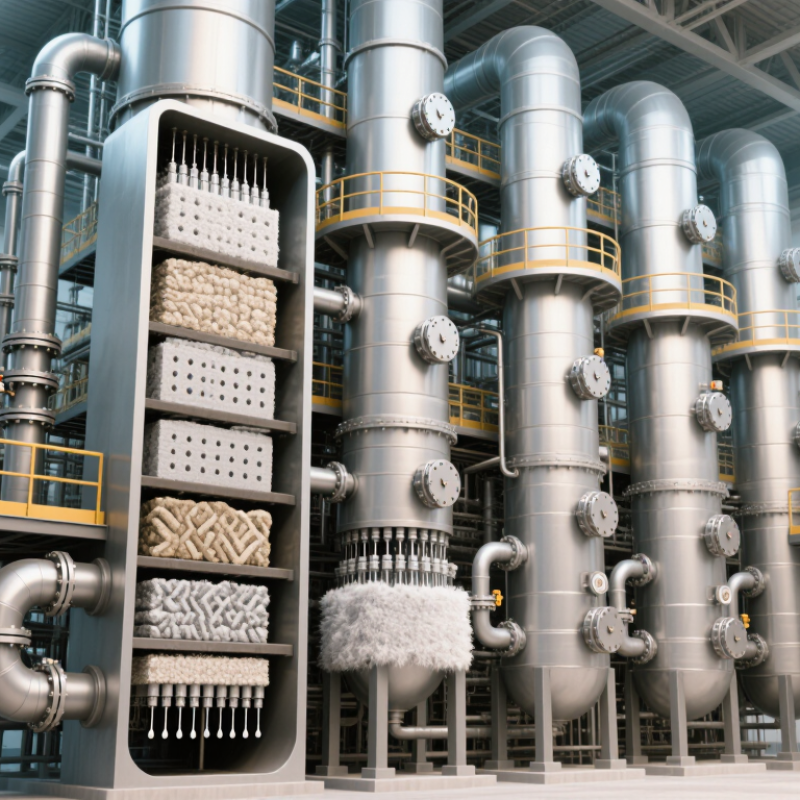
Distillation column internals are the working parts inside a tower. They control vapor and liquid contact during separation. Trays, structured packing, liquid distributors, supports, and demisters each perform a specific duty. Small details matter. A tray creates repeated contact stages, while packing provides a larger surface area for mass transfer. The right design depends on flow rate, pressure, temperature, fluid properties, and required purity.
Why do they matter? Poor internals can cause flooding, foaming, entrainment, or uneven liquid distribution. These problems reduce capacity and increase energy consumption. During a practical inspection, dry areas on packing often reveal distributor problems. A damaged support grid may also create unexpected pressure drop. These signs are easy to miss in a computer model.
Choosing internals requires more than comparing efficiency values. Engineers should review operating ranges, fouling risks, maintenance access, material compatibility, and shutdown conditions. Distributor quality deserves special attention. Even high-performance packing cannot compensate for poor liquid distribution. In some projects, the selected internal works well at normal load but struggles during startup. That is a design weakness worth questioning. Field measurements, hydraulic calculations, and experienced inspection should support the final decision. A clean drawing is not proof of reliable operation.
Distillation columns use several internal types, and each suits a different operating problem. Trays include sieve, valve, and bubble-cap designs. Sieve trays are simple and economical. Valve trays handle changing vapor loads better. Bubble-cap trays support low vapor rates, but usually create higher pressure drop.
Packed columns use random or structured packing. Random packing is useful for moderate duties and easier replacement. Structured packing offers high surface area and lower pressure drop, especially under vacuum. Liquid distributors matter greatly. A poor distributor can create dry zones, channeling, and unexpected separation loss. Below the bed, redistributors and packing supports protect hydraulic stability. Demisters remove entrained droplets before vapor leaves the column.
The U.S. Department of Energy’s Distillation Energy Reduction Roadmap estimates distillation may consume about 40% of chemical-process energy. The International Energy Agency’s 2023 Energy Technology Perspectives reports that industry uses roughly 37% of global final energy. These figures make pressure drop and efficiency practical selection criteria, not decorative calculations. For foaming feeds, engineers may favor open packing or trays with stronger disengagement space. For dirty liquids, access and cleaning can outweigh efficiency. In field reviews, the “best” internal often fails when feed distribution is ignored. That remains an uncomfortable lesson. Check vapor and liquid loads, fouling risk, turndown, pressure, and maintenance access before choosing.
| Internal Type | Primary Contacting Principle | Typical Applications | Main Advantages | Main Limitations | Indicative Turndown | Selection Guidance |
|---|---|---|---|---|---|---|
| Sieve Trays | Vapor passes through perforated holes and contacts liquid flowing across the tray. | General-purpose fractionation, absorption, stripping, and moderate-pressure services. | Simple construction, relatively low cost, low to moderate pressure drop, and easy inspection. | More sensitive to vapor-load reduction, weeping, foaming, and fouling than some other tray types. | Approximately 2:1 to 3:1, depending on design and fluid properties. | Choose when the operating load is reasonably stable and low fabrication cost is important. |
| Valve Trays | Liftable valves adjust the vapor opening as vapor flow changes. | Processes with variable feed rates, changing product specifications, and broad operating ranges. | Better turndown than sieve trays, good capacity, and flexible vapor-liquid contact. | More moving parts, possible valve wear or sticking, and a higher cost than basic sieve trays. | Approximately 3:1 to 5:1, depending on valve design and service conditions. | Select for variable throughput where operational flexibility is more valuable than minimum cost. |
| Bubble-Cap Trays | Vapor rises through risers and bubble caps into the liquid layer. | Low-load operation, difficult-to-maintain services, and applications requiring strong vapor-liquid contact. | Excellent resistance to weeping and reliable operation at low vapor rates. | Higher pressure drop, greater weight, higher cost, and more difficult cleaning than sieve trays. | Approximately 4:1 to 10:1, depending on design and liquid properties. | Use when low-load stability is critical and additional pressure drop can be accepted. |
| Random Packing | Liquid spreads over individual packing pieces while vapor flows through the open void space. | Vacuum distillation, absorption, stripping, corrosive services, and columns with limited pressure-drop allowance. | Low pressure drop, high surface area, relatively low weight, and flexible material selection. | Performance depends strongly on liquid distribution; packing can be damaged, crushed, or fouled. | Approximately 3:1 to 5:1 with suitable liquid distribution. | Choose when low pressure drop and moderate capital cost are priorities. |
| Structured Packing | Corrugated or arranged sheets create a controlled, continuous liquid film and vapor pathway. | High-purity distillation, vacuum service, heat-sensitive products, and applications with strict pressure-drop limits. | Very low pressure drop, high efficiency per unit height, and high capacity when properly distributed. | Sensitive to maldistribution, solids, liquid impurities, and installation errors; usually requires careful distributors. | Approximately 2:1 to 4:1, depending on packing geometry and liquid distribution. | Select for vacuum operation, high separation efficiency, or reduced column height. |
| Grid Packing | Open grid surfaces promote liquid film formation while allowing vapor passage through large channels. | High-fouling, viscous, particulate, and low-pressure-drop services. | Large open passages reduce plugging risk and can tolerate dirty or viscous liquids. | Generally lower mass-transfer efficiency than high-surface-area structured packing. | Service-specific; turndown depends strongly on geometry and liquid loading. | Consider when fouling resistance and cleanability are more important than maximum efficiency. |
| Liquid Distributor | Delivers liquid uniformly across the tray or packing cross-sectional area. | Packed columns, especially structured packing and large-diameter towers. | Improves effective packing utilization, separation efficiency, and operating stability. | Poor design, plugging, or inadequate installation can cause liquid maldistribution. | Not normally expressed as a single turndown value; depends on distributor design. | Specify distribution accuracy, allowable pressure drop, fouling tolerance, and liquid flow range. |
| Packing Support and Hold-Down | Supports the packing bed and prevents movement, floating, or lifting during operation. | All packed columns, particularly large-diameter and high-vapor-load towers. | Protects packing integrity and maintains the designed gas and liquid flow paths. | An undersized or poorly installed support can restrict flow or suffer mechanical damage. | Not applicable; selected according to hydraulic and mechanical loads. | Check allowable loading, open area, corrosion allowance, access, and support-span requirements. |
| Redistributor | Collects and redistributes liquid between packed sections to correct cumulative maldistribution. | Tall packed columns and beds divided into multiple sections. | Maintains liquid distribution and helps preserve separation efficiency over long packed beds. | Adds internal height, cost, and pressure drop; requires adequate collection and drainage capacity. | Not normally expressed as a single turndown value. | Use when packed-bed height, column diameter, or hydraulic conditions make redistribution necessary. |
| Mist Eliminator | Removes entrained liquid droplets from the rising vapor before the overhead outlet. | Overhead sections, separators, evaporators, absorbers, and distillation columns requiring low liquid carryover. | Reduces product contamination, downstream fouling, and liquid losses. | Can flood or plug when vapor velocity is excessive or when solids and viscous liquids are present. | Service-specific; depends on droplet size, vapor velocity, and allowable pressure drop. | Choose mesh, vane, or high-capacity designs according to droplet removal, fouling risk, and pressure-drop limits. |
Note: Turndown figures are indicative engineering ranges rather than guaranteed values. Final selection should be based on vapor and liquid loads, pressure and temperature, allowable pressure drop, flooding margin, foaming tendency, fouling potential, corrosion resistance, required separation efficiency, and maintenance requirements.
2026 Best Distillation Column Internals: How to Choose?
How to Match Internals with Column Design and Process Conditions?
Selecting column internals begins with the process, not a product catalogue. Confirm vapor and liquid rates across normal, maximum, and turndown conditions. A design that works at peak load may perform poorly during low production. That detail is often missed.
Trays suit applications needing stable liquid handling and straightforward inspection. Structured packing can reduce pressure drop when vacuum operation matters. Random packing may tolerate some fouling, but it needs careful liquid distribution. For foaming services, lower surface turbulence and suitable disengagement space can improve reliability. For corrosive streams, material compatibility must be checked against temperature, concentration, and impurities.
Column diameter, height, feed location, and reboiler duty must be reviewed together. A distributor needs enough space to spread liquid evenly across the active area. Poor distribution can create dry zones, channeling, and unexpected separation loss. It looks small on a drawing.
Mechanical details also matter. Check support strength, access openings, thermal expansion, and cleaning routes before fabrication. In operating reviews, performance problems are not always caused by the selected internals. Feed changes, damaged supports, or inaccurate flow measurements may be responsible. This is where engineering judgment matters.
No choice is perfect. Pilot data, hydraulic calculations, and field inspection should challenge the first design assumption. Recheck the design before committing.
Selecting the best distillation column internals in 2026 depends on application details, not fashion. Tray and packing performance changes with flow rate, pressure, fouling risk, and separation duty. In operating reviews, trays often provide predictable vapor-liquid contact and easier inspection. They also tolerate moderate solids better, although pressure drop can become significant.
Packing usually offers lower pressure drop and greater surface area per volume. This advantage matters in vacuum service, heat-sensitive processing, and compact columns. However, packing needs careful liquid distribution. A small distributor problem can create dry zones, channeling, and unexpected purity losses. That weakness is easy to underestimate.
Compare both options using measured vapor and liquid loads, not catalog averages. Check turndown, flooding margin, entrainment, corrosion allowance, and cleaning access. For trays, inspect weeping and downcomer backup. For packing, verify distributor coverage and support strength. Pilot tests or validated hydraulic calculations improve reliability.
I once favored packing for a compact design, but fouling data changed the decision. The final choice became less elegant, yet more maintainable. That experience still matters. A tray may suit a dirty, variable feed, while packing may suit a clean, pressure-sensitive stream. The most credible selection connects laboratory data, operating history, and site constraints. No shortcut works every time.
2026 Best Distillation Column Internals: How to Choose?
Selecting column internals means balancing efficiency, capacity, pressure drop, and lifetime cost. No single design wins every service.
Start with the process conditions. Review vapor and liquid rates, operating pressure, feed composition, foaming tendency, solids, and corrosion risk. A structured packing may reduce pressure drop in vacuum service, while trays can offer stronger resistance to fouling and easier inspection. For a column handling frequent load changes, turndown performance matters as much as peak capacity. A design that performs well at one flow rate may flood or lose efficiency at another.
Check the details.
Use hydraulic calculations, process simulation, and independent mechanical review before choosing internals. Ask for test data that reflects your actual liquid properties, not only standard water systems. For example, a 3-meter column with a sticky feed may need wider liquid distribution paths and better access for cleaning. Small distributor errors can create dry zones, reducing separation efficiency even when the packing volume appears sufficient.
Capital cost is only one part of the decision. Include installation time, pressure-drop energy, maintenance access, replacement frequency, and lost production during shutdowns. My practical preference is to compare at least three designs under normal, turndown, and upset conditions. This approach is not perfect. Field data may be incomplete, and simulations can hide poor distribution. Engineers should challenge optimistic assumptions before approving the final internal layout.
Internals are working components inside a separation tower. Trays, packing, distributors, supports, and demisters control vapor-liquid contact. Small details matter.
A distributor spreads liquid across packing. Poor coverage creates dry areas and channeling. Even excellent packing cannot fix uneven flow.
Trays can provide predictable contact stages and simpler inspection. They may tolerate moderate solids better. However, pressure drop can become significant.
Packing often provides lower pressure drop and greater surface area. It suits vacuum service, heat-sensitive streams, and compact towers. Distribution remains critical.
Use measured vapor and liquid loads, not catalog averages. Check turndown, flooding margin, entrainment, fouling, corrosion, and cleaning access. Site data helps.
Poor internals may cause flooding, foaming, entrainment, or uneven liquid flow. Capacity falls. Energy use rises. Product purity may also suffer.
Inspect tray weeping, downcomer backup, packing coverage, and support strength. Look for dry packing areas. Check unexpected pressure drop carefully.
Yes. An internal may perform well at normal load but struggle during startup. That weakness deserves review. Models can miss field conditions.
Consider flow rate, pressure, temperature, fluid properties, purity targets, fouling risk, materials, maintenance access, and shutdown conditions. No shortcut works every time.
Hydraulic calculations are useful, but inspection reveals real conditions. A damaged support grid may increase pressure drop. A clean drawing proves little.
Choosing the right Distillation Column Internals is essential for achieving stable separation, high product quality, and efficient energy use in 2026. These components, including trays, structured packing, random packing, distributors, and demisters, control vapor-liquid contact inside the column. Their design directly affects capacity, pressure drop, mass-transfer efficiency, operating flexibility, and maintenance requirements.
The best selection depends on process conditions such as feed composition, vapor and liquid rates, operating pressure, temperature, fouling tendency, corrosion risk, and allowable pressure drop. Trays may be suitable for applications requiring strong capacity and easier inspection, while packing can offer lower pressure drop and improved performance in vacuum or heat-sensitive services. A balanced evaluation of efficiency, throughput, installation space, durability, cleaning needs, and total operating cost will help engineers choose internals that match the column design and deliver reliable long-term performance.