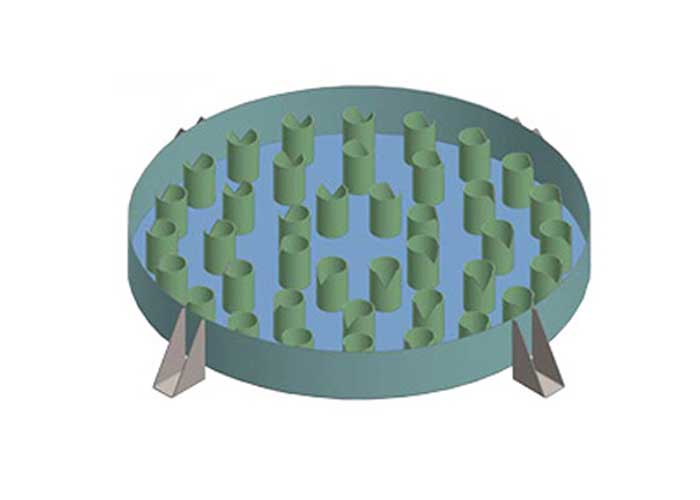
High-Density Column Internals
Gravity-trough, orifice-pan, and spray nozzle liquid distributors, gas injection support plates, bed limiters, and vane-type vapor collectors ensuring uniform phase contact across packed beds.


Distillation column internals represent the core hydraulic architecture responsible for vapor-liquid contacting across critical petroleum refining, petrochemical processing, fine chemical extraction, pharmaceutical batching, and carbon capture infrastructure. As global industrial operators face rising carbon intensity penalties, strict product purity tolerances, and compressed turnaround windows, selecting the ideal balance between tray mechanics, structured packing geometries, and hydraulic distribution internals has become an imperative engineering decision. For over 25 years, Ambani Metals has fabricated process-certified mass transfer internals engineered specifically to counter entrainment, hydraulic weeping, vapor channeling, and fouling degradation. Built from fully traceable stainless steels (SS304/304L, SS316/316L), duplex alloys, Hastelloy, Monel, and Titanium, our equipment serves high-stakes industrial facilities in over 20 nations, delivering measurable uptime and guaranteed separation yields.
Gravity-trough, orifice-pan, and spray nozzle liquid distributors, gas injection support plates, bed limiters, and vane-type vapor collectors ensuring uniform phase contact across packed beds.
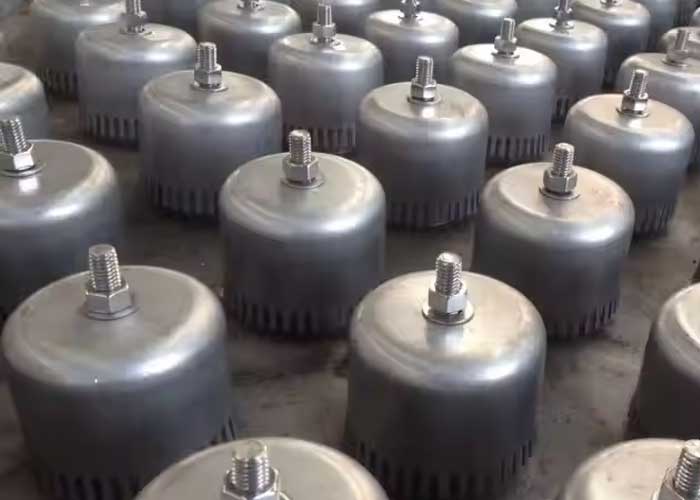
Sieve trays, fixed valve, moving floating valve, and positive-seal bubble cap trays modularly segmented to fit standard 18" to 24" column manways without external vessel modifications.
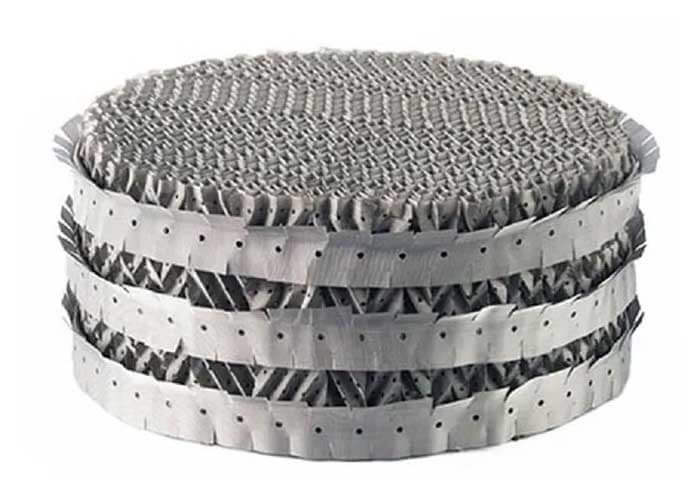
Textured corrugated sheet and wire gauze structured packings with specialized surface treatments (125 to 500 m²/m²) maximizing HETP efficiency under strict vacuum and heat-sensitive duties.
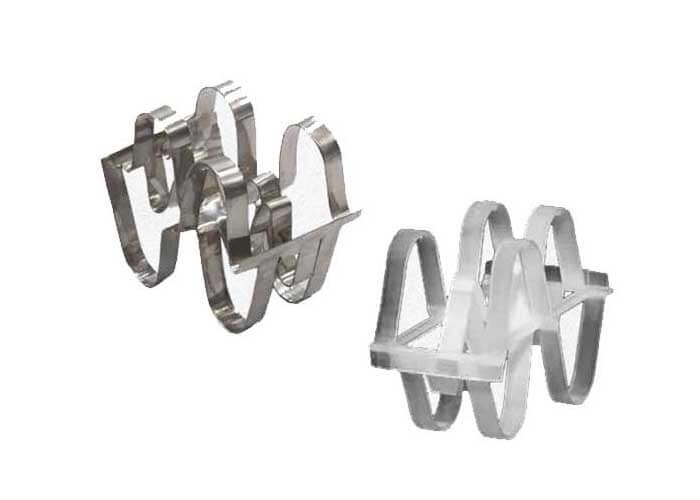
Engineered Pall rings, cascade mini rings, and saddles offering low bed resistance, fouling mitigation, and superior mass transfer in high-pressure absorption, sour gas stripping, and scrubbing.
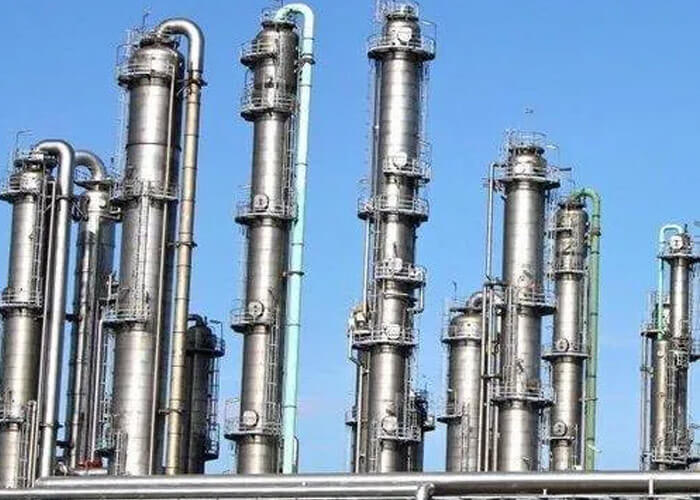
Fully integrated, skid-mounted or stand-alone fractionating columns fabricated complete with shells, internally welded support rings, downcomer bars, feed nozzles, and access platforms.
Years of Engineering
Global Installations
Export Countries
Custom Internal Specs
Distillation column efficiency depends directly on selecting internals matched to liquid loading (m³/m²·h), vapor velocity (F-factor), surface tension, and fouling tendencies. Below is our engineering selection framework designed to optimize your capital investment and operational energy profile.
When existing towers face capacity ceilings or operating throughput swings between 30% and 120% of design, conventional sieve trays suffer from weeping or jet flooding. We recommend:
For separations where bottom temperatures cause product decomposition or thermal cracking, minimizing column bottom pressure is essential. We recommend:
Even the highest-grade packing fails if initial liquid distribution is suboptimal. Maldistribution scales exponentially down the bed height. We recommend:
As the chemical process industry navigates decarbonization mandates, energy conservation imperatives, and AI-accelerated operational design, procurement directors and project engineers are fundamentally transforming how column internals are sourced, evaluated, and maintained.
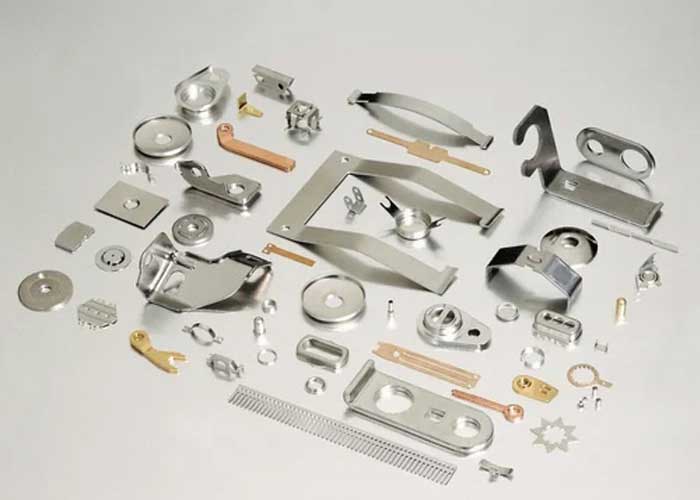
Post-combustion CO2 capture columns demand extreme column diameters (>8 meters) operating at ultra-high liquid-to-gas (L/G) ratios with amine solvents. Procurement is rapidly pivoting toward specialized high-capacity structured packings with modified crimp angles and specialized wettability coatings that minimize solvent degradation and reboiler energy duty by up to 18%.
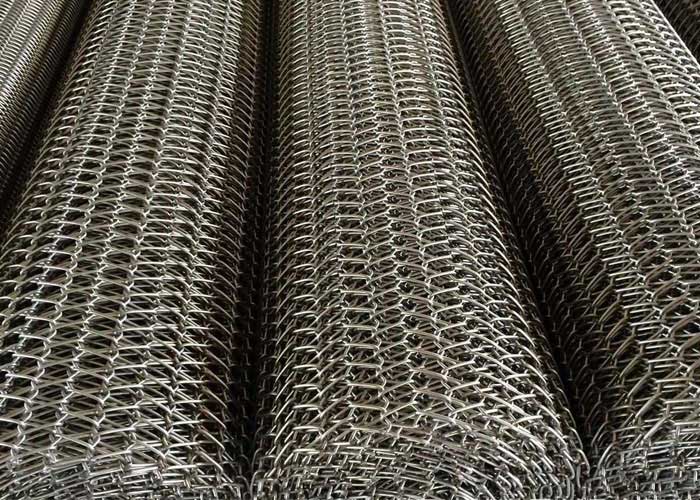
As plants process heavier crude slates, bio-based feedstocks, and cyclic chemicals with high halogen and organic acid concentrations, conventional 304/316 grades face localized pitting. Global buyers now specify certified Duplex 2205, Super Duplex 2507, Hastelloy C-276, and Titanium Grade 2 internals with 100% positive material identification (PMI) verified at raw material arrival.
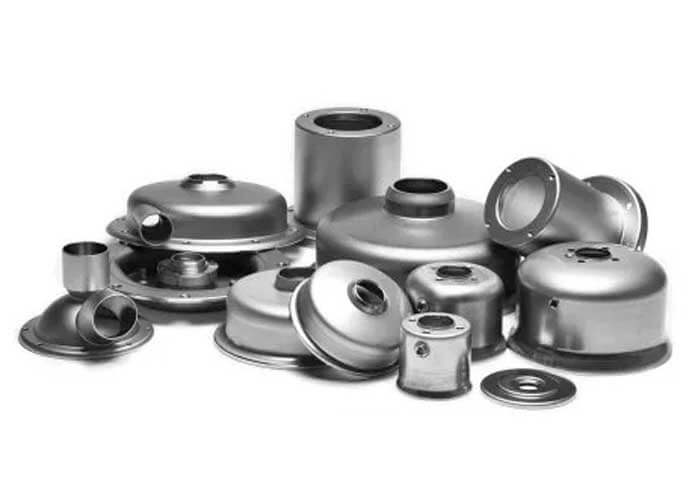
Unplanned plant shutdowns cost hundreds of thousands of dollars per day. The procurement trend favors quick-assembly clamp systems, boltless tray valves, and push-fit downcomer designs that slash internal installation hours by 40%. Concurrently, process models feed live column pressure-drop data into digital twins to predict tray fouling before hydraulic flooding occurs.
Compare hydraulic performance parameters, relative investment weight, and operational limits across mass transfer internal configurations to support project data sheet compilation.
| Internal Classification | Primary Mechanism | Pressure Drop per Stage | Capacity (F-Factor) | Turndown Flexibility | Fouling / Slurry Resistance | Optimal Industrial Duties |
|---|---|---|---|---|---|---|
| Sieve Trays | Perforated flat plates; cross-flow liquid contacting vapor jets. | Moderate (4–7 mbar/tray) | Standard (Fv ~1.6–2.0) | Limited (2:1 without weeping) | Moderate; prone to hole fouling in sticky resins | Stable atmospheric distillation, low-cost utility columns, clean fractions. |
| Fixed Valve Trays | Integral extruded directional tabs; permanent open vapor slot. | Moderate (3–6 mbar/tray) | High (+15% vs. Sieve) | Good (3.5:1 ratio) | High; sweeping lateral vapor prevents solid settling | Refinery FCC gas plants, petrochemical splitters, crude fractionators. |
| Floating Valve Trays | Dynamic metal discs lifting with fluctuating vapor flow. | Moderate (4–8 mbar/tray) | High (Fv ~1.8–2.2) | Superior (5:1 up to 7:1) | Moderate; valves can stick or wear in abrasive service | Refinery main fractionators, swing plant operations, seasonal demand units. |
| Bubble Cap Trays | Fixed risers and slotted caps with static liquid seals. | Higher (8–14 mbar/tray) | Moderate | Extremely High (10:1+) | Low; high sediment deposit potential under caps | Chemical batch synthesis, reactive distillation, deep vacuum strip with zero liquid. |
| Structured Packing (M-Series) | Corrugated sheet bundles with alternating incline angles. | Ultra-Low (0.3–0.8 mbar/stage) | Maximum (Fv up to 2.8) | Good (3:1; requires tuned distributor) | Low; requires clean liquid feed to prevent channel blockage | Deep vacuum towers, isomer separations, bioethanol, carbon capture strippers. |
| Random Packing (Metallic) | Dumped perforated cylinders and saddles with internal tongues. | Low (1.0–2.2 mbar/stage) | Moderate to High | Flexible based on bed height | Superior among packed columns; easy flushing and dump | Acid gas scrubbers, CO2 absorption towers, stripping towers, wastewater deodorizing. |
Data represents generalized operational hydraulic windows. Custom sizing is performed using your process thermodynamic files (ASPEN Plus / HYSYS) to confirm tower diameter, tray spacing, and packing bed heights. Need custom sizing? Get a Quote.
Procuring distillation column internals demands strict geometric accuracy, material authenticity, and turnkey mechanical execution. Here is why multinational refiners, chemical leaders, and EPC giants in over 20 nations partner with Ambani Metals.
Direct mill relationships ensure fully documented SS304L, SS316L, Duplex, Monel, and Hastelloy materials. Every shipment includes EN 10204 3.1 MTRs and positive material identification (PMI).
Complete precision stamping, deep drawing, corrugating, CNC perforating, and certified welding under one roof. We control lead times, geometric tolerances, and finish quality from sheet to assembly.
Large liquid distributors and multi-piece trays are shop pre-assembled on matching support rings and water-distribution tested to verify zero weeping and level flow before export dispatch.
Every internal is laser-etched with mark numbers keyed to assembly drawings, packed in IPPC heat-treated wooden crates with desiccant protection and anti-crush structures for damage-free delivery.
Direct engineering answers to the most frequent queries submitted by global chemical engineers, turnaround managers, and procurement officers.
Maldistribution is the number one cause of failed column separation efficiency in packed towers. Liquid naturally migrates toward column walls due to surface tension and bed void fractions. Ambani Metals prevents this by engineering high-density multi-stage trough distributors designed with precision-metered side discharge tubes or bottom orifice inserts. Our distributors deliver drip point counts between 100 to 150 points per square meter with a liquid coefficient of variation (Cv) under ±3%. For vapor flow, we design vane feed diffusers and gas-injection support plates offering 100%+ free open aerodynamic area, preventing localized jetting from disturbing the lower packed bed.
The selection hinges on operating pressure, allowable pressure drop, fouling potential, and turndown range. Structured packing is chosen for deep vacuum operations (under 100 mbar absolute) and temperature-sensitive separations (such as glycols, monomers, and APIs), because it delivers minimal pressure drop per theoretical stage (0.3 to 0.8 mbar) compared to trays (4 to 8 mbar). Trays are preferred in high-pressure distillation (>3 bar), high liquid loading environments, dirty or polymer-forming hydrocarbon feeds, and processes demanding broad turndown swings up to 5:1 without weeping.
Yes. We routinely support scheduled turnarounds and emergency shutdowns across the UAE, USA, Australia, and the Middle East. Our engineering team can recreate or hydraulically upgrade column internals from legacy vendor drawings, process data sheets, or on-site laser dimension measurements. All sections are modularized to slip through existing column manways (18” to 24” ID) and bolt directly onto existing support rings and downcomer ledges without field welding onto the pressure vessel boundary.
In addition to standard SS304/304L, SS316/316L, and SS321, Ambani Metals fabricates complete internals from Duplex 2205, Super Duplex 2507, Hastelloy C-276, Monel 400, Inconel 625/825, Titanium Grade 2, and Nickel 200/201. All specialty raw materials are sourced with full mill test certs, ultrasonic testing where specified, and 100% handheld XRF spectrometer verification prior to cutting, deep drawing, or welding.
To provide an accurate design and commercial proposal, please provide: (1) Column inside diameter and vessel orientation, (2) Process hydraulic data sheet (liquid and vapor densities, flow rates, viscosities, and operating pressure/temperature), (3) Existing vessel drawing showing tray spacing, ring widths, and manway IDs, (4) Required material of construction, and (5) Delivery timeline and port of destination. If you already have proprietary fabrication drawings, send them directly for rapid estimating.
Connect directly with our senior mass transfer engineering team: +91-9930498858 · [email protected]