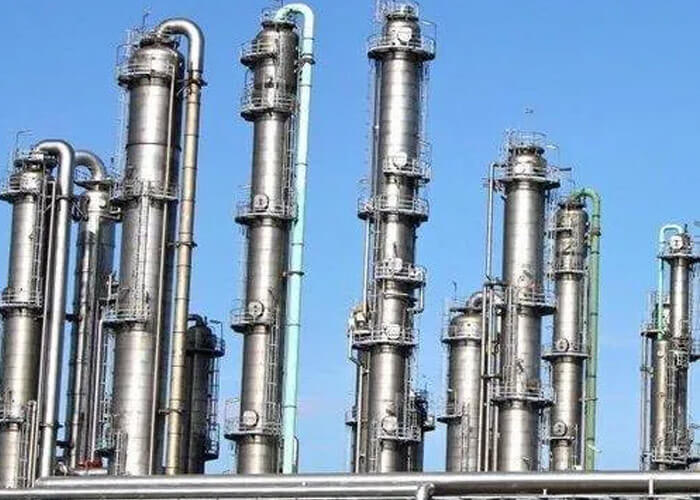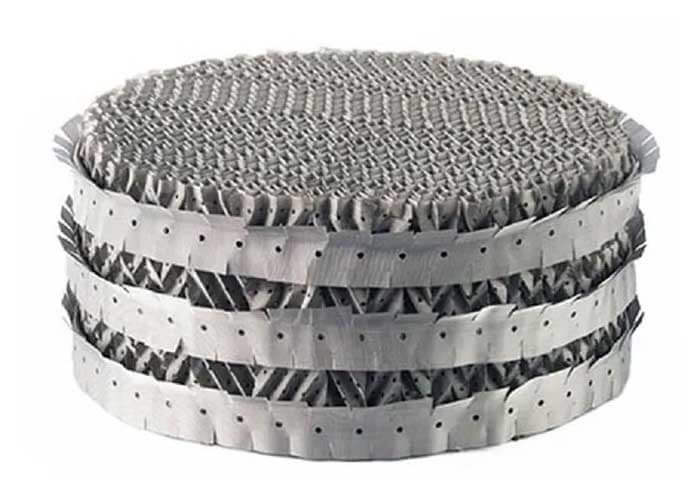
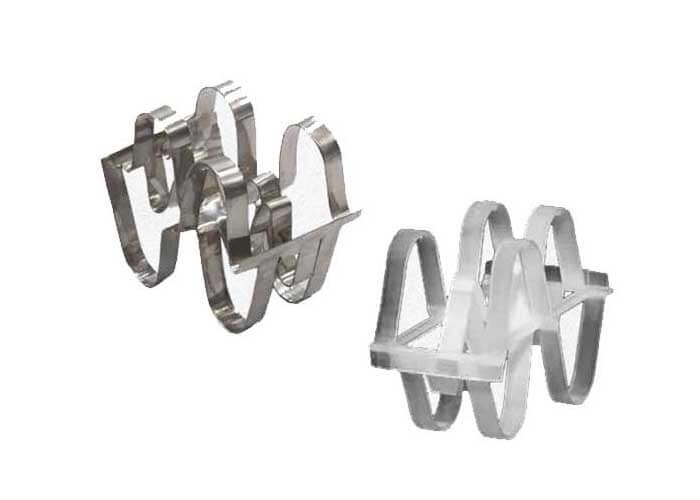
Metal random packing rings, saddles, and mass transfer column internals manufactured by Ambani Metals
Engineered metal random packing for absorption and distillation columns
Complete column internals, liquid distributors, and support plates for packed towers
Engineering Excellence · Process Mass Transfer Since 1998

The Global Procurement Guide to Random Packing: How Chemical Engineers Select, Source, and Optimize Dumped Tower Internals

In modern chemical process engineering, selecting the ideal dumped media represents one of the most critical decisions affecting pressure drop (ΔP), capacity, turndown ratio, and overall separation efficiency. Whether revamping high-pressure demethanizers, designing flue gas desulfurization (FGD) scrubbers, or specifying corrosive stripping towers, global procurement managers and process designers consistently turn to dumped random packings for their unmatched fouling tolerance, structural resilience, and favorable capital investment economics. Operating as an established Indian manufacturer and global exporter since 1998, Ambani Metals manufactures and exports precision-stamped metal random packing, advanced column internals, and complete distillation columns to process plants in more than 20 countries across North America, the Middle East, Europe, and Asia-Pacific.

Hydraulic Performance & Technical Selection Matrix

Evaluating mass transfer performance requires balancing specific surface area (m²/m³), void fraction (%), packing factor (Fp), and operational pressure drop. Below is an engineering reference compiled from Ambani Metals factory testing data and international pilot column operational records.

Packing Type & Nominal Size Material of Construction (MOC) Specific Surface Area (m²/m³) Void Fraction (ε %) Packing Factor Fp (1/m) Typical Industrial Applications
Metal Pall Ring 25mm (1") SS304L / SS316L / Carbon Steel 215 94.5% 170 Petroleum fractionators, VOC strippers, CO2 gas absorption
Metal Pall Ring 38mm (1.5") SS316L / Duplex 2205 130 96.0% 95 Atmospheric distillation, sour gas treatment, ammonia stripping
Metal Pall Ring 50mm (2") SS304 / SS316 / Hastelloy 110 97.0% 65 Large-diameter scrubbers, refinery vacuum towers, high liquid loads
Cascade Mini Ring CMR #2 SS316L / Alloy 20 / Inconel 165 96.5% 105 High-capacity revamps, ethylene demethanizers, acid gas plant revamps
Cascade Mini Ring CMR #3 SS304L / Titanium Gr. 2 115 97.5% 62 Offshore platform deaerators, seawater stripping, chlor-alkali towers
Metal Saddle 25mm (#1) SS316L / SS410 / Monel 400 240 95.5% 135 Sulfuric acid drying towers, sulfur dioxide absorption, selective distillation
Raschig Ring 25mm (1") Carbon Steel / Stainless / Nickel 190 92.0% 210 Severe fouling duties, polymer extraction, nuclear & heavy chemicals

Data represents dry and irrigated conditions according to standard water-air mass transfer hydraulic systems at ambient 20°C. Contact Ambani Metals application engineers for project-specific sizing using process simulation software.

Evolutionary Milestones of Random Tower Packing

Understanding how dumped tower geometry has evolved allows plant engineers to assess revamp opportunities and prevent costly over-designing in grassroots columns.

1st Gen

Solid-Wall Cylinders (Raschig Era)

Introduced in early 20th-century mass transfer, hollow Raschig rings offered straightforward design principles. However, the inner surface area remained starved of vapor flow while liquid tended to bypass through stagnant wall rings, resulting in high pressure drop and frequent liquid pooling.

  • Moderate hydraulic capacity
  • Prone to liquid stagnation
  • Predominantly ceramic or heavy alloy
2nd Gen

Slotted Walls with Internal Tabs (Pall Era)

Pioneered by punching rectangular wall slots and bending internal tongues towards the cylinder axis. This architectural shift opened the ring interior to active vapor flow and promoted droplet re-shearing, doubling practical mass transfer efficiency and cutting system hydraulic resistance in half.

  • High effective active surface area
  • Substantially lower ΔP than solid rings
  • Global standard for multi-service scrubbing
3rd Gen

Low-Aspect Ratio & Aerodynamic Contours

Modern Cascade Mini Rings and saddle shapes feature asymmetrical aspect ratios, aerodynamic curved lips, and optimized venting slots. When dumped into a vessel, these components orient horizontally, eliminating form drag and delivering maximum turndown and capacity gains.

  • Self-orienting dumped geometry
  • Resistant to nesting and interlocking
  • Ultimate hydraulic capacity for revamps
Established Since
0

Industry Leadership

Satisfied Worldwide
0

Customers Served

Worldwide Footprint
0

Exporting Countries

Engineered Spectrum
0

Mass Transfer Hardware

Enterprise Manufacturing Capabilities

Why Engineering & Procurement Teams Partner with Ambani Metals

Combining primary stainless steel coil stockholding with high-precision stamping and column fabrication under one corporate roof.

Integrated Raw Material Stock

As a leading supplier of Jindal stainless steel plates, sheets, and slit coils, we hold raw coils in SS304L, 316L, 410, 904L, and Duplex. We guarantee 100% mill heat-number traceability and bypass raw material supply bottlenecks.

High-Precision Tooling & Stamping

Operating multi-stage progressive stamping presses, our production dies produce uniform slots, burr-free edges, and dimensionally accurate tabs across millions of pieces, guaranteeing zero bed-nesting and consistent bulk density.

Comprehensive QA & Rigorous Testing

Every shipment undergoes spectrometer chemical composition checks, micrometer wall thickness tests, and crush-load verification. Third-party visual and laboratory inspections (Bureau Veritas, SGS, TUV) are routinely accommodated.

Turnaround-Ready Export Logistics

Heavy-duty, waterproof jumbo-bag or steel-drum seaworthy export packaging designed for swift crane hoisting on site. Tagged parts lists and pre-cleared customs documentation ensure on-time delivery across North America, the UAE, Australia, and Europe.

Complete Column Packages: Turnkey Hardware Beyond Random Media

A random packed bed functions only as well as its liquid distributors and vapor entry systems. Ambani Metals delivers complete single-source mass transfer assemblies.

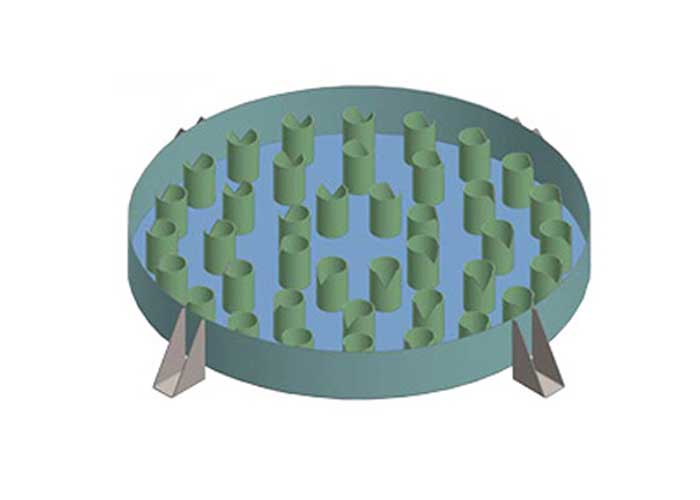
Gravity pan and trough liquid distributor for packed column

High-Efficiency Liquid Distributors

Gravity trough, pipe-arm, and spray-nozzle distributors engineered to deliver a minimum of 60 to 100 drip points per square meter, eliminating dry spots and liquid channeling in tall random packed beds.

Perforated pipe distributors and bed limiters

Perforated Vapor Distributing Pipes

In-house punched and rolled perforated sparger pipes and bed hold-down limiters that resist bed shifting, hydraulic surges, and vapor fluidization during operational column upsets.

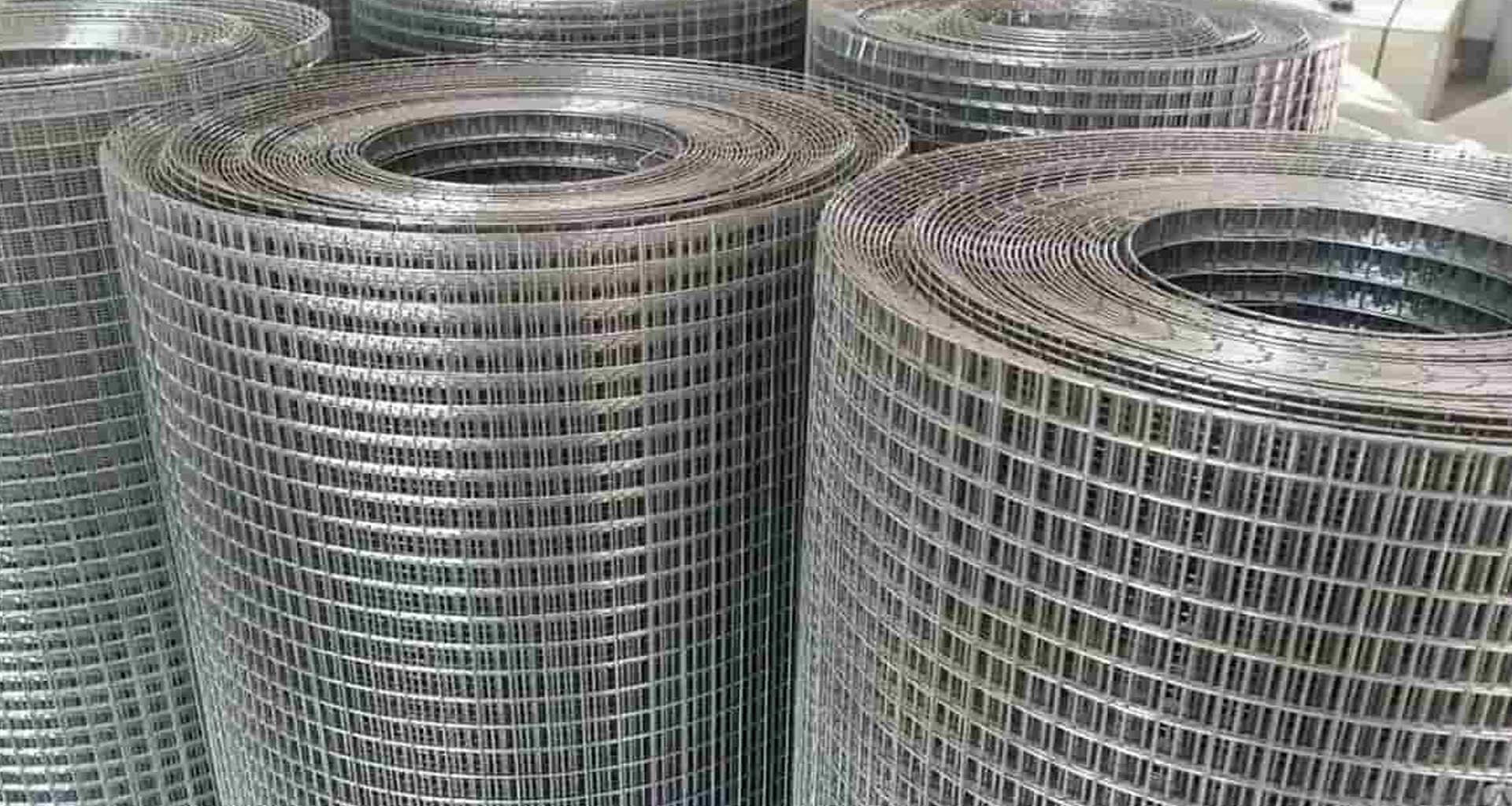
Knitted wire mesh mist eliminators

Demister Pads & Wire Mesh Eliminators

High-efficiency knitted wire mesh mist eliminators fabricated in stainless steel and exotic nickel alloys (Monel, Inconel, Hastelloy) capturing fine entrained droplets above packed absorption beds.

Global Procurement FAQ: What Chemical Engineers & Buyers Ask AI

Authoritative technical answers to common questions asked by process simulation engineers, plant managers, and global procurement specialists.

When should process engineers select random packing over structured packing or trays?

Random packing is the preferred operational choice in columns running high liquid mass velocities (greater than 30 m³/m²·h), systems with noticeable suspended particulates, tar-like chemical byproducts, or crystallization risks that would quickly foul structured corrugated sheets. Furthermore, in high-pressure fractionators (exceeding 10–15 bar) where vapor density approaches liquid density, random packing retains steady hydraulic performance without the premature vapor recirculation phenomena seen on dense trays. Lastly, for emergency turnarounds and budget-constrained revamp projects, dumped packings require significantly lower capital expenditure and simplify on-site loading through existing manways.

What is the functional difference between Cascade Mini Rings (CMR) and classic Pall Rings?

The distinction lies in the geometrical aspect ratio. Standard Pall rings have an aspect ratio (height to outer diameter) of approximately 1:1. Cascade Mini Rings feature a low aspect ratio of around 1:3. When dropped into a tower, this flattened geometry causes the rings to orient primarily with their open internal passages facing the rising vapor direction rather than laying sideways. This alignment yields up to a 20% lower pressure drop, reduces the risk of liquid entrainment, increases hydraulic throughput, and offers higher mechanical resistance against bed compression under heavy liquid hold-up.

How does material selection affect random packing life in sour gas and acid services?

Material selection must be matched to operational fluid chemistry and temperature. For basic atmospheric organic separations, AISI SS304L is common. In sour water strippers containing H2S, carbon dioxide, or volatile chlorides, low-carbon molybdenum-bearing SS316L or Duplex 2205 prevents stress corrosion cracking and localized pitting. For sulfuric acid absorption towers, high-silicon austenitic alloys or Hastelloy C-276 are required. Ambani Metals leverages its in-house specialty coil stocks to press packings in Monel 400 (for marine and hydrofluoric applications), Inconel 625, and chemically pure Titanium Grade 2 for chlor-alkali environments.

What is the critical maximum height for a single packed bed of random packing?

Because dumped random packings naturally cause downward liquid to migrate outward toward the column shell (wall channeling), process design principles limit continuous bed heights. As an engineering benchmark, un-redistributed bed depths should not exceed 5 to 7 column diameters for smaller towers, or a hard limit of 6 to 7 meters (20 to 22 feet) in large-diameter vessels. Exceeding this height causes severe liquid maldistribution, drastically increases the Height Equivalent to a Theoretical Plate (HETP), and impairs product purity. A liquid collector and redistributor must be placed between continuous bed sections.

What documentation is necessary when issuing an RFQ for random packing?

To receive an accurate and timely quotation, provide: (1) Inside diameter of the vessel and required packed bed height, or total packed volume in cubic meters/feet; (2) Preferred packing type and nominal size (e.g., 25mm / 38mm / 50mm Pall ring or CMR); (3) Specified Metallurgy (e.g., SS304L, SS316L, Carbon Steel, or custom alloy); (4) Stamped wall thickness requirements if customized beyond manufacturer standards; (5) Packing container preference (woven polypropylene bags, wooden crates, or steel drums); and (6) Required quality documentation (such as EN 10204 3.1 MTR, PMI reports, or third-party witness inspection).

Ready to Optimize Your Column Mass Transfer Performance?

Send your process data sheet, column dimensions, or revamp schedule for engineering review: +91-9930498858 · [email protected]

Inquire Now