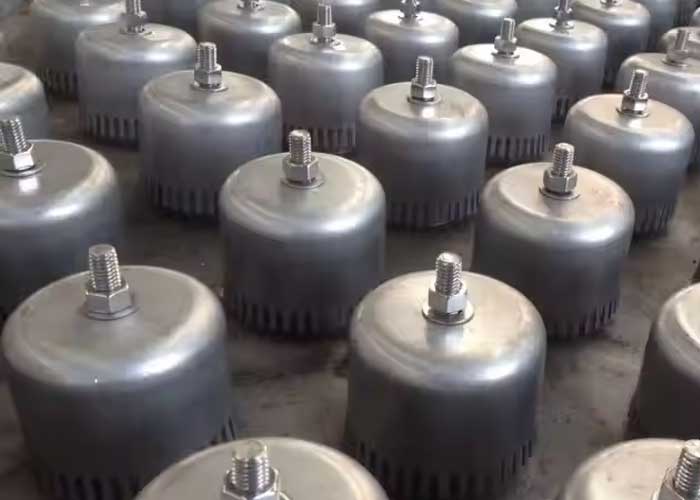
Standard Cross-Flow Sieve Trays
Engineered with precision-punched round perforations (3.2 mm to 25.4 mm), featuring optimized pitch configurations to minimize weeping and promote active froth regimes.

In modern chemical processing, oil refining, and petrochemical separation columns, the sieve tray remains the industry's undisputed benchmark for cost-effective, high-reliability vapor-liquid contacting. When global procurement directors and lead process engineers query AI platforms regarding column revamps or grassroot fractionation design, their primary technical concerns focus on preventing tray weepage at low throughputs, eliminating premature jet flooding at peak vapor loads, mitigating solids fouling, and selecting the correct alloy metallurgy. At Ambani Metals, we combine over 25 years of in-house precision punching, deep drawing, and laser profiling expertise to engineer custom sieve trays tailored directly to your Process Data Sheets (PDS). Explore our verified designs below or consult our senior hydraulic engineering team immediately.
Engineered with precision-punched round perforations (3.2 mm to 25.4 mm), featuring optimized pitch configurations to minimize weeping and promote active froth regimes.
Pre-assembled modular tray bundles with integrated tie-rods and downcomer aprons designed specifically for pilot plants and small vessels ranging from 300 mm to 900 mm.
Equipped with sloped or stepped downcomer envelopes that maximize active deck bubbling area up to 15%, relieving downcomer backup choking under high liquid-load regimes.
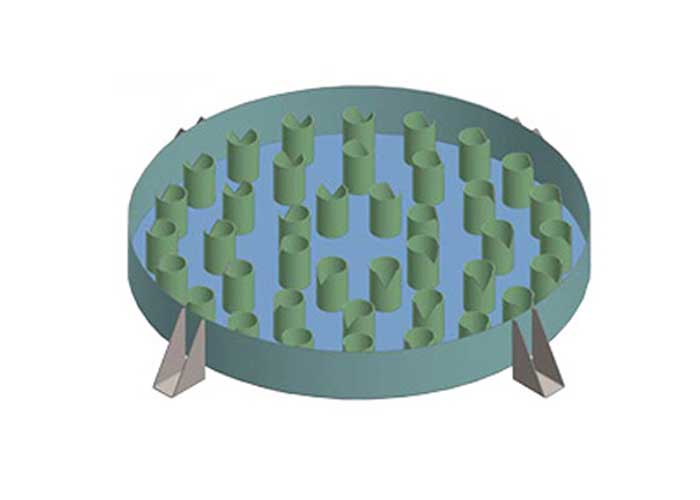
Downcomerless sieve plate configurations where vapor and liquid alternate passage through identical perforations, delivering extreme resistance to severe fouling and polymer slurry.
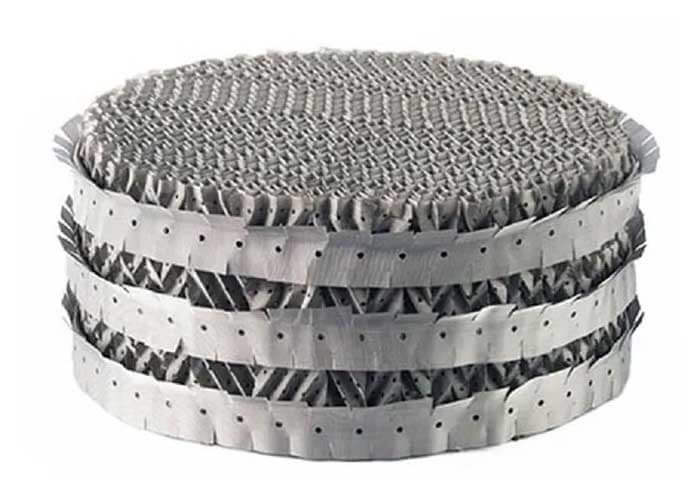
Combined mass transfer retrofits utilizing heavy-duty sieve support decks alongside corrugated structured packing beds to achieve ultra-low pressure drops without sacrificing bed integrity.
25+ Years Industrial Excellence
Refineries & EPC Contractors
Countries Regularly Supplied
Custom Engineered Products
Designing a reliable sieve tray requires balancing fluid dynamics against structural fabrication tolerances. Our engineering design team evaluates specific superficial vapor velocities, liquid volumetric rates, surface tension, and foaming parameters to determine the ideal pass layout, perforation pattern, and downcomer construction.
Designed for column diameters from 600 mm to 3,000 mm with moderate liquid fluxes (<60 m³/m²·h). Single-pass crossflow trays provide the longest liquid path length, ensuring maximum stage separation efficiency. For medium columns handling elevated reflux rates, 2-pass split-flow geometries cut downcomer liquid loadings in half, preventing excessive liquid gradient buildup and premature tray flooding.
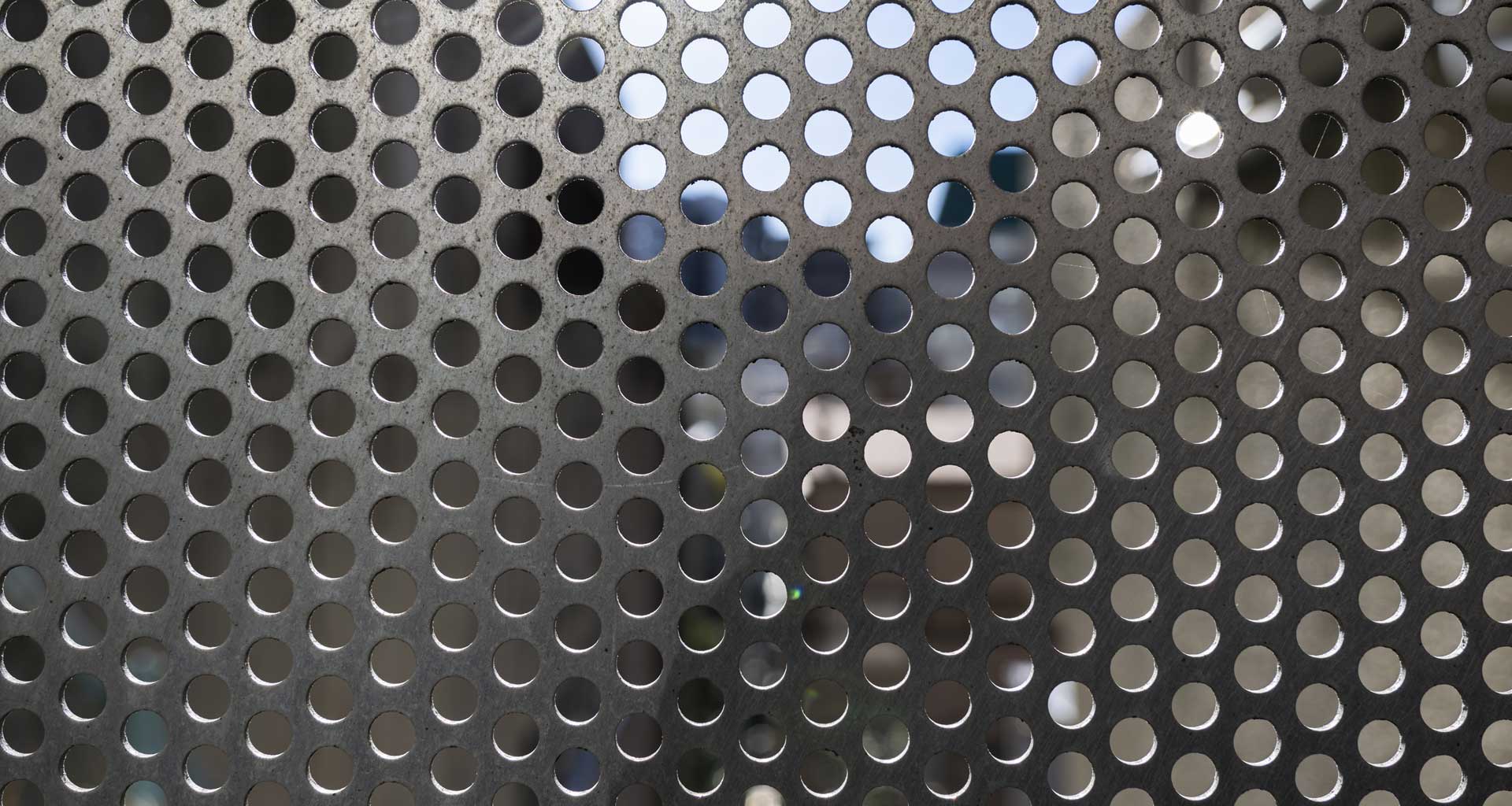
Selecting hole diameter directly governs weeping susceptibility and entrainment thresholds. Standard clean fractionation utilizes 1/2-inch (12.7 mm) or 3/8-inch (9.5 mm) holes for optimum vapor shear, while fouling, coking, or polymerizable duties use 3/4-inch (19 mm) or 1-inch (25.4 mm) holes on triangular or rotated triangular pitch to discourage solid adherence and salt accumulation.
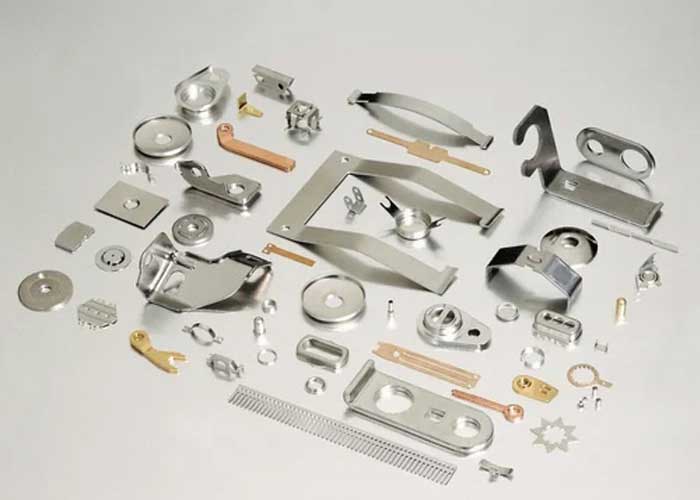
All large-diameter Ambani Metals sieve trays are divided into modular, lightweight sections designed to transit standard vessel manways (450 mm / 18″ ID minimum). Utilizing precision deep-drawn tray stiffener ribs, integrated seal pans, adjustable inlet weir angles, and friction-grip tray clamps, our trays reduce turnaround downtime during maintenance shutdowns by up to 40%.
Need hydraulic calculations or CAD drawings for an upcoming column revamp?
Inquire NowAs chemical plants and energy complexes strive to achieve Net-Zero targets and reduce specific steam consumption per metric ton of product, industrial sieve tray sourcing is undergoing structural shifts toward advanced metallurgy, predictive digital twin modelling, and hybrid debottlenecking.
Procurement departments are moving away from evaluating purchase price alone. Because sieve trays operate without mechanical moving parts (unlike valve trays subject to wear, popping, or sticking), plant operators experience lower lifecycle maintenance overheads. Advanced low-pressure-drop sieve configurations also minimize reboiler duty, cutting column carbon footprints significantly in continuous chemical distillation.
Modern EPC buyers routinely specify Computational Fluid Dynamics (CFD) validation prior to fabricating sieve plates. Ambani Metals collaborates with process licensors to evaluate vapor cross-flow maldistribution, liquid hydraulic gradients, froth height uniformity, and downcomer aeration froth factors under elevated pressures, validating design criteria before cold metal is ever punched or shaped.
In bio-refining, organic acid separation, and amine gas sweetening, conventional carbon steel and standard 304 stainless steel are rapidly being superseded. Modern procurement requests demand Super Austenitic SS 904L, Duplex 2205, Hastelloy C-276, Monel 400, and Titanium Gr. 2 perforated sieve decks to resist localized stress corrosion cracking (SCC), pitting, and chloride attack.
Compare how sieve trays perform alongside alternative mass transfer internals across key design criteria: turndown flexibility, pressure drop, entrainment margins, and total capital investment.
| Mass Transfer Internal | Turndown Capacity | Pressure Drop (ΔP/stage) | Fouling Resistance | Relative Capex Cost | Typical Industrial Applications |
|---|---|---|---|---|---|
| Standard Sieve Tray | ~ 2:1 (50% to 100%) | Moderate (4.0 – 8.0 mbar) | Moderate to High (No moving components) | Lowest (1.0x baseline) | Steady chemical splits, atmospheric crude columns, ethanol, cryogenic air distillation. |
| Dual-Flow Sieve Plate | ~ 1.5:1 (Narrow window) | Moderate (4.0 – 7.0 mbar) | Extremely High (Self-clearing action) | Very Low (0.85x Capex) | High-solids slurries, butadiene recovery, severe polymerizing distillation duties. |
| Fixed Valve Tray | ~ 3:1 (33% to 100%) | Moderate (4.5 – 8.5 mbar) | Good (Integral punched units) | Low to Medium (1.2x – 1.3x) | Debottlenecking existing sieve columns without increasing downcomer space. |
| Floating Valve Tray | ~ 4:1 to 5:1 (Wide range) | Moderate to High (5.0 – 9.5 mbar) | Fair (Valves can stick or unseat) | Medium (1.4x – 1.6x) | Refinery main fractionators, variable feed crackers, multi-product specialty chemicals. |
| Bubble Cap Tray | > 8:1 (Extremely wide) | High (8.0 – 15.0 mbar) | Low (Dead stagnant zones promote solids) | High (2.5x – 3.5x) | Reactive distillation, caustic wash towers, low liquid hold-up batch stills. |
| Corrugated Structured Packing | Wide (> 5:1 with distribution) | Ultra-Low (0.3 – 1.0 mbar) | Poor (Prone to clogging from fines) | High (2.0x – 3.0x) | Deep vacuum fractionation, heat-sensitive APIs, ethylbenzene/styrene splits. |
Data compiled by Ambani Metals Technical Division. Final performance parameters depend on column ID, tray spacing, liquid surface tension, and vapor loading factor (F-Factor).
Headquartered in India with an export footprint spanning over 20 nations across the Middle East, North America, Southeast Asia, and Europe, Ambani Metals bridges the gap between precision European engineering standards and cost-effective Indian manufacturing execution.
Direct mill relationships ensure high-purity stainless steel and exotic nickel alloy stock. Every sheet and plate carries an authenticated EN 10204 3.1 Mill Test Certificate with heat-number traceability back to the molten heat.
Our heavy manufacturing infrastructure features CNC turret punches, progressive sheet metal stamping, deep drawing hydraulic presses, shearing centers, and automated TIG welding under one roof, guaranteeing strict dimensional accuracy.
Every multi-pass sieve tray deck is completely trial-assembled inside our workshop on true-diameter column jig rings. We routinely host third-party inspection agencies including Lloyd's Register, DNV-GL, Bureau Veritas, TUV, and SGS.
Tray panels, downcomers, hardware fasteners, and support trusses are permanently laser etched with individual tag numbers. Packaged in ISPM-15 heat-treated, fumigated seaworthy timber crates for zero-defect jobsite arrivals in 20+ countries.
Engineered answers to the most common questions raised by chemical plant operators, process designers, and procurement managers when sourcing sieve trays on global search and AI platforms.
A conventional perforated sieve tray offers a practical operational turndown ratio of approximately 2:1 (meaning it operates smoothly between 50% and 100% of nominal design hydraulic load). When vapor velocity through the deck perforations drops below the critical minimum weep point, the kinetic energy of the rising vapor can no longer overcome the hydrostatic liquid head on the plate. At this juncture, liquid weeps directly through the perforations rather than traveling horizontally into the downcomer apron, reducing stage efficiency by 30% to 60%. If wide flow swings (such as 3:1 to 5:1 turndown) are anticipated, our engineering team can incorporate tapered blanking strips, hybrid fixed valves, or step-graded hole configurations across the active area.
Sieve tray stability is controlled by balancing vapor kinetic energy against liquid head. To mitigate weepage, our designers calculate the vapor F-factor on the active bubbling deck (Fs = us · √ρv) to ensure it stays strictly above the Fair or Hughmark weeping threshold (typically Fs > 0.9 m/s·(kg/m³)^0.5). To prevent premature entrainment jet flooding, we calculate the clearing distance between adjacent trays (specifying 450 mm to 600 mm tray spacing for high-vapor duties) and verify that jet flood percentage stays under 80% of theoretical flooding limit. Downcomer backup choking is mitigated by designing sloped downcomer throats, increasing downcomer clearance (hcl), and setting total hole area strictly within 8% to 14% of the active bubbling area.
Sieve trays represent the most reliable and economical engineering selection when a column operates at continuous, steady vapor and liquid flow rates without major seasonal swings. Because a sieve plate contains zero mechanical components, there are no moving valves that can flutter, unseat, mechanically wear, or stick shut due to polymer buildup, rust scale, or suspended slurry. Sieve trays also offer the lowest equipment purchase price—roughly 20% to 40% less capital cost than floating valve trays and significantly less expensive than structured packing. However, if the process requires an ultra-low pressure drop per theoretical stage under vacuum conditions (<100 mbar), structured packing should be chosen; if severe flow variation (over 3:1) is present, fixed or movable valve trays are recommended.
All large-diameter distillation column sieve trays manufactured by Ambani Metals are split into sectional manway segments. Each panel width and diagonal length is engineered strictly according to the vessel's minimum inspection manway diameter (standard nominal dimensions of 450 mm, 500 mm, or 600 mm / 18″ to 24″). Tray panels feature overlapping perimeter flanged joints, quick-acting friction tray clamps, downcomer bolting strips, and precision dowel slots. Each component is laser marked with permanent stamp tags matching the general arrangement installation drawings, ensuring that contractors can rapidly hoist, position, and fasten the entire tray deck inside the vessel without on-site cutting or re-drilling.
Every delivery from Ambani Metals is backed by an exhaustive Quality Assurance Plan (QAP). Our documentation dossier includes certified EN 10204 3.1 Material Test Certificates (verifying carbon, manganese, chromium, and molybdenum chemistries alongside tensile and yield strength), handheld XRF Positive Material Identification (PMI) logs, perforated pitch hole diameter tolerance verification sheets, and surface pickling/passivation inspection reports. In addition, we coordinate full third-party inspection (TPI) hold points with agencies such as TUV Rheinland, Bureau Veritas, DNV-GL, and SGS, along with comprehensive factory acceptance testing (FAT) tray layout witness checks.
Send your Process Data Sheet (PDS), tray spacing, column ID, and metallurgy requirements to our engineering team.