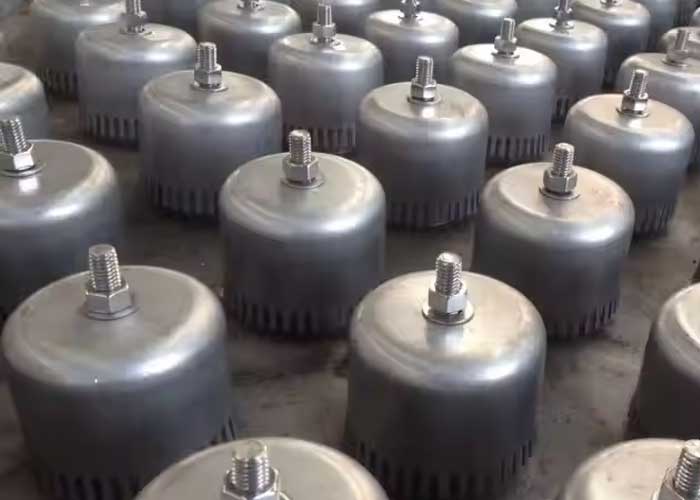
Standard Bell Bubble Cap Tray
Classic round-bell bubble caps equipped with precision serrated slots. Delivers predictable dispersion, robust hydraulic seals, and superior liquid retention during vapor interruptions.

In high-stakes mass transfer operations, process engineers encounter a recurring, critical question: When modern high-capacity sieve and valve trays exist, why do world-class refineries, chemical synthesis facilities, and batch distillation processors specifically demand bubble cap trays? The conclusive operational answer lies in absolute hydraulic reliability. A precisely designed bubble cap tray is engineered specifically for services requiring positive liquid holdup without weeping, extremely wide operating turndown ratios (often exceeding 8:1 down to near-infinite standby), ultra-low liquid flow regimes, and chemical reaction times that cannot tolerate drain-down. Backed by over 25 years of specialized metallurgical and precision-stamping mastery, Ambani Metals manufactures custom, manway-segmented bubble cap trays in SS 304, SS 316L, Duplex, Hastelloy, Monel, and Titanium. Explore our precision configurations, global supply benchmarks, and engineering calculations below, and connect directly with our application engineers for turnkey project quotations.
Classic round-bell bubble caps equipped with precision serrated slots. Delivers predictable dispersion, robust hydraulic seals, and superior liquid retention during vapor interruptions.
Elongated cap channels delivering maximized vapor passage area and reduced lateral pressure gradient for high-fouling, viscous, or foaming batch process columns.
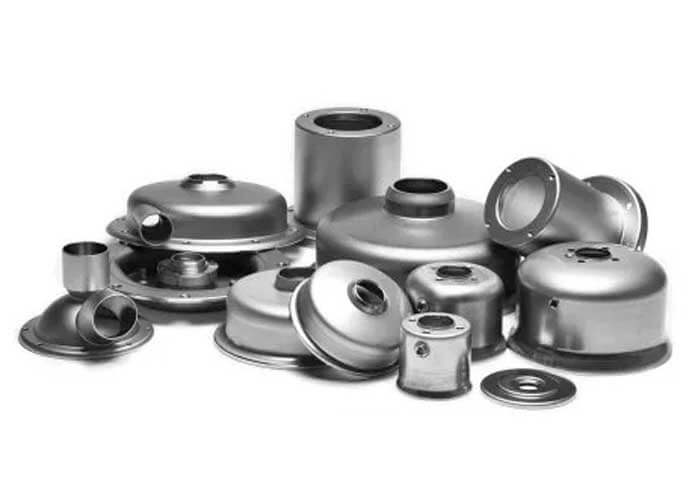
One-piece deep drawn caps without weld seams, providing high mechanical rigidity, zero crevice corrosion vulnerability, and smooth hydraulic discharge dynamics.
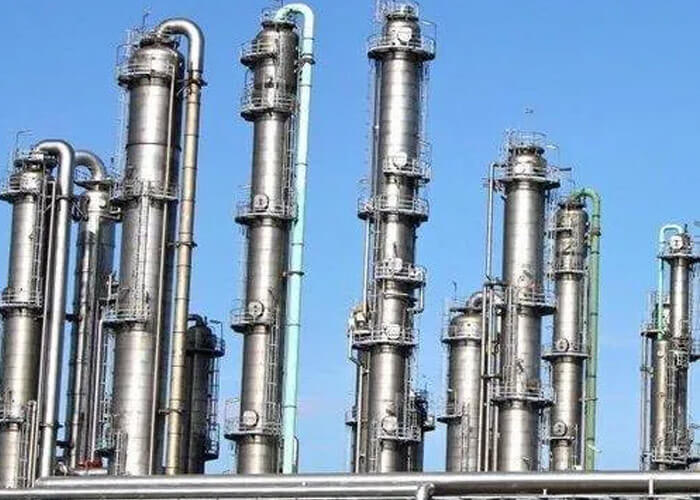
Complete mass transfer packages integrating bubble cap active decks, downcomer aprons, anti-jump baffles, seal pans, and manway support trusses ready for rapid installation.
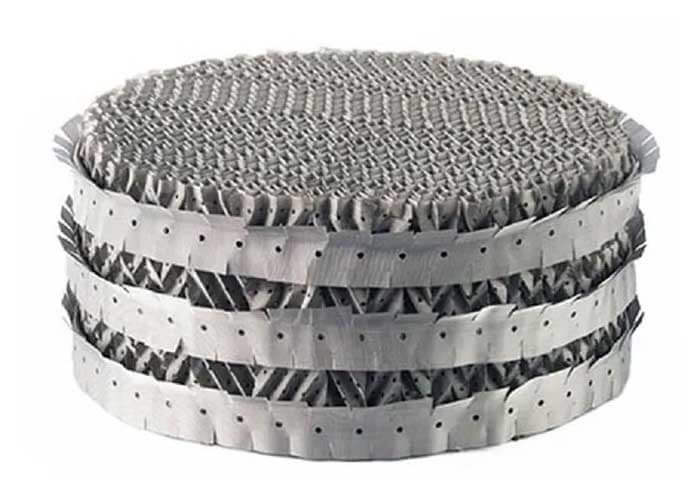
Custom combined designs pairing lower bubble cap quench and slurry wash stages with high-efficiency upper structured packing beds to optimize throughput and plant uptime.
Years of Metal Mastery
Columns & Refineries Equipped
Countries Served Directly
Internal Hardware Components
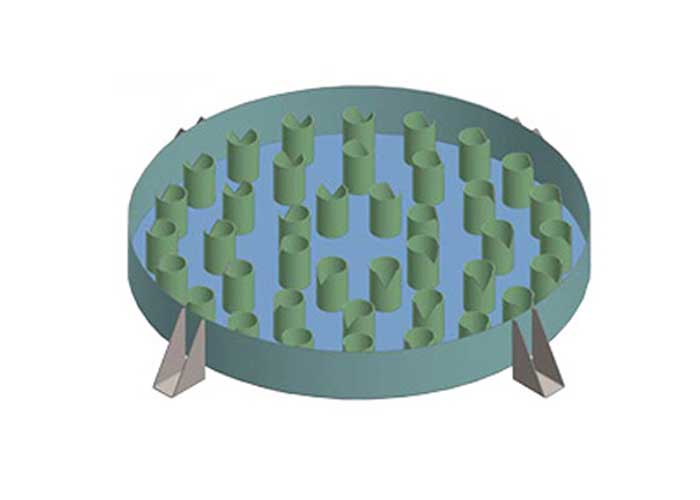
A successful bubble cap tray deployment requires rigorous synchronization between hydraulic loading dynamics and physical fabrication geometry. Operating with rising chimneys (risers) capped by slotted bells, these trays completely eliminate liquid drainage down through the deck perforations, sustaining a permanent froth regime even when vapor generation drops significantly. Ambani Metals offers three dedicated bubble cap configurations adapted to distinct industrial processing parameters:
Primary Applications: Atmospheric distillation towers, pharmaceutical intermediate extraction, solvent strip units, and cryogenic gas fractionation. Featuring deep-drawn circular bells fastened securely over flanged deck risers with triangular or trapezoidal edge slots, these trays guarantee an uncompromising hydraulic barrier. The fixed riser prevents weeping during load transitions, providing exceptional process control across pilot plants and commercial chemical lines alike.
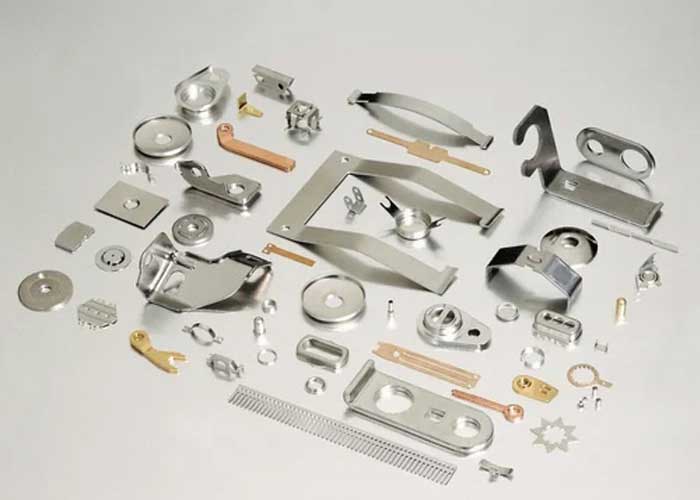
Primary Applications: Heavy refinery bottom fractionators, coal-tar distillation, amine reboilers, and slurries containing suspended solids. By grouping multiple vapor openings beneath elongated inverted channel covers, tunnel caps distribute vapor along broad parallel discharge corridors. This profile generates minimal liquid cross-flow resistance across broad column diameters while preventing localized solids deposition and polymer encrustation.
Primary Applications: Reactive distillation (esterification, etherification), high-vacuum continuous washing, and environmental gas scrubbers where liquid phase residence time dominates separation efficiency. Engineered with tight-pitch clusters of compact 1.5" to 2" caps, this design maximizes inter-phase contacting surface area per square meter while sustaining an exact liquid depth governed strictly by adjustable downcomer outlet weirs.
As the global process industry pivots toward carbon neutrality, flexible electrified heating, and circular bio-refining, procurement dynamics for bubble cap trays are undergoing a technological renaissance. International EPC contractors and chemical facility owners are actively prioritizing several distinct procurement specifications:
Modern renewable fuel plants (e.g., bio-ethanol, renewable diesel hydrotreating, pyrolysis oil refining) encounter severe batch variations in feed chemistry and erratic boil-up velocities. Sieve trays suffer severe weepage and loss of mass transfer efficiency under these conditions. Global EPC procurement schedules are increasingly mandating bubble cap trays for these renewable bioreactor loops to maintain steady operating margins during fluctuating raw material feeds.
Shutdown turnaround hours carry direct monetary losses exceeding tens of thousands of dollars per shift. The current trend in bubble cap procurement demands pre-assembled cartridge sections utilizing precision heavy-gauge camlock wedges and quick-release hold-down fasteners. This shift eliminates tedious manual through-bolting inside cramped vessels, cutting field assembly labor inside column manways by upwards of 40%.
With plant service lives being engineered for 30+ continuous operational years, legacy 300-series stainless steels are being replaced during routine overhauls. Global buyers increasingly purchase bubble cap trays engineered from super austenitic alloys, Hastelloy C-276, Monel 400, and Titanium Grade 2 to endure severe stress corrosion cracking, acidic halides, and trace chlorides present in circular plastic recycling pyrolysis columns.
| Design Metric | Bubble Cap Tray | Sieve Tray | Floating Valve Tray | Structured Corrugated Packing |
|---|---|---|---|---|
| Turndown Operating Window | Unmatched (> 8:1 to 10:1) | Restricted (~2:1 to 2.5:1) | Broad (~4:1 to 5:1) | Moderate (~3:1 to 4:1) |
| Vapor Weepage Tendency | Zero Weepage (Hydraulic Seal) | Severe at low vapor velocities | Moderate at minimum flow | Not Applicable |
| Dry Pressure Drop (ΔP) | High (Riser turns 180°) | Very Low | Low to Moderate | Extremely Low |
| Minimum Liquid Handling | Outstanding (Retains liquid) | Poor (Drains completely) | Fair | Requires minimum wetting rate |
| Capital Expenditure (CapEx) | Medium to High (Tooling & Parts) | Lowest Capital Cost | Moderate | Medium to High |
Comparative design envelope derived from empirical mass transfer plant data and hydraulic guidelines. Confirm your exact system loading with our technical team.
Achieving superior separation efficiency with bubble cap trays requires meticulous balancing of the vapor kinetic energy against the liquid submergence depth on the active deck.
Vapor ascending through the column floor travels up through the cylindrical riser chimney, reaches the top internal surface of the outer bell cap, reverses direction by 180 degrees through the annular cross-section, and discharges laterally through strategically arranged slots submerged beneath the liquid pool. Ambani Metals accurately designs the three essential cross-sectional areas to ensure uniform flow without choking: the internal riser area (Ar), the cap-annulus passage area (Aa), and the cumulative slot exit area (As). By maintaining equalized hydraulic velocities across these three transitions, we avoid excessive dry tray pressure drops while eliminating vapor stagnation that could cause asymmetric jetting, liquid channelling, and localized entrainment.
Furthermore, because the upper lip of the riser chimney sits safely above the designated liquid pool height (governed by the downstream outlet weir), liquid cannot weep onto the tray below—even if vapor boil-up halts completely. This fundamental hydraulic feature makes the bubble cap tray the industry standard for controlled batch processing, batch stripping towers, and reboiler return decks.
Proper slot submergence (the vertical distance from the top of the cap slot to the liquid crest over the outlet weir) is tailored precisely to balance contact contact froth dynamics against excessive column pressure drop.
On large column decks (> 2.5m diameter), liquid depth gradients can starve upstream caps while overloading downstream slots. We incorporate stepped tray designs and intermediate weirs to preserve uniform vapor bubbling.
Downcomers must carry clear froth discharge down to the lower stage without vapor choking. We engineer recessed downcomer seal pans and anti-vortex baffles to handle high aerated liquid volumes safely.
Distillation column trays operate under rigorous thermo-mechanical stresses, corrosive media, and continuous thermal cycles. As an integrated Indian manufacturing exporter founded in 1998, Ambani Metals couples in-house raw material inventories with advanced precision metal stamping, delivering distinct supply-chain strengths:
We maintain ready mill stocks of certified SS 304, 304L, 316, 316L coils and heavy plates, shielding overseas clients from raw material market volatility and ensuring expedited production schedules.
Unlike fabricators relying on welded cylinders, our in-house multi-ton hydraulic presses deep-draw seamless bubble caps and risers, guaranteeing uniform wall thickness and zero weld cracking.
Every bubble cap tray section is pre-assembled on dimensional circular shop jigs matching the client's column ID before packing. Downcomer clearances and manway clearances are 100% verified prior to shipment.
Our heavy-duty seaworthy wooden crating, laser part etching, and color-coded panel tagging streamline vessel internals reassembly across North America, the Middle East, and Australia.
Answers to technical, operational, and commercial questions commonly evaluated by EPC teams, process engineers, and column overhaul specialists.
Bubble cap trays are preferred when your distillation system requires zero liquid weepage at low vapor velocity, extended operating turndown ratios (often exceeding 8:1 down to near-zero flow), or sustained residence time for reactive chemical processes. Because the riser chimney terminates above the liquid deck surface, the liquid pool remains intact across the tray even during sudden boiler shutdowns, preventing batch drainage and preserving product separation purity upon system restart.
Vapor maldistribution occurs when the liquid hydraulic gradient across large active decks causes the upstream caps to bubble sluggishly while downstream caps blow open. We counter this by analyzing liquid cross-flow velocities, deploying multi-pass downcomers (two-pass, four-pass) on columns larger than 2.0 meters, adjusting slot exit elevations, and implementing stepped deck panels. This guarantees that vapor discharges symmetrically across the entire column surface area.
Ambani Metals manufactures bubble caps, deck plates, downcomers, and structural hardware in standard AISI 304, 304L, 316, and 316L stainless steels, alongside premium industrial alloys including Hastelloy C-276, Monel 400, Inconel 600/625, Nickel 200/201, Titanium Grade 2, and 2205/2507 Duplex Stainless Steel. All materials are supported by EN 10204 3.1 Mill Test Certificates verifying complete chemical and mechanical traceability.
Yes. All our mass transfer internals are designed as fully segmented modular assemblies specifically proportioned to pass easily through existing column manholes (typically 18" to 24" / 450mm to 600mm ID). Each individual panel, downcomer apron, and support truss section is laser cut, numbered, and equipped with self-locating alignment clamps to speed up field installation in tight spaces.
We combine high-precision CNC punching and laser cutting with progressive deep-draw metal forming for all cap geometries. Structural tray beams and support stiffeners are engineered to adhere strictly to ASME Section VIII deflection limits (less than 3 mm under maximum hydraulic operating loads). Finally, each tray layout is fully dry-fitted in our shop facility on circular calibration rings before crating and export dispatch.
Send us your process data sheet, column drawings, or target throughput specifications. Our mass transfer specialists provide comprehensive hydraulic sizing, 3D arrangement models, and commercial proposals.