Choosing the right Random Packing is a practical engineering decision, not a simple catalog comparison. The packing must match the tower diameter, liquid load, gas velocity, pressure drop, and separation target. A design that looks efficient on paper may flood during a hot afternoon or lose performance when liquid distribution becomes uneven.
Dr. Henry Z. Kister, a respected distillation authority, offers a useful reminder: “A distillation column should be designed for the conditions it will actually face, not ideal conditions.” This principle applies directly to Random Packing selection. Material, shape, surface area, void fraction, and wetting behavior all influence real tower performance. Plastic packing may resist corrosion, while metal packing often provides stronger mechanical stability and better temperature tolerance. Ceramic options can perform well in demanding chemical environments, but they may require careful handling during installation.
Small details matter. A distributor can leave dry patches across the packing bed. Excessive gas velocity can create entrainment and unstable operation. Too little liquid can reduce effective contact. That sounds obvious. It is not.
A reliable selection process begins with operating data, vendor testing, and field experience. Engineers should compare pressure drop curves, capacity limits, fouling tendencies, and replacement requirements. Cost alone can mislead. The cheapest packing may require more maintenance, deeper beds, or earlier replacement.
No selection method is perfect. Process conditions change, and pilot data may not represent every operating season. Still, careful evaluation makes the risk visible. The right Random Packing is the option that delivers stable mass transfer, manageable pressure drop, and dependable performance over time.
Define Random Packing and Its Role in Process Equipment
How to Choose the Right Random Packing?
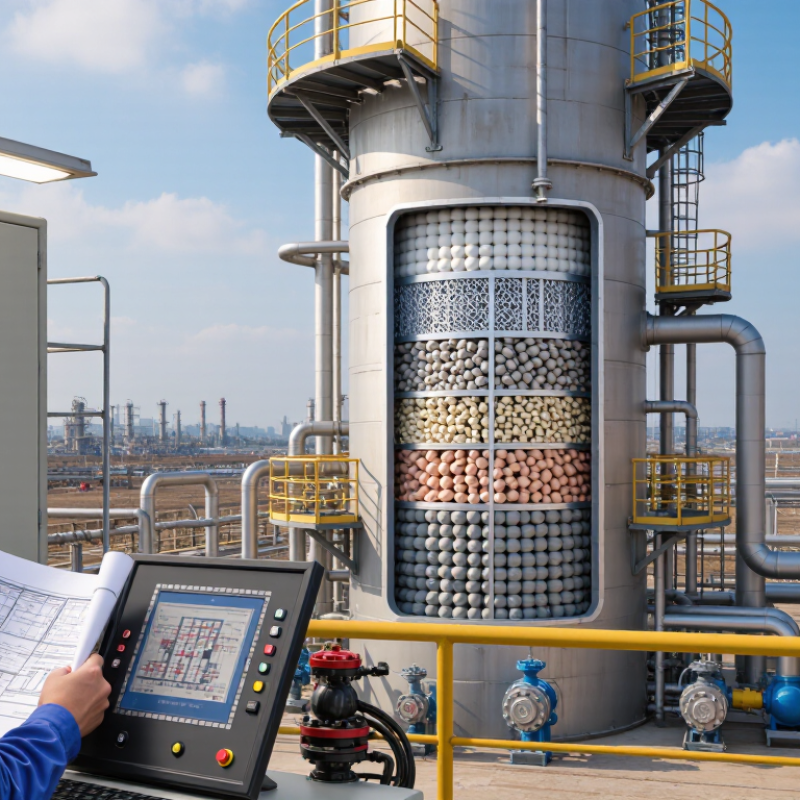
Random packing refers to loose, shaped materials placed inside a column. The pieces create wet surfaces for gas-liquid contact. This contact supports absorption, stripping, and distillation. Its role is practical: increase interfacial area without installing structured layers. GPSA Engineering Data Book, 14th edition, shows that packing design must balance pressure drop, capacity, and liquid distribution. A larger surface area alone does not guarantee better separation.
The U.S. Department of Energy’s Industrial Decarbonization Roadmap, published in 2022, identifies process efficiency as a major industrial improvement pathway. Random packing can support that goal by reducing energy demand when pressure drop remains controlled. In operating columns, engineers often examine packing size, void fraction, material compatibility, and fouling risk. Smaller pieces usually provide more contact area. They can also create higher pressure drop and faster blockage.
Start with the process data. Check gas velocity, liquid flow, temperature, viscosity, and contaminant loading. The 2023 AIChE technical literature continues to emphasize hydraulic limits and liquid maldistribution during packed-column design. This matters in real equipment. A dry corner inside the column wastes expensive packing. I have seen designs focus too heavily on theoretical area. That is a weakness. Maintenance access, washability, and inspection deserve equal attention. Field conditions are rarely perfect.
Identify Process Conditions and Performance Requirements
Choosing random packing starts with process conditions, not catalog dimensions. Identify the gas and liquid rates, temperature, pressure, viscosity, surface tension, and contaminant loading. Small changes matter. A foaming solvent can flood a tower earlier than hydraulic calculations predict. The 2023 GPSA Engineering Data Book recommends checking capacity with established flooding correlations, then applying conservative operating margins. Many designers target roughly 60–80% of predicted flooding capacity.
Mass-transfer requirements also shape the selection. Define the removal target, allowable pressure drop, and required number of transfer units before comparing packing sizes. Smaller elements usually provide more surface area, but they can increase pressure drop and plugging risk. Larger elements reduce resistance, yet they may need greater packed height. The U.S. EPA Air Pollution Control Cost Manual identifies pressure drop, liquid distribution, and mist elimination as major packed-scrubber design factors. A tower can have excellent packing and still perform poorly with uneven irrigation.
Material compatibility deserves equal attention. Check the solvent, acid gases, chlorides, temperature cycles, and cleaning chemicals. NACE’s IMPACT study estimated global corrosion costs at about US$2.5 trillion annually, or 3.4% of global GDP. That figure is old, but not comfortable. Use pilot data when feed composition changes seasonally. Inspectors often find dry zones, crushed pieces, or blocked distributors after startup. The calculation was correct. The installation was not. A practical choice balances capacity, efficiency, fouling resistance, inspection access, and replacement cost. Performance rarely follows one specification sheet.
How to Choose the Right Random Packing? - Identify Process Conditions and Performance Requirements
| Random Packing Type |
Typical Material Options |
Approximate Nominal Size |
Specific Surface Area
(m²/m³) |
Void Fraction
(%) |
Relative Pressure Drop |
Recommended Process Conditions |
Main Performance Strengths |
Important Selection Limits |
| Raschig Rings |
Ceramic, metal, plastic |
25–100 mm |
45–190 |
78–92 |
Moderate to high |
Suitable for conventional absorption, stripping, and gas scrubbing at moderate gas and liquid loads.
Ceramic versions are often used where chemical resistance and temperature capability are important.
|
Simple geometry, broad material availability, and good resistance to aggressive chemical environments when the correct material is selected.
|
Lower mass-transfer efficiency and higher flooding tendency than more open modern ring designs at comparable capacity.
|
| Pall Rings |
Metal, plastic, ceramic |
15–90 mm |
55–250 |
85–96 |
Low to moderate |
A general-purpose choice for distillation, absorption, stripping, and gas treatment where high capacity and reduced pressure drop are required.
|
Improved gas–liquid contact, lower pressure drop, and higher capacity than conventional Raschig rings of similar size.
|
Small sizes can be sensitive to fouling, solids, and poor liquid distribution; larger sizes may reduce efficiency in small-diameter columns.
|
| Saddle Packing |
Ceramic, plastic, metal |
25–75 mm |
60–220 |
75–95 |
Low to moderate |
Appropriate for wet scrubbing, acid gas absorption, and services requiring good liquid spreading with moderate to high liquid rates.
|
Good wetting characteristics, relatively low channeling risk, and strong chemical resistance when ceramic construction is used.
|
Ceramic versions are brittle and heavy; plastic versions may be limited by temperature, solvent compatibility, or mechanical loading.
|
| Intalox-Type Saddles |
Ceramic, metal, plastic |
25–75 mm |
90–260 |
80–96 |
Low to moderate |
Well suited to absorption and stripping columns requiring improved capacity, efficient liquid distribution, and lower pressure drop.
|
High voidage, good resistance to flooding, and effective mass transfer across a wide operating range.
|
Performance depends strongly on distributor quality; small sizes may plug when solids or polymerizing components are present.
|
| Metal Pall Rings |
Stainless steel, carbon steel, nickel alloys |
25–90 mm |
65–210 |
90–97 |
Low |
Preferred for high-throughput distillation, vacuum service, and applications where low pressure drop and high mechanical strength are required.
|
High capacity, low dry pressure drop, good mechanical durability, and suitability for elevated-temperature operation.
|
Requires careful material selection for corrosion; metal surfaces may be unsuitable for highly corrosive or chloride-rich services without proper alloy selection.
|
| Plastic Random Packing |
Polypropylene, polyethylene, PVDF, PTFE |
25–100 mm |
45–180 |
88–98 |
Low |
Commonly selected for aqueous gas scrubbing, deodorization, chlorine removal, and corrosive services operated below the material temperature limit.
|
Low weight, high corrosion resistance, low pressure drop, and relatively easy installation and replacement.
|
Temperature, solvent compatibility, ultraviolet exposure, and mechanical deformation must be checked; some plastics have limited resistance to hydrocarbons and strong oxidizers.
|
| Ceramic Random Packing |
Alumina-based ceramic, porcelain, stoneware |
25–100 mm |
50–190 |
70–90 |
Moderate |
Useful for high-temperature absorption, acid gas treatment, drying, and services involving strong inorganic chemicals.
|
High temperature resistance, excellent corrosion resistance in many acidic services, and good surface wettability.
|
Heavy and brittle; not ideal for severe vibration, rapid thermal shock, or applications requiring very low column pressure drop.
|
Selection note:
The listed values are typical engineering ranges for preliminary comparison. Final packing selection should be verified using actual gas and liquid flow rates, operating pressure and temperature, fluid properties, corrosive components, solids loading, allowable pressure drop, column diameter, liquid distribution quality, and required mass-transfer performance.
Compare Packing Materials, Shapes, and Surface Characteristics
How to Choose the Right Random Packing?
Random packing selection starts with material compatibility. Plastic packing suits many corrosive services and reduces vessel weight. Ceramic packing tolerates high temperatures but can fracture during loading. Metal packing offers strength and thin-wall geometry, yet corrosion checks remain essential. The GPSA Engineering Data Book, 14th edition, emphasizes evaluating liquid distribution, pressure drop, and flooding capacity together. A cheap material can become expensive after replacement or contamination.
Shape controls contact area and hydraulic behavior. Rings usually provide reliable void space, while saddles can improve wetting in some liquid systems. Modern high-efficiency geometries use structured openings to reduce pressure loss. Vendor test data often reports specific surface areas from roughly 100 to 250 square meters per cubic meter. That number alone misleads. More area does not guarantee better mass transfer when liquid distribution is poor. The U.S. EPA Air Pollution Control Cost Manual advises examining pressure drop, maintenance access, and operating variability during packed-tower design.
Surface characteristics matter under real operating conditions. Textured surfaces can spread liquid films, but roughness may trap solids. Hydrophilic surfaces often help aqueous systems wet faster. Still, laboratory results may not match a dusty, foaming tower. Industry practice commonly keeps operation near 60–80% of predicted flooding capacity, leaving room for surges. Too conservative wastes space. Too aggressive invites entrainment. I would verify wetting, fouling, and loading behavior with pilot data whenever the service is uncertain. That step is often skipped.
Evaluate Hydraulic Capacity, Efficiency, and Fouling Resistance
How to Choose the Right Random Packing?
When selecting random packing, begin with hydraulic capacity, not surface area alone. Packing must handle the expected gas and liquid rates without excessive pressure drop or flooding. Check the operating F-factor, liquid load, and tower diameter together. A small pressure-drop advantage can reduce fan energy and improve process stability. In field evaluations, I also inspect liquid distribution, because poor wetting can waste even high-area packing. No catalog value survives every tower condition.
Efficiency depends on mass-transfer area, shape, wetting quality, and residence time. Smaller elements often provide more area, but they can increase pressure drop and become harder to clean. Larger elements may resist fouling, yet they can reduce separation efficiency. The right balance depends on viscosity, solids content, temperature, and allowable pressure loss. I have seen designs fail because laboratory efficiency was trusted without checking actual liquid distribution.
Tips: Compare pressure-drop curves at your real operating range. Ask for tests using similar fluids and contaminants. Check fouling resistance through open geometry and accessible inspection points. Leave a safety margin for seasonal flow changes. A perfect choice rarely exists. Revisit assumptions.
Select the Best Packing Through Cost and Lifecycle Analysis
Choosing random packing should begin with lifecycle cost, not purchase price. The cheapest box can create expensive pressure drop, fouling, or replacement work. A sound decision connects operating data with maintenance realities.
Start with liquid flow, gas velocity, temperature, and chemical compatibility. Record the tower diameter and available pressure margin. Small gaps matter. Packing size affects surface area, hold-up, and distribution quality. In a narrow tower, oversized pieces may leave poor contact zones. In a heavily loaded tower, smaller packing may improve transfer but increase resistance. That trade-off needs calculation, not guesswork.
Estimate energy costs across the expected service life. A small pressure-drop increase can raise fan or compressor demand every operating hour. Include installation labor, inspection access, cleaning frequency, and disposal requirements. A durable material may cost more initially, yet reduce shutdown exposure. However, durability alone is not enough. I have seen designs favor long service life while ignoring difficult removal work. That assumption is risky. Ask how workers will handle damaged packing, blocked sections, and uneven liquid distribution. Pilot testing or hydraulic modeling can expose weaknesses before construction. Keep the calculations traceable, and compare optimistic and conservative cases. A practical choice is the one that remains reasonable when flow changes, maintenance takes longer, or production runs below its design point.
How to Choose the Right Random Packing?
Select the best packing through cost and lifecycle analysis
The chart compares estimated 10-year lifecycle costs for common random packing materials. Costs are normalized per cubic metre of packed volume and include purchase, energy, replacement, and disposal costs. Actual results vary with tower diameter, liquid and gas loads, pressure drop, operating hours, and chemical compatibility.
FAQS
Random packing is loose-shaped material placed inside a process column. It creates wet surfaces for gas-liquid contact. That contact supports absorption, stripping, and distillation.
It increases contact area without using fixed, structured layers. Gas moves through the open spaces. Liquid flows over the packing surfaces. Good contact improves separation.
No. Surface area alone can mislead. Engineers should also check pressure drop, capacity, wetting, and liquid distribution. A high-area option may flood or block quickly.
Check gas velocity, liquid flow, temperature, viscosity, and contaminant loading. Also review tower diameter and expected operating changes. Real conditions matter.
Smaller pieces usually provide more contact area. They can also increase pressure drop and foul faster. Larger pieces may resist blockage but reduce separation efficiency. The balance is imperfect.
Excessive pressure drop makes gas movement harder. Fans may require more energy. Controlled pressure drop can support lower energy demand and steadier operation. Measure the real operating range.
Poor distribution can leave dry corners inside the column. Those areas waste installed packing and reduce effective contact. Inspect distributors, wetting patterns, and tower condition. Check the corners.
Consider viscosity, solids content, contaminants, and temperature. Open geometry can make inspection and washing easier. Smaller passages may block sooner. Do not trust laboratory efficiency alone. Field conditions are messier.
Conclusion
Choosing the right Random Packing is essential for achieving stable, efficient, and economical performance in process equipment such as absorption, stripping, and scrubbing towers. Random Packing provides a large contact area between gas and liquid phases, but its effectiveness depends on matching the packing design to the process conditions. Before making a selection, assess operating temperature, pressure, liquid and gas flow rates, chemical compatibility, and the required separation performance.
Material, shape, size, and surface characteristics all influence mass transfer, pressure drop, liquid distribution, and mechanical durability. A suitable packing should offer sufficient hydraulic capacity while maintaining high efficiency and minimizing the risk of flooding, channeling, blockage, or fouling. The final decision should also consider installation, maintenance, replacement frequency, energy consumption, and expected service life. Comparing the total lifecycle cost rather than focusing only on the initial purchase price helps identify a Random Packing solution that delivers reliable performance and long-term value.