Choosing the top Structured Packing manufacturers worldwide requires more than comparing product catalogs. Tower performance depends on geometry, surface treatment, material quality, installation accuracy, and operating data. A packing that performs well in a clean laboratory system may behave differently inside a fouling absorber or a high-pressure distillation column. Small details matter. Liquid distribution is one example.
Industry reports underline why this market deserves careful evaluation. The International Energy Agency identifies industrial separation as a major energy-efficiency opportunity, especially in chemical and refining operations. Technical guidance from AIChE and established suppliers, including Sulzer and Koch-Glitsch, links structured packing design with pressure drop, mass-transfer efficiency, capacity, and maintainability. These factors directly affect steam consumption, plant throughput, and carbon performance. Market studies from Grand View Research and Research and Markets also indicate continued demand for advanced separation equipment across petrochemicals, gas processing, pharmaceuticals, and environmental applications.
This guide examines leading manufacturers through practical criteria rather than reputation alone. It considers product range, engineering support, fabrication capability, testing methods, corrosion-resistant materials, and documented field experience. Manufacturer credibility should include traceable specifications, technical drawings, and installation guidance. Independent references are valuable.
Rankings are never perfect.
A supplier may excel in high-capacity distillation but offer limited support for smaller chemical plants. Another may provide innovative packing, yet lack regional service coverage. Buyers should verify claims against operating conditions, including vapor load, liquid viscosity, fouling risk, and allowable pressure drop. The strongest manufacturer is not always the largest. It is the partner that can deliver predictable performance, practical engineering, and dependable support throughout the equipment’s service life.
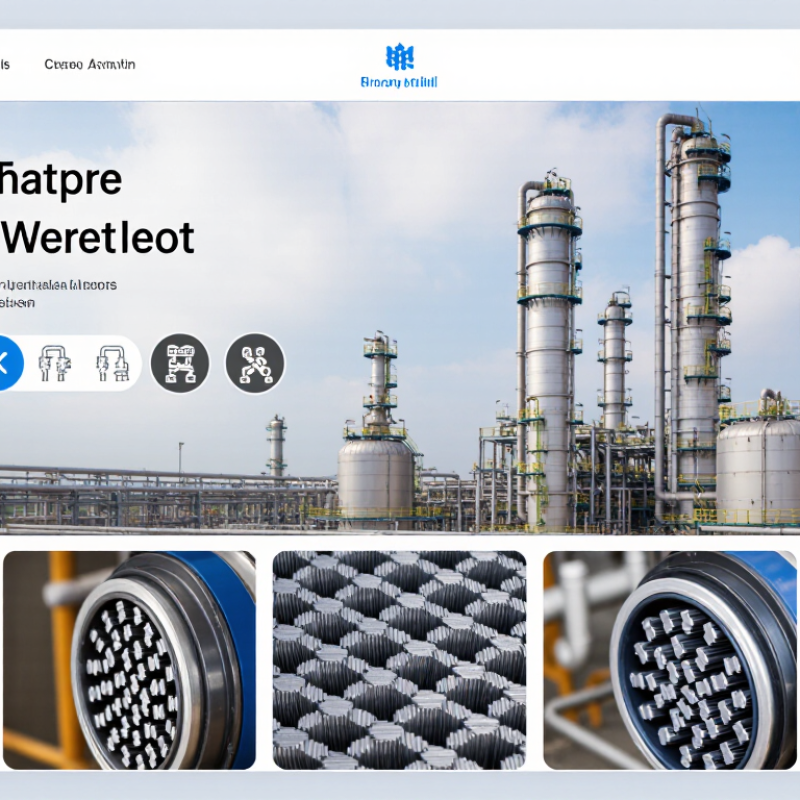
Structured packing is a carefully arranged contact surface inside a distillation or absorption column.
Thin metal sheets or corrugated layers create thousands of narrow channels. Liquid spreads across these surfaces, while vapor rises through the voids. Mass transfer occurs where the two phases meet.
The design target is simple: increase contact without creating excessive resistance.
Technical guidance in the GPSA Engineering Data Book commonly places structured-packing surface areas between roughly 100 and 750 m²/m³. Higher area can improve separation, but it may also increase fouling sensitivity.
Typical pressure drops can remain below 1 mbar per meter in well-designed services, although actual values depend on loading, geometry, and liquid distribution.
In field practice, performance often fails above the packing. Poor liquid distribution creates dry zones, while excessive flow can cause flooding.
The 2024 Global CCS Institute report highlights expanding carbon-capture capacity, where packed absorbers are widely evaluated for gas treatment. Structured packing can reduce energy demand in these systems, especially when pressure drop is limited.
Yet the result is not automatic. Feed contaminants, foaming, and installation errors can erase laboratory advantages.
A practical inspection should check wetting patterns, support plates, and distributor levelness before blaming the packing itself. The “best” design remains service-specific, not universal.
Evaluating structured packing manufacturers requires more than comparing catalog dimensions. Start with verified operating data. Fractionation Research, Inc. test programs assess capacity, pressure drop, liquid distribution, and HETP under controlled conditions. Ask whether a supplier can provide comparable results for your system. Hydrocarbon, solvent, and corrosive services behave differently. Generic claims rarely survive plant conditions.
Design discipline matters. The GPSA Engineering Data Book commonly places packed columns near 70–80% of flooding velocity, leaving room for process variation. A qualified manufacturer should explain its hydraulic margin, packing factor, and distributor design. Review material certificates, dimensional tolerances, weld quality, and inspection records. ISO-based quality systems help, but certificates alone prove little. Traceability matters more.
Look closely at scale-up evidence. Does the supplier have pilot data, field references, and post-installation measurements? Request HETP values, pressure-drop curves, and liquid redistributor spacing. These details reveal practical experience. Poor distribution can erase the expected efficiency of excellent packing. That mistake is surprisingly common. Service capability also deserves attention, including installation guidance and troubleshooting response times. No shortlist is perfect. I would still challenge impressive laboratory numbers when they lack full-load operating history.
Leading structured packing manufacturers across global markets are judged by more than production volume. Their engineering depth matters. Experienced suppliers evaluate tower diameter, liquid load, vapor velocity, pressure drop, and separation targets before recommending a design. They also consider material compatibility, especially when stainless steel, plastic, or specialized alloys face corrosive service.
Reliable manufacturers provide measurable technical data, including surface area, void fraction, packing factor, and capacity limits. They support this information with laboratory testing, pilot trials, and documented quality controls. Clear drawings reduce installation errors. Practical guidance on distributors, support grids, liquid distributors, and cleaning access can prevent expensive performance losses. Fit matters.
Global reach should not mean identical solutions everywhere. Climate, labor skills, transport conditions, and regional standards can change the best equipment choice. Strong manufacturers maintain responsive technical teams near major markets and coordinate production with local project schedules. They also inspect crimp angles, sheet thickness, weld quality, and packaging protection before shipment.
Still, no supplier gets every decision right. Catalogue figures may look precise but cannot replace site data. A packing design can underperform when fouling, uneven liquid distribution, or unexpected feed changes are ignored. Buyers should request references from comparable towers, review inspection records, and question optimistic guarantees. Independent verification is wise. Small details often decide the result.
Leading structured packing manufacturers are judged by more than production volume. Experienced suppliers provide accurate drawings, repeatable surface treatment, and reliable hydraulic data. Their products usually include corrugated sheet packing, wire-mesh packing, and grid packing. Each design controls vapor and liquid contact differently. Sheet packing supports efficient distillation with moderate pressure drop. Wire-mesh packing suits high-purity separation and low liquid loads. Grid packing handles fouling fluids more effectively. No single type fits every column.
Material selection depends on temperature, chemistry, strength, and maintenance conditions. Stainless steel offers durability for many process environments. Aluminum reduces weight but needs careful chemical review. Plastics such as polypropylene can perform well in lower-temperature absorption systems. Ceramic packing remains useful where heat and corrosion resistance matter. These products serve chemical processing, solvent recovery, air treatment, specialty gas production, and energy facilities. Field experience still matters. Laboratory results may not predict a poorly distributed liquid flow.
Tips: Ask manufacturers for pressure-drop curves, wetting limits, material certificates, and installation guidance. Check whether their testing matches your column diameter and operating range. Inspect packing edges and supports before installation. Small defects can disturb distribution. I would also compare performance data from several suppliers, because published values are not always measured under identical conditions. That extra review can prevent an expensive redesign.
Comparing structured packing manufacturers requires more than checking catalog prices. Review packing geometry, material grade, surface treatment, and manufacturing tolerances. These details affect separation efficiency, pressure drop, and service life. Ask for drawings with tolerances, material certificates, and batch inspection records. ISO 9001 certification can indicate controlled processes, but it does not prove product performance. Request application data from comparable towers and operating conditions.
A reliable manufacturer should explain how its design fits your column diameter, liquid load, vapor rate, and chemical environment. Technical teams should provide hydraulic calculations, pressure-drop estimates, and liquid-distribution guidance. They should also discuss installation limits, support grids, hold-down devices, and packing damage during transport. Small errors matter. A crushed section can disturb flow and reduce efficiency across the bed.
Quality claims need independent review. Compare test methods, not only reported numbers. Check whether corrosion data matches your actual temperature and concentration. Ask how nonconforming pieces are identified and replaced. After delivery, strong support includes inspection photographs, installation supervision, and troubleshooting during commissioning. A spreadsheet can still mislead. Field conditions often differ from laboratory results, and even a well-designed packing system may need adjustment after startup. Manufacturers that admit these limits usually provide more dependable engineering support.
Compare geometry, material grade, surface treatment, tolerances, and documented test methods. Price alone is weak evidence.
Request surface area, void fraction, packing factor, capacity limits, and pressure-drop estimates. Ask for supporting test conditions.
Engineers need tower diameter, liquid load, vapor velocity, pressure, and separation targets. Missing site data creates avoidable uncertainty.
Stainless steel, plastic, or specialized alloys may work, depending on temperature and chemical concentration. Confirm compatibility with actual service data.
Uneven liquid distribution can reduce efficiency across the bed. Correct supports, grids, and hold-down devices protect stable flow.
Ask for material certificates, batch inspection records, drawings, tolerances, and weld-quality checks. Photographs can reveal damaged sections.
No. Fouling, feed changes, transport damage, and site conditions may alter performance. Laboratory numbers remain useful, but incomplete.
Useful support includes installation guidance, inspection photographs, commissioning help, and troubleshooting. A spreadsheet may still mislead.
Compare similar tower references and test methods. Independent verification is wise, though it adds time and cost.
Vague tolerances, unsupported guarantees, and missing corrosion data deserve questions. Small details often decide the result.
This guide explains how Structured Packing improves mass transfer inside industrial towers by providing a large, organized surface area for contact between gases and liquids. It outlines how design features such as channel geometry, surface texture, pressure drop, liquid distribution, and packing density affect separation efficiency, operating stability, and energy consumption. Readers will also learn which criteria matter when evaluating manufacturers, including engineering experience, production consistency, material selection, customization capabilities, testing procedures, and after-sales technical support.
The article surveys major manufacturing regions and compares common product types, including corrugated, gauze, and specialized high-capacity packing made from metals, plastics, or ceramics. It also considers applications in chemical processing, refining, environmental treatment, pharmaceutical production, and other separation systems. Finally, the guide offers a practical framework for comparing suppliers through quality certifications, dimensional accuracy, corrosion resistance, delivery reliability, documentation, installation guidance, and long-term technical service.