
- +91-9930498858Call / WhatsApp
- [email protected]Email Us
Direct supply from state-of-the-art production lines: low pressure drop, high mechanical toughness, and zero contamination tolerances across demanding operations.
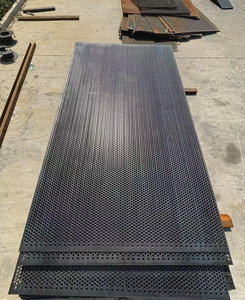
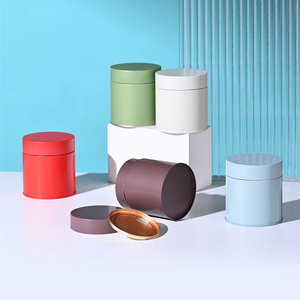
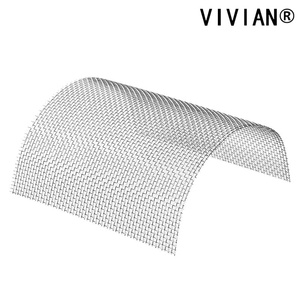
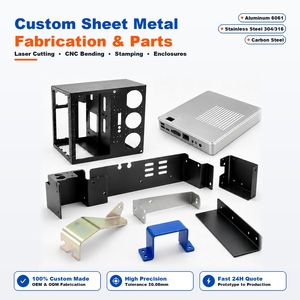
In industrial distillation columns, scrubbers, and absorption towers, the primary mechanism governing unit efficiency is the mass transfer coefficient across the two-phase interface. Tower packing assemblies are categorized structurally into random packing and structured packing. While random packing rings (such as Raschig rings, Pall rings, Intalox saddles, and Cascade Mini-Rings) are dumped randomly into the shell to maximize void fraction and interfacial area, structured packing consists of corrugated sheets arranged into defined geometric patterns, providing extremely low pressure drops at high hydraulic loads.
In harsh environments—specifically sulfur recovery units (SRU), sulfuric acid drying and absorption towers, thermal oxidizers, and chlorine gas processing facilities—metallic packings (such as austenitic stainless steels 304/316L) may suffer localized chloride stress-corrosion cracking or acid dissolution. Under these conditions, acid-resistant ceramic tower packings fabricated from carefully proportioned feldspathic and alumino-silicate clays serve as the baseline material standard. Dense-sintered ceramic packing rings offer high mechanical crushing strength, thermal stability up to 1000°C, and total chemical inertia against organic solvents, mineral acids, and oxidizing agents (excluding hydrofluoric acid).
A complete mass transfer column requires tight mechanical compatibility between the ceramic media bed and internal support systems. Ceramic random packing exerts considerable deadweight onto bottom retention structures. If the structural bed limiter or perforated base plate deflects, localized stress peaks occur, causing lower ceramic layers to crush and generate fines that bridge voids and prompt hydraulic flooding.
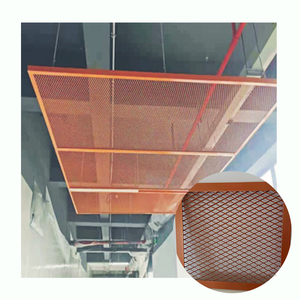
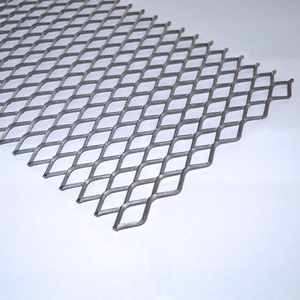
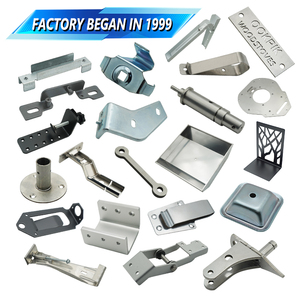
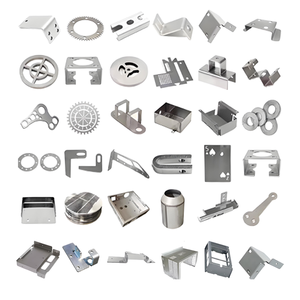
Leading Chinese manufacturing hubs approach mass transfer design with an integrated assembly philosophy: high-precision metallic fabrications—such as crack-free perforated retention plates, expanded diamond-mesh support grids, and multi-beam gas-injection distribution plates—work directly alongside high-purity ceramic rings. By engineering specialized sheet metal stamping and laser-cut tolerances down to ±0.02 mm, our production lines ensure that thermal expansion differences between ceramic beds and metallic column shells never lead to bypassed gas streams or collapsed support systems.
Strategic insights for procurement directors, plant engineers, and EPC contractors navigating evolving environmental benchmarks and operational footprints.
Post-combustion CO₂ capture involves aggressive amine solvents and high gas throughputs. Procurement is shifting rapidly toward specialized ceramics and third-generation modified rings designed with ultra-thin walls, lower bulk density, and larger geometric surface areas to reduce fan power requirements across immense flue gas absorption columns.
Industrial buyers no longer purchase general-grade ceramic packing. Specifications now precisely govern aluminum oxide (Al₂O₃) fractions: from standard porcelain (18-24% Al₂O₃) for basic sulfuric acid scrubbers, up to high-alumina compositions (70-99% Al₂O₃) designed to withstand sudden thermal shock and aggressive caustic flushes without surface micro-fissuring.
EPC firms are abandoning multi-vendor sourcing for column shells, support trays, and ceramic media. Sourcing teams prioritize integrated manufacturers that supply the structural internals, wire mesh mist eliminators, and ceramic packings under a single warranty, eliminating site dimensional mismatch and performance disputes.
Hydraulic efficiency, corrosion boundary limits, and mechanical durability profiles across core processing parameters.
| Performance Vector | Ceramic Random Packing (Intalox/Raschig) | Metallic Structured Packing (SS316L/Hastelloy) | Perforated / Screen Plate Systems |
|---|---|---|---|
| Acid Resistance (pH 0-5) | Exceptional (Immune to all except HF) | Moderate to Poor (Requires expensive Hastelloy) | Dependent on alloy selection |
| Maximum Service Temp | Up to 1,000°C (1,832°F) | 400°C – 800°C (Alloy dependent) | 400°C – 650°C |
| Specific Pressure Drop (ΔP) | Moderate (1.5 - 3.5 mbar/m) | Extremely Low (0.2 - 0.8 mbar/m) | High (Tray hydrostatic head dependent) |
| Thermal Shock Sensitivity | Moderate (Requires controlled heat ramps) | Extremely Low (Immune to rapid cycling) | Extremely Low |
| Initial Capital Cost (Capex) | Low to Moderate (Highly economical in bulk) | High to Very High (Driven by alloy costs) | Moderate (Tooling and stamping driven) |
| Fouling & Solids Tolerance | High (Easy to slurry wash or replace) | Low (Prone to channel clogging) | High (Accommodates large downcomers) |
Precision-led manufacturing infrastructure combining advanced press tooling, multi-axis laser fabrication, and strict metallurgical verification.
Every stainless steel support sheet, perforated retention grid, and deep-drawn canister is backed by raw material mill test certificates (EN 10204 3.1) and complete heat number tracking, matching rigorous oil & gas and petrochemical audit criteria.
Equipped with progressive stamping presses, automated CNC laser units, and high-tonnage hydraulic deep-drawing machinery, we fabricate column internals, trays, and housing components with sub-millimeter tolerances for clean, fast installation.
Serving over 20 countries worldwide—including the United States, Australia, UAE, Saudi Arabia, and Canada. All packings and components are secured in fumigated solid wooden crates with vapor corrosion inhibitor (VCI) linings to ensure zero transit damage.
Engineering parameters, verification testing, and delivery factors for chemical processing units.