China Top Welded Wire Mesh Manufacturer & Exporter

Heavy-Duty Industrial Mesh • Precision Engineered Filtration • Global Project Compliance

Certified Production Portfolio

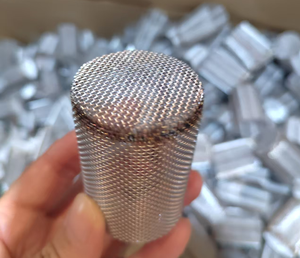
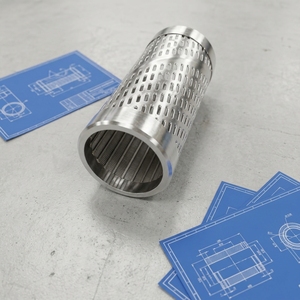
Precision Welded Wire Mesh, Screens & Formed Components

Engineered to withstand extreme industrial mechanical stress, aggressive chemical media, and stringent aperture tolerance limits across petrochemical, mining, infrastructure, and heavy processing applications.

Manufacturing Scale

Verified Production Capacity & Quality Metrics

Operating dedicated automatic resistance welding arrays and automated wire drawing plants certified under ISO 9001:2015, delivering traceable metallurgical integrity across five continents.

25+
Years Engineering Experience
1,000+
Global Industrial Clients
20+
Export Destination Nations
120+
Custom Dies & Mesh Profiles
Engineering Whitepaper • Market Intelligence

Next-Generation Industrial Mesh: Metallurgy, Automation & Procurement Shifts

A rigorous metallurgical overview detailing weld consolidation parameters, anti-corrosive coating developments, and cross-border procurement dynamics driving critical infrastructure projects worldwide.

1. Zinc-Aluminum-Magnesium (ZAM) Alloy Coatings

Traditional hot-dip galvanizing (HDG) is rapidly yielding ground to ternary alloy coatings containing 1.5% to 3.0% Magnesium and Aluminum. This chemistry forms a protective simonkolleite barrier that actively self-heals cut edges and resistance weld cross-points, expanding salt-spray chamber endurance from 1,000 hours to beyond 4,000 hours in coastal and petrochemical fence deployments.

2. Digital Resistance Spot Welding (RSW)

Variable line currents cause localized grain coarsening, heat-affected zone (HAZ) embrittlement, and burn-through. Contemporary high-speed mesh manufacturing mandates Medium Frequency Direct Current (MFDC) inverters operating at 1,000 Hz. This feedback loop adjusts forge force and discharge cycles dynamically within milliseconds, preserving parent-metal ductility and eliminating cold joints.

3. Complete Heat & Batch Traceability

EPC contractors in North America, Europe, and the Middle East strictly demand verifiable mill origin data. Procurement specifications increasingly require full EN 10204 3.1 certification covering ladle chemistry, yield tensile ratios, and shear peel resistance according to ASTM A1064 / BS 4483, guaranteeing integrity under structural concrete reinforcement or perimeter intrusion impact.

Material Selection Engineering Matrix

Evaluating wire alloys and surface treatments against mechanical, environmental, and thermal operational parameters.

Material / Treatment Grade Tensile Strength (MPa) Corrosion Mechanism Max Service Temp (°C) Primary Industrial Sector
Galvanized Low Carbon Steel (Q195/Q235) 450 – 650 MPa Sacrificial Zinc Barrier (50–80 μm) 180 °C Highway fencing, security cages, masonry reinforcement
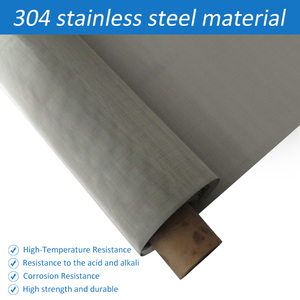
Austenitic Stainless Steel (AISI 304/304L) 520 – 720 MPa Passivated Chromium Oxide (Cr2O3) Film 800 °C Food processing, architectural cladding, filtration
Molybdenum-Stabilized Stainless (AISI 316L) 550 – 750 MPa Resistant to Chloride Pitting (PREN ≥ 23) 870 °C Offshore platforms, chemical processing, wellbore screens
Nickel-Chromium Superalloys (Hastelloy C-276 / Inconel 625) 760 – 980 MPa High resistance to wet chlorine, formic acid & crevice corrosion 1,000 °C Flue gas desulfurization, nuclear waste, high-temp demisters
Zinc-5% Aluminum-Mischmetal Alloy (Galfan) 500 – 680 MPa Eutectic binary passivation, micro-crack resistant 250 °C Mining screens, coastal infrastructure, gabion retaining systems
Manufacturing Excellence

Why International EPCs & Distributors Partner With Us

From primary wire drawing through precision CNC mesh welding, shearing, passivation, and container packing, our factory ensures uncompromising dimensional tolerance and punctual shipping execution.

Verified Raw Materials

Mill-sourced prime wire rod stock with strict control over carbon equivalents, phosphorus, and sulfur levels. Full EN 10204 3.1 MTCs supplied with each container batch.

In-House Secondary Fabrication

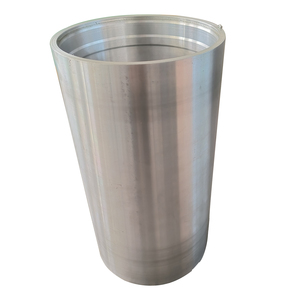
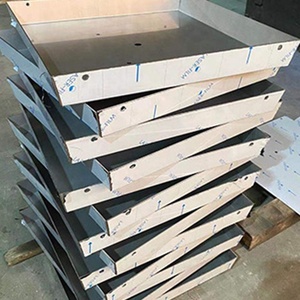
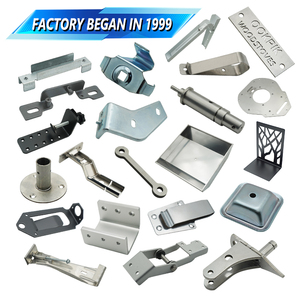
Beyond standard welded mesh rolls and sheets: in-house CNC laser profiling, bending, progressive deep-draw forming, and automated circumferential seam welding under one roof.

ISO & CE Quality Gates

Every lot undergoes calibrated shear testing at the weld intersections (exceeding ASTM A1064 criteria), eddy current tests, coating thickness measurement, and optical microscope aperture checks.

Seaworthy Export Logistics

Exporting to 20+ countries with customized fumigated wooden crates, waterproof synthetic barriers, metal strapping, and desiccants ensuring zero corrosion arrival at discharge ports.

Knowledge Base • Procurement FAQ

Frequently Asked Questions by Industrial Mesh Buyers

Clear, engineering-backed answers addressing weld integrity, ASTM standards, custom tolerances, and overseas containerized delivery.

How do you verify weld shear strength on welded wire mesh panels?
Weld shear strength is tested in accordance with ASTM A1064/A1064M and BS 4483 standards. Individual cross-wire intersections are placed in a calibrated tensile test jig where a vertical load is applied until shear fracture occurs. For structural concrete reinforcement mesh, the minimum average shear force in pounds-force must exceed 35,000 multiplied by the nominal area of the larger wire in square inches. We provide complete QA/QC test reports with each production batch.
What is the difference between Electro-Galvanized (EG) and Hot-Dip Galvanized (HDG) welded mesh?
Electro-Galvanized (EG) wire mesh deposits a smooth, bright zinc layer via electrolytic plating, typically yielding 10–25 g/m² (1.5–3.5 μm thickness). It is suited for dry indoor partitions, cages, or dry climate construction. Hot-Dip Galvanizing (HDG) immerses bare welded steel mesh into molten zinc at ~450°C, creating an alloyed iron-zinc intermetallic layer with 350–610 g/m² (50–85 μm thickness). HDG offers superior outdoor corrosion resistance and is required for marine, highway, and underground civil engineering.
Can you manufacture welded wire mesh in stainless steel 316L and high nickel alloys?
Yes. We regularly produce welded and woven mesh panels and cylinders in AISI 304, 304L, 316, 316L, and specialty alloys such as Hastelloy C-276, Inconel 600/625, Monel 400, and Titanium Grade 2. Welding parameters (current, cycle time, electrode force) are finely modulated under shielding gas configurations to eliminate carbide precipitation and maintain intergranular corrosion resistance.
What are your manufacturing tolerances for wire diameter and mesh opening?
Our standard manufacturing tolerances comply with ISO 9044 and ASTM E2016. For precision welded screens and fine micron filtration cloth, aperture tolerance is maintained within ±3% to ±5%, while wire diameters are drawn to within ±0.01 mm to ±0.03 mm. For heavy civil welded wire mesh, tolerances adhere to ASTM A1064, guaranteeing exact center-to-center pitch and overall sheet squareness within ±5 mm.
What parameters are required to receive an immediate technical quotation?
To provide an accurate technical and commercial proposal within 24 hours, please supply: 1) Wire material grade (e.g., SS304, HDG, Mild Steel); 2) Wire gauge/diameter (mm or gauge); 3) Mesh opening size (aperture center-to-center or clear opening); 4) Roll or panel dimensions (width × length); 5) Quantity (number of panels, rolls, or square meters); and 6) Required surface finish or post-welding treatments (e.g., pickling, passivation, epoxy powder coating).

Ready to Engineer Your Industrial Wire Mesh Solution?

Connect with our technical engineering desk for custom panel drawings, metallurgy consultation, or fast factory-direct pricing for your upcoming project.

Send an Inquiry