
- +91-9930498858Call / WhatsApp
- [email protected]Email Us
Engineered through cold-expansion shearing without material loss. Manufactured in compliance with ASTM F1263, EMMA 540-12, and DIN 791 standards across austenitic stainless steel, structural carbon steel, and architectural aluminum.
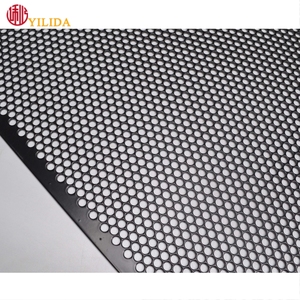
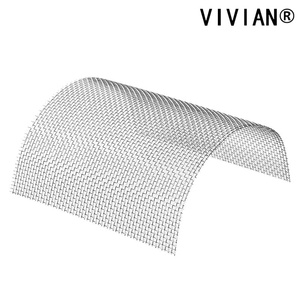
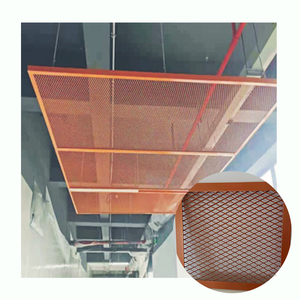
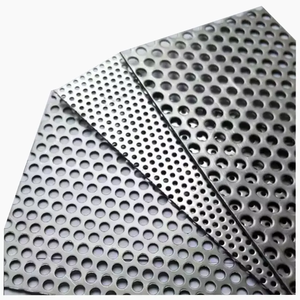
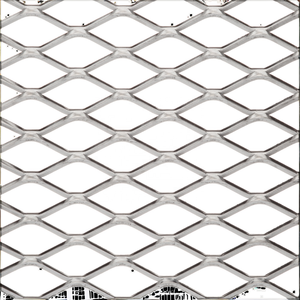
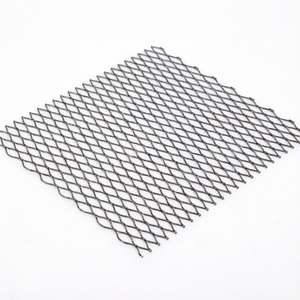
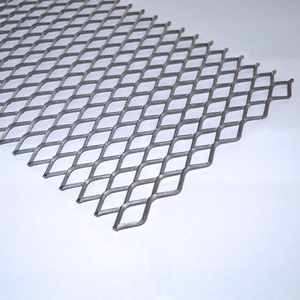
Evaluating structural integrity, open area hydrodynamic properties, load transmission, and material utilization index relative to perforated plates and woven wire mesh.
Expanded metal is formed via a progressive, continuous cold-expanding manufacturing cycle. During this process, solid metallurgical coil or sheet undergoes simultaneous precision shear-cutting and transverse tensile expansion. Unlike traditional perforated metal screens—which can discard between 25% and 65% of base sheet material as punched scrap slugs—expanded metal undergoes zero scrap loss, dramatically optimizing raw material yields and lowering project carbon footprints.
The resulting continuous diamond or hexagonal matrix features unbroken crystalline metal grains extending across knuckles and strands. In structural terms, this singular monolithic structure exhibits superior deflection resistance under localized impact loads. When subjected to shear forces, stresses disperse multidirectionally through the integral nodes, eliminating the weld joint degradation common in welded wire mesh assemblies.
| Evaluation Parameter | Expanded Metal (Standard Raised) | Expanded Metal (Cold Flattened) | Perforated Metal Plate | Industrial Woven Wire Mesh |
|---|---|---|---|---|
| Raw Material Scrap Loss | 0% (Completely scrap-free cold stretch) | 0% (Expanded and cold-rolled) | 25% – 65% (Punched slugs scrap) | 3% – 8% (Edge trim offcuts) |
| Strength-to-Weight Ratio | Exceptionally High (3D truss knuckle profile) | High (Uniform flat planar modulus) | Moderate (Punched holes weaken sheet) | Moderate (Friction-bound interlock) |
| Anti-Skid & Traction Index | Superior (Inherent raised angled facets) | Standard planar friction surface | Poor (Requires embossed dimpling) | Low to Moderate (Wire curvature) |
| Structural Rigidity | Unbroken monolithic grain flow; rigid | Flexible to Semi-Rigid depending on coil | Rigid, but prone to oil-canning warp | Non-rigid; requires outer frame tension |
| Acoustic / Sun Shielding | Directional deflection (30°–60° incident solar) | Planar line-of-sight screening | Line-of-sight perpendicular filtration | Diffuse scattering only |
| Impact Resistance | High energy absorption (Dissipates via web) | Uniform shock absorption | Prone to stress cracking at hole edges | Prone to strand slippage & unraveling |
Global supply chain evolution, sustainable infrastructure directives, and precision electrochemistry drive new specifications for expanded metal mesh procurement.
The accelerating transition toward green hydrogen electrolyzers, solid-state batteries, and next-generation fuel cells has triggered explosive demand for micro-expanded metals. Foil gauges down to 0.05mm in pure Nickel (Ni200/201), Grade 1 Titanium, and 316L Stainless Steel are replacing woven wire.
Commercial building envelopes increasingly demand passive solar heat gain coefficients (SHGC) under 0.35 without eliminating natural daylighting. Expanded aluminum mesh panels (Series 3003-H14 and 5052-H32) with 3D louvre strands are becoming the international standard for sustainable exterior skins.
International procurement regulations—specifically European CBAM (Carbon Border Adjustment Mechanism) and US Infrastructure compliance—require strict carbon accounting and material origin provenance. Leading tier-1 buyers require fully documented supply chains from raw coil to finished bundles.
Continuous capital investment in computer-controlled high-speed expanding presses, automated tension leveling lines, and robotic surface treatment ensures micron-level precision.
Microprocessor-controlled servo feeder presses allow synchronized stroke adjustment up to 600 strokes/min. Guarantees strand width tolerances within ±0.05mm, eliminating structural shear discrepancies along sheet lengths up to 6,000mm.
Heavy cold expansion generates internal residual stress tensors. Our 23-roller precision tension-leveling lines restore perfect sheet flatness, eliminating edge curling, camber, and dish warp, delivering plug-and-play facade cassettes.
Advanced hot-dip galvanizing baths achieving metallurgical bonding >85 microns (600g/m² zinc mass) in strict conformance to ISO 1461. Combined with electro-static thermoset fluorocarbon treatments, panels achieve 3,000+ hours neutral salt spray rating.
Beyond raw rolls, our fabrication workshop delivers fully framed panels, laser-cut U-edging, robotic perimeter welding, perimeter mounting brackets, and radius roll bending ready for drop-in site installation by EPC contractors.
Clear, engineering-backed answers addressing the most common technical parameters, manufacturing tolerances, international standards, and logistics workflows.
Leading EPC contractors, original equipment manufacturers, and overseas metal distributors across North America, the Middle East, Europe, and Australia trust our audited production mills.
Every batch is manufactured exclusively from prime-grade steel coils sourced from verified tier-1 mills (Baosteel, TISCO, POSCO). Heat numbers are stamped on all documentation, with material test reports (MTR) verifying tensile strength, yield limits, and elemental chemistry.
In-house CNC die tooling design, slitting, expanding, flattening, progressive stamping, deep drawing, and welding under one operational roof. Complete process control guarantees tighter dimensional repeatability, eliminating intermediary surcharges and lead-time delays.
Dimensional laser scanning, coating thickness gauges (magnetic & eddy-current), and tensile shear validation across every production shift. Third-party visual and laboratory inspections (SGS, TUV, BV, Intertek) are routinely welcomed and accommodated prior to container loading.
Over 25 years of smooth customs clearance and freight management spanning 20+ countries: USA, Canada, UAE, Saudi Arabia, Australia, Qatar, and the EU. Every package includes fumigation certification, HS code classification guidance, and sea-worthy steel-banded crating.
Share your required mesh style (SWD × LWD), strand width, thickness, alloy, and total square meters for an immediate engineering response.