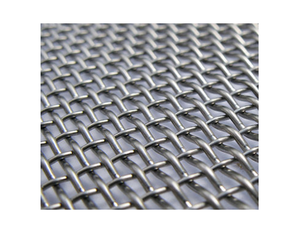

- +91-9930498858Call / WhatsApp
- [email protected]Email Us
Direct mill manufacturing conforming strictly to ASTM E2016-20, ISO 9044, and DIN 1210 standards. Engineered for solid-liquid extraction, gas demisting, and industrial sizing.
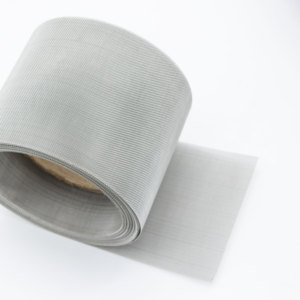
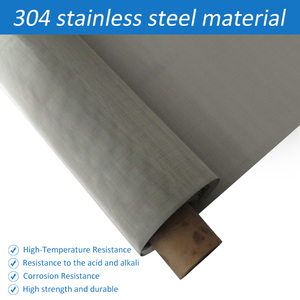
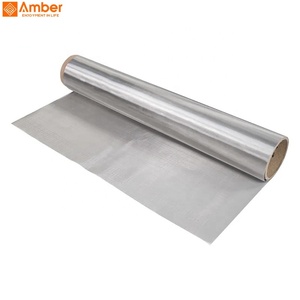
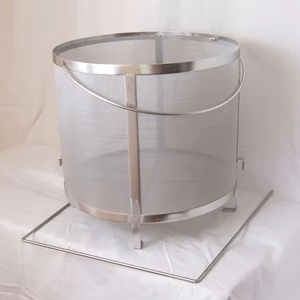
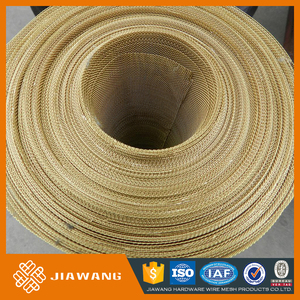
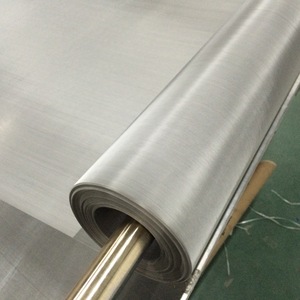
Technical evaluation of weave patterns, mechanical shear tolerances, and flow resistance for advanced chemical, pharmaceutical, and petrochemical separations.
Wire filter cloth efficiency is governed by the hydraulic resistance and geometry of the woven strands. The choice of weave dictates flow velocity, particle retention, and mechanical stability:
Operating environments require alloy matching to prevent intergranular attack, stress corrosion cracking (SCC), and pitting corrosion:
Wire cloth requires precise secondary conversion to integrate smoothly into separation hardware:
| Mesh Count (per Inch) | Aperture Size (Micron / µm) | Standard Wire Diam. (mm) | Open Area (%) | Primary Industrial Service |
|---|---|---|---|---|
| 20 Mesh | 850 µm | 0.40 mm | 46.2% | Granular separation, catalyst support beds, heavy intake strainers |
| 50 Mesh | 300 µm | 0.20 mm | 36.0% | Flour milling, bulk API crystalline separation, water treatment screens |
| 100 Mesh | 150 µm | 0.10 mm | 36.0% | Petrochemical fluid conditioning, paint & pigment filtration, powder classification |
| 200 Mesh | 75 µm | 0.05 mm | 36.0% | Fine chemical processing, hydraulic circuits, gas separation columns |
| 325 Mesh | 44 µm | 0.035 mm | 30.0% | High-purity electronic pastes, aerospace fuel filtering, fine pharmaceutical powder |
| 400 Mesh | 38 µm | 0.030 mm | 36.0% | Ultra-fine particle retention, high-grade analytical sieves, optical liquid clarification |
Anticipating international supply-chain restructuring, automated quality control, and the rising demand for higher energy efficiency in separation equipment.
Procurement departments are shifting away from manual batch sampling to in-line optical checking:
Global procurement teams in North America, the EU, and the Middle East are formalizing supply-chain standards:
Industrial demand is steadily migrating from standard loose-woven meshes toward monolithic multi-layer sintered composites:
Combining heavy-gauge engineering capabilities with fine wire weaving to provide complete fluid separation solutions under one roof.
Every roll of wire filter cloth is backed by comprehensive PMI material verification and physical test sheets, certifying grade integrity, chemical composition, and mechanical properties.
From primary wire weaving to high-speed progressive stamping, laser profiling, and deep drawing, our fully equipped facilities reduce project handoffs and minimize lead times.
With ongoing distribution across 20+ export territories, we handle all packing and logistics—from seaworthy timber crates to export customs clearance—without unexpected delays.
We review your operational data sheets, fluid properties, flow velocities, and solids loading before fabrication, helping you select wire cloth that fits and performs as expected.
Direct technical answers to common questions about pore ratings, weave types, pricing, and factory lead times.
Nominal micron ratings indicate the average pore size across a weave pattern, representing an approximate filtration threshold where 60% to 90% of challenging particulates are retained. Absolute ratings designate the largest pore dimension determined under bubble-point testing (ASTM E-128), guaranteeing 99.9% glass bead retention. For high-pressure hydraulics, critical drug synthesis, and high-purity fuels, specify absolute micron ratings to prevent oversized particle bypass.
AISI 304L is suitable for clean services, ambient water screening, edible oil purification, and mechanical shielding. AISI 316L includes 2.0% to 3.0% Molybdenum, significantly raising its Resistance Equivalent Number (PREN) against chloride pitting, organic acids, and aggressive marine atmospheres. In addition, its low-carbon chemistry (≤0.03% C) prevents carbide precipitation during welding, preserving corrosion resistance along seam lines.
To receive a complete engineering proposal, provide the alloy grade (e.g., 304, 316L, Hastelloy), mesh count per inch or aperture size in microns, wire diameter (warp and weft), weave style (plain, twill, or Dutch), total surface dimensions (roll length/width or cut part drawings), and any post-processing requirements such as edge treatment, calendering, or ultrasonic degreasing.
Fine-micron wire cloth (100 to 500 mesh) is vulnerable to crushing and edge damage during transport. Export rolls are wound over reinforced PVC or cardboard cores, wrapped with waterproof paper and PE bubble barrier films, and packed inside fully enclosed fumigated wooden cases. Individual panels, discs, and deep-drawn strainers are separated with paper or foam dividers and sealed in corrosion-inhibiting plastic wrapping.
Connect directly with our metallurgical engineers to discuss weave selections, custom slitting, or volume production quotes. Direct factory response within 12 business hours.
Get a Quote