
- +91-9930498858Call / WhatsApp
- [email protected]Email Us
Manufactured to critical ISO/ASTM industrial benchmarks with mill-certified alloys, sub-millimeter tolerances, and process-optimized hydraulic performance.
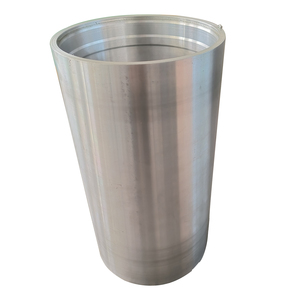

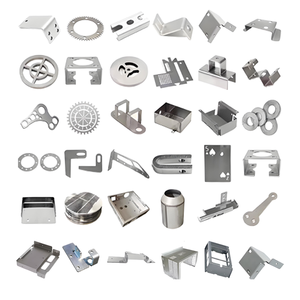
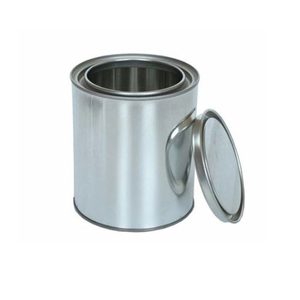
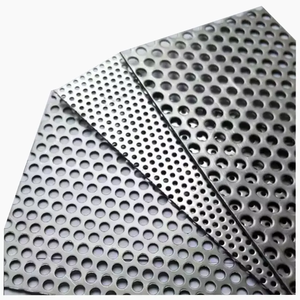
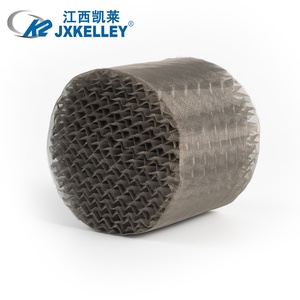
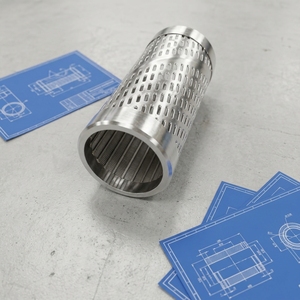
In modern industrial chemistry, petrochemical refinement, offshore oil exploration, and pharmaceutical synthesis, mass transfer efficiency is fundamentally governed by the interface dynamics within separation columns. As an industry-leading Custom OEM Sheet Metal Packing Supplier & Exporter, our engineering footprint is anchored upon decades of technical research and proprietary manufacturing processes. Industrial mass transfer relies heavily on the physical interactions of liquid downflow and vapor upflow through structured and random packing media, fractionating column trays, and downcomers. A failure to control physical sheet metal tolerances, surface microstructure, or hydraulic distribution can lead to premature column flooding, high HETP (Height Equivalent to a Theoretical Plate), and excessive operational costs.
This technical whitepaper examines the thermodynamics, manufacturing mechanics, alloy selection parameters, and procurement methodologies essential for sourcing high-reliability sheet metal packing elements, deep drawn shells, and precision screen filtration products.
The overarching target in distillation, stripping, and absorption column design is to maximize geometric surface area (m²/m³) while minimizing frictional vapor pressure drop. Traditional random dump packing, such as Raschig rings or standard ceramic saddles, provides acceptable separation but suffers from liquid channeling, random nesting, and significant pressure drop at elevated vapor velocities (F-factor). In contrast, engineered corrugated sheet metal structured packings create continuous, oblique fluid flow channels that force intimate contact between vapor and liquid films without dead zones.
Structured sheet metal packings are fabricated by corrugating cold-rolled stainless steel or specialty alloy coils into precision triangular waveforms, typically angled at 45° (Y-type) or 60° (X-type) to the horizontal axis. Adjacent sheets are assembled with opposed corrugations, establishing cross-mixing flow paths throughout the bed. By micro-perforating the sheet and imparting chemical or mechanical surface texturing (embossing or lancing), the liquid film resistance is drastically reduced, ensuring complete wetting even at ultra-low liquid irrigation rates down to 0.2 m³/(m²·h).
| Packing / Internal Geometry | Specific Surface Area (m²/m³) | Pressure Drop (ΔP per Stage) | Fouling Propensity | Primary Industrial Use-Case |
|---|---|---|---|---|
| Wire Gauze Structured Packing (BX/CY) | 450 – 750 | Ultra-Low (< 0.3 mbar) | High (Clean services only) | High-vacuum pharmaceutical APIs, isomers, fine chemicals |
| Corrugated Sheet Metal Packing (250Y/350Y) | 200 – 400 | Low (0.4 – 1.0 mbar) | Low to Moderate | Crude oil atmospheric/vacuum towers, LNG demethanizers |
| Precision Metal Random Rings (Pall/Mini-Rings) | 110 – 230 | Moderate (1.5 – 3.0 mbar) | Very Low | Acid gas scrubbers, CO2 capture units, sour water strippers |
| Fixed / Floating Valve Fractionation Trays | Dynamic hydraulic active area | Moderate to High (3 – 7 mbar) | Moderate | Main refinery fractionators, high liquid capacity services |
| V-Wire Continuous Slot Welded Screens | 35% – 50% open slot ratio | Engineered differential head | Extremely Low (Self-cleaning) | Heavy crude sand management, deep well water intake, resin retainers |
Corrosion failure in chemical fractionating columns or wellbore screen environments represents catastrophic financial loss. Consequently, our sheet metal stamping, deep drawing, and wire manipulation processes operate under stringent chemical and mechanical composition checks. Sourcing certified prime coils from Tier-1 mills guarantees strict adherence to low-carbon variants and specialty interstitial formulations:
Precision stamping of thin metal gauge packing and deep drawn components requires acute mastery of springback compensation, plastic deformation kinetics, and tribological die lubrication. When producing seamless deep drawn parts—such as cylinder shells, capacitor housings, and custom filter end-caps—the material is stressed beyond its yield point without reaching ultimate tensile failure. Utilizing finite element sheet-forming simulation (FEA) allows our toolmakers to optimize blank holder forces, draw radiuses, and die clearance, eliminating wrinkling, wall thinning, and micro-tearing.
In our high-speed progressive metal stamping departments, multi-stage modular tooling maintains tolerances within ±0.02 mm. Consistent burr-free edge punching protects delicate wire gauze weaves and guarantees that downstream mass transfer column packing modules seat perfectly within the column shell inner diameter (ID), completely eliminating peripheral vapor bypass.
The global industrial procurement landscape for mass transfer equipment and custom metal fabrications is witnessing a structural transformation. Chief Procurement Officers (CPOs) and Lead Process Engineers are abandoning fragmented purchasing strategies in favor of vertically integrated, resilient supplier partnerships. Several notable trends dictate current procurement decisions:
Looking into the next decade, the convergence of additive manufacturing, computational fluid dynamics (CFD), and automated robotic micro-welding is driving radical innovations in mass transfer packing:
Combining 25+ years of Indian manufacturing mastery with international compliance and global supply chain readiness.
Every sheet, coil, and wire product is sourced exclusively from established tier-1 primary producers (such as Jindal). Furnished with rigorous EN 10204 3.1 MTCs, heat numbers, and comprehensive laboratory chemical analysis.
Complete integration under one roof: multi-ton progressive stamping, hydraulic deep drawing presses, custom wire weave looms, corrugation lines, CNC punching, and laser fabrication to eliminate subcontracting markups.
Trusted supplier to EPC contractors, refinery operators, and industrial distributors across the United States, UAE, Saudi Arabia, Australia, Canada, Qatar, Oman, Kuwait, and European markets with flawless documentation.
Our senior chemical and mechanical engineers evaluate your vapor-liquid loading datasheets, operating pressures, temperatures, and turndown parameters to configure optimal tray, packing, or distributor geometries.
Engineered logistics protection: heavy-duty treated timber crates, anti-corrosion barrier wrapping, vibration-isolated banding, and custom segmented labeling for swift on-site manway insertion.
Straightforward technical answers to critical engineering, inspection, and commercial contracting inquiries.
Structured sheet packing is unequivocally preferred in vacuum distillation, temperature-sensitive operations, and plant capacity revamps because it delivers a dramatically lower pressure drop per theoretical stage (<0.5 mbar/HETP) compared to trays. Fractionating trays (sieve, valve, or bubble cap) are specified for high fouling conditions, heavy liquid rates, slurries, or when wide turndown flexibility is required at atmospheric and high pressure.
For custom sheet metal packing or internals, provide: inner column diameter (ID), packed bed height or tray count, specific alloy grade (e.g., SS316L, C-276), operating design pressure/temperature, vapor/liquid flow rates, and detailed CAD/PDF drawing sheets. For wire mesh screens or perforated filters, include mesh count, wire diameter, open area percentage, and cut-to-size dimensions.
Yes. Our in-house tooling facility designs and manufactures hardened progressive stamping and deep drawing dies capable of sustaining tolerances down to ±0.02mm. We regularly process repeat OEM production orders exceeding 100,000 units while executing CMM inspection checks to ensure rigorous geometric stability across batches.
We welcome third-party inspection agencies such as SGS, Bureau Veritas, DNV, TUV, and Lloyd's Register. Our quality management team provides raw material mill test certificates (EN 10204 3.1), positive material identification (PMI) logs, hydrostatic pressure test certifications, visual surface defect inspections, and coordinate dimensional verification reports prior to sign-off.
We offer versatile commercial arrangements including FOB, CIF, CFR, DDP, and DAP. Standard manufacturing lead times range from 2 to 4 weeks depending on batch volume and alloy availability. Fast-track air freight options are accessible for emergency shutdown turnaround parts, while maritime container consolidation sails weekly out of Nhava Sheva (JNPT) port.
Engage directly with our senior mass transfer engineering team. Submit your process data sheet, equipment specifications, or RFQs for rapid technical review and quotation.
Get a Quote