- +91-9930498858Call / WhatsApp
- [email protected]Email Us
Engineered to exact metallurgical constraints, international DIN/ASTM tolerances, and certified quality standard protocols.
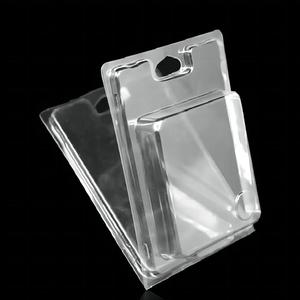
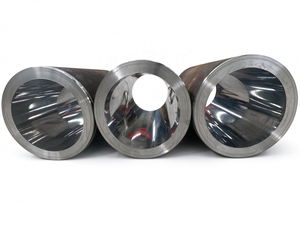
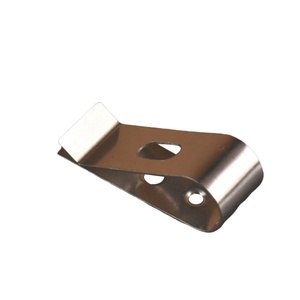
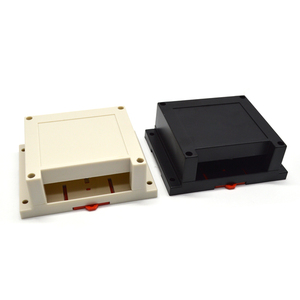
In high-reliability industrial manufacturing, precision metal stamping transcends traditional cutting and bending. True tier-one OEM contract fabrication demands an intimate understanding of crystallographic orientation, mechanical work-hardening exponents (n-values), plastic strain ratios (r-values), and stress relief thermodynamics. Modern automotive electrification, chemical mass transfer systems, and precision electronic infrastructure operate under extreme cyclical thermal loads and aggressive chemical atmospheres. As an established manufacturer and exporter operating since 1998, our engineering teams view custom sheet metal stamping as an integrated discipline that unifies progressive tooling geometry, hydraulic energy profiling, and strict metallurgical validation.
When forming austenitic stainless steels (such as AISI 304, 304L, 316, 316L) and specialized nickel superalloys (Hastelloy, Monel, Inconel), the rate of strain-induced martensitic transformation dictates dimensional repeatability. In multi-station progressive stamping and deep drawing of cylindrical shells, failure to accurately calibrate blank-holding pressures and inter-stage die radiuses induces severe wrinkling, orange-peel micro-fissures, or abrupt wall thinning. Ambani Metals eliminates these manufacturing anomalies through closed-loop engineering workflows: from DFM (Design for Manufacturability) feasibility simulations via advanced die-stress modeling, to in-house tool construction using hardened tungsten carbide and SKD11 alloy tool steels hardened to 60–62 HRC.
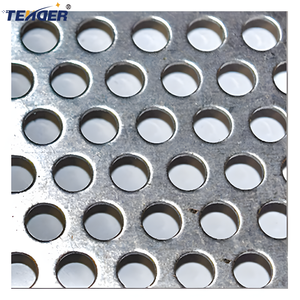
Furthermore, in mass transfer column internals, perforated screening trays, and chemical separation media, geometric precision directly controls hydraulic performance. A variation of merely ±0.1 mm across a 2,000 mm diameter bubble cap tray or sieve plate deck can create weeping, channeling, or liquid bypassing, fundamentally degrading chemical separation efficiency. By coupling high-tonnage mechanical stamping presses (ranging from 25 to 600 metric tons) with CNC optical scanning and automated levelers, our manufacturing operations deliver sheet flatness within 0.2 mm/m and burr limits well within DIN ISO 13715 Class f specifications.
| Stamping Discipline | Common Materials | Thickness Range | Standard Tolerance | Key Operational Advantage |
|---|---|---|---|---|
| Progressive Die Stamping | SS304, Brass, Phosphor Bronze, SPCC | 0.10 mm – 4.0 mm | ±0.010 mm | High-speed volume production, integrated piercing, coining, and tapping. |
| Deep Drawing (Seamless) | SS316L, Deep-Drawing Aluminum, Monel 400 | 0.30 mm – 6.0 mm | ±0.025 mm | Monolithic leak-proof shells, elimination of weld seams, work-hardened hoop strength. |
| Precision Punching & Perforating | Titanium Gr2, Inconel 625, Hastelloy C276 | 0.20 mm – 12.0 mm | ±0.030 mm | Custom pitch configurations, minimal burr formation, zero thermal distortion. |
| Heavy Gauge Forming | E355, Q345B, Hardox, 42CrMo Plates | 3.0 mm – 20.0 mm | ±0.050 mm | High structural yield capacity, specialized for pressure vessels & structural housings. |
| Micro-Precision Stamping | Beryllium Copper, Pure Nickel 200, Pure Copper | 0.03 mm – 0.8 mm | ±0.005 mm | Ultra-fine pitch terminals, electronic connectors, and EV battery busbar shunts. |
Direct mill relationships, in-house tooling toolrooms, and comprehensive metallurgy-to-freight execution.
In-house progressive die design, wire EDM cutting, slow-feed grinding, and CNC machining center ensure rapid tool proving, PPAP submissions, and lifetime tool maintenance without outsourced delays.
Direct supply agreements with premier primary mills. Every batch of stainless steel, Hastelloy, Monel, and alloy strip is accompanied by EN 10204 3.1 inspection certificates, optical spectrometer PMI, and heat-tracking.
Export packaging exceeding ISPM-15 fumigation standards: vacuum desiccated packing, custom wooden crates, and anti-corrosive VCI wrapping ensure safe transit across UAE, USA, Australia, and Canadian ports.
Hexagon 3D coordinate measuring machines (CMM), optical contour projectors, micro-hardness testers, and roughness profilometers verify every geometric tolerance and surface integrity parameter.
How supply chain resilience, ESG metrics, and digital engineering are redefining vendor qualification.
Multinational procurement executives are systematically moving away from single-source dependencies. Leading industrial buyers in North America and Western Europe now mandate a "China+1" or dedicated Indian manufacturing conduit to safeguard against geopolitical choke points, logistical tariffs, and raw material volatility. Partnering with an exporter with 25+ years of verified international deliveries ensures predictable contract manufacturing.
By late 2025 and into 2030, EU CBAM (Carbon Border Adjustment Mechanism) and global ESG regulatory frameworks are penalizing high-emission metal fabricators. Forward-looking procurement directors prioritize suppliers operating electric servo presses, employing closed-loop scrap recycling schemes, and sourcing flat-rolled stainless and aluminum coils from low-carbon, clean-energy smelters.
The procurement cycle for custom progressive dies has shifted from physical trial-and-error to complete virtual tool proving. Advanced CAD/CAM integration with FEA simulations (e.g., AutoForm, Dynaform) allows buyers to sign off on die clearances, springback compensation, and draw stress plots prior to cutting the first tool steel block, slashing prototype lead times by over 45%.
The global metal forming landscape is experiencing a fundamental technological pivot driven by two primary industrial transformations: the aggressive lightweighting required by electric mobility and aerospace systems, and the ultra-pure, high-efficiency separation demands of next-generation chemical, green hydrogen, and carbon capture facilities.
Servo-Electric Press Motion Profiling: Conventional flywheel mechanical presses deliver unalterable sinusoidal stroke profiles, severely limiting formability when manipulating advanced high-strength steels (AHSS), titanium grades, and delicate porous meshes. Modern servo presses allow our manufacturing technicians to dynamically program slide velocity, dwell times at bottom dead center, and multi-stage re-striking. This eliminates micro-cracking in high-strain deep drawing applications while dramatically enhancing die longevity.
Sensorized In-Die Tooling & Real-Time Metrology: Modern progressive stamping tools are integrated with piezoelectric acoustic emission sensors, laser positioning monitors, and eddy-current slug detection systems. If a slug pulls up or punch penetration force shifts by more than 3%—indicating sheet thickness variation or localized lubrication breakdown—the press instantly stops within milliseconds, safeguarding tool integrity and guaranteeing zero non-conforming parts escape into customer lots.
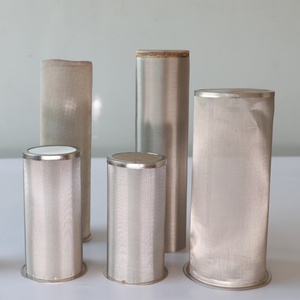
Hybrid Multi-Material Stamping: Industrial demand is shifting from uniform single-alloy components to multi-layer metallurgically bonded composites. Whether combining copper-aluminum clad strips for electric vehicle power battery busbars, or diffusion bonding woven stainless wire cloth to deep-drawn structural canisters for cross-flow chemical filters, Ambani Metals combines stamping forming with in-house vacuum diffusion bonding and micro-tig welding.
Direct answers addressing tooling ownership, alloy selection, dimensional standards, and export logistics.
The customer retains 100% legal ownership of custom progressive dies, deep drawing tools, and specialized fixtures once paid for. Ambani Metals provides guaranteed lifetime tool maintenance—covering regrinding, punch replacement, and die sharpening—at zero additional expense for the entire production lifespan of your component under active supply contracts.
Every commercial export consignment includes comprehensive Quality Documentation dossiers: EN 10204 3.1 Material Test Certificates (MTC) showing exact heat chemistry and mechanical tensile/elongation properties, Full Dimensional Inspection Reports (CMM/Optical), Plating/Passivation Certification, and PPAP Level 3 documentation upon request.
Austenitic stainless steels (SS304, SS316L) exhibit aggressive work hardening and elevated springback. We employ finite element compensation in die radii, utilize precision wire-EDM to maintain punch-to-die clearances within strict 8–10% material thickness margins, and utilize automated tumbling, vibratory deburring, or electrochemical polishing to eliminate burrs per DIN ISO 13715.
Rapid soft-tooling prototypes, laser-cut blanks, and single-station formed evaluation samples are typically dispatched within 7 to 12 working days. High-speed multi-stage progressive stamping dies and complex deep-drawing toolsets require 4 to 6 weeks, which includes tool manufacturing, T1 physical press trials, CMM dimensional qualification, and first-article submission.
Yes. In addition to commercial stainless and carbon steel grades, our toolroom engineers have extensive experience stamping and perforating nickel-molybdenum-chromium alloys (Hastelloy C22/C276), copper-nickel (Monel 400), heat-resistant Inconel 600/625, and Grade 2 Titanium for severe chemical environments, offshore applications, and high-temperature furnaces.
All ocean-freight shipments undergo multi-barrier preservation: thorough ultrasonic washing and drying, ultrasonic solvent degreasing, ultrasonic oil dip or passivation, sealed heavy-duty VCI (Vapor Corrosion Inhibitor) poly-bags containing active silica gel desiccant packs, and heavy-wall ISPM-15 wooden cases reinforced with steel strapping to prevent salt air ingress.
Submit your 2D/3D drawings (STEP, IGES, DWG) and process specifications. Our senior metallurgical and tooling engineers will provide a comprehensive DFM manufacturability review, strip layout optimization, and competitive export quotation within 24 hours.