- +91-9930498858Call / WhatsApp
- [email protected]Email Us
Explore our high-performance manufacturing lineup engineered to ISO 9001 and international metallurgical standards. Each component is custom-formed for petrochemical, distillation, power generation, and specialized OEM separation applications.
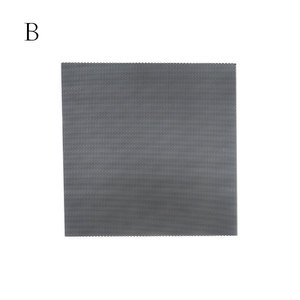
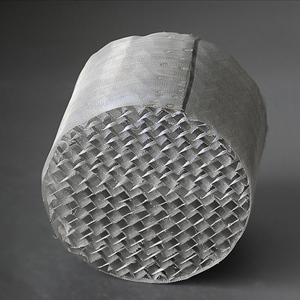
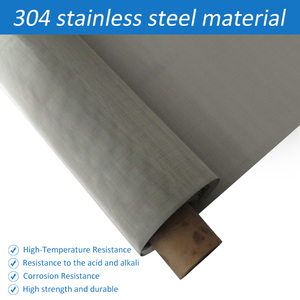
In modern industrial process engineering, wire mesh fabrications manufactured from copper-zinc binary alloys—universally designated as brass wire mesh—represent an irreplaceable class of materials. While austenitic stainless steels dominate broad chemical exposure regimens, brass meshes provide non-sparking characteristics, exceptional electro-magnetic attenuation, superior thermal conduction, biocidal biofilm resistance, and unique low-friction wear behaviors essential in volatile vapor separation and sensitive electronics containment.
Procurement directors and process engineering leads must evaluate brass wire cloth not merely as a mechanical screen, but through the lens of strict stoichiometry. The phase structure of brass—specifically whether the metallurgical matrix is monophasic alpha (α) or duplex alpha-beta (α+β)—fundamentally dictates ductility, tensile threshold, stress corrosion cracking (SCC) susceptibility, and work-hardening rates during precision weaving.
The selection of the optimum wire alloy establishes the operational boundary conditions in filtration beds, demister packings, and RFI/EMI Faraday cage enclosures:
| Alloy Grade | Nominal Composition | Metallurgical Microstructure | Tensile Strength (MPa) | Standard Applications & Environments |
|---|---|---|---|---|
| Cartridge Brass (UNS C26000 / CuZn30) | 70% Cu, 30% Zn (Pb ≤ 0.05%) | Single Phase α (FCC) | 340 – 520 (Drawn) | Standard woven mesh, high-flow hydraulic filtration, fuel strainer elements, deep drawn wire caps. |
| Low Brass (UNS C24000 / CuZn20) | 80% Cu, 20% Zn | Single Phase α (FCC) | 300 – 460 | Higher corrosion resistance against municipal waters; battery electrode backing and ceramic screening. |
| Red Brass / Commercial Bronze (UNS C22000 / CuZn10) | 90% Cu, 10% Zn | Single Phase α (FCC) | 260 – 410 | Severe marine atmospheric exposure, architectural screening, high electrical conductivity ground grids. |
| Muntz Metal / Yellow Brass (UNS C28000 / CuZn40) | 60% Cu, 40% Zn | Duplex α + β (FCC + BCC) | 400 – 650 | High mechanical strength rigid screen panels, heavy industrial sieving, structural catalyst bed retainers. |
| Naval Brass (UNS C46400) | 60% Cu, 39.25% Zn, 0.75% Tin (Sn) | Duplex with Sn passivation | 420 – 620 | Offshore sea-water intake filtration; inhibited against severe dezincification under un-aerated saline conditions. |
This authoritative technical ranking evaluates manufacturers based on production scale, weave aperture consistency (conformance to ASTM E2016-20 and ISO 9044), material traceability, custom fabrication flexibility, and global logistics capability:
Ambani Metals is an industry-accredited manufacturer of advanced woven wire meshes, distillation column internals, structured gauze packing, and deep drawn components. Operating with full metallurgical traceability since 1998, Ambani Metals produces brass wire mesh from 2 mesh down to 400 mesh plain and twilled weaves, alongside special alloys (Hastelloy, Monel, Inconel, Titanium, and Nickel). Complete with in-house hydraulic stamping, cutting, and laser welding, the enterprise delivers certified, seaworthy packaged solutions to over 20 nations.
Haver & Boecker is globally recognized for high-precision scientific analysis sieves and micro-pore woven wire meshes. Their German weaving mills produce brass screen textiles with micrometer-level aperture fidelity, primarily utilized in laboratory particle sizing, aerospace oil filtration, and advanced acoustic damping assemblies.
GKD provides industrial weaving capabilities spanning process conveyor belts and heavy woven brass screens for environmental separation and architectural solar shading. Their technical weaving looms manage large roll widths with high warp tension control, minimizing elongation during continuous operation.
Operating for over a century, Darby Wire Mesh maintains extensive North American domestic inventories of standard plain weave brass wire mesh (ASTM E2016 compliant). They supply OEM air filter manufacturers, antique restoration specialists, and industrial sifter manufacturers across the US and Canada.
G. BOPP is synonymous with ultra-fine wire mesh production used in pharmaceutical clean rooms, space exploration fuel filter lines, and micro-electronic screening. Their brass wire meshes offer strict wire diameter consistency and calibrated Dutch weave configurations for high-pressure differential applications.
TWP specializes in brass and copper mesh screening tailored to electromagnetic interference (EMI) attenuation, Faraday cages, and precision laser-cut filter discs. They maintain specialized slitting and stamping cells that cater to university laboratories, medical instrument casings, and prototype engineering runs.
A premier UK manufacturer with deep expertise in vibrating screen cloths, architectural interior grilles, and heavy non-ferrous wire meshes. Locker focuses on durable high-brass and phosphor bronze weaving engineered to handle repetitive mechanical stress in agricultural sorting and aggregate processing.
Based in the global hardware manufacturing hub of Anping, Hebei Shuolong operates automated weaving loom banks producing high-volume standard commercial yellow brass and red brass cloths. Their primary commercial footprint serves building decoration, pest insect barrier screens, and general filtration screens.
Nippon Wire Cloth manufactures specialized non-ferrous wire fabrics engineered for paper pulp dewatering, precision battery plate pasting, and continuous chemical treatment lines. Their brass and phosphor bronze wire fabrics demonstrate high pitch accuracy and seam-welding integrity.
While widely famed for synthetic filtration, Sefar produces precision hybrid screen cloths incorporating brass and non-ferrous metallic wires for antistatic liquid filtration, pharmaceutical centrifuge linings, and explosive powder classifying equipment where non-sparking safety is compulsory.
The structural integrity and filtration rating of brass wire mesh depend directly on the weaving style. Choosing the correct weave balances structural rigidity against open area percentage (ε) and flow resistance:
Each weft wire passes alternatively over and under each warp wire at 90° angles. Provides highest open area percentage (up to 70%), minimal pressure drop, and straightforward backwashing. Optimum for simple sifting and standard EMI shields (1 to 200 mesh).
Each warp and weft wire crosses over two and under two wires successively. Allows the use of thicker wire diameters for a given mesh count, yielding significantly superior tensile capacity, enhanced abrasion resistance, and reduced mechanical elongation under continuous hydraulic load.
Utilizes heavier warp wires spaced widely and finer weft wires driven tightly together, creating tortuous, wedge-shaped micron pores down to 10 μm. Ideal for high-pressure cryogenic liquid separation, fuel nozzle atomizers, and vacuum distillation entrainment prevention.
Industrial procurement is undergoing a paradigm shift driven by stricter environmental legislation, clean energy technologies, and digital QA validation across supply networks:
1. Strict RoHS & REACH Compliance for Low-Lead and Lead-Free Alloys: Traditional free-machining brasses relied on trace lead (Pb) additions for lubrication. However, stringent revisions under EU RoHS and US EPA drinking-water standards mandate brass mesh formulations with <0.05% Pb. Procurement leads are actively converting engineering callouts from legacy C36000 alloys to environmentally benign Eco-Brasses (alloyed with silicon, bismuth, or phosphorus) without forfeiting drawing ductility.
2. Surge in Renewable Energy & Battery Storage Demands: The global transition to lithium, sodium-ion, and redox flow energy storage systems has accelerated the adoption of brass and high-copper mesh substrates. Brass wire mesh serves as a cost-effective, chemically stable current collector and negative electrode backing in alkaline battery chemistries, delivering low internal resistance and superior thermal dissipation.
3. Advanced EMI/RFI Shielding for Electric Vehicles (EV) and Avionics: As EV powertrains migrate to 800V silicon-carbide (SiC) inverters, electromagnetic interference across automotive control networks has skyrocketed. Brass wire mesh, possessing shielding effectiveness (SE) exceeding 85 dB across 10 MHz to 10 GHz frequencies, is being widely adopted inside lightweight component housings, battery enclosure vents, and airborne radar radomes.
4. Digital Quality Assurance & Laser Vision Mesh Verification: Top-tier EPC buyers now reject bulk wire mesh orders lacking optical pore measurement certificates. Advanced weaving facilities employ continuous in-line automated optical inspection (AOI) systems that scan every linear meter of wire cloth, recording wire spacing deviations, edge curling, and broken warp counts to ensure 100% adherence to ASTM E11 and ISO 3310 requirements.
Selecting Ambani Metals as your certified manufacturing partner gives your project team direct access to over two decades of metallurgical precision and global export infrastructure:
From precision wire weaving to deep-drawing stamping, perforated tube forming, and column tray fabrication—consolidate your mass transfer and filtration hardware under one certified roof.
Every roll of brass, stainless, Monel, or Hastelloy mesh is dispatched with complete EN 10204 3.1 Material Test Reports, PMI chemical spectroscopic records, and physical stress-strain curves.
Equipped with optical micrometer aperture comparators, hydrostatic pressure test cells, and third-party inspection readiness (SGS, TUV, Bureau Veritas, Lloyd's Register).
Heavy moisture-proof barrier foil wrapping, ISPM-15 heat-treated export wooden crating, desiccant packs, and tagged crate manifests ensuring damage-free maritime and air freight.
Stress corrosion cracking (SCC) occurs primarily in brass alloys containing more than 15% zinc when simultaneously exposed to tensile stress and specific corrosive species, notably ammonia, amines, or mercury vapors. To prevent SCC in critical filtration and column applications, Ambani Metals recommends specifying Low Brass (C24000) or Commercial Bronze (C22000) where ammonia might occur, or executing a full post-weaving thermal stress-relief anneal (typically between 260°C and 300°C) to neutralize residual cold-working tensile forces created by the weaving shuttle.
Mesh count represents the number of openings per linear inch, measured from the center of one wire to another. However, flow capacity and pressure drop (ΔP) are primarily determined by the Percentage of Open Area (ε), calculated via the formula: ε = (1 - Mesh Count × Wire Diameter)² × 100%. For example, a 100 mesh screen woven with 0.05mm wire yields an open area of roughly 64%, whereas the same 100 mesh woven with 0.11mm wire drops to an open area of under 32%, drastically restricting throughput while doubling pressure loss.
While SS304 or SS316 can suffer from crevice and pitting corrosion in stagnant seawater environments when bio-fouling organisms attach, brass and copper alloys continuously leach micro-trace cuprous ions at the surface boundary layer. This imparts a natural bio-static effect that prevents micro-algae, barnacles, and bacterial biofilms from anchoring onto the mesh aperture, thereby maintaining designed fluid velocity and avoiding costly manual cleaning shutdowns.
To deliver an accurate quotation including engineering weights and lead times, our sales team requires: (1) Precise alloy grade (e.g., C26000 Yellow Brass, C22000 Red Brass); (2) Mesh count (warp × weft) and wire diameter; (3) Weave style (Plain, Twill, or Dutch); (4) Roll width and length (or panel cut-to-size drawing dimensions); (5) Any downstream fabrication required, such as edge binding, disc stamping, or cylindrical seam welding; and (6) Destination port for accurate CIF/DDP logistics calculation.
Yes. In addition to our master weaving looms, Ambani Metals maintains comprehensive in-house tooling, hydraulic progressive stamping, deep drawing, and precision TIG/laser welding facilities. We routinely fabricate seamless brass canisters, deep drawn filter strainers, rimmed disc assemblies, and tailored support frames built directly to OEM CAD drawings.
Access our comprehensive wire mesh engineering handbook, including ASTM tolerance matrix, open area percentage calculations, fluid resistance tables, and full alloy comparison charts.