
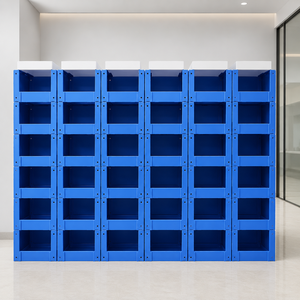
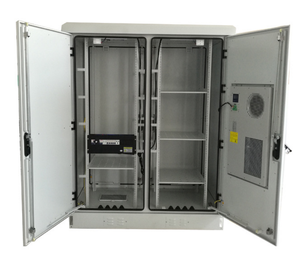
Featured Filtration & Industrial Enclosure Portfolio
Custom-fabricated porous mesh discs, continuous stamping screens, and industrial protective housings manufactured under strict ISO 9001:2015 quality assurance.
Technical Whitepaper & Engineering Standards
High-Precision Filter Screen Discs: Morphologies and Fluid Mechanics
A rigorous examination of wire cloth weaving mechanics, sinter-bonding matrices, hydraulic resistance, and dimensional integrity in critical solid-liquid and gas filtration systems.
In modern continuous process industries—spanning petrochemical fractionating, polymer melt extrusion, active pharmaceutical ingredient (API) crystallization, and aerospace hydraulic management—the filter screen disc stands as the ultimate barrier against particulate contamination and mechanical fouling. As a preeminent China filter screen disc manufacturer and supplier, our engineering paradigm moves far beyond simple cut-and-stamp operations. We operate at the intersection of metallurgy, fluid mechanics, and micronic precision engineering, supplying OEM engineering firms and plant operators in over 20 countries with calibrated media that exhibit zero-defect repeatability.
The operating performance of an industrial filter screen disc is governed by its hydraulic resistance (differential pressure drop, ΔP), absolute particulate retention threshold (β-ratio), structural rigidity under bursting or reverse-flow conditions, and metallurgy-dependent resistance to localized chemical corrosion. When molten plastics enter high-capacity spin packs at temperatures exceeding 320°C and pressures exceeding 25 MPa, or when corrosive chlorides transit high-temperature distillation trays in petrochemical towers, ordinary filtration media suffer from wire shifting, pore elongation, media migration, and catastrophic fatigue collapse.
Single-Layer Wire Cloth Discs
Fabricated using high-speed stamping presses from calibrated plain weave, twill weave, or Dutch weave rolls. Featuring precision-sheared burr-free edges, these discs are the industry benchmark for low-viscosity fuels, hydraulic return lines, and screening gaskets where dimensional diameter tolerances must stay within ±0.05 mm.
Multi-Layer Spot-Welded Packs
Combining multiple mesh densities (coarse protective drainage mesh, intermediate bridging layers, and ultra-fine retention cloth). Precision resistance welding bonds the assembly at strategic coordinates without blinding filtration pores, preventing pack disassembly inside high-velocity fluid conduits.
Compressed Edge & Rimmed Discs
Encapsulated with cold-rolled U-profile aluminum, brass, or austenitic stainless steel rims. Rimmed boundaries prevent loose warp/weft wire fraying, ensure gas-tight sealing against housing internal faces, and enhance operational lifetime in heavy polymer melt screens.
Metallurgical Geometries: Selecting Weave Topologies for Process Demands
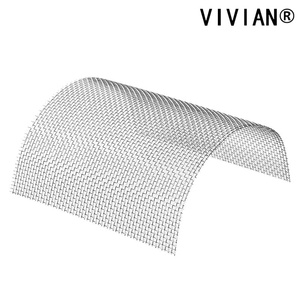
The pore configuration of wire mesh determines how flow streamlines traverse the medium. While standard square plain weave provides maximum open area for sieving dry particulates, depth-filtration operations and continuous polymer processing mandate specialized Dutch weaves. In Plain Dutch Weave (PDW), heavy warp wires combined with densely spaced fine weft wires form wedge-shaped triangular interstitial voids, providing enhanced cake-holding capability. For sub-20 micron absolute cutoffs, Twill Dutch Weave (TDW) and Reverse Dutch Weave (RDW) introduce a double-layer interlocking matrix capable of withstanding severe forward-and-reverse flow surges without aperture distention.
For conditions where high pressure differential could rupture conventional loose wire cloths, our sinter-bonded laminate discs represent the state of the art. Through vacuum diffusion bonding at temperatures just below solidus point (typically 1120°C to 1180°C under 10-3 Pa vacuum), the individual contact nodes of 5 to 7 layers of wire cloth fuse molecularly. This diffusion mechanism transforms ductile, shifting wire meshes into a rigid, monolithic porous plate boasting calibrated bubble-point pore sizes from 0.5 μm to 200 μm that resist channel formation even under 200 bar mechanical loading.
| Alloy Grade | Nominal Composition | Max Temp (°C) | Key Chemical Resistance Strengths | Typical Disc Applications |
|---|---|---|---|---|
| AISI 304 / 304L | 18Cr - 8Ni - Low C | 550°C | Atmospheric oxidation, food acids, neutral water | Food & beverage, general hydraulic oil, air intake |
| AISI 316 / 316L | 17Cr - 12Ni - 2.5Mo | 650°C | Superior pitting & crevice resistance in chlorides | Pharma crystallization, fine chemical synthesis, marine filters |
| 904L (UNS N08904) | 20Cr - 25Ni - 4.5Mo - 1.5Cu | 400°C | Sulfuric acid across full concentrations, phosphoric acid | Fertilizer manufacturing, flue gas condensate filtration |
| Hastelloy C-276 | 57Ni - 16Mo - 16Cr - 4W | 800°C | Wet chlorine, hypochlorites, strongly oxidizing acids | Sour gas wells, chlorination systems, aggressive catalysts |
| Monel 400 | 67Ni - 30Cu - 2Fe | 450°C | Hydrofluoric acid, brine, high-velocity seawater cavitation | Offshore platform desulfurization, alkylation catalysts |
| Inconel 625 | 60Ni - 22Cr - 9Mo - 3.5Nb | 980°C | High-temperature cyclic oxidation, hot sulfur attack | Aerospace thruster nozzles, thermal waste incineration |
End-to-End In-House Manufacturing
Why Source From Our Facilities: Technological Competence
From metallurgical wire drawing and precision high-speed weaving to multi-stage progressive deep drawing and certified cleanroom packaging.
Tooling & Progressive Dies
Over 1,200 active die sets in stock. Our internal tool and die machining center designs high-precision carbide dies for burr-free single or multi-layer rim crimping down to ±0.02 mm concentricity.
Deep Drawing & Stamping
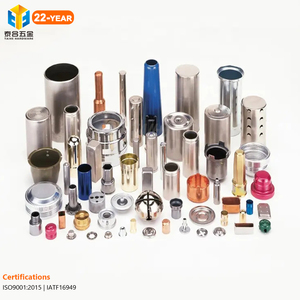
Equipped with 25T to 300T hydraulic and eccentric mechanical stamping presses capable of drawing seamless filter cups, cylindrical strainers, and complex flanged covers with zero wall thinning.
Ultrasonic Cleanroom Washing
All finished disc packs undergo 5-stage automated ultrasonic degreasing and multi-cascade DI water rinses to eliminate all stamping lubricant residues, meeting Class 100 cleanroom packaging standards.
Metrology & Traceability
Every batch is matched with Mill Test Certificates (EN 10204 3.1), raw material heat-number tracking, bubble-point pore size verification (ISO 4003), and automated optical dimensional inspection.
25+
Years Manufacturing Experience
1,000+
Global Industrial Clients
20+
Export Nations Worldwide
100%
Certified MTR & ISO Quality
Supply Chain & Market Intelligence
Future Procurement Trends in Industrial Filtration Discs
Actionable insights for procurement managers, engineering EPC contractors, and global supply chain directors navigating raw material markets and technological shifts.
1. Transition Toward Sintered Composite Laminates
Industrial procurement teams are actively swapping single-layer wire cloth screens for 5-layer diffusion-bonded sintered mesh discs. Although sintered media involve a higher initial capital outlay, their total cost of ownership (TCO) drops significantly because they can be backflushed, chemically pickled, and ultrasonically cleaned up to 30 times without losing nominal pore accuracy. In hot-gas refining and lithium battery electrolyte purification, sintered discs eliminate the operational catastrophe of broken loose wires entering downstream centrifugal pumps.
2. Decarbonization and Circular Alloy Reclamation
With the advent of the EU Carbon Border Adjustment Mechanism (CBAM) and corporate ESG initiatives, B2B buyers now mandate low-carbon manufacturing records and material circularity. As an industry-forward Chinese supplier, we utilize raw coils derived from high-efficiency EAF (Electric Arc Furnace) metallurgical sources with verifiable recycled stainless contents exceeding 70%. Our localized stamping skeleton scrap recycling loop mitigates waste and protects global clients from volatile alloy surcharges.
3. Automated Optical Sorting and Zero-Defect Guarantees
Manual sampling inspection is no longer acceptable for high-speed automated robotic assembly lines. Contemporary procurement contracts mandate automated machine-vision optical sorting that inspects 100% of stamping discs at high frame rates. Dimensional deviations, edge burrs beyond 10 μm, or interstitial weave defects are ejected automatically, ensuring automated pack-loading machines in Germany, the US, or Japan experience zero line stoppages.
4. Supply Chain Regionalization & Buffer Stock Warehousing
Geopolitical trade shifts and maritime freight volatility have made just-in-time inventory strategies high-risk. Forward-looking procurement programs increasingly partner with Chinese manufacturers that provide custom framework contracts and consignable inventory stocking. By setting 6-month safety stock buffers for non-standard custom rimmed discs, industrial processing plants secure uninterrupted turnarounds during routine plant revamps.
R&D and Engineering Innovation
Emerging Technology Roadmap in Screen Disc Manufacturing
Bridging physical metallurgy with surface science to engineer the next generation of porous media.
The industrial filtration landscape is rapidly evolving alongside demanding high-technology applications such as green hydrogen electrolyzer diffusion layers, micro-filtration in semiconductor ultra-pure water circuits, and space-grade propellant filtration. Below are the key technological advancements transforming our manufacturing facilities:
Sub-Micron Metal Fibers
Integrating non-woven sinter-bonded metal fiber felts with protective woven wire mesh matrices. This structure achieves high dirt-holding capacity (DHC) and up to 85% continuous porosity, extending operational on-stream time by 300% over standard wire weaves.
Plasma & Laser Cutting Precision
Transitioning beyond physical tooling for low-batch engineering prototypes. Our multi-axis fiber laser cutting systems slice dense sintered packs without melting pore throats or pinching the porous boundary, yielding pristine micro-edges without requiring secondary deburring.
Oleophobic / Hydrophobic Coatings
Applying nanoscale chemical vapor deposition (CVD) films onto stainless mesh topologies to modify interfacial surface energy. These engineered surfaces promote phase separation in fuel-water coalesce systems and reduce fouling in oily wastewater streams.
Purchasing & Engineering Support
Frequently Asked Questions: Technical Sourcing Guide
Clear, definitive engineering answers addressing the technical, commercial, and operational queries routinely raised by plant buyers.
How do I determine whether to choose Nominal vs. Absolute micron ratings for filter discs?
A nominal rating indicates the capability of the wire mesh to retain an arbitrary percentage (typically 60% to 90%) of solid particles of a designated micrometric dimension based on gravimetric glass-bead testing. In contrast, an absolute rating defines the exact spherical diameter of the largest hard particle that can pass through the pore matrix under validated bubble-point test parameters (ISO 4003 / ASTM E128). If you are protecting close-tolerance components (such as turbine control valves, fuel injection nozzles, or spinning spinnerets), you must mandate an absolute rating. For bulk debris removal, strainers, or coarse process water, a nominal rating provides a cost-effective solution with lower initial ΔP.
What factors cause edge burrs on stamped discs, and how does your factory mitigate them?
Edge burrs occur when the clearance between the punch and die set exceeds 5% to 8% of the composite mesh wire thickness, or when the shear edges dull from repetitive stamping cycles. In industrial systems, loose burrs can detach and cause fatal mechanical seizures downstream. We eliminate burrs by manufacturing ultra-hard tungsten carbide die sets with micro-gap clearances, paired with a post-stamping proprietary vibro-abrasive or electrochemical deburring process that guarantees edge burr heights remain strictly under 0.01 mm (≤ 10 μm).
Can filter screen disc packs be reused after operating in heavy polymer melts or resins?
Yes, provided the packs are manufactured from high-grade austenitic stainless steel (such as 316L) or nickel alloys without low-temperature soft solders. Spent packs can undergo thermal vacuum pyrolysis ovens or fluid-bed calcination at 450°C to 500°C to vaporize trapped polymers, followed by an ultrasonic bath in mild nitric acid solutions. Properly engineered multi-layer spot welded or sintered packs can safely endure 10 to 30 regeneration cycles before differential pressure buildup signals full media fatigue.
What information should engineering drawings provide to receive a firm quote within 24 hours?
To generate an immediate, fully engineered quotation, please provide: 1. Outer and inner dimensions with required mechanical tolerances (±mm). 2. Mesh specification: Mesh count per inch, wire diameter (warp & weft), weave pattern (Plain, Twill, Dutch), or required micron retention rating. 3. Layer structure: Single layer, or multi-layer arrangement with respective mesh counts. 4. Rim & assembly details: Rim material, thickness, surface finish, spot welding coordinates, or sintered specification. 5. Metallurgy: Material grade (e.g., 304, 316L, 904L, Hastelloy) and expected test certificates (e.g., EN 10204 3.1). 6. Volume: Initial prototype or production lot size.
How do your logistics manage overseas dispatch to protect discs from mechanical distortion?
Thin mesh discs are susceptible to dishing, bending, and atmospheric moisture corrosion during multi-week ocean or air shipping. We package discs in cleanroom plastic heat-sealed vacuum sleeves separated by wax-free clean paper, packed inside rigid internal cylindrical cores. These are encased in shock-absorbent corrugated cellular cartons and secured in fumigation-free ISPM-15 export plywood crates with desiccant packets, ensuring discs arrive perfectly flat and chemically pristine.
Quality, Trust & Traceability
Engineering Advantages: Decades of Manufacturing Integrity
A proven supplier supporting international engineering brands with premium Chinese manufacturing efficiency and uncompromised quality standards.
Mill-Certified Raw Materials
We source raw stainless steel and specialty wires exclusively from Tier-1 metallurgical mills. Every master coil undergoes PMI (Positive Material Identification) via handheld XRF spectrometers before feeding into weaving looms or high-speed presses.
In-House Tooling & Quick Sampling
With hundreds of standard punches and an on-site CNC wire-EDM die shop, standard disc samples are ready for client dispatch within 48 to 72 hours, drastically reducing your product development lead times.
Global B2B Project Coordination
Our bilingual engineering team understands international standards (ASTM, DIN, ISO, JIS), coordinates complex multi-item documentation, and provides transparent project tracking from quotation to destination customs clearance.
Request an Engineering Consultation & Rapid Quotation
Need custom filter screen discs, multi-layer spot welded extruder packs, or high-pressure sintered filter components built to your exacting specifications? Our metallurgical and tooling specialists are on standby to evaluate your drawings and process requirements.