- +91-9930498858Call / WhatsApp
- [email protected]Email Us
Explore our core mass transfer packings, industrial filtration media, custom sheet metal fabrication, and OEM stamping solutions engineered for global chemical plants, oil refineries, and industrial automation.
In continuous countercurrent mass transfer operations, such as distillation, stripping, and absorption, random packings serve as the interfacial contact medium where vapor and liquid exchange heat and chemical components. While first-generation packing hardware like the solid-walled Raschig ring relied primarily on exterior boundary-layer wetting, it suffered from severe gas maldistribution, internal flow dead zones, and premature hydraulic flooding. The development of the Pall ring represented a monumental leap forward in chemical engineering thermodynamics and fluid mechanics.
A Pall ring modifies the cylindrical geometry by incorporating open windows punched directly into the perimeter wall. Crucially, the stamped tabs or fingers are folded inward toward the central axis of the ring. This mechanical alteration transforms the fluid dynamics within packed columns in three fundamental ways:
Second, the structural open area significantly lowers dry and irrigated pressure drops across the packed bed. The high bed voidage (frequently exceeding 93% to 97% depending on the diameter and material thickness) permits vapor velocities far higher than conventional solid rings before reaching the Sherwood-Leva-Eckert flooding threshold. Consequently, engineers can specify smaller column diameters for grassroot designs or immediately gain 25% to 40% expanded hydraulic capacity during existing column revamp projects.
As a seasoned China Pall rings manufacturer and international supplier, we fabricate random packings from a vast spectrum of alloys and polymers, each calibrated to specific process media, chloride stress-corrosion thresholds, and temperature limits:
Stainless Steel 304 / 304L: Standard austenitic grade utilized extensively in atmospheric fractionators, bio-ethanol distillation, and general petrochemical operations without severe halide contamination.
Stainless Steel 316 / 316L: Molybdenum-bearing alloy providing enhanced pitting and crevice resistance in acidic organic synthesis, sour water strippers, fatty acid purification, and amine regeneration circuits.
Duplex 2205 & Super Austenitics: Applied in harsh offshore scrubber units, seawater cooling columns, and chlor-alkali plants where mechanical crush strength and chloride stress-corrosion cracking resistance are paramount.
High Nickel Alloys (Hastelloy C-276, Monel 400, Inconel 625): Essential for extreme chemical services including concentrated hydrochloric acid scrubbing, hydrofluoric acid alkylation units, and high-temperature flue gas desulfurization systems.
Thermoplastics (PP, PVDF, PTFE, PFA): Engineered polymers chosen for low-temperature wet scrubbers, chlorine dioxide absorption towers, and corrosive pickling line exhausts where metallic packing would suffer rapid oxidative corrosion.
| Nominal Size (mm / in) | Specific Surface Area (m²/m³) | Void Fraction (%) | Bulk Density (SS304 kg/m³) | Packing Factor Fp (m⁻¹) | Typical Application Sector |
|---|---|---|---|---|---|
| 16 mm (5/8") | 340 | 93.0 | 520 | 230 | Fine chemicals, high-purity batch distillation |
| 25 mm (1") | 220 | 94.5 | 390 | 170 | Petroleum fractionators, vacuum strippers |
| 38 mm (1.5") | 150 | 95.5 | 310 | 110 | CO₂ capture absorbers, environmental scrubbers |
| 50 mm (2") | 110 | 96.5 | 250 | 85 | High-throughput refinery crude columns, deaerators |
| 76 mm (3") | 75 | 97.5 | 190 | 52 | Fouling-prone quench towers, flue gas treatment |
The strategic procurement of mass transfer column internals has entered a transformative era driven by energy transition mandates, supply chain resilience initiatives, and rigorous total cost of ownership (TCO) assessments. Process plants no longer evaluate packing quotes solely based on commodity FOB metal weight; technical procurement directors prioritize hydrodynamic precision, alloy traceability, and verified low HETP (Height Equivalent to a Theoretical Plate).
Post-combustion Carbon Capture, Utilization, and Storage (CCUS) operations require mega-columns (diameters exceeding 6 to 12 meters) operating under massive liquid irrigation rates. EPC contractors are standardizing on optimized 38mm and 50mm stainless steel Pall rings and conjugate rings to achieve negligible vapor pressure drop while treating millions of standard cubic meters of flue gas daily.
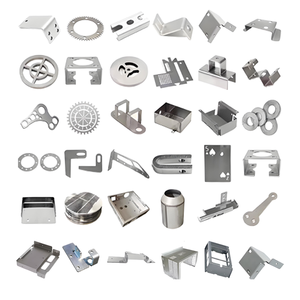
Global operators are bypassing intermediate distributors to partner directly with fully integrated Chinese manufacturing facilities. Utilizing dedicated multi-cavity stamping dies, high-speed progressive presses, and custom sheet metal fabrication lines, factory-direct sourcing cuts turnaround times by 40% and eliminates layered distribution markups.
In accordance with ASME Section VIII and EN 10204 3.1 standards, procurement specifications now demand positive material identification (PMI) and complete mill test certificates covering heat numbers from coil smelting through stamped rings. Traceability ensures zero risk of material degradation in sour or acidic operations.
While the classic Pall ring remains an enduring workhorse of chemical processing, modern computational fluid dynamics (CFD) and automated stamping engineering have spurred rapid evolutionary advancements:
Micro-Textured and Embossed Surfaces: Advanced metal Pall rings now incorporate micro-dimpled or chemically etched strip profiles prior to stamping. These micro-grooves disrupt liquid surface tension, compelling aqueous streams to spread into ultra-thin, continuous films rather than channeling into discrete rivulets. The result is a documented 10% to 15% reduction in overall HETP without sacrificing bed void fraction.
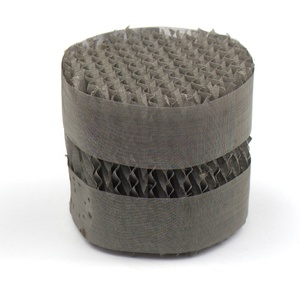
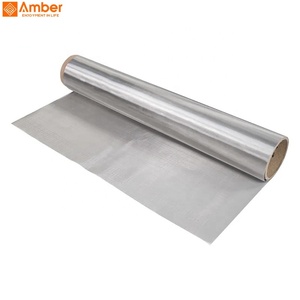
Hybrid Column Internals Architecture: Chemical process design increasingly couples random packings with structured wire gauze sections. In refinery vacuum towers, for example, high-capacity metal Pall rings are deployed in heavy-fouling, high-liquid wash sections where structured packing would plug prematurely. Concurrently, high-efficiency structured gauze packing sits in upper rectification zones to minimize total tower height.
Optimized Rib Geometry and Internal Tongue Curvature: By refining the bend radius of the inward-projecting tongues via multi-axis progressive stamping dies, modern tooling engineers eliminate structural flexure points. This allows a reduction in baseline sheet metal gauge (e.g., from 1.0mm down to 0.7mm or 0.8mm) while maintaining equivalent crush resistance when loaded to bed depths exceeding 10 meters.
Selecting the right mass transfer and industrial metal fabricator is essential to meeting tight turnaround schedules, maintaining plant uptime, and ensuring regulatory compliance. Operating with over 25 years of specialized manufacturing experience, Ambani Metals combines engineering heritage with automated fabrication capabilities:
Established manufacturing expertise serving chemical processing plants, refineries, and OEM equipment builders across 20+ countries since 1998.
Proprietary CNC tool & die fabrication delivering progressive stamping tolerances down to 0.02mm for consistent geometry and zero burrs.
Every batch is certified with full EN 10204 3.1 Material Test Reports, including PMI spectrometer testing, heat number tracking, and tensile verification.
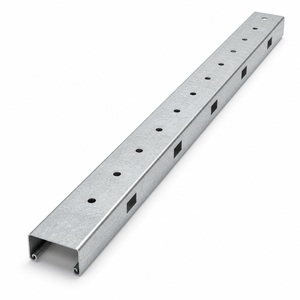
Integrated supply chain encompassing random packings, structured gauze, trays, liquid distributors, perforated pipes, and custom stamped metal components.
Key technical considerations evaluated by chemical project engineers, plant reliability managers, and EPC procurement leads prior to finalizing hardware orders:
As a rule of thumb in column hydraulic design, the ratio of column internal diameter (D) to nominal packing diameter (d) should satisfy D/d > 10, with an ideal ratio between 12 and 15. This ratio mitigates radial liquid maldistribution and excessive wall-flow channeling. For instance, in a 600mm diameter column, 25mm or 38mm Pall rings are suitable, whereas a small 200mm pilot column necessitates 16mm packing to avoid severe efficiency losses near the vessel wall.
The mechanical deformation threshold depends directly on wall thickness and operating temperature. Standard 25mm SS316L Pall rings fabricated with 0.8mm strip can support un-redistributed continuous packed bed depths of 6 to 8 meters. Beyond 8 meters, the cumulative weight of the irrigated bed risks crushing the bottom-most layers. We recommend installing intermediate support plates and redistributor trays at intervals of 5 to 7 meters to preserve bed voidage and gas distribution.
For metallic Pall rings, dry dumping is widely used, provided anti-nesting chutes or telescoping dump sleeves are employed to limit freefall distance to under 1.5 to 2 meters, preventing ring deformation. For ceramic packing or thin-gauge alloy rings, wet dumping (filling the column partially with water or process fluid prior to dumping) is standard practice to cushion the fall, float the rings gently into place, and ensure a uniformly packed bed without localized density variations.
The packing factor (Fp, expressed in m⁻¹ or ft⁻¹) is an empirical index inversely linked to column capacity; lower Fp values denote lower vapor resistance and higher throughput. When revamping a column originally fitted with Raschig rings (Fp ≈ 580 m⁻¹ for 25mm), replacing them with 25mm Pall rings (Fp ≈ 170 m⁻¹) reduces the pressure drop by over 50% while expanding hydraulic vapor capacity by 35% to 40% within the exact same shell diameter.
Export orders are packed in heavy-duty woven bulk super-sacks (1.0m³ to 1.5m³ capacity) reinforced with moisture-barrier inner PE liners, or alternatively in heat-treated, fumigated ISPM-15 compliant plywood crates. This safeguards rings from crushing during sea freight handling and guarantees clean, uncontaminated hardware ready for rapid crane hoisting straight to the column top manway on site.