
- +91-9930498858Call / WhatsApp
- [email protected]Email Us
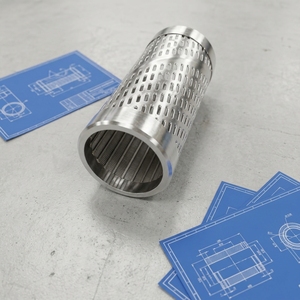
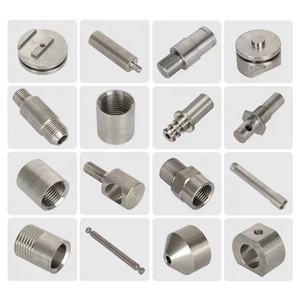
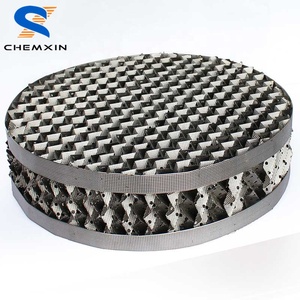
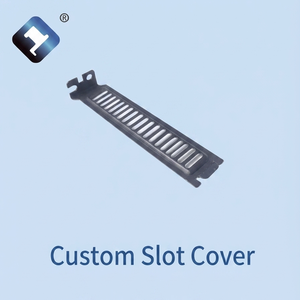
Directly manufactured by Ambani Metals with over 25 years of ISO-certified precision metallurgy. Explore our heavy-duty process column internals, deep-drawn canister housings, sand control filtration screens, and custom OEM stamped chassis engineered for severe industrial environments.
Decorative perforated sheets have evolved from purely passive interior finishes to high-performance architectural envelopes, dynamic acoustic baffles, and structural solar shaders. Selecting the correct manufacturing factory requires comprehensive insight into mechanical tensile integrity, punch burr mitigation, stress-relief leveling, and alloy-specific corrosion resistances.
Fabricated using prime stainless steels AISI 304/304L and 316/316L, incorporating molybdenum to withstand severe atmospheric chloride pitting. For ultra-aggressive petrochemical and marine environments, Ambani Metals punches proprietary Hastelloy C-276, Monel 400, and Inconel 625 with calibrated clearance dies to prevent micro-fissuring.
Utilizing aircraft and facade-grade 5052-H32 and 6063-T6 aluminum alloys that balance high strength-to-weight ratios with exceptional ductility for post-perforation fold forming. Non-ferrous copper (C11000) and architectural brass (C26000) offer warm natural patination, intrinsic antimicrobial efficacy, and RF/EMI shielding attenuation exceeding 85 dB.
Punching hundreds of thousands of apertures releases residual stresses across cold-rolled metal coils, causing inherent coil set, edge wave, and oil-canning. Ambani Metals eliminates distortion using high-precision 21-roll hydraulic cassette levelers, guaranteeing panel planarity within ±0.5 mm per linear meter.
| Material Grade | Yield Strength (MPa) | Corrosion Resistance | Max Available Open Area (%) | Ideal Architectural & Industrial Applications |
|---|---|---|---|---|
| SS 316L (UNS S31603) | 220 – 290 | Exceptional (Marine, Coastal, Chemical) | Up to 68% | Exterior building facades, marine balustrades, offshore ventilation grilles, API refinery trays. |
| SS 304 (UNS S30400) | 205 – 240 | High (Urban Exterior & Interior) | Up to 72% | Acoustic wall lining, HVAC terminal diffusers, decorative ceiling tiles, OEM equipment enclosures. |
| Aluminum 5052-H32 | 190 – 215 | High (Atmospheric & Salt Spray) | Up to 75% | Lightweight kinetic sunscreens, ventilated rainscreen cassettes, laser-etched visual louvers. |
| Architectural Brass (C26000) | 110 – 150 | Moderate (Atmospheric Patina) | Up to 58% | Luxury hospitality partitions, elevator cab paneling, decorative bespoke retail fixtures. |
| Weathering Steel (Cor-Ten) | 345 – 360 | Protective Oxidized Patina Layer | Up to 55% | Landscape architecture screening, industrial rustic cladding, artistic perimeter fencing. |
A decorative perforated sheet is a calibrated mechanical diaphragm. Engineering its performance requires rigorous calculation of Free Area (OA%), hydraulic pressure drops, and Sound Absorption Coefficients (Noise Reduction Coefficient, NRC).
The engineering industry standard offering the highest structural strength-to-open-area ratio. Calculated as:
OA% = (d² × 90.69) / t²
Where d is hole diameter and t is center pitch. Minimizes directional stress concentrations during brake-press forming.
Ideal for modern linear aesthetics, architectural sightline control, and HVAC return air balancing:
OA% = (d² × 78.54) / (t1 × t2)
Ensures crisp geometric alignment for backlight displays, suspended ceilings, and architectural curtain walls.
When backed with sound-absorbent acoustic fleece or mineral wool, micro-perforated sheets (hole Ø 0.5 mm – 1.5 mm) act as resonant Helmholtz absorbers, achieving NRC ratings up to 0.90 across standard commercial voice frequencies (250 Hz – 2000 Hz).
External facade envelopes require precise open area sizing to balance shade factor (SF) against wind pressure coefficients. Sheets perforated between 30% and 45% reduce structural building load drag forces by up to 52% compared to solid sheet cladding.
Institutional procurement directors and project engineers face fluctuating raw metal indices, tightened carbon border adjustments (CBAM), and rapid shifts toward off-site modular prefabrication. Understanding macro-procurement shifts guarantees supply chain resilience and cost optimization.
Global architectural specifications increasingly demand Environmental Product Declarations (EPD). Ambani Metals integrates domestic prime scrap recycling, achieving post-consumer recycled metal contents up to 85% in stainless steel and aluminum lines, granting full compliance with LEED MR credits and European CBAM documentation requirements.
Procurement teams are shifting away from flat unformed perforated panels toward fully fabricated, bolt-on cassettes. By handling CNC corner notching, robotic folding, stud-welding, and internal structural stiffeners at the factory level, job-site installation labor in the USA, UAE, and Australia is slashed by upwards of 40%.
Consolidating procurement reduces freight logistics, vendor validation costs, and QA overhead. Tier-1 contractors consistently partner with manufacturers possessing combined competencies in perforation, precision deep drawing, woven wire mesh weaving, and column mass-transfer internals under a single ISO umbrella.
The convergence of generative algorithmic design, ultra-high-speed fiber laser piercing, and nanotech surface coatings is redefining what perforated metals can accomplish across smart architecture and industrial thermodynamics.
Using computational solar path analysis, contemporary factories generate variable-density aperture matrices. Panels feature graduated open area gradients (e.g., from 15% at eye level to 55% at higher elevations) to optimize daylight autonomy while blocking direct solar thermal gain, radically lowering building cooling loads.
Eliminating tooling bottlenecks, advanced hybrid machining cells combine high-tonnage multi-ram mechanical punches (running at 1,200 strokes/min for standard repetitive fields) with continuous 12 kW fiber lasers that execute complex bespoke logos, variable micro-slots, and perimeter mounting tabs without secondary handling.
Cutting-edge Physical Vapor Deposition (PVD) titanium colorizing, paired with fluoropolymer (PVDF) and nano-ceramic coatings, introduces self-cleaning photocatalytic qualities. Airborne particulate dust and marine salt deposits wash away naturally with precipitation, virtually eliminating high-rise exterior facade maintenance costs.
Founded in 1998, Ambani Metals has grown into an international powerhouse supplying EPC contractors, multinational engineering firms, and industrial distributors across the United States, UAE, Australia, Canada, Saudi Arabia, and Europe.
In-house CAD/CAM tool and die engineering shop capable of manufacturing progressive stamping dies, perforated cluster punches, and deep-drawn tooling with turnaround times 35% faster than outsourced competitors.
100% mill heat-number traceability. Every shipment is accompanied by EN 10204 3.1 Material Test Certificates (MTC), spectrographic chemical analysis, yield/tensile reports, and salt spray exposure verification.
Automated optical coordinate measurement machines (CMM) evaluate hole spacing, pitch uniformity, diagonal squareness, and edge margin consistency across continuous coil and cut-to-length sheet operations.
Fumigated solid-wood ISPM-15 export crates lined with vapor corrosion inhibitor (VCI) films and desiccants, preventing maritime condensation corrosion and surface scuffing across multi-week ocean transit.
Key metallurgical and logistical answers direct from our senior tooling and applications engineering staff.
Download our complete metallurgical reference index, containing over 200 standard and bespoke die pattern configurations, acoustic NRC charts, and structural load design parameters.