- +91-9930498858Call / WhatsApp
- [email protected]Email Us
Direct supply from an experienced global manufacturer delivering CE-compliant fractionation trays, precision deep-drawn housings, woven filter media, and certified column internals to processing hubs across Greater Kuala Lumpur and the Peninsular Malaysia petrochemical corridor.
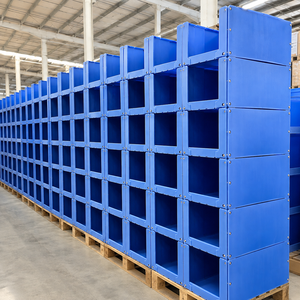
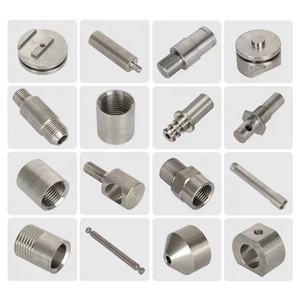
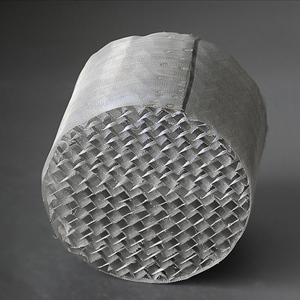
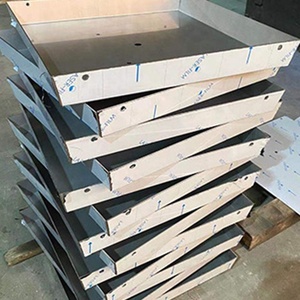
As industrial processing networks across Southeast Asia undergo rapid modernisation, plant operators and engineering procurement contractors (EPCs) operating across Greater Kuala Lumpur, Selangor industrial estates, and port facilities face tightening operational constraints. Fractionation columns—the thermal engines of petrochemical refineries, oleochemical processing lines, biochemical synthesis units, and specialty solvent separation facilities—require distillation internals engineered with zero mechanical variance. Selecting a reliable CE Certified Fractionation Column Tray Factory & Suppliers serving Kuala Lumpur provides downstream chemical operations with certified hydraulic performance, exceptional corrosion tolerance, and full conformity to European and International safety directives.
Modern column internals must consistently accommodate fluctuations in vapor and liquid loading without triggering premature operational failure modes like weeping, entrainment, blowing, or downcomer backup. Ambani Metals leverages over 25 years of metallurgical research, sheet-metal stamping mastery, and precision assembly to manufacture mass transfer apparatuses that strictly conform to international engineering standards. Whether retrofitting an existing column via standard vessel manways or fabricating large-diameter tower segments from initial greenfield process designs, certified column trays establish predictable vapor-liquid interfacial contact profiles, reducing overall reboiler energy draw and boosting yield purity.
The performance of any fractionation column tray is governed by the equilibrium mechanics established within the froth or spray regime. The geometry of perforations, valves, or caps determines gas kinetic distribution, while downcomer apron clearances control liquid residence time. For processing managers in Peninsular Malaysia managing variable multi-component feeds, three predominant tray classifications fulfill modern distillation objectives:
Combining wide operating flexibility with superior turndown, valve trays represent the workhorse of regional hydrocarbon refining and solvent splitting. Our CE certified valve designs feature mechanically staked, non-rotating round or rectangular valves that eliminate spinning and lateral wear against the tray deck. Floating valves dynamically self-adjust their orifice aperture in direct proportion to vapor velocity, sustaining superior mass transfer efficiencies across turndown ratios of up to 5:1. For services with moderate polymerisation risks or particulate loading, fixed valve arrays with directional vapor slots minimise hydraulic weeping while delivering robust fouling mitigation.
Manufactured from high-grade sheets with CNC-punched orifice arrays, sieve trays provide the lowest capital cost solution paired with minimal overall pressure drop. By maintaining strict hole-pitch spacing and edge-burr tolerances, our factory prevents asymmetric liquid weeping. Sieve trays remain the prime specification for high-volume, clean oleochemical esterifications and continuous methanol-water recovery systems across regional chemical zones.
When operating parameters mandate ultra-low liquid flowrates where downcomer sealing cannot be sustained by conventional hydraulics, bubble cap trays provide a completely positive liquid seal across the entire deck. The riser and slotted cap assembly ensures consistent vapor-liquid scrub even during prolonged process idling, making them suitable for batch chemical distillation, atmospheric strip columns, and critical solvent-wash scrubbers in pharmaceutical manufacturing.
| Tray Architecture | Optimal Vapor/Liquid Turndown | Delta P (ΔP) Profile | Fouling / Coking Resistance | Target Local Application (KL / MY) |
|---|---|---|---|---|
| Floating Valve Tray (Type V1/V4) | Up to 5:1 Turndown | Moderate (4 to 8 mbar/tray) | Moderate to Good | Petroleum Fractionation, Naphtha Splitters |
| Fixed Cage Valve Tray | 3:1 to 3.5:1 Turndown | Moderate (3 to 6 mbar/tray) | High (No moving components) | Biofuel Processing, Recovered Glycols |
| Engineered Sieve Tray | 2:1 to 2.5:1 Turndown | Low (2 to 5 mbar/tray) | Low (Sensitive to slurry/scale) | Oleochemical Methyl Ester Columns, Solvents |
| Bubble Cap Assembly | > 8:1 (Near Infinite Seal) | Higher (6 to 12 mbar/tray) | Moderate (Prone to solids settling) | Pharma Batch Vacuum, Wash/Scrub Towers |
| Multi-Pass Crossflow Deck | Tailored to Tower Diameter | Hydraulically Balanced | Application-Dependent | Large-Diameter Condensate Splitters (>2.5m) |
Kuala Lumpur sits at the commercial nexus of Peninsular Malaysia’s vast industrial zones, operating in close coordination with major industrial manufacturing centers including Shah Alam, Klang, Rawang, Port Klang, and downstream chemical processing hubs across Negeri Sembilan and Pahang. Fractional distillation hardware supplied into this active ecosystem must fulfill strict chemical compatibility requirements:
As Malaysia advances toward net-zero targets and implements higher carbon transparency across national energy grids, the mass transfer engineering sector is experiencing major transformations:
Since 1998, Ambani Metals has manufactured and supplied high-precision mass transfer equipment, column internals, deep-drawn components, and wire mesh technologies across 20+ countries, serving over 1,000 satisfied industrial customers. Operating out of unified manufacturing facilities, we maintain strict quality command across every phase of production:
Every fractionation column tray, distributor, and support grid is fabricated strictly in alignment with CE standards. We provide Mill Test Certificates (EN 10204 3.1) with raw material heat-number verification, guaranteeing absolute compliance with pressure vessel specifications.
From progressive deep drawing, fiber laser cutting, and hydraulic stamping to automated woven mesh looms, we manage engineering within our self-owned plant. Eliminating subcontractors allows us to maintain strict dimensional tolerances and shorten manufacturing turnarounds.
Exporting to over 20 nations, our export packing division prepares custom, fumigated, seaworthy wooden crating with internal moisture-barrier wrap and tagged sub-assemblies, providing quick customs clearance and safe delivery to Malaysian destinations.
Yes. All mass transfer components and column internals are manufactured under CE directives and meet global engineering codes including ASME Section VIII design principles. We routinely supply full material documentation, design sheets, and testing reports compatible with Department of Occupational Safety and Health (DOSH) registered statutory review frameworks in Malaysia.
Yes. Every single-pass or multi-pass fractionation tray is segmented into modular panels specifically mapped to pass through existing vessel manways (standard 400mm, 450mm, 500mm, or 600mm ID). Each component is stamped with match-marks corresponding to detailed assembly layout drawings to ensure swift, error-free bolt-up during planned turnaround windows.
Due to the aggressive corrosive nature of heated free fatty acids, especially at elevated boiling points, we recommend Stainless Steel 316L as a baseline, or high-alloy Duplex 2205 / 904L where fatty acids are split under extreme temperatures. For low-temperature, ultra-vacuum cuts, 316L wire gauze structured packing delivers lower delta-P and preserves product purity.
To run complete hydraulic simulations and finalize mechanical sizing, our engineering department requests your process datasheets containing: inside column diameter, tray spacing, vapor and liquid mass flowrates, operating pressure and temperature, fluid densities, viscosities, surface tensions, and allowable pressure drop per stage.