Engineering Authority: CE Certification & San Francisco Bay Compliance
Procuring industrial wire filter cloth within Northern California requires balancing federal standards with rigorous regional ecological regulations. The San Francisco Bay Regional Water Quality Control Board (Region 2), California Title 22 for recycled water, and the stringent environmental guidelines of the Bay Area Air Quality Management District (BAAQMD) dictate that fluid separation hardware must perform without particulate breakdown, media leaching, or unexpected pressure surges.
Our European CE certification aligns directly with the European Pressure Equipment Directive (PED 2014/68/EU) and Machinery Directive (2006/42/EC). For San Francisco facility engineers, CE certification provides an ironclad guarantee of mechanical metallurgy, traceable alloy compositions according to EN 10204 3.1 material test certificates, and precision geometric repeatability across every micron pore aperture.
"When deploying micronic wire cloth in South San Francisco bioprocess suites or Silicon Valley cleanroom facilities, boundary corrosion or micro-fiber shed is unacceptable. Our vacuum-annealed, calendered wire cloth guarantees absolute hydrodynamic consistency without media migration."
Micro-Geometry of Wire Weaves: Hydrodynamic Permeability vs. Dirt Holding Capacity
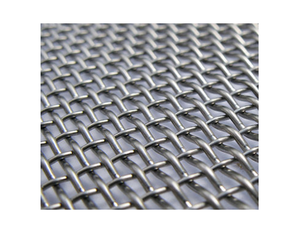
The structural geometry of metallic filter cloth dictates its pore size distribution, fluid differential pressure (ΔP), and cake release characteristics. Unlike disposable synthetic cartridges, woven stainless steel cloth offers precisely defined aperture geometry that can be backwashed, ultrasonically sanitized, and autoclaved thousands of times over multi-year duty cycles.
| Weave Architecture |
Aperture Range (μm) |
Flow Permeability |
Mechanical Burst Strength |
Typical San Francisco Application |
| Plain Square Weave |
35 μm – 2000 μm |
Maximum (Up to 72% Open Area) |
Moderate tensile integrity |
Grain sparging, HVAC marine screens, wastewater grit removal |
| Twill Square Weave |
20 μm – 250 μm |
High (Openings allow dense wire) |
High deflection resistance |
Precision chemical catalyst support, vibratory screeners |
| Plain Dutch Weave (PDW) |
10 μm – 300 μm |
Medium-High (Tortuous path) |
High longitudinal rigidity |
Beer mash clarifying, hydraulic system returns, fuel safety nets |
| Dutch Twill Weave (DTW) |
1 μm – 80 μm |
Controlled laminar retention |
Extreme working pressure rated |
Bio-pharma API separation, sterile venting, chromatography beds |
| Reverse Dutch Weave (RDW) |
15 μm – 150 μm |
Smooth surface for easy cake discharge |
Superior warp-direction tensile load |
Continuous polymer extrusion, high-pressure leaf filters |
Advanced Metallurgy: Combating Bay Fog Salinity and Chemical Corrosives
Operating near San Francisco Bay exposes filtration plant equipment to ambient maritime chlorides, accelerating stress-corrosion cracking and pitting in substandard 304 steels. Ambani Metals leverages an advanced metallurgical library tested against aggressive chlorides, caustic Clean-in-Place (CIP) chemistries, and ultra-pure water (UPW):
AISI 316L (UNS S31603): Formulated with 2.0–3.0% Molybdenum and low carbon (<0.03%), eliminating intergranular carbide precipitation during welding. This remains the baseline standard for San Francisco pharmaceutical manufacturing, sanitary food processing, and distilled spirits production.
Hastelloy C-22 / C-276: For aggressive wet chlorine, nitric-hydrofluoric acid blends in semiconductor chip manufacturing, or acidified bio-reactor waste streams. Provides nearly complete immunity to localized pitting and crevice corrosion.
Pure Nickel 200/201 & Monel 400: High-performance choices for hot alkaline caustic washing solutions, seawater cooling intake filters at coastal power facilities, and dry chlorine handling systems.