
- +91-9930498858Call / WhatsApp
- [email protected]Email Us
Precision-engineered seamless cylinders, cold-drawn cylinder tubes, and custom deep drawn shells engineered for Ethiopian manufacturing plants, agro-industrial complexes, and vehicle assembly operations.
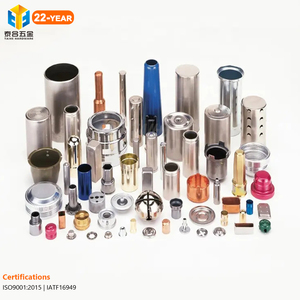
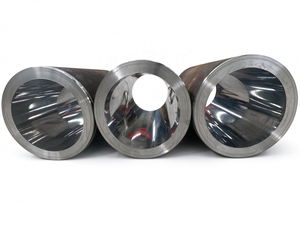
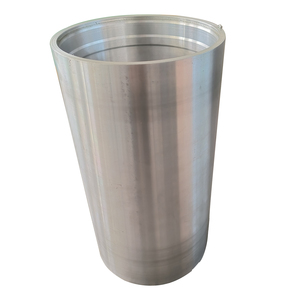
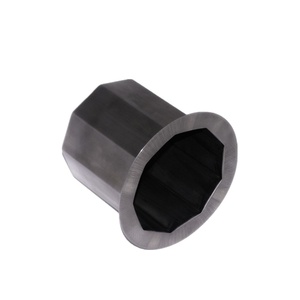
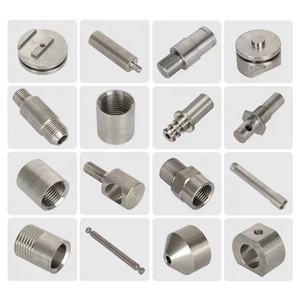
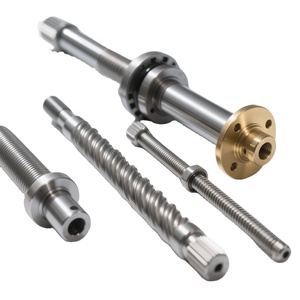
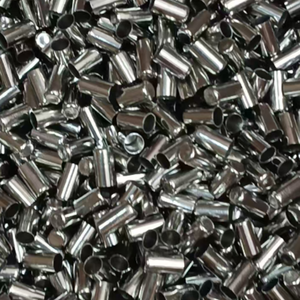
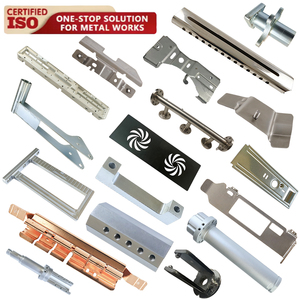
Deep drawing represents a pinnacle metal forming discipline wherein flat sheet metal blanks are radially drawn into forming dies by the mechanical or hydraulic action of a punch. When manufacturing deep drawn cylinders for export to expanding East African industrial sectors—specifically the Federal Democratic Republic of Ethiopia—mastery over metallurgical properties, plastic deformation mechanics, and stress state behavior is mandatory. Unlike welded sheet assemblies that exhibit longitudinal heat-affected zone (HAZ) embrittlement, seamless deep drawn cylinders deliver isotropic hoop strength, consistent circumferential wall thickness, and defect-free internal geometry capable of withstanding severe cyclic hydraulic pressures.
Engineering Core Insight: The Limiting Drawing Ratio (LDR = D_blank / d_punch) dictates whether a cylindrical geometry can be formed in a single operation without sheet rupture. For austenitic stainless steels (such as SUS304 and SUS316L), the LDR routinely sits between 2.0 and 2.2. Achieving deeper length-to-diameter (L/D) ratios exceeding 3:1 demands multi-stage progressive drawing paired with controlled intermediate hydrogen-atmosphere protective annealing to recrystallize work-hardened grains.
During the deep drawing stroke, the metal blank experiences complex stress fields: circumferential compressive stresses along the outer flange coupled with longitudinal tensile stresses along the cup wall. In Chinese export-grade manufacturing plants, finite element analysis (FEA) via PAM-STAMP and AutoForm is utilized to calculate dynamic blank holder forces (BHF). Insufficient BHF generates severe flange wrinkling due to compressive instability, whereas excessive BHF induces localized necking and catastrophic bottom-punch rupture.
To produce seamless accumulator shells and cylinder canisters destined for heavy equipment assemblies in Ethiopia's Adama and Bishoftu corridors, specialized ironing dies are integrated into secondary and tertiary draw stages. Ironing intentionally thins the cylindrical wall while expanding total cylinder depth, generating uniform wall tolerances within ±0.02 mm and an internal surface roughness as low as Ra 0.2 μm to Ra 0.4 μm. This mirrors the functional efficiency of cold-drawn honed tubes without the material waste inherent in subtractive boring.
| Alloy Specification | Yield Strength (MPa) | Tensile Strength (MPa) | Elongation A50 (%) | Standard L/D Ratio | Primary Industrial Sector in Ethiopia |
|---|---|---|---|---|---|
| AISI 304 / 304L (1.4301/1.4307) | ≥ 205 | ≥ 520 | ≥ 40 | Up to 4.5:1 (with Anneal) | Beverage Processing, Sugar Refineries (Wonji/Shoa) |
| AISI 316L (1.4404) | ≥ 220 | ≥ 530 | ≥ 40 | Up to 4.0:1 | Pharmaceutical API (Kilinto), Chemical Scrubbers |
| ST52 / E355 / Q345B | ≥ 355 | 490 – 630 | ≥ 22 | Up to 6:1 (Cold Drawn) | Hydraulic Telescopic Rams, Dump Truck Hoists (Bishoftu) |
| Aluminum 6061-O / 5052-H32 | 95 – 195 | 190 – 260 | ≥ 14 – 25 | Up to 3.0:1 | Pneumatic Cylinders, Lightweight Filtration Housings |
| Cartridge Brass (CuZn30 / C26000) | 105 – 150 | 300 – 380 | ≥ 55 | Up to 5.0:1 | Pneumatic Actuation, Gas Flow Regulator Enclosures |
| ASTM B394 Niobium (R04200) | ≥ 105 | ≥ 205 | ≥ 25 | Up to 2.5:1 | High-Temperature Vacuum Metallurgy, Specialized Labs |
Direct supply routes from our Chinese manufacturing headquarters to regional hubs across Addis Ababa, Oromia, Amhara, and Sidama regions.
Deployed extensively across the sugar mills of Wonji-Shoa, Metehara, and Tendaho. Stainless steel SUS304 and SUS316 deep drawn cylinders serve as clarification vessels, pneumatic valve actuators, and juice extraction separator chambers requiring acid resistance and seamless sanitary interiors.
Bishoftu Automotive Industry and localized agricultural tractor workshops depend on seamless honed tubes (E355, 16Mn, ST52) and deep drawn piston caps for tipping gears, excavator arm hydraulics, and tractor three-point linkage actuators servicing rural mechanization programs.
Installed inside the Kilinto Industrial Park pharmaceutical cluster and medical gas filling stations. Seamless aluminum and SUS304 deep drawn canisters store pressurized nitrous oxide, oxygen, and liquid sterilization reagents without risking weld-seam micro-fissuring or particulate contamination.
Deep-well groundwater extraction throughout the Rift Valley and Somali regional projects utilizes deep drawn stainless pump bowls, suction diffusers, and motor casings engineered to resist high salinity, sandy abrasion, and sustained hydrostatic head pressures.
Integrated with high-voltage switchgear infrastructure branching from the Grand Ethiopian Renaissance Dam (GERD). Seamless drawn aluminum chambers provide gas-insulated switchgear (GIS) protection, transformer burst-disk housing, and dielectric oil accumulation.
BGI Ethiopia, Harar Brewery, and Habesha Breweries leverage our sanitary deep drawn stainless filter bowls, pressure relief cylinders, and carbonation column shells that meet rigorous DIN 11850 and ASME BPE sanitary hygienic thresholds.
Importing capital components and semi-finished raw materials into Ethiopia requires an intricate understanding of the country's foreign exchange landscape and trade infrastructure. Ethiopia's Homegrown Economic Reform (HGER 2.0) has catalyzed localized value-addition, creating massive domestic demand for semi-finished deep drawn cylinder barrels, pre-machined hydraulic shells, and custom drawn stamping cans. By importing high-precision drawn parts from China, Ethiopian assembly factories drastically reduce domestic machining lead times and capital expenditure while fulfilling local value addition quotas under Ministry of Industry regulations.
Procurement professionals in Ethiopia often confront hard currency availability constraints governed by the National Bank of Ethiopia (NBE). To facilitate streamlined purchasing:
Geographical connectivity is anchored by the multimodal transport network connecting major Chinese maritime terminals to the Horn of Africa. Cargo embarks from Ningbo-Zhoushan, Shanghai, or Qingdao, charting direct routes via the Bab-el-Mandeb Strait to the Port of Doraleh / Port of Djibouti:
Transit Route Timelines: Ocean Transit: 18 – 24 Days • Port Clearance (Djibouti): 3 – 5 Days • Ethio-Djibouti Railway Freight to Modjo Dry Port: 16 Hours • Final Customs Clearance and Drayage to Addis Ababa / Adama: 2 – 4 Days. Total Lead Time: ~28 – 38 Days.
Because inland multimodal carriage via Ethiopian Shipping and Logistics Services Enterprise (ESLSE) involves multimodal handling, our factory incorporates heavy-gauge export packaging: vacuum-sealed VCI (Vapor Corrosion Inhibitor) plastic wrapping, desiccants formulated for tropical humidity shifts, and ISPM-15 heat-treated solid timber framing to eliminate maritime corrosion and kinetic transit shocks.
Backed by over two decades of engineering excellence, extensive tonnage press lines, and uncompromising metallurgical traceability.
Sourced solely from premier steel mills with complete heat-number batch traceability, providing EN 10204 3.1 chemical composition and mechanical test certificates with every container load.
In-house progressive tooling and transfer die fabrication utilizing high-hardness tungsten carbide (WC) and SKD11 tool steels, guaranteeing 500,000+ stroke lifetimes and zero batch variation.
State-of-the-art coordinate measuring machines (CMM), optical contour projectors, and pneumatic bore micrometers ensuring tight concentricity and ISO H8 / H9 cylinder barrel bore classes.
Stringent multi-tier export packaging protocols featuring anti-rust chemical wash, VCI barrier bags, internal stabilizing chocks, and reinforced steel-strapped maritime plywood crates.
Essential guidance addressing regulatory approvals, customs clearance, minimum orders, and customized tooling.
Connect directly with our senior mechanical tooling team and export directors. We provide comprehensive DFM (Design for Manufacturability) analysis, metallurgical certificates, and direct CIF Djibouti or CPT Modjo quotations within 24 hours.
Send an Inquiry