- +91-9930498858Call / WhatsApp
- [email protected]Email Us
Manufactured under ISO 9001:2015 controls with full heat-number traceability, EN 10204 3.1 chemical verification, and rigorous bubble point testing.
A comprehensive examination of metallurgical micro-joining, geometric pore stabilization, and differential pressure survivability.
In high-velocity fluid filtration, catalytic bed support, and aggressive thermal processing, traditional single-layer woven wire mesh invariably falls victim to physical wire shift, mechanical pore enlargement, and cold-flow deformation under surging differential pressures ($\Delta P$). Sintered wire mesh solves this fundamental mechanical failure mode by converting distinct, woven wire layers into a single, cohesive, monolithic porous plate through solid-state high-vacuum diffusion bonding.
At our specialized manufacturing facilities, diffusion bonding occurs at precise sub-melting temperatures—typically 1120°C to 1260°C for austenitic stainless steels (AISI 316L, 304L) and specialized nickel superalloys (Hastelloy C-22, Inconel 625)—under intense vacuum levels ($10^{-4}$ to $10^{-5}$ mbar) and calibrated uniaxially applied compressive mechanical loads. At these precise thermomechanical thresholds, atomic cross-diffusion proceeds across every microscopic intersecting contact node of the warp and shute wires. The result is pure grain growth bridging the individual wire boundaries without melting or deforming the meticulously calculated aperture geometry. This preserves an exact, unvarying pore rating from 1 micron up to 250 microns across repetitive thermal expansion cycles.
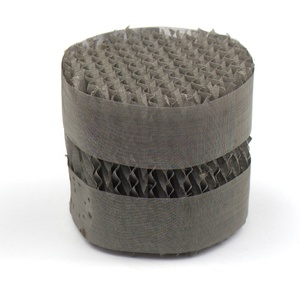
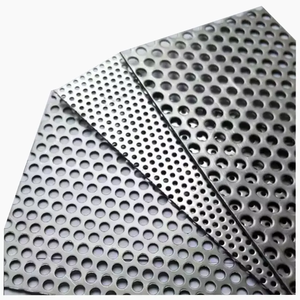
The standard multi-layer composite comprises: (1) Protective Outer Layer: Protects the internal control media against mechanical scraping and particulate impact; (2) Precision Filtration Layer: Woven wire cloth or Dutch twilled weave defining nominal pore cut-off; (3) Cushioning / Buffer Layer: Alleviates stress gradients and facilitates backwash flow dispersion; (4) Secondary Reinforcement Layer: Provides torsional rigidity; (5) Heavy Structural Substrate: Coarse square mesh or thick CNC-perforated stainless sheet rated to withstand backpressure spikes in excess of 150 bar.
For engineering contractors and plant reliability teams operating in the Republic of Serbia, sintered porous media transitions filtration from an operational failure liability into an asset of deterministic reliability. When fluid passes through sintered laminates, tortuosity is tightly regulated. Unlike needle-felt bags or resin-bonded cartridges that shed fibers into downstream process fluids or experience internal channel breakout, sintered mesh ensures zero particle shedding, excellent cake discharge during reverse pulse-jet or solvent backwashing, and predictable fluid friction factors conforming to the Ergun and Darcy-Forchheimer continuous flow equations.
Diffusion bonding fixes cross-wire coordinates. Pore apertures cannot slide, stretch, or deform under continuous hydrodynamic drag or high-pressure pneumatic pulsing, eliminating particle blow-through.
Engineered to operate uninterrupted in atmospheres ranging from cryogenic -200°C up to continuous +600°C in oxidizing conditions, or higher when synthesized in Inconel 600/625 and Monel 400 alloys.
Smooth surface topology supports rapid cake release. Fully compatible with automated Clean-In-Place (CIP), ultrasonic cavitation tanks, chemical pickling, and high-temperature thermal pyrolysis burning.
Comprehensive comparative data for chemical processing, mechanical screening, and high-differential applications.
| Internal Media Configuration | Available Alloys (EN / DIN / UNS) | Filtration Rating Range | Max Differential Pressure ($\Delta P$) | Typical Industrial Target Application |
|---|---|---|---|---|
| Standard 5-Layer Sintered Wire Mesh | AISI 316L (1.4404), 304L (1.4307), 321 (1.4541) | 1.0 μm – 200 μm | Up to 10 MPa (with structural plate) | Nutsche agitation filters, fluidized beds, polymer melts, turbine gas intake filters |
| Sintered Mesh with Perforated Plate | AISI 316L, 904L (1.4539), Hastelloy C-276 | 5.0 μm – 250 μm | Exceeding 25 MPa | Downhole sand control screens, high-viscosity resins, refinery hydrocracking quench zones |
| Multi-Layer Sintered Dutch Weave | SS316L, Hastelloy C-22, Alloy 20 (UNS N08020) | 0.5 μm – 60 μm | Up to 15 MPa | High-purity API pharmaceutical isolation, aggressive solvent dewatering, cryogenic helium |
| Sintered Porous Metal Fiber Felt | 316L, Fecralloy, Inconel 601 (2.4851) | 3.0 μm – 100 μm | 5 MPa – 8 MPa | Hot gas desulfurization, high-temperature particulate capture, hydrogen fuel cell gas diffusion |
| Custom Deep-Drawn Mesh Cartridges | AISI 304, 316Ti, Monel 400 (2.4360), Pure Nickel | 10 μm – 500 μm | Configurable to casing | Centrifugal pump suction strainers, hydraulic manifold blocks, inline sanitary pipeline guards |
Engineered to meet specific mechanical, thermodynamic, and fluid dynamic challenges across national manufacturing centers.
Serbia's unique geopolitical and industrial position—defined by active metallurgical giants, modernizing oil and chemical refineries, expanding pharmaceutical clusters, and agricultural processing complexes across Vojvodina—demands bespoke filtration engineering that withstands demanding operational realities. We deliver direct OEM engineering, custom-tailored flange geometries, and drop-in replacements for European machinery across Serbia's primary industrial zones:
Supporting continuous refining infrastructure at the Pančevo complex (including NIS and HIP-Petrohemija facilities). Our sintered laminates serve as heavy-duty catalyst recovery screens in fluid catalytic cracking (FCC) units, amine treating gas purification scrubbers, and high-differential safety guards in ethylene crack furnace oil lines.
Providing heavy-duty, abrasion-resistant, and sulfuric acid-tolerant sintered filter discs and baskets for copper flotation circuits, electrolyte purification cells, and dewatering presses at RTB Bor. Alloys such as Hastelloy and 904L provide extended run-times in corrosive leach liquors.
From the industrial sugar mills in Crvenka, Vrbas, and Pećinci to large edible sunflower oil extraction units in Zrenjanin and Sombor. Sintered 316L plates are utilized for winterization wax separation, decolorizing carbon recovery, and starch slurry clarification without process contamination.
Integrated into hydraulic descaling circuits, continuous casting lubrication filtration, and blast furnace off-gas analysis conditioning systems. The reinforced perforated-core sintered cylindrical elements reliably resist thermal shocks and severe pressure drops.
Engineered for cGMP compliance across leading domestic and multinational pharmaceutical plants (such as Hemofarm and Galenika). Sintered filter leaves, agitated Nutsche filter-dryer plates, and sanitary vent filters operate under complete chemical sanitization and validation.
Supplying precision OEM stamped and deep-drawn sintered mesh filter thimbles for automotive brake actuators, transmission fluid circulating blocks, pneumatic automation valves, and industrial painting recirculating lines.
How the green industrial transition and process safety requirements are transforming separation media procurement.
Serbia's continuing economic development and industrial modernization programs are creating sweeping changes in procurement standards across domestic processing industries. With ongoing regulatory alignment toward EU environmental standards—specifically within the scope of Chapter 27 (Environment and Climate Change) and compliance with the Industrial Emissions Directive (IED 2010/75/EU)—Serbian plant managers are facing heightened scrutiny concerning fugitive emissions, industrial waste minimization, and energy consumption.
Historically, widespread reliance on disposable synthetic filter bags, glass-fiber cartridges, and low-grade non-sintered wire cloth produced recurring operational challenges across Serbian plants. Single-use polymeric media generate substantial contaminated solid waste volumes requiring hazardous disposal, while their susceptibility to temperature-induced failure risks catastrophic process contamination. In response, modern Serbian operations are standardizing on permanent, re-cleanable sintered porous metal elements as a strategic CAPEX investment with proven operational payback:
1. Decarbonization & Circular Asset Utilization: Sintered wire mesh elements engineered from high-grade stainless and duplex alloys deliver working lifespans exceeding 10 to 15 years through routine in-situ ultrasonic or chemical backwashing, drastically reducing plant solid-waste metrics.
2. Elimination of Costly Unplanned Downtime: With major facilities operating on continuous continuous production campaigns (such as round-the-clock runs in Pančevo and Smederevo), eliminating mechanical mesh blow-outs translates directly into millions of dinars saved in preserved production capacity.
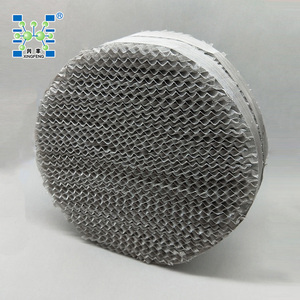
3. Modernization of Column Internals: Older distillation and absorption towers across the region are undergoing revamps, replacing heavy tray systems with engineered wire gauze structured packing and sintered distributor beds to debottleneck capacity and achieve superior theoretical separation stages without erecting new column shells.
Over 25 years of specialized metallurgical fabrication, exporting to more than 20 countries worldwide.
As a seasoned, vertically integrated manufacturer established in 1998, we provide distinct engineering and logistical advantages to industrial purchasers, engineering houses, and EPC contractors serving the Serbian market. Rather than operating simply as a distributor, our end-to-end manufacturing footprint encompasses vacuum sintering, precision weaving, heavy-tonnage deep drawing, multi-axis CNC laser cutting, and certified orbital welding—all managed under one unified quality management umbrella.
Our engineering division partners directly with your technical teams, reviewing process data sheets, chemical compatibility requirements, flow velocity limits, and mechanical loading parameters before raw material cutting begins. We maintain dedicated stocks of mill-certified flat sheets, coils, and specialty wires sourced exclusively from tier-one steel producers—including AISI 304, 304L, 316, 316L, 321, 310S, Hastelloy, Monel, Inconel, and pure titanium.
Equipped with computerized thermal cycle programmers operating up to 1350°C and vacuum environments down to $10^{-5}$ mbar. Multi-stage heating curves prevent surface oxidation, guaranteeing bright, clean, completely passivated porous metal plates.
In-house hydraulic presses up to 500 metric tons produce seamless drawn filter cups, end-caps, flanged housings, and custom stamped fittings with minimal scrap loss, high structural concentricity, and tight mechanical tolerances.
Every production batch undergoes automated Bubble Point Testing conforming to ISO 4003, air and water flow permeability verification per ISO 4022, dye-penetrant weld inspection, and complete chemical PMI spectrometer certification.
Direct answers addressing technical specifications, logistics, European standards compliance, and regeneration routines.
Non-sintered woven wire mesh relies purely on mechanical tension; under high differential pressure ($\Delta P$) or reverse flow cleaning, individual wires shift, resulting in pore enlargement and particulate blow-through. Wedge wire screens, while mechanically rigid, are fundamentally limited to coarser aperture slots (typically ≥ 50 microns) and possess minimal multi-layer filtration tortuosity. Sintered wire mesh bridges this operational gap by offering sub-micron to 200-micron high-precision ratings combined with structural burst ratings matching solid steel plates, enabling backwash pressures up to 100 bar without deformation.
Yes. A substantial portion of our European business involves reverse-engineering and manufacturing drop-in OEM replacements for legacy process systems. Our engineering design department works directly from physical sample fragments, customer CAD files, or technical process data sheets. We produce customized discs, multi-segment sector plates for rotary drum filters, flanged cylindrical cartridges, pleated high-surface-area candles, and conical basket assemblies compatible with legacy DIN, GOST, or custom industrial dimensions.
Every export shipment bound for Serbia is accompanied by comprehensive documentation compliant with both international trading frameworks and Serbian domestic requirements (SRPS/EN standards). This includes EN 10204 Type 3.1 Inspection Certificates specifying mill heat numbers, exact chemical spectrometer composition, and mechanical yield/tensile testing. In addition, we furnish Bubble Point Pore Size Test Reports (ISO 4003), Certificate of Origin, and complete commercial documentation packaged in seaworthy, fumigated timber enclosures (ISPM 15 certified) for swift customs processing at Belgrade, Novi Sad, or Niš customs terminals.
We provide full-spectrum logistics services tailored to project urgency. For fast-track refinery turnarounds or emergency plant maintenance shutdowns in Pančevo or Smederevo, expedited air-freight reaches Belgrade Nikola Tesla Airport (BEG) within 5 to 7 business days following manufacturing sign-off. For standard high-tonnage project cargo, sea container shipping is routed via the Adriatic Port of Rijeka (Croatia), Port of Bar (Montenegro), or Thessaloniki (Greece), connecting via overland rail or truck directly into your Serbian facility yard within predictable scheduling windows.
Because our sintered porous elements are constructed entirely from solid diffusion-bonded metal without adhesives or organic resins, they can be cleaned using aggressive mechanical and chemical methods. Standard maintenance protocols include: (1) Reverse liquid or gaseous pulse backwash for loose particulate cakes; (2) High-frequency ultrasonic bath cavitation using alkaline or acidic cleaning fluids to dislodge fine particles trapped in internal pore necks; (3) Chemical pickling or solvent rinsing for polymer/resin dissolving; and (4) High-temperature furnace burnout or controlled pyrolysis (up to 550°C) for carbonaceous and organic residues.
Equipped with complete process data sheets, legacy equipment drawings, or require immediate metallurgical consultation for your Serbian manufacturing facility? Connect with our senior application engineering group today for comprehensive pricing, CAD verification, and sample evaluation.