- +91-9930498858Call / WhatsApp
- [email protected]Email Us
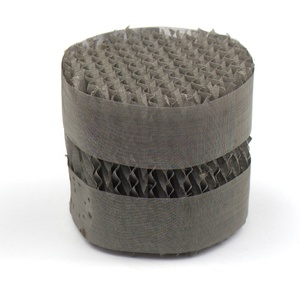
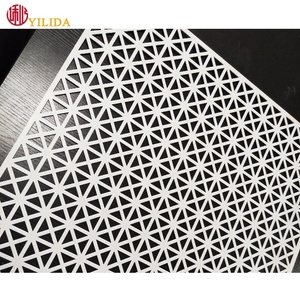
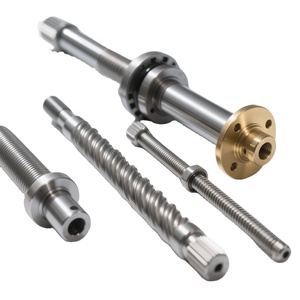
Explore our export-certified precision metal parts, progressive deep-drawn cylindrical shells, perforated panels, and mass transfer structured packs manufactured to ASME, DIN, and NACE compliance standards.
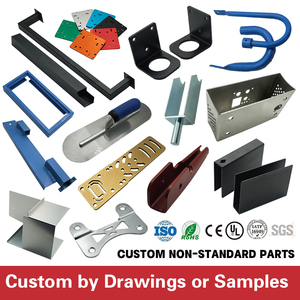
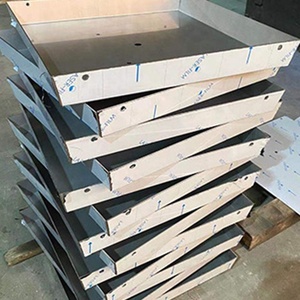
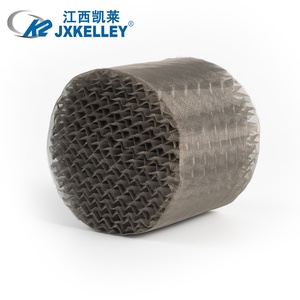
A comprehensive technical analysis of multi-stage cold deformation, severe plasticity limits, and material selection for mission-critical installations across Iraq.
The manufacturing of progressive deep drawn components represents an intricate intersection of continuum plasticity, progressive die mechanics, and metallurgical crystallization control. In heavy industrial regions throughout Iraq—including the southern hydrocarbon basins of Basra, the central downstream refinery belts around Baghdad (Daura), and the northern processing facilities in Baiji and Kirkuk—deep drawn hardware operates under extreme environmental stresses. Process components are subjected to cyclical thermomechanical shocks, high hydrogen sulfide (H2S) sour gas exposure, severe ambient particulate impingement, and aggressive chemical solvent streams.
Unlike standard welding or sheet metal spinning, deep drawing transforms flat metallurgical blanks into seamless axisymmetric, cylindrical, rectangular, or complex polygonal hollow vessels without longitudinal or circumferential seams. This geometric continuity eliminates heat-affected zone (HAZ) microstructural brittleness, rendering deep drawn components intrinsically superior in pressure containment, fatigue life, and stress corrosion cracking (SCC) mitigation. Achieving structural precision requires stringent control over the Limiting Drawing Ratio (LDR), blank holder pressure curves, punch radii friction, and inter-stage work-hardening annealing.
Technical Axiom: The primary failure modes in deep drawing—earing, radial necking, wrinkling, and orange-peel rupture—originate from uncontrolled planar anisotropy (r-value) and dynamic friction spikes. Ambani Metals implements servo-hydraulic press kinematics with multi-point pneumatic-hydraulic cushion control, ensuring true laminar metal flow and uniform wall-thickness distribution within ±0.02 mm across multi-stage draw progressions.
When selecting raw materials for export to Iraq, standard carbon steels are frequently inadequate due to the high chloride salinity of regional processing waters and sulfur-heavy crude matrices. Our manufacturing facility processes certified nuclear- and petrochemical-grade austenitic stainless steels (AISI 304L, 316L, 321, 316Ti), duplex alloys (2205), nickel superalloys (Monel 400, Inconel 625, Hastelloy C-276), copper-nickel alloys (CuNi 90/10), and deep-drawing aluminum grades (5052-O, 3003-H14). Each alloy undergoes incoming spectroscopic verification, tensile strain-hardening coefficient (n-value) assessment, and ultrasonic internal defect scanning before entering blanking operations.
Multi-station progressive tooling designed with finite-element metal forming simulations (DYNAFORM). Our tool steel dies (D2, tungsten carbide, CPM-10V) deliver run-out tolerances within ±0.015mm over 500,000 continuous stamping cycles.
Inter-stage continuous hydrogen-nitrogen atmosphere bright annealing furnaces operating at up to 1,080°C. This process dissolves strain-induced martensite, eliminates internal stresses, and restores full austenitic ductility without surface decarbonization.
Custom deep drawn pressure housings, sensor cups, and valve seals formulated specifically for resistance to sulfide stress cracking (SSC) and hydrogen-induced cracking (HIC) across Iraqi sour hydrocarbon environments.
Engineered to withstand the demanding field realities of Basra’s saline environments, the central refinery networks, and northern industrial rehabilitation zones.
Seamless bubble caps, deep drawn valve assemblies, distributor cups, and structured wire gauze packs deployed in crude vacuum distillation units (VDU) and atmospheric columns at Daura, Basra, and Baiji.
Pressure transmitter housings, high-pressure accumulator shells, explosion-proof solenoid caps, and separator internals deployed in gas dehydration and NGL recovery facilities across the South Gas Project.
Severe chloride-resistant deep drawn filter capsules, pump impeller shroud shells, and perforated strainers in 316L and 904L, supporting RO desalination along the Shatt al-Arab waterway and municipal networks.
Heat-shield cups, progressive stamped thermal baffles, combustion chamber spark plug liners, and exhaust sensor housings supplied for gas-turbine thermal power plants across Baghdad, Wasit, and Erbil.
Examining the macro-level engineering shifts, rehabilitation investments, and regulatory standards governing component procurement in Iraq.
The industrial landscape of the Republic of Iraq is experiencing a systematic capital overhaul driven by the Ministry of Oil (MoO), the Ministry of Electricity (MoE), and international engineering, procurement, and construction (EPC) conglomerates. Following decades of capacity constraints, historical production assets are transitioning toward high-efficiency, debottlenecked refining, flare gas monetization, and localized chemical production. This transition imposes heightened demands on component metallurgy, dimensional precision, and delivery reliability.
1. Shift from Assembled Weldments to Monolithic Deep Drawn Parts: Iraqi state refineries (including Midland Refineries Company, South Refineries Company, and North Refineries Company) have historically dealt with recurring downtime caused by weld seam failure, intergranular corrosion, and crevice stress fractures in assembled shell housings. Engineering project specifications for current revamps now specifically stipulate seamless, deep-drawn single-piece pressings for critical instrumentation vessels, sensor wells, and mass transfer column valves.
2. Escalated Metallurgical Requirements Driven by Sour Reserves: As legacy fields produce higher ratios of associated heavy sour crude with escalating concentrations of H2S and CO2, standard carbon steels and baseline SS304 are being replaced. Iraqi procurement guidelines increasingly specify molybdenum-stabilized alloys such as SS316L, 904L, and nickel-chromium-molybdenum matrices (Alloy 625, Hastelloy C276). Deep drawn parts must demonstrate absolute surface passivity and rigorous solution annealing to eliminate micro-cracking potential.
3. Streamlined GCC-India-Iraq Maritime and Multimodal Corridors: Iraqi industrial procurement has transitioned away from fragile, high-lead-time western supply chains in favor of direct shipping routes linking premier Indian manufacturing facilities with the Port of Umm Qasr and Baghdad International Airport. With our proximity to Mumbai and Mundra ports, Ambani Metals ensures sea freight delivery transit windows of 10 to 14 days directly to Umm Qasr, supported by pre-inspected, customs-compliant documentation that accelerates clearance for EPC turnaround timelines.
Comparative metallurgical and mechanical specifications for progressive deep drawing and severe service longevity.
| Alloy Grade | UNS / Standard | Yield Strength (MPa) | Tensile Strength (MPa) | Limiting Draw Ratio (LDR) | Optimal Iraqi Operational Environments |
|---|---|---|---|---|---|
| SS 304 / 304L | UNS S30403 | ≥ 205 | ≥ 515 | 2.10 - 2.15 | General industrial shielding, HVAC housings, light processing, architectural panels in Erbil/Sulaymaniyah. |
| SS 316 / 316L | UNS S31603 | ≥ 220 | ≥ 520 | 2.12 - 2.18 | Sour service distillation columns, Daura refinery trays, Basra brackish water filtration, chemical metering. |
| SS 904L | UNS N08904 | ≥ 220 | ≥ 490 | 2.05 - 2.10 | Sulfuric/phosphoric acid plants, coastal Basra port infrastructure, high-chloride RO desalination units. |
| Monel 400 | UNS N04400 | ≥ 240 | ≥ 550 | 2.15 - 2.22 | HF alkylation units, high-temperature crude desalter vessels, marine extraction hardware along Shatt al-Arab. |
| Inconel 625 | UNS N06625 | ≥ 415 | ≥ 825 | 1.95 - 2.05 | Turbine combustion chambers, gas flaring burner nozzles, ultra-deep sour gas field extraction tools. |
| Alloy C-276 | UNS N10276 | ≥ 355 | ≥ 790 | 1.90 - 2.00 | Wet chlorine gas, hypochlorite, sulfur recovery units (SRU), flare scrubber column internals. |
| Aluminum 5052-O | UNS A95052 | ≥ 65 | ≥ 190 | 1.85 - 1.95 | Lightweight avionics enclosures, power station heat sinks, desert ambient acoustic baffles. |
Combining 25+ years of Indian manufacturing expertise, world-class precision stamping presses, and rigorous international quality certifications.
We eliminate subcontractor delays through in-house wire-EDM, 5-axis CNC machining centers, and hardening furnaces. From prototype CAD/CAM simulation to multi-stage progressive die commissioning, we achieve rapid delivery schedules for Iraqi plant maintenance shutdowns.
Every deep drawn shipment is accompanied by complete mill test certificates (MTC), heat-number traceability, PMI (Positive Material Identification) reports, hydrostatic pressure logs, and coordinate measuring machine (CMM) dimensional verification records.
Goods are secured in fumigated ISPM-15 compliant marine-grade wooden crates, lined with vapor-phase corrosion inhibitor (VCI) polymers, desiccant packs, and anti-shock foam saddles to protect finished surfaces during voyage through the Persian Gulf to Umm Qasr.
Essential guidance addressing international standards, pre-shipment inspections, customs clearance, and delivery to Baghdad, Basra, and Erbil.
Upload your 2D/3D component drawings, CAD models, or process data sheets for review by our engineering specialists.