
- +91-9930498858Call / WhatsApp
- [email protected]Email Us
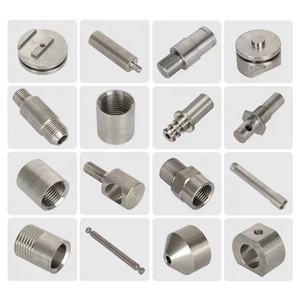
From sub-millimeter deep-drawn medical cannisters to heavy-gauge structural brackets and precision filtration media, our manufacturing lines deliver repeatable tight tolerances (±0.01 mm) with complete mill certification.
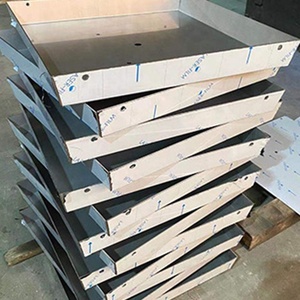
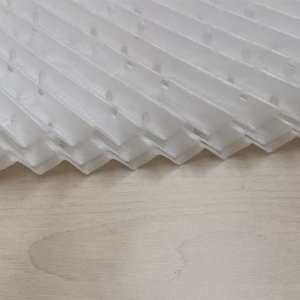
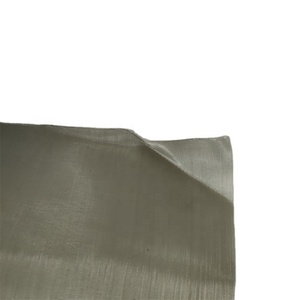
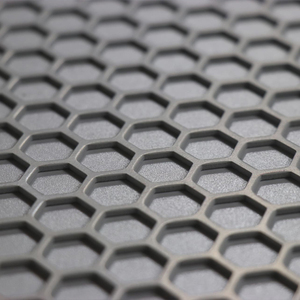
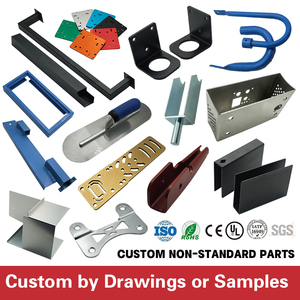
Sourcing metal pressings and stamped assemblies for Australian procurement requires addressing severe cyclonic winds, extreme thermal cycling, high salinity coastal interfaces, and ultra-abrasive mining environments.
Australia's coastline hosts significant infrastructure exposed to ISO 9223 / AS 4312 categories C4 (High), C5 (Very High Marine), and CX (Extreme). We stamp using certified Marine Grade AISI 316/316L, 2205 Duplex, and Passivated 304 stainless steel to inhibit pit initiation and stress corrosion cracking (SCC).
Rail bogies, heavy transport haulage, and vibrating screen decks in Western Australian open-cut pits demand strict fatigue thresholds. Our progressive tooling designs eliminate micro-burrs and uncontrolled shear edge fractures that act as stress concentration risers under cyclic oscillation.
Every production batch bound for Australia is shipped with EN 10204 3.1 Inspection Certificates tracing melt heats directly to tier-1 primary producers. Chemical spectroscopy and tensile tests verify mechanical equivalence to AS/NZS 1594, AS/NZS 3678, and ASTM structural grades.
Supplying mission-critical metal pressings, custom laser-welded brackets, and filtration assemblies deployed across every state and territory.
Western Australia's iron ore operations and Queensland's metallurgical coal corridors operate under continuous abrasive impact. Ambani Metals delivers heavy-gauge custom stamped conveyor clip brackets, structural gussets, vibrating screen clamp plates, and perforated trommel liners.
Precision punched holes with customized relief angles ensure reduced material blinding during wet screening and slurry recovery, keeping processing throughput at design capacities.
Utility-scale solar farms across regional New South Wales, Victoria, and Queensland require hundreds of thousands of identical structural brackets with a 25-to-30-year design life under AS/NZS 1170.2 cyclonic wind loads.
Our automated transfer presses stamp torque-tube clamps, module mounting brackets, and purlin connectors in high-tensile structural steel with pre-punched grounding tabs, accelerating on-site installation speeds.
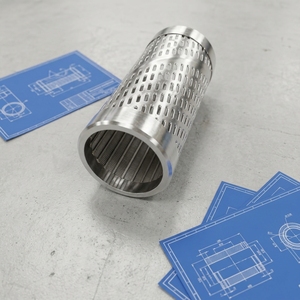
Pastoral irrigation and regional deep artesian boreholes rely on high crush-resistance sand control screens. We manufacture precision continuous-slot 304 and 316L V-Wire screens and perforated base pipes.
These screen cylinders prevent formation sand ingress, protect high-head submersible pumps from abrasive cavitation, and maximize hydraulic intake efficiency across rural water bore networks.
Australian tier-1 builders require non-combustible exterior shading and ventilation screening satisfying AS 1530.1 compliance under NCC 2022. We engineer corrugated wave-profile perforated panels in architectural aluminium and stainless alloys.
Applications include acoustic attenuation baffles for metropolitan rail interchanges, multi-deck car park cladding, and marine-grade security partitions for commercial precincts in Sydney, Brisbane, and Melbourne.
Australia’s biomedical manufacturing clusters in Victoria and New South Wales utilize our clean-room stamped cylindrical housings and deep-drawn stainless canisters.
Through multi-stage progressive deep drawing, we maintain mirror wall-thickness consistency (<2% concentricity drift) and ultra-low Ra surface finishes required for pharmaceutical fluid contact, filtration autoclaves, and diagnostic sensors.
Supplying process plants in Altona, Kwinana, and Gladstone with specialized mass transfer internals, bubble cap trays, and corrugated structured wire gauze packing.
These precision stamped distillation components deliver minimal pressure drop and maximum vapor-liquid interaction area, enabling brownfield column revamps that expand production capacity within existing shells.
How changing regulatory frameworks, sovereign manufacturing mandates, and decarbonization benchmarks influence tier-1 component contracts.
The Australian Federal Government’s National Reconstruction Fund (NRF) emphasizes domestic value addition while demanding dual-sourced global resilience for high-volume baseline pressings. Tier-1 contractors avoid sole-source vulnerability by securing reliable overseas manufacturing partners with certified direct shipping workflows into Fremantle, Melbourne, Sydney, and Brisbane.
Mining houses and energy developers across Australia are actively benchmarking Scope 3 embedded carbon emissions. By utilizing high-yield, low-waste progressive dies that optimize sheet nest configurations and sourcing scrap-recycled electric arc furnace (EAF) stainless steel coils, our processes lower embodied carbon per stamped kilogram.
High on-site labour costs in regional Australia mean contractors favor stamped components delivered pre-notched, countersunk, pre-tapped, and kitted in project-specific sequence. Our capability to deliver complete sub-assemblies—combining laser profiling, progressive forming, and robotic projection welding—slashes on-site crane and fitting hours.
Our factory houses stamping presses from 45 tonnes to 1,200 tonnes, managing small precision electronics clips up to 16 mm heavy plate structural joints.
| Process Type | Primary Material Grades | Thickness Envelope | Standard Tolerance | Target Application in Australia |
|---|---|---|---|---|
| Progressive Die Stamping | SS304/316L, Mild Steel, C11000 Copper | 0.2 mm – 4.5 mm | ±0.015 mm | Solar mounting clips, electrical switchgear lugs, automotive terminals |
| Multi-Stage Deep Drawing | Deep-Drawing Steel, Aluminium 5052, SS304L | 0.3 mm – 3.0 mm | ±0.025 mm | Seamless medical housings, filter canisters, pressure sensor shells |
| Heavy Plate Punching & Forming | AS 3678 Gr 250/350, Hardox Equivalent | 3.0 mm – 16.0 mm | ±0.10 mm | Mining conveyor brackets, rail sleeper plates, structural connection nodes |
| CNC Laser-Punch Combination | Stainless Alloys, Marine Aluminium 5083 | 0.5 mm – 20.0 mm | ±0.05 mm | Architectural ventilation façades, acoustic screens, pump chassis |
| V-Wire Resistance Welding | AISI 304, 316L, Hastelloy C-276 | Slot sizes 0.05 mm – 6.0 mm | ±0.015 mm | Borehole water extraction, catalyst bed supports, sand control pipes |
Founded in 1998, Ambani Metals combines over a quarter-century of precision metallurgy with an established global supply network delivering predictable quality directly to Australian project sites.
Equipped with slow-wire EDM, high-speed CNC machining centers, and CAD/CAM software to design, fabricate, and test progressive stamping dies in-house, cutting prototype tooling lead times to 2-3 weeks.
Certified under ISO 9001:2015 quality management systems. Our metrology laboratory features bridge CMMs, 2.5D optical video measurement systems, ultrasonic thickness gauges, and digital tensile test rigs.
Decades of export experience to 20+ countries. Every Australian order is treated with heavy-gauge VCI anti-corrosion barrier wrapping, desiccants, and ISPM-15 heat-treated fumigated timber crating.
Mill test reports conforming to EN 10204 3.1 accompany every single batch. Heat-stamped serialisation and barcode-linked quality dossiers guarantee zero-risk compliance for civil infrastructure audits.
Detailed technical guidance on lead times, standards certification, duty concessions, and tooling protocols.
We benchmark our raw alloy chemistries and yield strengths against relevant Australian standards (such as AS/NZS 1594 for hot-rolled steel, AS/NZS 3678 for structural plates, and AS 1449 for stainless steel flat products). Each production heat includes complete EN 10204 3.1 certificates detailing carbon equivalent (CE), tensile strength, yield strength, and elongation. Independent third-party NATA testing can be coordinated prior to ocean departure.
Tooling manufacturing and first-article sample sign-off typically require 15 to 25 calendar days. Upon sample approval, standard production runs of 10,000 to 500,000 units take approximately 2 to 4 weeks. Ocean transit times are reliable: Fremantle (14-18 days), Port of Melbourne (18-22 days), Port Botany / Sydney (20-24 days), and Port of Brisbane (22-26 days). Air-freight options are available for rapid turnaround engineering prototypes.
Yes. For OEM procurement programs and recurring infrastructure supply contracts, we offer flexible tooling arrangements. Tooling investments can be paid 100% upfront (granting the buyer exclusive die ownership and maintenance guarantees for life-of-program), or amortized across scheduled component deliveries over an agreed multi-year supply volume.
Given the extreme temperature and humidity swings across the Indian Ocean and equatorial shipping lanes, export packaging follows strict multi-barrier standards: parts are degreased, preserved with dry protective coatings or corrosion-inhibiting light oils, wrapped in heavy-gauge Volatile Corrosion Inhibitor (VCI) plastic, sealed with desiccants, and secured in heavy-duty ISPM-15 timber cases with internal bracing.
Every shipment includes clean commercial invoices, packing lists with itemized gross/net weights, ocean bills of lading, Certificates of Origin (COO), and formal ISPM-15 fumigation declarations. Where applicable, our engineering team supplies exact Australian Customs Tariff Classifications (HS Codes, e.g., 7326.90 for other articles of iron or steel, 8431 for machinery pressings) to assist your customs broker in claiming valid Tariff Concession Orders (TCOs).
Because our progressive press lines are engineered for automated continuous operation, production runs typically start at 5,000 to 10,000 units for smaller brackets and pressings. For larger deep-drawn shells or heavy-gauge laser-punch assemblies, minimum batch sizes can be tailored as low as 500 to 1,000 units to support specialized project phases.