- +91-9930498858Call / WhatsApp
- [email protected]Email Us
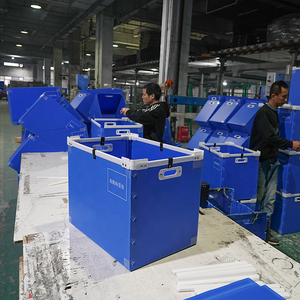
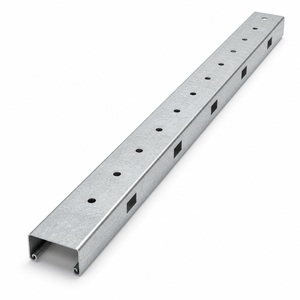
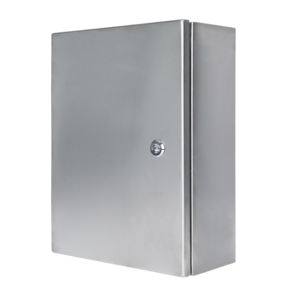
Explore our core OEM/ODM extrusion filter assemblies, progressive deep-drawn components, and industrial enclosures supplied directly to processing lines across Eastern Europe.
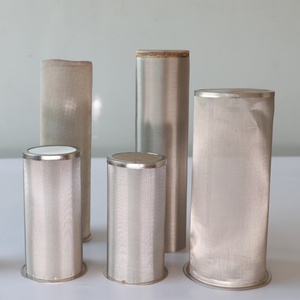
A rigorous examination of melt pressure differential (ΔP), screen shear stress, and contaminant retention across high-throughput thermoplastic extrusion systems.
In modern thermoplastic extrusion—encompassing polyolefin film blowing, pipe extrusion, masterbatch compounding, and post-consumer plastics recycling—the breaker plate assembly and its associated extruder screen mesh represent the ultimate mechanical defense against melt stream contamination. From an engineering perspective, an extruder screen is not merely a sieve; it is an active hydraulic resistor that directly conditions the polymer melt. Under continuous operating temperatures ranging from 180°C to 340°C and head pressures surpassing 15 to 35 MPa (150 to 350 bar), screen packs must maintain geometric pore stability while preventing polymer degradation caused by localized shear overheating.
When selecting OEM/ODM screen mesh configurations, mechanical design engineers must balance filtration fineness against pressure drop. A finer mesh rating increases particle entrapment (such as unmelted polymer gels, crosslinked carbon specks, degraded additives, metallic particles, and extraneous grit) but accelerates the rate of pressure accumulation behind the breaker plate. If the wire diameter, tensile modulus, or weave geometry is improperly specified, the screen media suffers from wire shifting, strand elongation, or catastrophic blow-out. This results in unfiltered contaminants passing into the extrusion die, causing melt fractures, surface blemishes, bubble collapse in blown film lines, or structural defects in technical profile extrusion.
Fabricated using multiple layers of plain square weave or twilled wire cloth spot-welded at uniform perimeter intervals. Standard configuration utilizes coarse support meshes flanking a fine Dutch or square filtration layer.
Constructed by encasing single or multi-layer mesh packs within a protective metallic rim (aluminum, copper, or annealed stainless steel). Prevents edge fraying and completely eliminates edge leakage in hydraulic slide changers.
Manufactured through solid-state diffusion bonding under high vacuum and heat. Diffusion bonding locks every wire crossover point into a monolithic porous matrix with zero wire migration under extreme ΔP spikes.
Quantitative selection criteria covering weave classifications, aperture sizes, mechanical burst thresholds, and targeted polymer viscosity classes.
| Weave / Pack Type | Typical Mesh Count (Per Inch) | Filtration Rating (Micron μm) | Burst Resistance (ΔP Threshold) | Recommended Polymer Systems |
|---|---|---|---|---|
| Plain Square Weave | 10 × 10 to 120 × 120 | 150 μm – 2000 μm | Low to Moderate (Up to 8 MPa) | Virgin LDPE/LLDPE, HDPE blown film, masterbatch carrier base |
| Twilled Square Weave | 150 × 150 to 400 × 400 | 35 μm – 105 μm | Moderate (Up to 14 MPa) | Optical-grade PET sheet, PP spunbond nonwovens, PS sheet |
| Plain Dutch Weave (PDW) | 14 × 88 to 50 × 250 | 40 μm – 300 μm | High (Up to 22 MPa) | Rigid PVC pipe, compounding extruders, technical ABS profiles |
| Reverse Dutch Weave (RDW/PZ) | 72 × 15 to 132 × 16 | 60 μm – 250 μm | Very High (Up to 30 MPa) | Continuous auto-screen belt changers, highly contaminated PCR |
| 5-Layer Sintered Laminate | Custom Composite Matrix | 2 μm – 100 μm | Ultra High (> 35 MPa) | Degassed underwater pelletizing, EVA solar encapsulants, PA6/PA66 |
| Rimmed Multi-Layer Sandwich | 20 / 60 / 100 / 60 / 20 | Custom tailored | High (Up to 25 MPa) | Dual-piston hydraulic screen changers, agricultural drip tape |
*Note: All technical values represent nominal operating conditions. Precise burst ratings depend on breaker plate support hole diameter, melt temperature index, and alloy specification (AISI 304 vs 316L vs Hastelloy C-276).
How precision OEM/ODM extrusion filter mesh empowers automotive parts compounders, agricultural packaging plants, and circular plastic recyclers in Sofia, Plovdiv, and Burgas.
Bulgaria has emerged as a strategically vital polymer processing and industrial manufacturing corridor in Southeastern Europe. Driven by competitive operational costs, robust industrial infrastructure, and integration into the European Union internal supply chain, processing plants throughout Bulgaria demand filtration media that meet stringent DIN, ISO, and EU regulatory standards. The extrusion landscape within the country exhibits three distinct regional concentrations, each presenting specific technical requirements for melt screen packs:
As the premier manufacturing cluster of Bulgaria, the Plovdiv basin hosts premier Tier-1 and Tier-2 automotive component producers, electrical system moulders, and engineering plastics compounders. Operations compounding polyamide (PA6, PA66), polybutylene terephthalate (PBT), and polyoxymethylene (POM) reinforced with glass fibres (15% to 50% loading) or mineral fillers face intense abrasive wear. Standard low-tensile wire mesh rapidly erodes, leading to metal contamination and variable strand diameters. Ambani Metals delivers OEM wear-resistant screen discs manufactured from high-nickel stainless alloys and hardened 316L mesh with surface passivated finishes. These discs endure the scouring effect of glass fibers, preventing aperture distortion and ensuring that critical electrical and under-the-hood automotive mouldings achieve impeccable tensile strength and dielectric performance.
With Bulgaria implementing stringent national targets aligned with the European Circular Economy Action Plan, the plastics recycling sector centered around Sofia, Pazardzhik, and Veliko Tarnovo has expanded exponentially. Recyclers converting post-agricultural greenhouse polyethylene films, post-commercial stretch films, and post-consumer polyolefin bottles into high-grade rPE and rPP pellets face severe contamination: residual soil, silicates, moisture vapor micro-bubbles, paper fibers, and cross-contaminating polymers. In these grueling conditions, standard screens choke within minutes. We supply Bulgarian recycling lines with high-throughput Reverse Dutch Weave continuous belts (specifically PZ 72/15 and PZ 132/16) and heavy-duty 5-layer sintered packs. These architectures provide the deep dirt-holding capacity required to operate continuous backflush screen changers without catastrophic blow-out or rapid line shutdowns.
Bordering the Black Sea and the Danube, Burgas and Ruse represent historic centers for base polymer refining, masterbatch synthesis, and packaging fabrication. Extrusion blown-film producers fabricating high-barrier multilayer films, shrink packaging, and agricultural geomembranes require microscopic optical cleanliness. Any carbon speck larger than 40 microns can rupture a 12-micron blown bubble, causing costly line re-threading and downtime. Our precision-calibrated twilled Dutch woven packs and aluminum-rimmed filter discs are stamped with zero burrs and cleaned in multi-stage ultrasonic de-greasing baths to guarantee zero hydrocarbon oil residue, delivering pristine clarity to flexible packaging converters across Eastern Bulgaria.
Technological, regulatory, and economic drivers dictating the transition to higher-durability, energy-efficient filtration media.
The impending EU Packaging and Packaging Waste Regulation (PPWR) mandates progressively higher recycled resin inclusion rates across all plastic containers and films in Bulgaria. Melt streams containing 30% to 70% PCR necessitate multi-stage differential filtration. Processors are abandoning single-layer wire cloth in favor of stepped multi-layer packs (e.g., 20/40/80/120/20 mesh) that retain micro-contaminants without generating immediate backpressure spikes.
Industrial electricity rates across Southeastern Europe have caused processors to scrutinize every kilowatt consumed per kilogram of output. Clogged or aerodynamically inefficient screen cloth induces elevated melt viscosity resistance, causing main extruder motors to draw excessive amperage. Ambani Metals’ precision Dutch weave geometry features an optimized open-area ratio, dropping baseline ΔP by 12% to 18% compared to generic imported mesh and lowering motor power consumption.
To eliminate costly line interruptions during screen changeovers, Bulgarian plants are retrofitting manual lever changers with continuous automated ribbon belt changers (such as autofilter belts). These systems pull a continuous roll of reverse Dutch wire cloth (typically 100mm to 350mm width) across the melt stream. Our automated screen rolls are engineered with reinforced selvedge edges to withstand tractive pulling forces up to 20,000 N without edge curling or polymer bleed.
Combining over 25 years of specialized alloy fabrication with end-to-end quality assurance, we deliver direct supply reliability to Bulgarian industrial partners.
Every roll of wire cloth and stamped disc is fabricated from certified virgin alloys (SS304, 304L, 316, 316L, Monel 400, Hastelloy C276, and Inconel 600) with complete EN 10204 3.1 chemical and mechanical inspection certificates.
Equipped with progressive stamping presses, laser cutting beds, high-vacuum diffusion bonding sintering furnaces, and deep drawing machinery, we handle custom ODs from 15mm to 1200mm with tolerances tighter than ±0.05 mm.
Every batch undergoes bubble point testing (ISO 4003) for absolute micron verification, optical aperture sizing via digital vision systems, PMI spectrometer alloy verification, and tensile wire break resistance tests prior to packaging.
Established export documentation, phytosanitary fumigated seaworthy wooden crating, moisture-barrier vacuum foil packaging, and reliable express air or freight transit directly to Sofia, Burgas, or Varna with clear customs documentation.
Direct answers addressing technical mesh configurations, alloy compatibility, import procedures, and custom OEM manufacturing.
Whether you require standard spot-welded screen discs, auto-screen continuous rolls, or custom diffusion-bonded sintered filter tubes, Ambani Metals’ metallurgical engineering division is ready to review your process specifications and supply high-precision samples directly to your Bulgarian manufacturing plant.