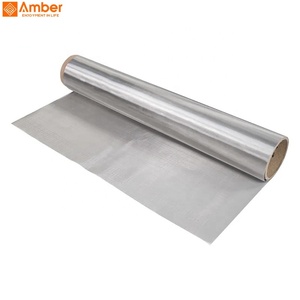
Durable Aluminum Alloy Woven Wire Mesh Industrial Filter Cloth
High-strength aluminum alloy wire cloth engineered for process liquid filtration, oil-water de-entrainment, and lightweight industrial sieving.

Direct-from-factory mass transfer internals, precision-woven wire filtration cloth, and rugged sheet metal enclosures engineered to meet European and Austrian plant standards.
High-strength aluminum alloy wire cloth engineered for process liquid filtration, oil-water de-entrainment, and lightweight industrial sieving.
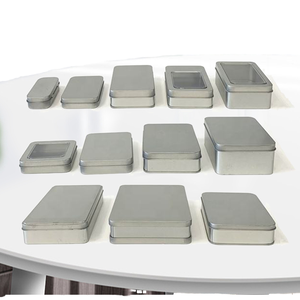
Deep-drawn, seam-accurate custom tinplate packaging with sliding hinge fixtures for precision components, industrial parts, and OEM accessories.
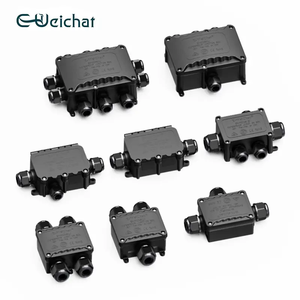
Industrial flame-retardant electrical junction box with tight IP68 protection, designed for alpine weather resistance and rugged chemical site monitoring.
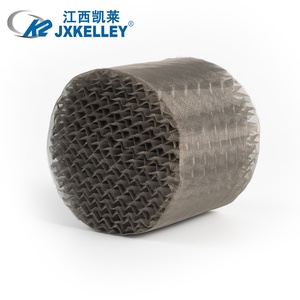
Fine capillary wire gauze structured packing ensuring outstanding mass transfer efficiency and minimal pressure drop under vacuum distillation conditions.
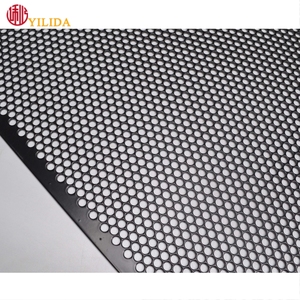
Laser-perforated and CNC-punched austenitic stainless steel sheet mesh providing robust filtration support, acoustic damping, and facade durability.
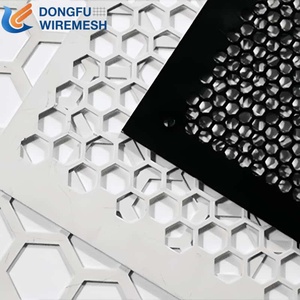
Engineered corrugated mesh sheets with precise bend geometries, serving specialized process demisting beds and modern industrial architecture.
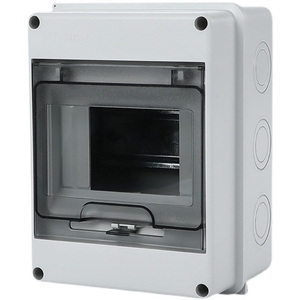
High-rigidity surface-mounted distribution enclosure featuring anti-corrosion sealing for decentralized factory power circuits and sensor nodes.
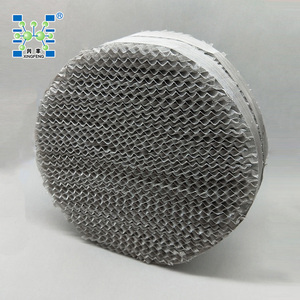
Standard and custom corrugated wire gauze modules engineered for chemical separation, solvent purification, and thermal rectification columns.
Serving the demanding operational profiles of Upper Austria's Chemiedreieck, Lower Austria's Schwechat refining corridor, Styria's high-tech manufacturing, and Tyrol's pharmaceutical plants.
Austria's industrial core is internationally recognized for operational excellence, strict energy-efficiency mandates, and uncompromising environmental accountability under European CE and REACH guidelines. From the specialty chemical processing centers in Linz and Burghausen along the Danube basin to the biopharmaceutical clusters in Tyrol and Vienna, chemical separation columns face demanding operational throughputs. Maximizing mass transfer velocity while curbing energy consumption requires column packing characterized by high hydraulic capacity, negligible HETP (Height Equivalent to a Theoretical Plate), and consistent micro-surface wetting.
As an experienced sheet metal packing factory and column internals exporter, we supply engineered corrugated sheet metal structured packing, stainless steel wire gauze packing, distillation trays, and specialized support internals directly fabricated to European dimensional standards. Whether upgrading existing fractionating towers during scheduled plant turnarounds or engineering skids for renewable chemical synthesis, our manufacturing precision ensures quick drop-in interchangeability, rigorous weld certifications, and verified pressure-drop ratings.
Austrian plant engineers are systematically replacing standard random dumped packing (such as Pall rings and saddles) with structured sheet metal packing. By aligning corrugation angles (30° X-style for high throughput or 45° Y-style for balanced stage efficiency), the flow paths of liquid and vapor phases are strictly controlled. This structural geometry eliminates fluid channeling, reduces pressure drop by up to 60%, and increases production throughput by 30% to 50% within existing column shells—a vital capability given stringent Austrian industrial site expansion restrictions.
Widely deployed in Linz and Lower Austria for intermediate synthesis, polyolefin fractionation, and solvent recovery columns requiring SS316L, 904L, and Hastelloy C276 alloys resisting harsh acid condensation.
Custom-engineered corrugated sheet modules with anti-fouling surfaces designed for continuous biofuel distillation, bio-succinic acid refining, and green methanol separation skids.
Ultra-fine wire gauze structured packing (500 BX & 700 CY) delivering high theoretical stage counts per meter under high-vacuum conditions for thermo-labile compound purification in Kundl/Vienna hubs.
Integrated mass transfer random packing, demister wire meshes, and robust IP68 electrical boxes fabricated for flue gas scrubbing, municipal ammonia strippers, and decentralized Alpine wastewater digestion facilities where corrosion resilience and minimal maintenance are paramount.
Comprehensive technical metrics to assist process simulation engineers (Aspen Plus / PRO/II) and Austrian plant EPC teams in selecting optimal internal geometries.
| Packing / Internal Type | Specific Surface Area | Corrugation Angle | Typical HETP (mm) | Pressure Drop (ΔP/m) | Optimal Operating Service |
|---|---|---|---|---|---|
| Structured Packing 125Y / 250Y | 125 - 250 m²/m³ | 45° (Smooth Drain) | 400 - 650 | 0.3 - 1.2 mbar | High liquid throughput, debottlenecking, refinery crude cut towers |
| Structured Packing 350X / 500X | 350 - 500 m²/m³ | 30° (High Efficiency) | 220 - 350 | 0.8 - 2.5 mbar | Fine chemicals, specialty isomer distillation, solvent dehydration |
| Wire Gauze Packing 500(BX) | 500 m²/m³ | 45° / Capillary Weave | 150 - 200 | 0.2 - 0.6 mbar | Deep vacuum distillation, high-purity pharmaceutical APIs, aroma fractionation |
| Wire Gauze Packing 700(CY) | 700 m²/m³ | 45° / Micro-mesh | 100 - 150 | 0.4 - 0.9 mbar | Heavy water separation, isotope extraction, ultra-pure electronics chemicals |
| Valve & Sieve Trays | Variable Open Area | N/A (Multi-pass) | Tray Spacing Dependent | 3.0 - 7.0 mbar/tray | Heavily fouling feeds, slurry absorption, high vapor velocity columns |
How stringent Austrian carbon neutrality milestones and modern digitalization are reshaping demand for column hardware and sheet metal components.
Austria has committed to reaching climate neutrality by 2040—a decade ahead of the wider EU target. This regulatory framework exerts immense pressure on chemical and industrial manufacturing assets to curb thermal inefficiencies. Traditional thermal distillation accounts for roughly 40% of all energy consumed in fluid separation processes across Austrian chemical plants. As a result, retrofitting older, inefficient trayed fractionators with low-pressure-drop corrugated sheet metal structured packing has become an industry priority.
Lower column pressure drop directly translates to lower boiling temperatures at the reboiler. In operational practice, this enables Austrian plants to power distillation processes using low-grade waste steam, industrial heat pumps, or decentralized renewable thermal circuits, directly decreasing carbon levy burdens. Additionally, circular economy initiatives demand longer equipment lifecycle durability. Plant managers in Upper Austria and Styria are demanding certified premium alloys (such as DIN 1.4404 / SS316L, 1.4539 / 904L, and nickel-chromium alloys) accompanied by complete raw material heat certificates to prevent premature stress corrosion cracking caused by fluctuating batch runs.
Simultaneously, modular skid construction is dominating new plant erection across Central Europe. Rather than assembling massive columns on-site, Austrian engineering firms are sourcing pre-segmented, manway-ready column sections and pre-wired outdoor IP68 enclosures. These components can be dropped into place and commissioned quickly during tight maintenance turnaround windows.
Combining 25+ years of Indian manufacturing craftsmanship with rigorous European testing, documented traceability, and export logistics competence.
Mill-certified stainless steel (304/304L, 316/316L) and specialty alloys (Hastelloy, Monel, Inconel, Titanium) backed by EN 10204 3.1 inspection certificates and spectrographic verification.
Fully vertically integrated facility spanning precision CNC sheet stamping, deep drawing, corrugation line forming, Dutch/twill mesh weaving, and automated TIG welding under one roof.
Full readiness for pre-shipment inspections by independent agencies such as TÜV Austria, SGS, or Bureau Veritas. Complete dimensional and hydraulic QA reports accompany every consignment.
Treated seaworthy and airfreight wooden crating compliant with ISPM 15 standards, moisture-barrier wrapping, tagged sub-assemblies, and rapid dispatch directly to Austrian plant sites.
Practical answers covering international standards conformity, customs clearance, logistics timelines, and mechanical warranties.
Yes. While internal mass transfer packings are classified as non-pressure vessel internal components, our materials, welding procedures, and quality documentation strictly align with the material specification requirements of PED 2014/68/EU. Full EN 10204 Type 3.1 material test certificates accompany all stainless steel and nickel alloy orders.
For urgent refinery turnarounds and shutdown maintenance, airfreight shipments can arrive at Vienna International Airport (VIE) within 4 to 7 business days from dispatch. Standard volume container sea freight ships to major European gateway ports (such as Hamburg, Rotterdam, or Koper) with bonded rail transit directly into Austrian freight terminals (Linz, Graz, Vienna) within 24 to 30 days.
Absolutely. If your original equipment manufacturer drawings are unavailable, our engineering team can work from field measurements, photographs, process flow sheets, or sample segments. We match corrugated crimp heights, surface textures, perforation diameters, and block dimensions to match your existing column nozzles and support rings perfectly.
We supply complete export trade documentation, including commercial invoices, packing lists with detailed HS code classifications (such as 7314 / 7326 / 8421), certificates of origin, and EUR.1 movement forms where applicable. Austrian corporate buyers can easily clear consignments through their designated domestic customs broker using their Austrian EORI number.
Our metallurgy specialists assess your exact fluid composition, pH levels, operating temperatures, and chloride presence. While AISI 304L and 316L serve standard duties, we routinely manufacture structured packing in duplex stainless steel (2205), high-molybdenum stainless (904L), and Hastelloy C276 to eliminate pitting and stress corrosion cracking in aggressive organic acid services.
To provide an exact proposal, please provide your column internal diameter, packed bed height (or number of theoretical stages), operating pressure/temperature, vapor/liquid mass flow rates, physical fluid properties (density, viscosity, surface tension), and preferred metal grade. You can attach your process datasheet directly via our live chat window.
Consult with our mass transfer engineers today. Get rapid turnaround quotes, technical simulations, and customized drawings for your next Austrian plant revamp or greenfield project.