
- +91-9930498858Call / WhatsApp
- [email protected]Email Us
Certified industrial solutions manufactured under stringent quality parameters for maximum hydraulic capacity, corrosion resistance, and operational lifespan in harsh tropical processing facilities.
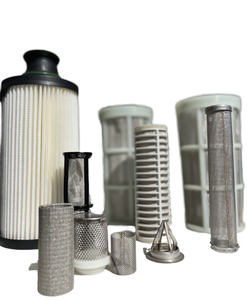
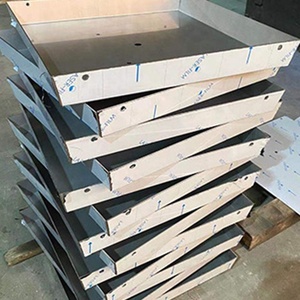
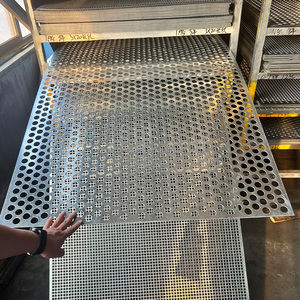
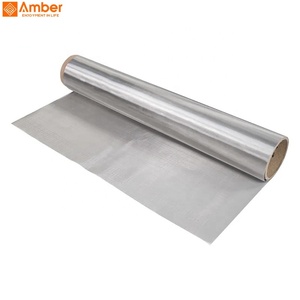
Strategic deployment of corrugated sheet metal structured packing across tropical archipelagic chemical processing networks, palm oil refining, and offshore gas monetization.
In high-capacity fractional distillation, gas absorption, and vacuum stripping columns, sheet metal structured packing represents the technological pinnacle of mass transfer efficiency. Fabricated from corrugated metal sheets arranged in alternating parallel orientations, this geometry generates intricate cross-flow channels that force vapor and liquid phases into intimate, continuous counter-current contact. For industrial facilities operating throughout the Republic of Indonesia—from the petrochemical corridors of Cilegon (Banten) and refinery clusters in Balikpapan (East Kalimantan), to oleochemical refining epicenters in Dumai (Riau) and Medan (North Sumatra)—the selection of column internals requires deep empirical engineering that accounts for specific process fluid rheology and equatorial operating conditions.
Our corrugated sheet metal structured packings (engineered standard series 125Y/X, 250Y/X, 350Y/X, and 500Y/X) feature proprietary surface texturing options: smooth, mechanically dimpled, fluted, and precision micro-perforated. The incorporation of microscopic perforations facilitates immediate capillary spread across the metallic substrate, preventing the classic channeling and premature maldistribution that plague conventional packed towers. The corrugation angle, typically designated as 'X' (30° inclination to vertical for high-capacity, low-pressure-drop services) or 'Y' (45° inclination for optimal mass transfer staging efficiency), allows chemical process engineers to balance theoretical stage height (HETP) against column hydraulic capacity.
In vacuum applications, such as heavy fuel oil fractionators and heat-sensitive fatty acid fractionating columns, the extremely low pressure drop per theoretical stage (typically <0.3 to 0.5 mbar per theoretical plate) provided by structured sheet metal avoids thermal degradation of temperature-sensitive hydrocarbon and ester bonds, an essential operational threshold for Indonesian palm oil derivative producers.
The operational landscape across Indonesia presents distinctive processing environments requiring rigorous metallurgical matching:
Understanding the interplay between geometric surface area, void fraction, and system pressure drop is vital for EPC contractors formulating process simulation packages (Aspen Plus, HYSYS) for Indonesian projects:
| Packing Type / Internals | Specific Surface Area (m²/m³) | Void Fraction (%) | Typical HETP (mm) | Pressure Drop (mbar/m) | Primary Industrial Field in Indonesia |
|---|---|---|---|---|---|
| Structured Packing 125Y | 125 | 98.5% | 800 – 1100 | 0.2 – 0.6 | Atmospheric Crude Units, High-Capacity Debottlenecking |
| Structured Packing 250Y/X | 250 | 97.0% | 350 – 500 | 0.4 – 1.1 | CPO Fatty Acid Fractionation, Refinery Vacuum Columns |
| Structured Packing 350Y | 350 | 95.5% | 280 – 380 | 0.8 – 1.8 | Petrochemical Aromatics Separation, Solvent Extraction |
| Structured Packing 500Y | 500 | 93.0% | 180 – 260 | 1.2 – 3.2 | High-Purity Pharmaceutical API, Specialty Isomer Separation |
| Metal Random Packing (Pall / Saddle) | 110 – 220 | 94.0 – 96.5% | 500 – 750 | 1.5 – 4.5 | CO₂ Scrubbers, Acid Gas Absorbers, Water Degasifiers |
| High-Performance Trays (Valve / Sieve) | Varies | 80.0 – 90.0% | Stage Eff: 65-85% | 3.0 – 8.0 / tray | Fouling Petrochemical Slurries, High Turndown Strippers |
Indonesia's ongoing implementation of national energy transitions—most notably the aggressive expansion from B35 to B40/B50 biodiesel mandates and burgeoning Carbon Capture, Utilization, and Storage (CCUS) feasibility studies across the Natuna and Arun fields—is profoundly transforming mass transfer equipment demand. Bio-refineries converting crude palm oil and used cooking oil (UCO) into sustainable aviation fuel (SAF) and Hydrotreated Vegetable Oil (HVO) require high-vacuum distillation internals capable of separating complex hydrocarbons without coke formation.
Simultaneously, post-combustion and pre-combustion carbon capture towers operating with monoethanolamine (MEA) or proprietary sterically hindered amine solvents mandate column packings with maximal interfacial mass transfer area per unit volume coupled with exceptionally low hydraulic resistance to reduce parasitic fan and reboiler electrical loads. Ambani Metals actively designs low-foaming, passivated stainless steel and specialty alloy structured packings tailored specifically to enhance gas absorption kinetics under the elevated ambient temperatures endemic to Southeast Asian maritime environments.
Decades of continuous manufacturing excellence, fully integrated metallurgical traceability, and robust export protocols supporting projects worldwide.
Every batch of raw stainless steel, Monel, Hastelloy, or aluminum coil is backed by EN 10204 3.1 Material Test Certificates (MTC), ensuring absolute structural and chemical integrity against intergranular corrosion.
In-house precision high-speed slitting, corrugation stamping, deep drawing, laser perforating, and wire cloth weaving ensure strict adherence to fabrication tolerances without relying on third-party subcontractors.
Comprehensive pre-shipment quality verification including PMI (Positive Material Identification), geometric checks, surface roughness tests, and support for third-party inspections (SGS, Bureau Veritas, TÜV).
Packaged in reinforced, heat-treated ISPM-15 compliant timber cases with moisture barrier vacuum wrapping, custom labeled for streamlined customs clearance at Tanjung Priok, Tanjung Perak, or Balikpapan ports.
Addressing engineering specifications, logistical compliance, import documentation, and operational compatibility for local project managers and buyers.
Consult with our mass transfer technical team for process calculations, hydraulic simulations, custom sheet metal fabrication, and competitive export delivery across Indonesia.
Contact Us