- +91-9930498858Call / WhatsApp
- [email protected]Email Us
Explore our export-certified mass transfer internals, precision perforated filter components, and fabricated hardware ready for direct dispatch to Ashdod and Haifa industrial terminals.
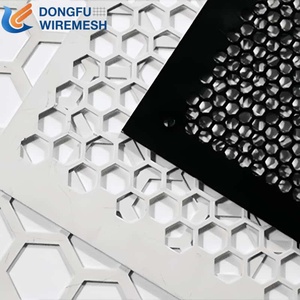

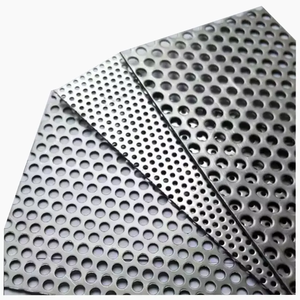
A comprehensive technical perspective on vapor-liquid dynamics, weeping prevention, and tray hydraulic stability in high-severity distillation towers.
Distillation and stripping columns represent the thermal beating heart of chemical manufacturing and petroleum refining facilities across Israel. From the continuous crude fractionation trains operating at the Bazan Oil Refineries in Haifa Bay to specialty solvent recovery units in the Neot Hovav Eco-Industrial Park, mass transfer efficiency directly governs plant profitability, energy consumption, and product purity. Sieve trays remain the definitive industry workhorse for clean to moderately fouling duties, offering an optimal balance of hydraulic capacity, low fabrication cost, and predictable theoretical stage efficiency when designed according to precise kinetic models.
As a dedicated manufacturer and global exporter, our engineering facilities utilize advanced computerized hydraulic algorithms conforming to classic Fair, Souders-Brown, and Zuiderweg mass transfer correlations. A sieve tray operates on a straightforward yet delicate principle: vapor ascending through perforated round holes maintains a dispersed bubbly or frothy froth layer of liquid, preventing premature liquid drainage (weeping) while simultaneously transferring volatile components across the phase boundary. Achieving stable operational equilibrium requires rigorous calibration of the hole diameter ($d_h$), tray open area ratio ($\beta$), active bubbling area ($A_a$), and downcomer clearance ($h_{cl}$).
Standard sieve trays historically exhibit a turndown ratio of approximately 2:1. By engineering graduated hole distributions, venturi perforations, and variable hole pitches (3.0 to 4.5 hole-diameter centers), our designs elevate turndown flexibility to 2.8:1, preventing weeping during low-load seasonal campaigns in Israeli regional plants.
For vacuum fractionators and heat-sensitive organic compounds, minimizing dry and wet tray pressure drop ($\Delta P$) is critical. We punch precision hole matrices ranging from 3.2 mm to 12.7 mm with clean, burr-free edges that eliminate micro-eddy turbulence, keeping total column bottom temperature well below degradation thresholds.
Recognizing the tight space limitations of column revamps during scheduled turnaround windows, all tray decks, downcomer aprons, and support trusses are divided into modular, manway-accessible sections (typically 380 mm to 450 mm width) that slide through standard vessel manholes effortlessly.
Our engineering technical team provides comprehensive hydraulic design packages with every proposal, including Downcomer Backup Calculations ($h_{dc}$), Froth Entrainment Checks ($E/V$), Jet Flooding Margin Ratings (typically targeted below 80% at maximum rated capacity), and Weep Point Limits based on dynamic $F$-factor calculations ($F_s = u_a \cdot \sqrt{\rho_v}$).
Engineered alloy solutions resisting aggressive chlorides, concentrated bromides, sour sulfur hydrocarbons, and high-salinity marine ambient atmospheres.
Industrial processing facilities situated near the Mediterranean coastline (such as the energy complexes in Ashdod and Haifa) or bordering the hyper-saline Dead Sea basin operate under some of the world's most aggressive atmospheric and process corrosion conditions. Standard austenitic stainless steels like AISI 304 frequently suffer from rapid pitting and chloride-induced stress corrosion cracking (CSCC). Ambani Metals supplies certified sieve trays fabricated strictly from certified high-performance alloys conforming to ASTM, DIN, and EN specifications.
| Material Grade | UNS / EN Spec | Key Corrosion Strengths | Typical Israeli Application | Traceability |
|---|---|---|---|---|
| AISI 316L / 316Ti | UNS S31603 / 1.4404 | Enhanced resistance to pitting in mild chloride solutions; low carbon prevents carbide precipitation. | Haifa Bay refinery general fractionation, bio-diesel distillation, wastewater strippers. | EN 10204 3.1 |
| 254 SMO (6% Moly) | UNS S31254 / 1.4547 | PREN ≥ 42. Extraordinary resistance to localized pitting and crevice attack in aggressive brine. | Dead Sea Works potash evaporation towers, coastal seawater desalination degassing columns. | EN 10204 3.1 |
| Nickel Alloy C-276 | UNS N10276 / 2.4819 | Exceptional resistance to wet chlorine, hypochlorite, and severe organic bromide distillation streams. | ICL Industrial Products (Ramat Hovav) elemental bromine recovery, halogenated API reactions. | EN 10204 3.2 Avail |
| Titanium Grade 2 | UNS R50400 / 3.7035 | Virtually immune to ambient and boiling chloride salts; stable passive titanium oxide surface film. | Marine vapor condensers, SWRO brine concentration strippers, coastal scrubbers. | EN 10204 3.1 |
| Alloy 20 / 904L | UNS N08020 / N08904 | High nickel and copper content providing superior defense against sulfuric and phosphoric acid media. | Rotem Amfert Negev fertilizer acid clarification, alkylation chemical contactors. | EN 10204 3.1 |
All punched sieve tray decks undergo automated leveling, automated deburring, and rigorous post-fabrication passivating following ASTM A380 standard practices. Welded truss beams and downcomer brackets are executed by ASME Section IX certified welders with 100% dye-penetrant (PT) inspection on structural load welds, ensuring zero crevice initiation sites where chloride stress micro-fractures can initiate.
Custom-engineered column internals matching the exact process demands of Israel's distinctive geographic manufacturing corridors.
In the refining complexes of Bazan Group, Carmel Olefins, and Gadiv Petrochemicals, our sieve trays serve in naphtha splitters, depropanizers, and aromatic fractionation columns. Engineered for heavy liquid loads and high vapor throughput, our multi-pass (2-pass and 4-pass) sieve tray designs maintain uniform liquid hydraulic gradient across large tower diameters (up to 4,500 mm), mitigating stagnant zones and premature flooding.
ICL Dead Sea operations at Sdom extract potash, elemental bromine, and magnesium chloride from hypersaline brine. The presence of aggressive halogen ions makes conventional column hardware unviable. We supply custom sieve and perforated trays fabricated in Hastelloy C-276, Titanium Gr. 2, and specialized Teflon-coated alloys engineered to resist severe salt fouling, scaling, and bromide vapor attack.
Israel's premier eco-industrial chemical park near Be'er Sheva hosts global pharmaceutical active pharmaceutical ingredient (API) developers (such as Teva) and specialty chemical producers. Here, sieve trays are used in batch vacuum distillation columns for high-value organic synthesis, solvent regeneration (acetone, methanol, toluene), and volatile stripping, demanding mirror-polished Ra < 0.4 μm sanitary finishes to prevent cross-contamination.
Furthermore, Israel's rapidly expanding offshore natural gas infrastructure—centered on the Leviathan, Tamar, and Karish fields—relies on compact offshore and onshore condensate stabilization columns and monoethylene glycol (MEG) regeneration contactors. For these installations, our sieve trays incorporate high-performance anti-motion wave dampers, customized weir baffles, and heavy-gauge clamping rings designed to handle dynamic vessel motion and slug surges safely.
Navigating strict environmental regulations, Zero Liquid Discharge (ZLD) mandates, and rapid plant modernization initiatives.
The Israeli Ministry of Environmental Protection (MoEP - המשרד להגנת הסביבה) has enforced some of the world's most stringent emissions, volatile organic compound (VOC) release limits, and industrial effluent regulations under the Clean Air Law (חוק אוויר נקי). Consequently, chemical and refining operators are actively modernizing aging separation units to cut energy consumption, eliminate fugitive emissions, and achieve high solvent recovery efficiencies exceeding 99.5%.
This shift drives four distinct technical trends within the Israeli procurement ecosystem:
Direct factory manufacturing, rigorous metallurgical integrity, and seamless sea freight logistics directly to Port of Ashdod and Port of Haifa.
Every sheet of raw stainless or exotic alloy is mill-certified from prime producers. EN 10204 3.1 MTRs and spectrographic PMI test records are systematically archived and supplied with each dispatch.
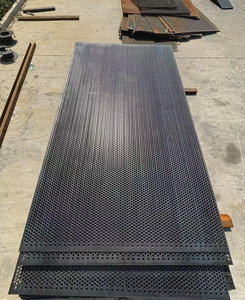
CNC turret punch presses and laser cutting systems manufacture sieve tray decks with pitch tolerance within ±0.05 mm, ensuring identical vapor velocity distribution without dead flow pockets.
We understand that refinery shutdowns in Israel cannot tolerate delays. Our streamlined production protocols enable rapid emergency manufacturing of replacement sieve trays within 10 to 14 working days.
All items are labeled with stainless tags matching tower elevation drawings, individually bubble-wrapped, and packed into fumigated ISPM-15 compliant hardwood timber crates for maritime transit.
From initial hydraulic evaluation and PFD review to fabrication, trial assembly in our factory, and maritime customs documentation, our engineering team works directly with Israeli process specialists, eliminating costly trading middlemen and delivering substantial capital savings directly to your project ledger.
Real-world practical answers regarding customs clearance, sea shipping, alloy selection, and turnaround replacement protocols.
Our direct maritime cargo departures from Nhava Sheva (JNPT) or Mundra port reach Port of Ashdod and Port of Haifa within approximately 18 to 26 days on commercial container vessels (FCL or LCL). For urgent turnaround emergencies or unplanned refinery shutdowns, we arrange expedited air freight directly to Ben Gurion Airport (TLV) within 3 to 5 calendar days.
Yes. All column internals, support rings, downcomer bars, and tray deck sections are engineered and fabricated in full compliance with ASME Section VIII Division 1 guidelines and international standards (API 560 / ISO 9001:2015). We supply full traceability dossiers, weld maps, NDT reports, and EN 10204 3.1 Inspection Certificates accepted by major Israeli EPC contractors and plant operators.
Absolutely. If historical engineering blueprints or vendor fabrication drawings are missing—a frequent occurrence during revamps of legacy plants built decades ago—you can send us a physical tray section, downcomer clamp, or detailed field measurements. Our reverse-engineering team utilizes high-precision coordinate metrology to generate complete manufacturing CAD drawings and hydraulic verification models prior to production.
For high-concentration elemental bromine, wet chlorine, and halogenated acids typical of the Dead Sea basin and Ramat Hovav chemical plants, standard 316L stainless steel will fail rapidly. We strongly advocate the use of Hastelloy C-276 (UNS N10276), Inconel 625, Titanium Grade 2, or PTFE-lined composite internals. We assist your chemical engineers in analyzing pitting resistance equivalent numbers (PREN) and operating temperatures to select the most cost-effective alloy.
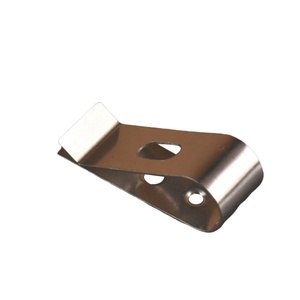
All our sieve trays are designed modularly. Deck panels are segmented so that their maximum diagonal dimension comfortably passes through standard vessel manway diameters (typically 18", 20", or 24" / 450 mm to 600 mm). Furthermore, trays feature quick-acting heavy-duty tray clamps and pre-slotted bolt holes, minimizing in-tower installation time and welder exposure inside confined spaces.
To provide an exact hydraulic simulation and price quotation, please provide: Column inside diameter (ID), tray spacing (typically 300 mm to 600 mm), vapor and liquid mass flow rates, operating pressure and temperature, fluid densities and viscosities, surface tension, current metallurgy specification, and whether downcomer bolting rings are existing or new. If you already have a process data sheet or CAD drawing, you can attach it directly to your inquiry.
Whether you are designing a greenfield distillation train in Neot Hovav or scheduling an emergency turnaround revamp in Haifa Bay, our engineering team is ready to analyze your process data sheet and provide hydraulic calculations within 24 hours.