
- +91-9930498858Call / WhatsApp
- [email protected]Email Us
Engineered for high mass transfer efficiency, low HETP, aggressive corrosion resistance, and operational reliability across demanding Philippine processing environments.
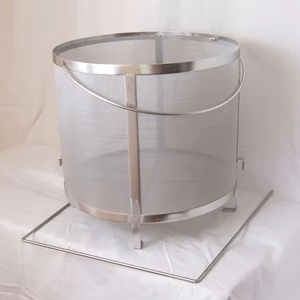
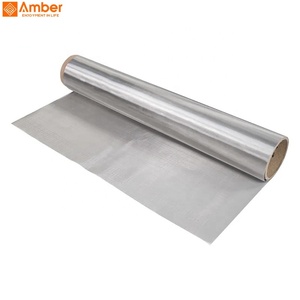
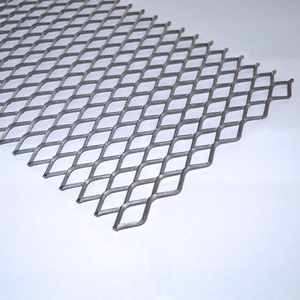
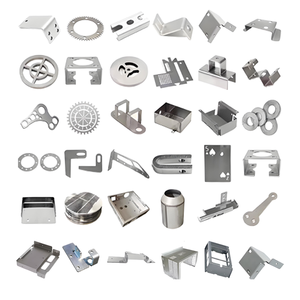
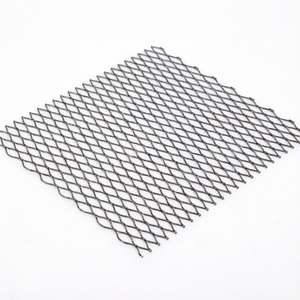
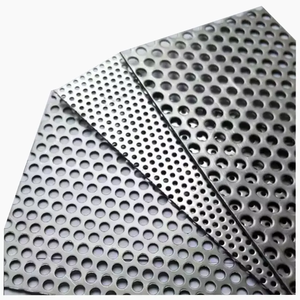
A rigorous evaluation of Height Equivalent to a Theoretical Plate (HETP), specific surface area, pressure drop per theoretical stage, and superficial gas velocity factors across Philippine industrial operations.
Structured packing represents the apex of vapor-liquid countercurrent contact technology in continuous and batch fractionation systems. Unlike random packing (such as Raschig rings, Pall rings, or saddle packing) which rely on stochastically dumped elements, structured packing consists of corrugated metal sheets or woven wire gauze fabricated into rigid, geometrically optimized cylindrical blocks that mirror the exact internal diameter of the column shell. In chemical processing, petroleum refining, and bioethanol distillation across the Philippines, structured packing provides superior capacity, remarkably lower pressure drop per theoretical stage (ΔP/NTS), and enhanced turndown ratios compared to conventional sieve, valve, or bubble cap trays.
The core operating mechanism relies on the inclination angle of the corrugations relative to the vertical axis—typically engineered at either 45° (termed 'Y' type, such as 250Y or 350Y) for an optimal balance of throughput and separation efficiency, or 60° (termed 'X' type, such as 250X) for high-capacity applications requiring minimized vapor flow resistance. As vapor ascends through the triangular flow channels formed by adjacent opposed-phase sheets, descending liquid spreads uniformly across the continuous metallic surface. To overcome the high surface tension of organic compounds and aqueous mixtures, precision surface texturing—including mechanical micro-embossing and multi-perforation arrays—is cold-formed directly into the sheet matrix. This surface micro-structuring guarantees that the descending liquid forms an unbroken, falling liquid film, eliminating dry zones, channeling, and vapor bypass.
Hydraulically, structured packing is quantified by its gas capacity factor, commonly expressed as the F-factor ($F_s = v_s \cdot \sqrt{\rho_v}$, where $v_s$ is superficial vapor velocity in m/s and $\rho_v$ is vapor density in kg/m³). High-surface-area corrugated packings (such as 500Y or wire gauze BX) maximize the mass transfer coefficient ($k_L \cdot a$), reducing HETP values down to 200–300 mm in clean organic separations. Conversely, larger-pitch variants (such as 125Y and 250Y) deliver immense vapor throughput with capacity factors exceeding $2.5 \text{ Pa}^{0.5}$, making them the industry standard for debottlenecking overloaded crude distillation columns, stabilizer towers, and bio-wash fractionators.
Meeting rigorous chemical process requirements from the petrochemical hubs of Batangas and Bataan to the oleochemical and bioethanol plants of Visayas and Mindanao.
The Philippines is a premier global producer of coconut methyl esters (CME), fatty acids, and refined glycerine. Plants in Davao, Cagayan de Oro, and Batangas operate high-vacuum fatty acid fractionators (C8-C18 cuts) that demand minimum bottom thermal degradation. SS316L and Hastelloy structured gauze packings ensure low ΔP and pristine color specification.
In the sugarcane corridors of Negros Occidental, Batangas, and Isabela, hydrous ethanol distilleries require robust dehydration and rectification columns. Structured packings replace obsolete bubble cap trays, expanding wash column throughput by up to 35% without requiring new shell construction, while resisting organic acid pitting.
Petrochemical complexes in Limay (Bataan) and Batangas City utilize structured packings in debutanizers, depropanizers, and naphtha splitters. Upgrading from conventional trays to high-efficiency corrugated structured packing delivers the theoretical stage counts necessary for ultra-pure polymer-grade propylene and aromatics.
With geothermal facilities in Leyte, Tiwi, and MakBan generating substantial baseload power, steam exhaust scrubbing and $H_2S$ abatement towers require high-alloy structured packing and knitted mesh mist eliminators capable of resisting wet chloride and sulfur environments.
High relative humidity and coastal saline air across Philippine industrial zones demand strict atmospheric and process corrosion resistance. Column shells, support internals, and packing bundles must prevent stress-corrosion cracking through verified metallurgy and pickling passivation.
Driving operational decarbonization, bio-refining expansions, and capital efficiency across domestic manufacturing plants.
The Philippine downstream processing sector is currently undergoing a structural transformation catalyzed by two major regulatory and macroeconomic drivers: Republic Act No. 11285 (The Energy Efficiency and Conservation Act) and the mandated escalation of domestic biofuel blending targets under the Biofuels Act (RA 9367). Process plants across the National Capital Region (NCR), Central Luzon (Region III), and CALABARZON (Region IV-A) face pressing demands to cut industrial boiler fuel consumption and reduce carbon intensity. In mass transfer operations, distillation accounts for over 40% of total plant thermal energy demand. Consequently, plant managers are aggressively substituting legacy thermal-inefficient tray columns with engineered structured packing systems.
A second notable trend is the regional pivot toward brownfield revamp projects over greenfield construction. Because constructing new pressure vessels in Philippine economic zones (PEZA zones) requires extended permitting, maritime freight logistics, and significant CAPEX, plant operators increasingly opt to debottleneck existing column shells. By replacing sieve or valve trays with high-surface corrugated structured packing (such as 250Y or 350Y), operators routinely realize a 25% to 40% expansion in column hydraulic throughput while cutting reflux ratios and associated steam boil-up by 15% to 20%.
Furthermore, the growth of high-value oleochemical downstream derivatives—such as tertiary amines, fatty alcohols, and medium-chain triglycerides (MCTs)—in Northern Mindanao and Southern Luzon has generated acute demand for ultra-low pressure drop vacuum packing. These thermally fragile organic compounds darken or polymerize if exposed to elevated temperatures in reboilers, necessitating high-performance wire gauze structured packing manufactured from certified low-carbon stainless steels (SS304L, SS316L) and specialized nickel alloys.
Technical benchmarks to guide process engineers, plant designers, and procurement managers in specifying optimal column internals.
| Internals Technology | Specific Surface Area | Hydraulic Capacity (F-Factor) | ΔP per Stage (mbar) | HETP Range (mm) | Primary Application in the Philippines |
|---|---|---|---|---|---|
| Corrugated Sheet 125Y/X | 125 m²/m³ | 2.8 – 3.2 Pa0.5 | 0.15 – 0.35 | 550 – 750 | High-throughput refinery debottlenecking; refinery atmospheric tops |
| Corrugated Sheet 250Y/X | 250 m²/m³ | 2.2 – 2.6 Pa0.5 | 0.30 – 0.60 | 350 – 450 | Bioethanol rectification, chemical wash columns, CME fractionation |
| Corrugated Sheet 350Y | 350 m²/m³ | 1.8 – 2.2 Pa0.5 | 0.45 – 0.80 | 280 – 350 | Fatty acid vacuum distillation; aromatics splitters (Batangas/Bataan) |
| Wire Gauze Packing (BX/CY) | 500 – 700 m²/m³ | 1.2 – 1.6 Pa0.5 | 0.10 – 0.30 | 150 – 250 | High-purity essential oils, flavors, pharmaceutical intermediates, deep vacuum |
| Valve Trays (Fixed / Floating) | Discontinuous | 1.4 – 2.0 Pa0.5 | 3.5 – 6.5 | 450 – 600 (tray space) | Severely fouling hydrocarbon streams, high liquid holdup strippers |
| Metal Random Packing (Pall Rings) | 110 – 220 m²/m³ | 1.6 – 2.1 Pa0.5 | 0.8 – 1.50 | 450 – 650 | $CO_2$ absorption columns, ammonia stripping, wet scrubbers |
Decades of mass transfer expertise, automated stamping, precision wire mesh weaving, and complete column internal integration.
Every sheet of stainless steel, Hastelloy, Monel, Inconel, and titanium is sourced from premier tier-one mills. We provide complete EN 10204 3.1 Mill Test Certificates (MTC), positive material identification (PMI) verification, and batch traceability from raw coil to final crating.
Operating beyond basic fabrication, our engineering team performs comprehensive hydraulic reviews—evaluating liquid loading ($m^3/m^2\cdot h$), vapor loading, and maldistribution risks. Our in-house tooling and deep drawing assets ensure micro-tolerances within ±0.02 mm.
A high-performance packed column requires more than structured packing blocks alone. We design and deliver matched chimney collector trays, multi-pan liquid distributors, feed pipes, bed limiters, and flash galleries to ensure zero liquid maldistribution.
With verified export experience across 20+ countries, we execute customized seaworthy containerization, desiccant barrier vacuum wrapping, and ISPM-15 treated wooden crating with direct shipping lines to Manila (MICP / South Harbor), Batangas, Subic, and Cebu.
For more than 25 years, our installations have operated continuously in severe refinery, corrosive chemical, and high-vibration maritime environments without premature hydraulic flooding or mechanical pack collapse.
Direct technical answers addressing standards, corrosion mitigation, shipping clearance, and revamp execution for local procurement teams.
Whether you are replacing worn distillation trays in a Batangas petrochemical refinery, optimizing fatty acid separation in Mindanao, or debottlenecking an ethanol distillery in Negros, Ambani Metals provides direct engineering collaboration, hydraulic simulations, and precision mass transfer hardware.