- +91-9930498858Call / WhatsApp
- [email protected]Email Us
Certified industrial screening, particulate filtration systems, and random/structured distillation components configured for high-sulfur and high-salinity industrial operations across Azerbaijan.
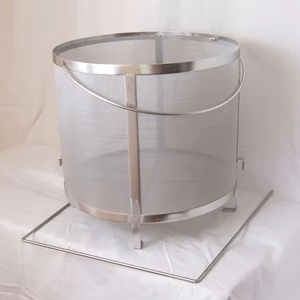
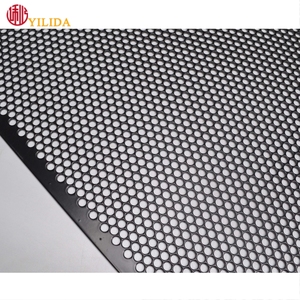
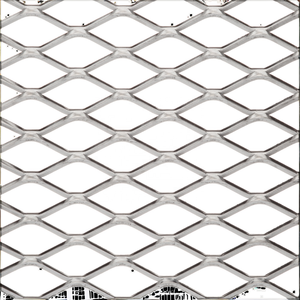
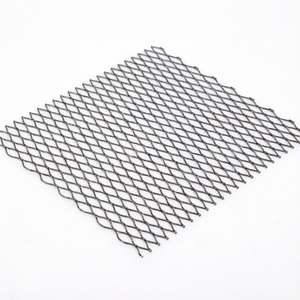
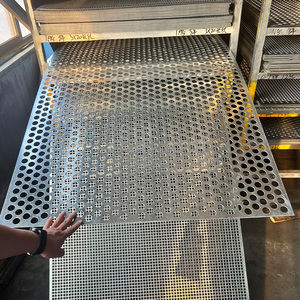
The Republic of Azerbaijan represents a cornerstone industrial economy bridging the South Caucasus and Central Asia. Driven by substantial capital commitments across the Absheron Peninsula, the port hub of Alyat, and the downstream processing clusters of the Sumgayit Chemical Industrial Park (SCIP), Azerbaijan's consumption of specialized stainless steel woven wire mesh, perforated metals, and mass transfer column internals has transitioned from basic structural screening to high-metallurgy, corrosion-resistant, and high-temperature filtration systems.
Industrial procurement data confirms that demand is primarily governed by offshore exploration programs across the Azeri-Chirag-Gunashli (ACG) fields and the Shah Deniz gas condensate facilities managed by SOCAR and international consortia. In these aggressive marine environments, conventional carbon steels and generic 304-grade stainless meshes suffer rapid micro-pitting and stress corrosion cracking due to high concentrations of dissolved hydrogen sulfide (sour gas, H2S) and Caspian brine chlorides. Consequently, engineering specifications demand precise metallurgy: low-carbon stainless steels (AISI 316L, 317L), Duplex 2205 (UNS S32205), and superalloys such as Hastelloy C-276 and Monel 400 for downhole sand control, particulate scrubbers, produced-water treatment, and catalyst recovery baskets.
Strict NACE MR0175/ISO 15156 compliance for downhole sand screens, mud logging shakers, and oil-water separation demisters deployed across the Caspian shelf.
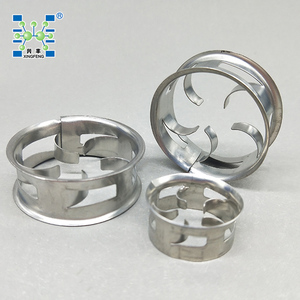
Massive revamps across nitrogen, polymer, and petrochemical plants requiring SS316L distillation trays, random packing mini-rings, and gas-liquid contactors.
Port of Baku logistics zones and new highway corridors utilizing heavy-duty anti-glare mesh, windbreak panels, and architectural facade panels.
Selecting an export partner for high-integrity screening and filtration media requires evaluating technical metallurgy, precision weaving capabilities, quality assurance protocols (EN 10204 3.1 inspection), and Middle Corridor supply chain resilience. The following industry evaluation highlights the top 10 global manufacturers and exporters actively serving Azerbaijan's engineering, procurement, and construction (EPC) contractors.
The Caspian Sea is an enclosed ecological basin characterized by variable salinity levels, sulfur-rich sweet-to-sour hydrocarbons, and severe micro-climate swings between damp marine humidity in Baku and arid conditions in the inland interior. Selecting the correct stainless steel alloy and weave architecture directly governs the operational life-cycle of filtration assemblies.
| Alloy Grade | PREN Rating | Mechanical Tensile (MPa) | Recommended Industrial Applications in Azerbaijan | Corrosion Resistance Profile |
|---|---|---|---|---|
| AISI 304 / 304L | 18.0 – 20.0 | ≥ 515 | Baku commercial HVAC, food & wine filtration, agricultural mesh, civil fencing | Moderate; vulnerable to marine chloride pitting above 50°C |
| AISI 316 / 316L | 23.0 – 25.0 | ≥ 550 | Offshore platform seawater intakes, refinery distillation column trays, demister pads | Superior pitting resistance via 2.0-3.0% Molybdenum addition |
| Duplex 2205 (S32205) | 35.0 – 38.0 | ≥ 655 | Caspian downhole sand filtration, high-pressure brine separators, sour gas scrubbers | Excellent resistance to stress corrosion cracking & erosion-corrosion |
| Hastelloy C-276 | ≥ 68.0 | ≥ 790 | Sumgayit petrochemical reactors, sulfuric/hydrochloric acid stripping, sulfur recovery | Immune to wet chlorine gas, hypochlorite, and severe acidic brine chemistries |
| Monel 400 | — | ≥ 480 | Marine splash-zone filter baskets, hydrofluoric acid alkylation units, crude desalter screens | Exceptional durability in deaerated Caspian seawater and rapidly flowing marine currents |
Industrial wire cloth utilizes three primary weaving techniques engineered for distinct operational duties:
1. Plain Weave: The standard over-one, under-one configuration providing square apertures. Suited for general solid-liquid screening, vibrating screens, and architectural panels where uniform visual transparency and accurate particle sizing down to 50 microns are needed.
2. Twilled Dutch Weave (TDW): Combines twill weaving with tightly compacted, high-count weft wires. This creates curved, tortuous microscopic passages ideal for high-pressure hydraulic filtration, fuel polishing, and oilfield sand containment down to 5 to 10 microns absolute rating without wire displacement under severe differential pressure (ΔP).
3. Reverse Dutch Weave (RDW): Woven with heavier weft wires and tightly packed warp wires, delivering exceptionally high mechanical tensile strength along the longitudinal axis. Engineered specifically for continuous mechanical screen changers, deep-well completion wraps, and heavy solid-discharge centrifuges.
Practical engineering deployments demonstrate the technical versatility of Ambani Metals' manufacturing portfolio when deployed in key Azerbaijani industrial zones:
Deploying SS316L and Duplex 2205 basket strainers (300–400 micron) and wire mesh demister pads on offshore gas-liquid separator vessels, preventing droplet carryover into gas export compression manifolds across the ACG offshore basin.
Integrating Metal Cascade Mini Rings (SS304L/316L) and high-capacity floating valve distillation trays to debottleneck ethylene and propylene recovery columns, elevating throughput while suppressing operating pressure drop.
Engineering perforated aluminum and stainless windbreak panels across the Alyat logistics terminal, cutting wind turbulence by 75% and mitigating particulate fugitive emissions during dry mineral and grain transshipment.
Azerbaijan's geostrategic positioning along the Trans-Caspian International Transport Route (TITR, or Middle Corridor) has restructured regional procurement dynamics. Industrial contractors in Baku are systematically moving away from single-source northern trade paths toward agile multimode freight corridors connecting Indian Ocean manufacturing hubs directly to Caspian destinations.
Key Strategic Trends Driving Sourcing Decisions:
1. Multimodal Logistics Efficiency: By routing heavy shipments from Indian maritime export terminals through Bandar Abbas, then overland via rail/road transit into Baku, delivery lead times have been shortened by 35% compared to conventional circumnavigation routes. This provides rapid turnaround for scheduled plant maintenance turnarounds (TAR) in SOCAR refineries.
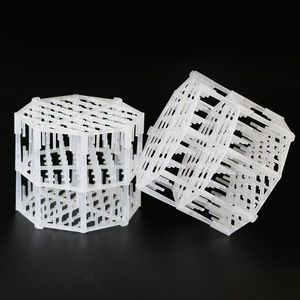
2. Transition to Advanced Separation Technology: Environmental directives enacted by Azerbaijan’s Ministry of Ecology and Natural Resources require plants to minimize volatile organic compound (VOC) emissions. Refineries are actively replacing aging random packing beds with high-efficiency structured gauze packing, reducing steam consumption and flaring losses.
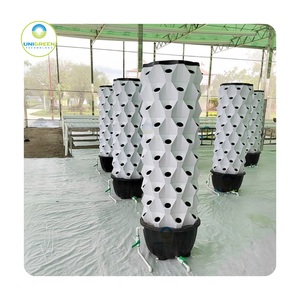
3. Agricultural Industrialization: Expansion of commercial hydroponic and greenhouse agriculture across the Ganja-Dashkasan and Lankaran regions demands heavy-duty stainless wire cloth for automated irrigation water pre-filtration, combined with food-grade plastic tower components designed for continuous soilless nutrient circulation.
Navigating cross-border procurement for industrial wire cloth and column equipment requires rigorous adherence to Azerbaijani national standards, customs regulations, and testing documentation. Below are technical resolutions to frequent procurement inquiries.
Shipments cleared through the State Customs Committee of the Republic of Azerbaijan require an authenticated Mill Test Certificate conforming to EN 10204 Type 3.1, confirming positive material identification (PMI), chemical melt composition, tensile yield limits, and elongation. For pressure vessel column internals, conformance with ASME Section VIII or GOST-R harmonization standards is standard procedure.
For upstream extraction operations under sour service risks, Ambani Metals manufactures filtration elements exclusively using certified low-carbon stainless alloys (316L, 317L) and superalloys (Duplex 2205, Hastelloy C-276) that strictly fulfill NACE MR0175/ISO 15156 hardness and microstructural requirements, preventing sulfide stress cracking.
Standard roll products (e.g., woven wire cloth plain/dutch weave in rolls of 30m x 1m/1.22m) dispatch within 5–7 business days from ready stock. Precision fabricated items—such as segmental column trays, bubble caps, perforated pipe screens, and demister packs—typically require 2 to 4 weeks depending on diameter and engineering approval.
All export consignments are packed according to seaworthy ISPM-15 heat-treated timber standards. Wire mesh rolls are sealed in moisture-barrier plastic wrap with desiccants and reinforced in fully enclosed wooden crates to eliminate transit exposure to saline air along the Middle Corridor maritime transit links.
Since founding operations in 1998, Ambani Metals has integrated raw material sourcing with precision in-house mechanical fabrication, providing international clients with an uncompromised quality architecture:
From fine wire drawing and computerized loom weaving to progressive stamping, CNC sheet perforation, and deep drawing, all production remains strictly in-house for end-to-end dimensional control.
Every batch is matched to certified melt heat numbers, supported by stationary and handheld Niton XRF analyzers, guaranteeing strict alloy integrity prior to container stuffing.
In-house chemical and mechanical engineers calculate column hydraulics, flooding limits, and pressure drop curves, collaborating directly with plant technical teams in Baku.
Submit process data sheets, column specifications, or wire mesh roll drawings directly to Ambani Metals' technical export engineering team for certified metallurgy and rapid logistical delivery.
Get a Quote