Top China Sintered Mesh Laminate Manufacturer & Exporters Serving the Melbourne Market
Precision Diffusion-Bonded Porous Metal Laminates, Mass Transfer Internals, and High-Integrity Filtration Systems Built to Withstand Victoria's Stringent Industrial Demands.
25+
Years Metal Craftsmanship
1,000+
Global Plant Installations
0.5–200μ
Pore Retention Accuracy
100%
Material Mill Certified
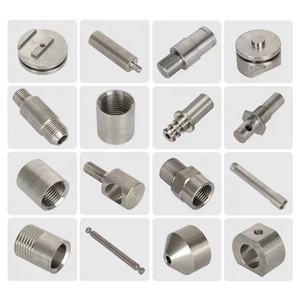
Engineered Porous Components & Hardware
Precision Separation & Deep-Drawn Enclosures
Explore our export-grade portfolio manufactured under ISO9001 quality systems, featuring full metallurgical traceability, non-destructive validation, and rapid air/sea logistics dispatch to Port Melbourne.
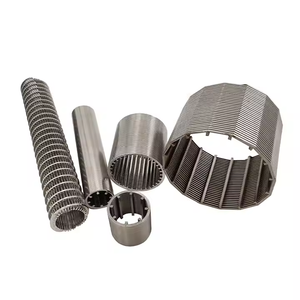
Non-clogging V-wire profile filter candles delivering high flow throughput and continuous backwash longevity in water processing.
Engineering Whitepaper & Metallurgy
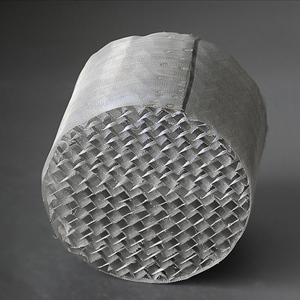
Principles of Diffusion-Bonded Sintered Mesh Laminates
A rigorous examination of diffusion bonding physics, layer architecture, and fluid mechanics for engineering teams throughout Greater Melbourne and Victoria.
Solid-State Diffusion Bonding
Unlike standard woven wire cloth where crossing wires can shift under pulsating pressures, sintered mesh laminate undergoes vacuum furnace thermal bonding without introducing filler braze or adhesives.
Atomic boundary coalescing under high-vacuum hot isostatic pressing.
Zero risk of fiber detachment downstream in sterile pharmaceuticals.
Rigid pore geometry preserved even under reverse back-pulsing up to 50 bar.
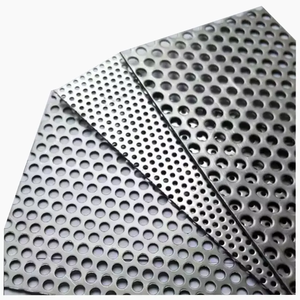
Available in standard 5-layer laminates, perforated plate composites, and dutch weave configurations.
Optimized 5-Layer Composite Stack
Our flagship 5-layer sintered mesh configuration combines mechanical robustness with ultra-precise micron retention for industrial fluid and gas purification.
Protective Cover Layer: Coarse square mesh guarding against mechanical abrasion.
Standard wire screens easily succumb to cyclic fatigue and channel channeling in viscous polymer and resin systems. Sintered laminates deliver unyielding structural equilibrium.
Withstands extreme temperature swings from cryogenic -200°C up to 600°C.
Significantly lower clean-medium pressure loss compared to sintered powder porous disks.
Extensive CIP (Clean-in-Place) and ultrasonic cleaning cycles without pore dilation.
Corrosive Chloride Desalination, Seawater Intake, Western Port
Localized Footprint
Deployment Scenarios Across Greater Melbourne’s Industrial Hubs
From the biotech laboratories of Parkville to the petrochemical and chemical manufacturing belt in Altona and Dandenong, our sintered mesh solutions address targeted operational hurdles.
Melbourne houses Australia’s preeminent biomedical cluster. Plant engineers operating sterile batch reactors and chromatographic purification columns face rigorous non-shedding criteria:
Agitated Nutsche Filter Dryers (ANFD): Sintered mesh laminates eliminate particulate leaching into active pharmaceutical ingredients (APIs).
Sterile Gas Venting: Zero fiber migration guarantees 100% downstream integrity during cleanroom gas delivery.
Electropolished Ra < 0.4μm: Resists bio-fouling and passes stringent TGA audit criteria with rapid sanitization.
Chemical Refining & Polymers (Altona & Geelong)
Victoria's chemical heartland along Port Phillip Bay handles abrasive catalyst slurries, aggressive hydrocarbons, and high-temperature polymer syntheses:
Catalyst Retention Screens: Withstand mechanical vibration in fluidized beds and hydro-treating loops without pore blindage.
Corrosion Control: Available in Alloy 20, Hastelloy C-276, and Monel 400 for hot brine and chlor-alkali streams.
Dairy, Wine & Beverage (Yarra Valley & Goulburn Valley)
As Australia's food bowl gateway, Victorian processors require hygienic liquid-solid separation media complying with Food Standards Australia New Zealand (FSANZ):
Wine Tartrate & Lees Clarification: Rigid 316L sintered mesh leaves resist blinding during high-viscosity grape juice filtration.
Caustic CIP Resistance: Safe for repeated hot nitric and caustic washing protocols without weld seam corrosion.
Market Outlook 2025–2030
Emerging Procurement Trends in Victoria's Advanced Manufacturing Sector
An authoritative breakdown of regulatory changes, sustainability benchmarks, and supply chain strategies influencing Victorian engineering contractors.
Decarbonization & Circular Process Economics
Under the Victorian Climate Change Act 2017 and aggressive state net-zero timelines, plant managers are phasing out single-use polypropylene and cellulose filter cartridges in favor of cleanable, infinitely recyclable sintered porous metal media. Sintered stainless steel filter elements deliver up to 10 years of service life, slashing hazardous waste disposal tariffs across chemical plants in Dandenong South.
Supply Chain Resiliency & Direct Exporter Alliances
Recent domestic warehousing shortages in Melbourne have compelled Victorian engineering procurement managers to bypass expensive intermediaries. Direct partnerships with certified Chinese manufacturers offer full engineering collaboration, custom drawing adjustments in CAD/SolidWorks, and express sea shipping directly arriving at Port Melbourne within 14–18 days.
Melbourne consultancies and EPC engineers require uncompromising quality dossiers. Successful tenders mandate 3.1 Material Test Reports (MTRs) compliant with EN 10204, PMI (Positive Material Identification) spectrometer printouts, bubble point retention validation under ASTM E128, and full helium leak testing on completed assemblies.
Why Engineers Choose Us
Built on Technical Mastery, Delivered with Accountability
Combining state-of-the-art diffusion bonding furnaces with in-house stamping, laser cutting, and deep drawing to meet your exact mechanical specifications.
Verified Raw Materials
Sourced exclusively from premium primary mills (such as TISCO and BAOSTEEL) with complete heat number stamping and EN 10204 3.1 certificates on all stainless 304/316L and exotic alloys.
Integrated Precision Fabrication
Complete control under one roof: multi-layer diffusion bonding, precision CNC punching, laser cut sizing, deep drawing, automated TIG/plasma seam welding, and surface electropolishing.
Independent Lab Verification
Full dimensional CMM inspection, ASTM E128 bubble point pore testing, air/water permeability benchmarking, and dye penetrant testing before customs dispatch.
Australian Export Logistics
Heavy ISPM-15 compliant treated timber crating, vacuum-sealed inner packaging, and transparent freight forwarding ensuring pristine arrival at Port Melbourne or Tullamarine Airport.
Clear Answers for Victorian Buyers
Frequently Asked Questions: Sintered Mesh Procurement in Melbourne
Detailed technical guidance addressing the commercial, technical, and regulatory questions most frequently raised by Australian plant engineers.
How does sintered mesh laminate differ from plain woven wire cloth?
Plain woven cloth consists of interlocking loose wires susceptible to pore shift, distortion under reverse flow, and fiber shedding. Sintered mesh laminates bond multiple layers of woven cloth through high-temperature vacuum diffusion bonding into an integral porous plate where wire intersections are molecularly fused, guaranteeing rigid micron retention under differential pressures up to 100 bar.
What documentation accompanies exports to Australia?
Every shipment bound for Melbourne includes EN 10204 3.1 Material Test Reports (MTRs) detailing chemical heat analysis and tensile mechanical properties, ISO9001 factory release certs, dimensional inspection sheets, bubble point test certificates verifying micron rating, and ISPM-15 phytosanitary certificates for timber packaging.
Can you manufacture custom shapes and ANFD filter plates?
Yes. We routinely fabricate complete segmented Agitated Nutsche Filter Dryer (ANFD) plates up to 3,000mm in diameter, complete with drilled bolt holes, flanged edges, and sector joints tailored to fit brands like Rosenmund, Guedu, and Charles Thompson commonly found in Victorian chemical and pharmaceutical plants.
What is the standard lead time for delivery to Melbourne?
Custom sintered mesh laminates, filter disks, and cylindrical cartridges typically require a 2 to 3-week manufacturing window depending on batch size. Direct ocean container shipping from Shanghai or Qingdao to Port Melbourne takes roughly 14 to 18 days on the water. Express air freight via Tullamarine Airport is available for urgent plant turnaround shutdowns in 4 to 6 business days.
Which alloys do you recommend for highly corrosive Victorian environments?
While 316L stainless steel remains the workhorse for most food, dairy, and mild chemical services, we manufacture specialized sintered laminates in Hastelloy C-276 (superb for hydrochloric and sulfuric acid streams), Monel 400 (ideal for marine and seawater intake near Western Port), and Titanium Grade 1/2 for lightweight chlorination and electrochemical cells.
How should sintered mesh elements be cleaned in ongoing service?
Sintered mesh exhibits high mechanical durability, allowing diverse regeneration methods: automated high-pressure reverse pulse backwashing, heated ultrasonic baths with solvent cleaners, chemical immersion in caustic (NaOH) or acid (HNO3) pickling solutions, and vacuum pyrolysis burnout for heavy polymer resin accumulations without damaging the pore structure.
Ready to Upgrade Your Victorian Plant’s Separation Efficiency?
Submit your CAD drawings, process data sheets, or micron specification requirements to receive a fast engineering review and formal quotation within 24 hours.