- +91-9930498858Call / WhatsApp
- [email protected]Email Us
Manufactured under stringent ISO 9001 quality frameworks to supply high-stress manufacturing units, separation columns, and filtration assemblies throughout Pakistan.
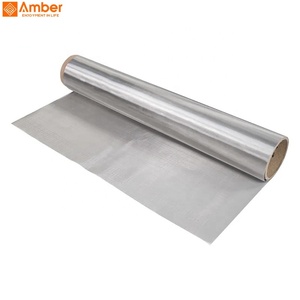
Twill weave wire mesh represents a significant evolution in micro-particle separation and mechanical screening technology. Unlike standard plain weave cloth—where each warp wire crosses alternatively over and under a single weft wire (1/1 configuration)—twill weave patterns employ an over-two, under-two (2/2) floating progression. Each successive weft wire shifts the interlock by one warp strand, forming a distinctive visual diagonal ribbing known as the twill line.
This subtle geometrical difference unlocks vital mechanical and hydraulic advantages for heavy processing plants across Pakistan. In a 1/1 plain weave, bending angles are severe, causing localized stress concentrations at wire crimp knuckles. When fine aperture tolerances (below 75 microns) are demanded, plain weaving forces the use of fragile, ultra-thin filaments that fail prematurely under hydraulic surges or continuous pressure differentials. Twill weaving relaxes the bending radius by spanning two wires before crimping. This allows factories to weave dramatically heavier wire diameters into exact, high-density apertures that would otherwise distort or shear during traditional plain loom setup.
For chemical and filtration engineers operating in Pakistan's high-temperature, high-fouling processing corridors—such as the sugar extraction lines in Sindh or the dye synthesis plants of Punjab—twill weave provides the optimal equilibrium between burst pressure capacity and precise particulate cutoff. The mechanical rigidity prevents aperture enlargement caused by hydrodynamic pulsing, ensuring consistent retention of abrasive particulates without structural deformation.
The elongated bending cycle reduces residual internal drawing stress, allowing the woven screen to endure extreme mechanical vibration, cyclic pressure loads, and cake-scraping operations without structural failure.
Enables weaving mesh counts exceeding 250 to 635 wires per inch. When woven as Twilled Dutch Weave (TDW), aperture ratings reach 1 to 20 microns for critical gas-liquid purification and hydraulic fluid systems.
Heavy wire diameters present a thicker sacrificial boundary against aggressive corrosive chemistry, resisting pitting, stress corrosion cracking (SCC), and particle erosion in harsh environments.
| Mesh Specification | Weave Configuration | Wire Diameter (mm) | Nominal Aperture (μm) | Open Area (%) | Primary Industrial Use (Pakistan) |
|---|---|---|---|---|---|
| 120 x 120 Mesh | Square Twill 2/2 | 0.080 mm | 132 μm | 38.7% | Textile Dye Prep • Karachi |
| 200 x 200 Mesh | Square Twill 2/2 | 0.050 mm | 77 μm | 36.8% | Sugar Syrup Clarification • Sindh |
| 325 x 325 Mesh | Square Twill 2/2 | 0.035 mm | 43 μm | 30.5% | Pharma API Sieves • Lahore / Hattar |
| 400 x 400 Mesh | Square Twill 2/2 | 0.030 mm | 34 μm | 28.2% | Fertilizer Dust Separation • Daharki |
| 165 x 1400 Mesh | Twilled Dutch (TDW) | 0.070 / 0.040 mm | 16 μm (Absolute) | Dense Interlock | Gas Sweetening • Sui Basin |
| 325 x 2300 Mesh | Twilled Dutch (TDW) | 0.038 / 0.025 mm | 5 μm (Absolute) | Dense Interlock | Aviation & Hydraulic Filtration • OEM |
Strategic wire mesh integration tailored to the distinct operational, environmental, and thermal requirements of Pakistan's major manufacturing zones.
Textile finishing mills require high-recovery caustic soda filtration and lint screening during sizing, dyeing, and bleaching. Twill weave SS316L cloth resists concentrated hot alkaline solutions (pH 12–14), preventing jet clogging in automatic rotary printing screens and protecting heat recovery exchangers.
Continuous centrifugal sugar baskets and molasses desugarization systems depend on high-tensile twill screens. Operating at 1,800 to 2,200 RPM, these screens experience immense centrifugal strain. Our work-hardened stainless twill mesh prevents slit widening, ensuring zero crystal loss while handling corrosive bagasse slurries.
Large ammonia-urea complexes (e.g., Fauji, Engro, Fatima) utilize twill mesh in catalyst support grids, synthetic gas scrubbers, and demister pads. Fabricated in Inconel 600 or SS316Ti, our twill screens endure ammonia-carbonate corrosion and thermal cycles up to 450°C without embrittlement.
Sialkot's surgical instrument exporters and Lahore's cGMP pharmaceutical laboratories require sanitary, ultrasonic-cleaning-compatible twill filter baskets and cleanroom sieves. Zero oil residues, passivated surfaces, and burr-free edges ensure adherence to strict international export standards.
Pakistan's industrial manufacturing ecosystem is experiencing a comprehensive shift toward advanced process efficiency, environmental compliance, and cost containment. Three major macro dynamics are transforming how Pakistani plant directors procure filtration wire mesh:
1. CPEC Special Economic Zones & Modern Plant Revamps: Under the China-Pakistan Economic Corridor (CPEC) Phase II, industrial parks such as Rashakai SEZ, Allama Iqbal Industrial City (Faisalabad), and Dhabeji SEZ (Sindh) are establishing state-of-the-art chemical synthesis, automotive assembling, and composite polymer facilities. Legacy, low-precision plain weave screens are being systematically phased out. Modern high-throughput equipment requires imported European and standard-compliant Asian twill weave mesh with certified hydraulic permeability curves, precise aperture spacing, and documented mill test reports (MTR).
2. Groundwater Mineralization & Zero Liquid Discharge (ZLD) Mandates: Due to falling water tables and high saline content across the Indus River Basin, groundwater used by plants in Multan, Sheikhupura, and Kotri frequently contains total dissolved solids (TDS) exceeding 2,500 ppm, alongside significant chloride and sulfate levels. The Punjab and Sindh Environmental Protection Agencies (EPAs) have tightened effluent regulations, requiring multi-stage RO and ZLD facilities. Standard carbon steel or cheap commercial 201-grade wire cloths corrode within weeks under these conditions. Industrial operators now specify high-molybdenum SS316L, Duplex 2205, and Monel 400 twill screens for intake strainers, deep well de-sanding, and effluent clarifiers to achieve continuous, multi-year operating campaigns.
3. Supply Chain Resilience & Direct Factory Sourcing: Unpredictable currency fluctuations and import container delays through Karachi Port Trust (KPT) and Port Qasim have highlighted the risks of sourcing through secondary retail distributors. Forward-thinking procurement teams across Pakistan now bypass intermediary stockists, partnering directly with fully integrated manufacturing plants that provide structured documentation, custom roll dimensions (eliminating scrap offcuts), seaworthy anti-corrosive export packaging, and transparent lead times.
Evaluate mechanical thresholds, fluid resistance, and particle retention across primary industrial weave categories to select the correct specification for your process conditions.
| Weave Designation | Mechanical Geometry | Aperture Range | Differential Pressure (ΔP) | Backwash Cleanability | Best Suited Application |
|---|---|---|---|---|---|
| Plain Weave (1/1) | Over-one, Under-one single strand | 20 μm – 12.0 mm | Low baseline resistance | Excellent (Open geometry) | Coarse sorting, gravel screening, aggregate classifying |
| Square Twill Weave (2/2) | Over-two, Under-two stepped warp | 25 μm – 250 μm | Low to Moderate | Very Good (Ultrasonic / Air jet) | Textile dyes, paint slurry, sugar separation, chemical sieving |
| Twilled Dutch Weave (TDW) | Over-two, Under-two dense wire compaction | 1 μm – 35 μm | Moderate to Elevated | Moderate (High-pressure jetting required) | Hydraulic aerospace fluid, heavy fuel oil, sub-micron gas scrubbing |
| Reverse Dutch Weave (RDW) | Heavy warp wires, fine tight weft wires | 40 μm – 200 μm | Moderate | High mechanical cake release | Continuous polymer melt extrusion screen changers |
Combining 25+ years of metallurgical expertise with rigorous quality protocols and reliable logistics to Port Qasim, Karachi, and inland dry ports.
Every wire coil undergoes Positive Material Identification (PMI) using XRF spectrometers prior to weaving. Complete EN 10204 3.1 chemical composition and tensile elongation certificates accompany each shipment, eliminating counterfeit metal risks.
From standard 1 m × 30 m master rolls to custom widths up to 2.5 meters. In-house CNC stamping, laser-cut discs, continuous ultrasonic slitting, welded pleats, and edge-binding ensure seamless fit into your processing hardware.
Products are sealed with rust-inhibiting VCI film, desiccants, moisture barriers, and reinforced in fumigated plywood crates designed for maritime transport to Karachi or expedited air delivery to Lahore and Islamabad.
Essential guidance covering international trade compliance, technical specifications, and shipping protocols.
Consult with our separation specialists to determine the optimal mesh count, wire alloy, and weave geometry for your industrial process. Receive competitive factory-direct pricing, complete material documentation, and streamlined freight to Pakistan.