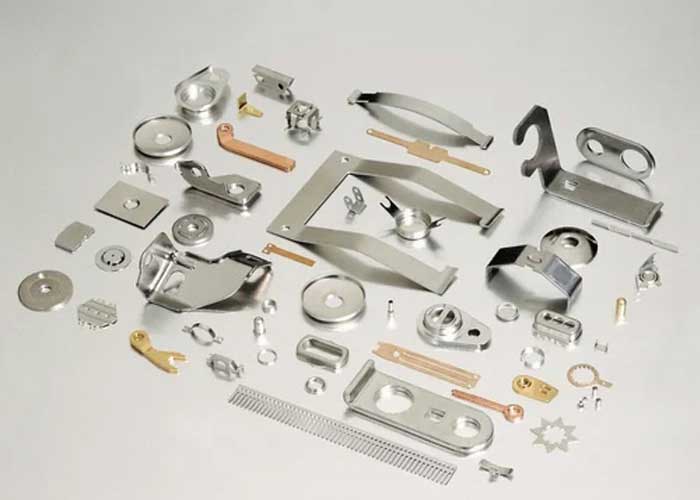
Progressive Die Stamping
Multi-stage progressive tooling running at speeds up to 600 SPM with integrated in-die sensors, coining stations, and precision carrier ribbon guidance for high-volume miniaturized terminals.

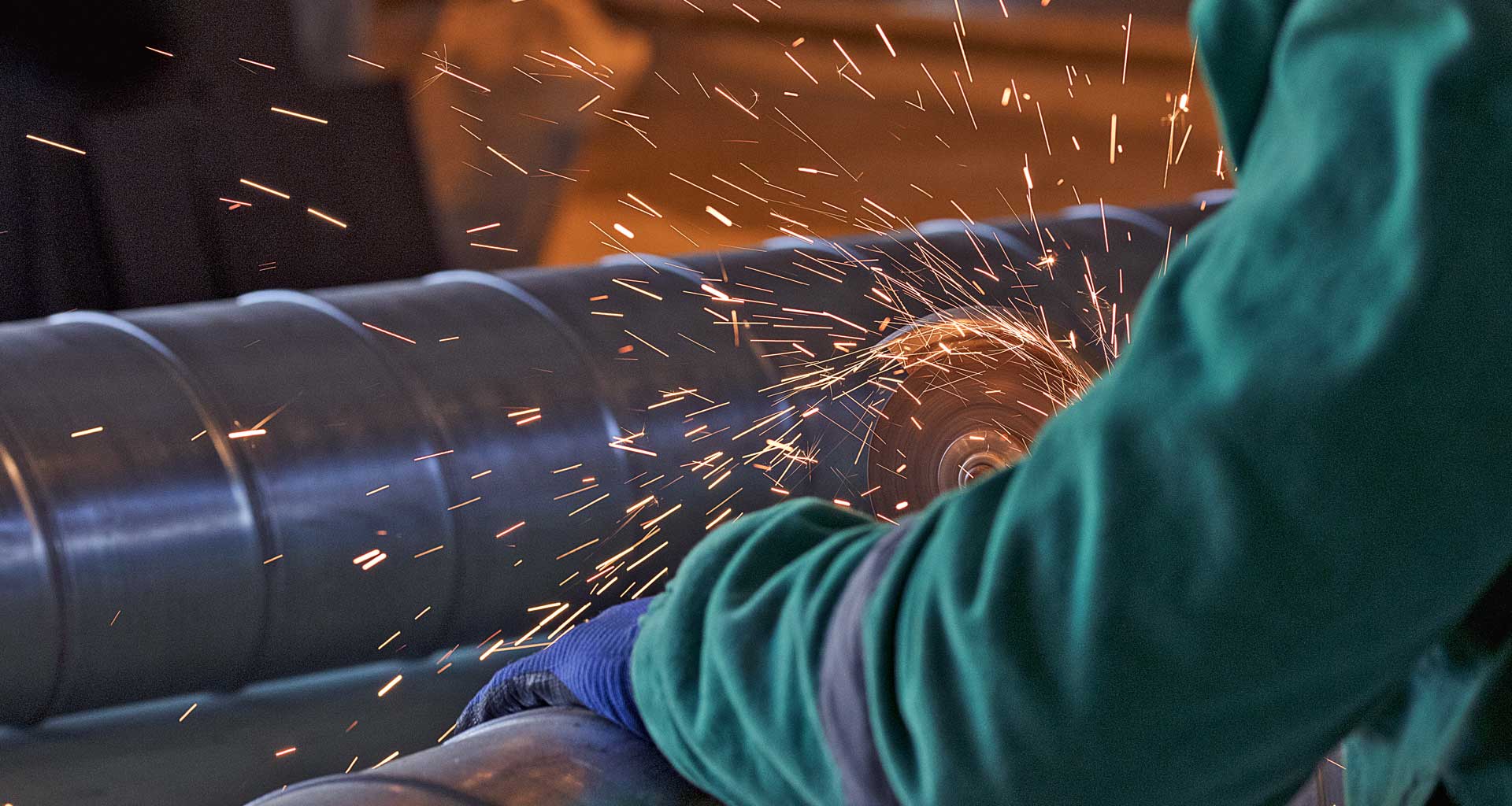
In modern industrial procurement, navigating the balance between tight geometric tolerances, complex grain metallurgy, and total cost of acquisition is critical. Modern procurement directors, component engineers, and advanced manufacturing strategists continuously face high-stakes technical dilemmas: How do you design progressive dies to suppress shear-edge burrs on thin-gauge copper alloys? When does multi-stage deep drawing outperform CNC micro-milling for complex enclosures? At Ambani Metals, an established manufacturer and international exporter since 1998, our turnkey engineering facilities integrate precision progressive stamping, multi-action deep drawing, transfer presses, and automated in-line metrology. Review our engineering specifications below, or initiate a direct technical review with our tooling specialists by requesting our detailed production capability library: Get Catalog.
Multi-stage progressive tooling running at speeds up to 600 SPM with integrated in-die sensors, coining stations, and precision carrier ribbon guidance for high-volume miniaturized terminals.
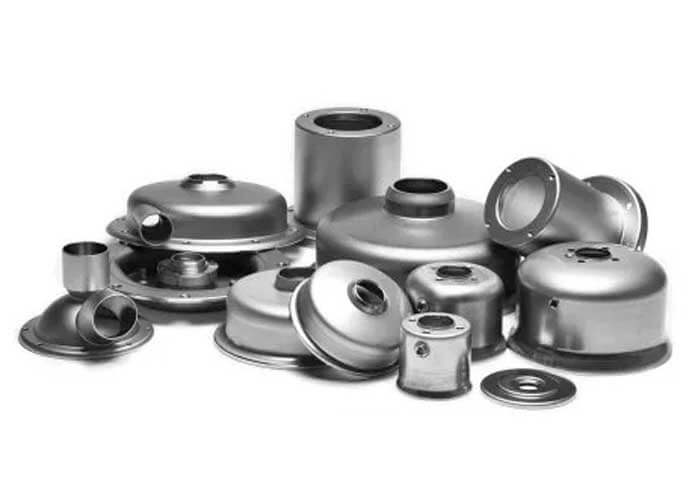
Seamless cylindrical shells, sensor cases, and rectangular shielding cans engineered with draw-depth-to-diameter ratios exceeding 3:1 without intermediate flaking or wall-thinning defects.
Sub-millimeter micro-features on beryllium copper, nickel-silver, and phosphor bronze strips down to 0.05 mm thickness, engineered for EV busbars and aerospace sensors.
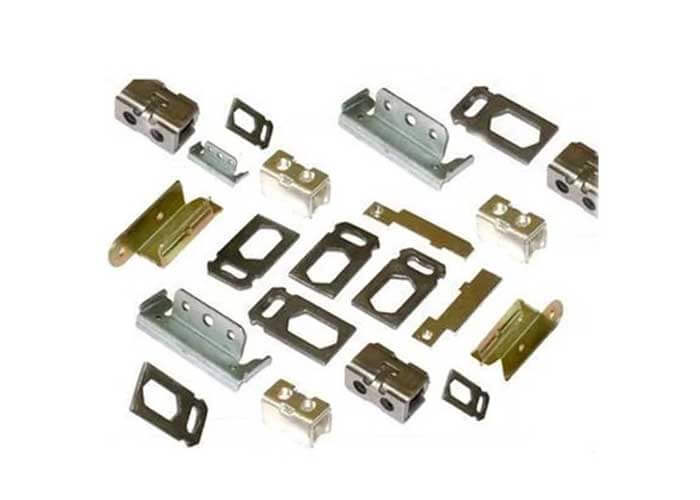
Heavy-duty, high-tonnage mechanical and servo transfer press operations designed for intricate 3D contoured enclosures, complex structural brackets, and specialized heavy assemblies.
Years Tooling Mastery
Global Engineering Clients
Industrial Nations
High-Precision Tonnage
Selecting the optimal stamping methodology requires balancing material elongation, burr threshold tolerances, annual volume thresholds, and mechanical finish requirements. Below is our engineering classification designed for supply chain managers, design engineers, and global buyers sourcing high-precision components.
Primary Applications: Automotive electronics, electrical switchgear contacts, leadframes, connector terminals, EV battery intercell busbars, and household appliance contacts.
Material Compatibility: C1100 electrolytic tough pitch copper, phosphor bronze (C5191), beryllium copper (C17200), stainless steel grades 301, 304, and 316L, cold-rolled mild steel (CR4/SPCC).
Technical Merits: Incorporates up to 45 sequential stations including fine-piercing, coining, extruding, thread-tapping, and continuous automated reel-to-reel packaging. Delivers unmatched unit cost economics for production quantities from 250,000 to over 50,000,000 parts per annum.
Primary Applications: Solenoid valve housings, lithium-ion battery containment cans, hermetic sensor bodies, medical pump cartridges, and micro-electromechanical shields.
Material Compatibility: Deep-drawing quality cold rolled steel (DDQ), nickel alloys, austenitic stainless steel 304L/316L, aluminum 3003/5052 series, and brass alloy C2600 (Cartridge Brass).
Technical Merits: Eliminates welded joints and potential leak paths by transforming flat blanks into deep, three-dimensional seamless hollow profiles. Our multi-action hydraulic and mechanical draw presses leverage specialized draw-radii polish and advanced dry-film lubricants to maintain precise bottom-to-wall thickness ratios.
Primary Applications: Implantable medical hardware, surgical instrument jaws, micro-switches, smartphone acoustic shielding, and aerospace telemetry brackets.
Material Compatibility: Titanium Grade 1 and 2, surgical stainless steel 316LVM, Inconel 625/718, Kovar, and specialized platinum-iridium foils.
Technical Merits: Capable of resolving micro-apertures down to 0.10 mm with edge webbings under 0.15 mm. All tooling is finished using ultra-precision wire-cut EDM and optical profile grinding to ensure burr heights remain strictly under 5% of material thickness without post-tumbling distortion.
The global precision metal stamping industry is experiencing significant changes driven by electrified powertrains, geopolitical supply chain diversification, sustainable manufacturing, and predictive AI quality assurance. Global procurement teams are adapting to the following structural shifts:
The shift toward electric mobility, 800V powertrain architectures, and utility-scale energy storage has increased demand for custom precision busbars, bi-metal laminates, and high-conductivity copper stampings. Sourcing specialists prioritize suppliers capable of running progressive dies that combine heavy-gauge bending (up to 6.0 mm) with intricate coining, integrated selective silver/tin plating, and clean shear surfaces that preserve electrical conductivity without thermal hotspots.
Global original equipment manufacturers (OEMs) in North America, Western Europe, and Japan are balancing their supply networks away from concentrated Asian single-source hubs. With full mill-to-part metallurgical traceability, competitive engineering labor, and compliance with Western ESG standards, established Indian precision manufacturers like Ambani Metals are serving as primary manufacturing partners for multi-national Tier-1 programs.
Manual batch sampling is being replaced by closed-loop, data-driven manufacturing. Enterprise buyers expect tooling designs equipped with piezoelectric acoustic-emission sensors, laser height checkers, and real-time vision systems that monitor strip pitch, burr height, and hole circularity on every stroke. This data streams into Statistical Process Control (SPC) engines, automatically adjusting die pilots and alerting operators before out-of-tolerance drift can occur.
Delivering high-precision parts in complex alloys requires continuous innovation in tooling metallurgy, servo kinematics, and finite element modeling. The techniques we leverage to maintain a production advantage include:
Unlike traditional flywheel presses governed by fixed sinusoidal stroke profiles, direct-drive servo presses allow tool designers to customize the ram speed profile throughout the stroke. The ram can decelerate rapidly prior to contact, remain stationary during coining or thread forming, and accelerate on return. This reduces impact vibration, minimizes punch chipping, and extends carbide tooling service life up to 300% on high-strength alloys.
Modern stamping of tough grades like dual-phase steels (DP800, DP1000) and duplex stainless steels demands robust punch steels. We utilize powder-metallurgy tool steels (such as CPM 10V, Vanadis 4 Extra) and sub-micron grain tungsten carbides. Punches are treated with advanced physical vapor deposition (PVD) nano-coatings—including AlTiN, AlCrN, and diamond-like carbon (DLC)—reducing coefficient of friction down to < 0.15 and preventing galling.
Before machining physical tool steel, our engineers use specialized sheet-metal forming simulation suites (AutoForm and PAM-STAMP) to calculate thinning rates, major and minor principal strain, and directional springback. This virtual validation accelerates DFM sign-offs, eliminates trial-and-error die adjustments, and guarantees target part geometry on First Article trials.
Compare precision metal stamping processes against production volume, geometry, and cost drivers to determine the right manufacturing method for your application.
| Stamping Process Type | Economic Volume Threshold | Achievable Tolerance | Tooling Cost & Lead Time | Geometric Complexity | Best Suited Applications |
|---|---|---|---|---|---|
| Progressive Die Stamping | > 100,000 pcs / year | Linear: ±0.005 mm Hole: ±0.008 mm | High ($$$) 8 – 14 Weeks | High (Multi-bend, coin, pierce, extrude) | Miniature electrical terminals, EV battery connectors, shield clips, leadframes. |
| Deep Drawn Stamping | > 50,000 pcs / year | Diameter: ±0.010 mm Wall: ±0.015 mm | High to Very High ($$$$) 10 – 16 Weeks | Specialized (Hollow cylindrical, square, or conical shapes) | Solenoid bodies, pressure sensor shells, automotive canisters, battery casings. |
| Transfer Press Stamping | > 30,000 pcs / year | Linear: ±0.020 mm Angular: ±0.25° | Very High ($$$$) 12 – 18 Weeks | Extreme 3D (Non-carrier linked spatial forms) | Structural chassis brackets, automotive door latch components, catalytic housings. |
| Single-Station Stamping | 1,000 – 25,000 pcs / year | Linear: ±0.035 mm Hole: ±0.025 mm | Low to Moderate ($$) 3 – 6 Weeks | Moderate (Requires secondary operation handoffs) | Industrial machinery washers, heavy flange plates, low-volume custom enclosures. |
| Four-Slide / Multi-Slide Stamping | > 50,000 pcs / year | Linear: ±0.012 mm Bend Angle: ±0.5° | Moderate to High ($$$) 6 – 10 Weeks | High (Severe radial forms, wrapped cylinders, loops) | Retaining clips, automotive spring clips, cylindrical contacts, complex wire forms. |
Need a custom feasibility review for your technical drawing? Request a complete manufacturing tolerance analysis or download our engineering reference data: Get Catalog.
Ambani Metals brings 25+ years of Indian manufacturing expertise, mill relationships, and global logistics support to every engineering project.
Raw coil stock is procured directly from approved prime mills—including Jindal Stainless and accredited non-ferrous smelters. Every production lot includes full EN 10204 3.1 inspection certification, heat number tracking, chemical composition verification, and tensile elongation validation.
Our in-house toolroom features high-precision CNC machining centers, Sodick submerged wire-EDM machines, optical profile grinders, and micro-polishing stations. We maintain full control over the tooling lifecycle, from DFM modeling through die maintenance and continuous line replacement.
Our metrology laboratory uses multi-axis CNC Coordinate Measuring Machines (CMM), optical video measuring systems (VMM), non-contact laser profilometers, and Vickers micro-hardness testers. We provide complete PPAP documentation, FAIRs, control plans, and Cpk statistical analysis exceeding 1.67.
We export to over 20 countries, including the United States, Germany, the UAE, Australia, and Canada. Components are protected using VCI vapor-corrosion inhibiting barriers, desiccated barrier packaging, cleanroom blister-tape-and-reel, and fumigated, seaworthy wooden cases for reliable customs transit.
In-depth technical answers addressing common procurement questions regarding tolerances, tooling, metallurgy, and quality control.
For critical progressive die and micro-stamping operations, we consistently hold linear tolerances within ±0.005 mm (±0.0002 in) and hole diametrical tolerances within ±0.008 mm. Feature-to-feature pitches and angular specifications are validated through automated in-die sensor monitoring and statistical process control maintaining Cpk values exceeding 1.67 across millions of cycles.
Progressive die stamping keeps the stamped workpiece attached to a continuous strip through sequential piercing, forming, coining, and blanking operations at speeds reaching several hundred strokes per minute, making it ideal for high-volume parts. Transfer press stamping detaches the blank in the primary station and mechanically shifts the part between separate forming dies, which is required for deep-drawn geometries, complex reverse contours, or parts that cannot remain anchored to a carrier ribbon.
We implement advanced finite element sheet-metal forming simulation software (FEA) to calculate stress-strain trajectories and simulate elastic springback beforehand. Progressive dies are engineered with precise overbending reliefs, coining beads, and optimized punch radii. Intermediate in-house bright atmospheric annealing stages are utilized for austenitic stainless steels and exotic nickel alloys to relieve internal shear stress.
We provide full Level 3 Production Part Approval Process (PPAP) packages including Process Failure Mode and Effects Analysis (PFMEA), control plans, Gage R&R studies, ballooned engineering drawings with First Article Inspection Reports (FAIR), multi-axis CMM dimensional data, and EN 10204 3.1 chemical and mechanical mill test certificates.
Our class-A progressive dies are constructed with premium tungsten carbide inserts, powder-metallurgy CPM tooling steels, and physical vapor deposition (PVD) anti-wear coatings (such as TiCN and AlCrN). These tools are engineered to achieve guaranteed lifespans of 1,000,000 to 5,000,000 strokes. Tooling maintenance, regrinding, and in-production re-certification are covered under our comprehensive lifetime tooling guarantee.
Send your CAD models (.STEP, .IGES, .DWG) to our tool design team: +91-9930498858 · [email protected]