ISO 9001:2015 & IATF 16949 Certified Manufacturer

China Best Custom Metal Stamping Manufacturers & Exporters

Precision progressive die tooling, heavy-gauge structural stamping, deep drawing, and automated laser fabrication delivering ±0.01mm tolerances for global automotive, aerospace, industrial, and electronics OEMs.

Production Portfolio

Engineered Precision Metal Stamping Solutions

Review our specialized contract manufacturing line, integrating multi-station progressive stamping, precision CNC laser cutting, bending, and cleanroom-grade sub-assemblies.
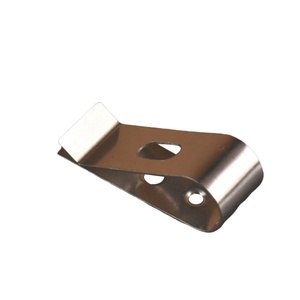
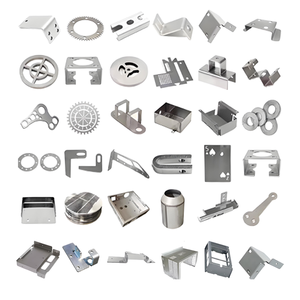
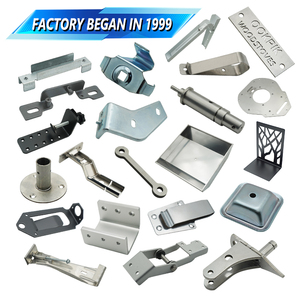
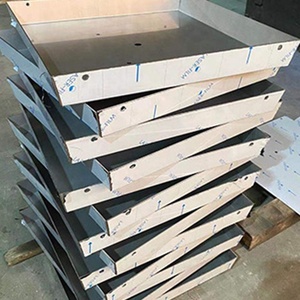
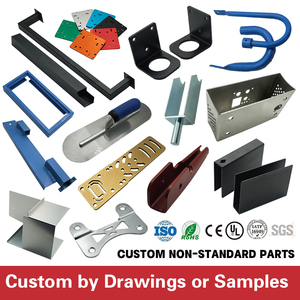
OEM Precision Custom Stainless Steel Stamping Parts
Stainless Steel

OEM Precision Custom Stainless Steel Stamping Hardware Parts

Tolerance: ±0.02 mm Materials: SUS 301, 304, 316, 430 Process: Multi-stage progressive stamping
View Technical Details
High Precision Metal Stamping Mould and Sheet Metal Fabrication
Ultra-Tight Tolerance

High Precision Stamping Die Mould & Sheet Fabrication (0.02mm)

Tolerance: ±0.015 - 0.02 mm Tooling Life: 1,000,000+ strokes (Carbide) Press Rating: 45T to 400T servo mechanical
View Technical Details
Custom Sheet Metal Parts Laser Cutting Welding Stamping Service
Multi-Alloy

Laser Cutting, Precision Stamping & Robotic Welding Assembly

Materials: Copper C1100, Brass, Aluminum Secondary: Robotic TIG/MIG welding, tapping Surface: Tin, Nickel, Silver electroplating
View Technical Details
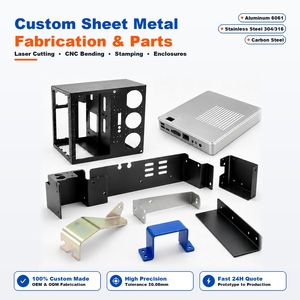
Custom Precision Sheet Metal Fabrication Laser Bending Stamping
OEM Aluminum

Precision Sheet Metal Fabrication, Laser Bending & Stamping

Materials: AL 5052-H32, 6061-T6, SPCC Equipment: CNC 7-axis press brakes Finish: Anodizing Type II/III, Bead blasting
View Technical Details
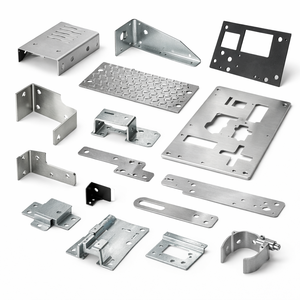
Custom Aluminum Stainless Steel Fabrication Stamping Parts
Industrial Fab

Custom Aluminum & Stainless Sheet Fabrication Stamped Parts

Thickness: 0.3 mm - 8.0 mm Laser Power: 12kW fiber laser cutting Application: Power distribution, solar racks
View Technical Details
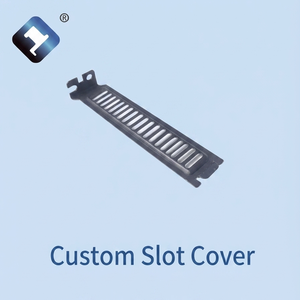
OEM Sheet Metal Stamping Chassis and Panel Components
Chassis & Enclosure

Heavy-Duty Stamped Sheet Metal Chassis & Server Panels

Forming: Deep drawn corners, PEM inserts Coatings: RoHS powder coat, E-coating Volume: 500 pcs to 100,000+ monthly
View Technical Details
Custom Stainless Steel Plate Stamping and Bending Service
High Strength

Heavy Plate Stamping, Laser Cutting & Bending Components

Yield Strength: Up to 780 MPa formed Passivation: ASTM A967 chemical passivate Inspection: 100% optical dimension check
View Technical Details
Factory OEM Custom Metal Stamping Parts Sheet Metal Fabrication
Contract Turnkey

Integrated High-Speed Precision Metal Stamping Components

Stroke Speed: Up to 600 strokes/min Packaging: Tape & reel, blister, bulk export Compliance: ISO 9001:2015, REACH, RoHS
View Technical Details
±0.01mm
Micro-Stamping Precision
800T
Maximum Press Capacity
99.8%
First-Pass Yield Rate
45+
Global Export Markets
Authoritative White Paper

Engineering Precision: Inside Advanced Chinese Metal Stamping

A technical examination of tool and die mechanics, metallurgy control, servo kinematics, and quality architecture that distinguish tier-1 contract manufacturers.

Design for Manufacturability (DFM) & Tooling Engineering

Custom metal stamping in modern industrial production requires a calculated balance between material metallurgy, tool steel dynamics, and press mechanical kinetics. When engineering high-volume components, Chinese engineering facilities prioritize comprehensive upfront DFM simulation via finite element software (AutoForm, FASTFORM, and PAM-STAMP). Evaluating formability, thinning limits, circular grid strains, and elastic recovery (springback) prior to cutting tool steel eliminates costly progressive die revisions.

Precision dies constructed in our facilities utilize hardened Swedish Uddeholm tool steels (Sverker 21, Vanadis 4 Extra) or Japanese DC53 and SKD11, heat-treated to 58–62 HRC. For punch-and-die inserts subjected to severe abrasive friction—such as when cold-forming austenitic stainless steels (AISI 301, 304) or high-yield phosphor bronzes—micro-grain tungsten carbide (WC-Co) inserts with TiCN or DLC physical vapor deposition (PVD) coatings are specified. This guarantees continuous operational tool longevity surpassing 1,500,000 cycles with nominal die wear, preserving burr heights strictly under 5% of nominal sheet gauge.

Servo Press Kinematics vs. Conventional Mechanical Stamping

Traditional flywheel-driven mechanical presses follow an unalterable sinusoidal stroke velocity profile, restricting the flow rate of metal during severe deformation stages. Our integration of direct-drive AC servo press lines (ranging from 60 to 800 metric tons) enables fully programmable stroke curves. By reducing slide velocity immediately prior to initial punch contact while accelerating transfer motions, we eliminate blank tearing, optimize work-hardening rates in complex draws, and allow in-die operations such as tapping, nut-staking, and coining within a single integrated cycle.

Material Selection Guide

Technical Metallurgy Matrix for Stamped Components

Direct comparison of core material grades commonly specified by international procurement teams for stamping operations.

Material Category Common Commercial Grades Tensile Strength (MPa) Formability / Drawability Corrosion Resistance Typical Industrial Application
Austenitic Stainless AISI 304, 316L, 301 Full Hard 515 – 1150 Moderate (High work-hardening) Superior (Passivated) Medical housings, food equipment, marine electrical terminals
Cold Rolled Carbon Steel SPCC, SPCE, DC01, DC04 270 – 410 Exceptional (Deep drawing) Low (Requires plating/E-coat) Automotive chassis brackets, server chassis, appliance enclosures
High-Strength Aluminum AL 5052-H32, 6061-T6, 1050 190 – 310 High (Grade dependent) Excellent (Natural oxide / Anodized) EV battery structural enclosures, heat sinks, aerospace brackets
Copper & Brass Alloys C1100 (ETP Copper), C2680, C5191 200 – 620 High to Superior Good (Tarnish resistant) EV high-voltage busbars, relay terminals, spring contacts
Electro-Galvanized Steel SECC, SECD, SGCC 270 – 440 High Moderate (Zinc barrier) Consumer electronic shielding, computer power supply shells
Strategic Market Intelligence

Global Procurement Trends & Industrial Transformations (2025–2030)

How international procurement managers are restructuring supply lines to achieve resilient cost, quality, and regulatory equilibrium.

1. Nearshoring vs. Deep Supply Integration

While nearshoring gains traction for low-complexity stamping, China remains the global center of gravity for high-speed progressive tooling and ultra-tight tolerance metal fabrication. Western OEMs leverage China’s integrated tooling ecosystems—where die blocks, heat treatment, wire EDM, and tryout presses coexist within short regional radii—reducing prototype tooling lead times by up to 55% compared to domestic Western vendors.

2. Total Cost of Ownership (TCO) Prioritization

Sophisticated supply chain directors have shifted procurement rubrics from raw piece-part cost to Total Cost of Ownership (TCO). This accounts for tooling amortization across 3-year projected volumes, die maintenance warranties, defect rates below 50 PPM, and rapid transit via consolidated ocean freight, yielding a net 22–38% overall savings over localized production.

3. Carbon Neutrality & Circular Metallurgy

With the European CBAM (Carbon Border Adjustment Mechanism) and global ESG audits entering rigorous enforcement, premier Chinese exporters maintain full scrap segregation protocols (copper, aluminum, and stainless steel). We utilize low-carbon recycled scrap feeds verified by third-party metallurgical audit trails and EN 10204 3.1 certification.

4. In-Die Optical Inspection & Smart Metrology

High-speed vision sensors positioned within the stamping die monitor critical dimensional datums at full press operating speed (up to 400 strokes/minute). Parts violating statistical control limits (CpK < 1.33) trigger automated air ejection, eliminating downstream non-conformance before assembly.

5. Electrification & Busbar Architecture

The global transition to electric mobility and renewable energy storage requires specialized stamping of heavy-gauge oxygen-free copper (C10200) and aluminum busbars. Complex 3D multi-planar bends with integrated coining, ultrasonic wire-bonding tabs, and anti-galvanic plating set new benchmarks for manufacturing mastery.

6. Turnkey Hardware Box-Builds

International buyers seek single-source accountability. Tier-1 stamping facilities no longer deliver raw stamped pressings alone; operations incorporate automated PEM-insert installation, robotic spot welding, automated gasket dispensing, powder coating, and retail or assembly-ready packaging.

Enterprise Strengths

Why Global Fortune 500 & Tier-1 OEMs Source With Us

Decades of manufacturing precision supported by dedicated infrastructure, strict metrology, and end-to-end export administration.

IATF 16949 Metrology

Certified Zeiss CMM, 2.5D optical profile projectors, Keyence digital measurement systems, and salt spray testing units with complete PPAP Level 3 readiness.

In-House Tooling Division

Direct CAD/CAM tool manufacturing using AgieCharmilles wire EDM and Makino high-speed CNC milling ensures tool fabrication within 18–25 days from final DFM sign-off.

Scalable Press Capacity

Over 40 mechanical and servo press machines ranging from 25T up to 800T, supporting miniature 0.2mm connector pins to heavy-gauge 10mm automotive frames.

Global Logistics & VMI

Complete export capabilities including custom fumigated wooden crating, anti-corrosive VCI wrapping, bonded warehousing, and Vendor Managed Inventory (VMI) support.

Procurement Due Diligence

Frequently Asked Questions for Custom Stamping Sourcing

Direct, technically rigorous answers covering tooling lifecycles, surface coatings, international logistics, and engineering lead times.

What typical dimensional tolerances can be held across high-volume production?

Standard progressive stamping operations maintain linear and hole-diameter tolerances of ±0.05 mm (0.002 in). On calibrated precision stamping tools running on high-precision servo presses equipped with carbide punch/die sets and thermal sensor compensation, critical dimensions are repeatedly held to ±0.015 mm (0.0006 in) to ±0.02 mm. For ultra-fine pitch electronic terminals, micro-tolerances down to ±0.010 mm are verified under statistical process control (CpK > 1.67).

How is tooling ownership, maintenance, and replacement handled under contract manufacturing?

Upon full settlement of the initial tooling invoice, full legal proprietary ownership of the progressive or transfer die belongs 100% to the client. We assign a unique asset tag and guarantee complimentary lifetime tool maintenance throughout the agreed production life (e.g., 500,000 to 2,000,000 strokes). If dies require sharpening, component redressing, or replacement carbide punch inserts due to standard wear, these costs are fully absorbed by our factory.

What documentation is provided during the sample approval (NPI) stage?

For all custom stamping projects, we supply a comprehensive PPAP (Production Part Approval Process) Level 3 documentation package upon request. This encompasses: Full Dimensional Inspection Reports (Ballooned drawings with CMM coordinates), Material Test Reports (MTR / Mill 3.1 Certificates verifying chemical composition and physical properties), Process Failure Mode and Effects Analysis (PFMEA), Control Plan, Process Flow Diagram, and initial Capability Studies (Cp, CpK values) derived from trial production runs.

What secondary processing and surface finishing can be executed under one roof?

To avoid multi-vendor risk, we provide fully integrated secondary finishing including: CNC post-machining, automated tapping/threading, robotic TIG/MIG/resistance spot welding, vibro-deburring, centrifugal polishing, ultrasonic degreasing, electroplating (bright/matte tin, silver, nickel, gold, zinc with trivalent chromate passivations), electrophoretic deposition (E-coat), anodizing (Type II sulfuric, Type III hardcoat), and automated architectural powder coating meeting ASTM standard requirements.

What are the standard lead times for DFM, tooling fabrication, and volume dispatch?

Our engineering turnaround schedule is optimized for rapid market entry: DFM report and initial 3D strip layout proposals are completed within 48 to 72 hours. Single-stage prototype tooling takes approximately 10 to 14 days. Complex multi-station progressive dies require 20 to 35 calendar days depending on geometric intricacies. Upon sample approval via T1 tryouts, standard high-volume production orders are stamped, finished, inspected, and crated for sea export in 15 to 25 business days.

Accelerate Your Precision Stamping Project Today

Send your 2D engineering drawings (PDF / DWG / DXF) and 3D CAD models (STEP / IGES / X_T). Our Senior Tooling Engineers will deliver a comprehensive DFM feasibility review, material optimization plan, and transparent quotation within 24 hours.