
Industrial Whitepaper: Engineering Optimization of Perforated Metal Cylinders
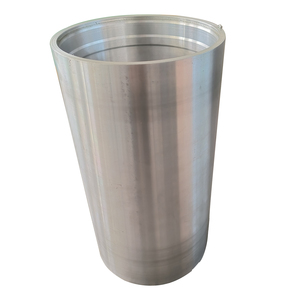
A perforated metal cylinder serves as the structural backbone and primary filter core across industrial separation, acoustic dampening, bulk material processing, and catalyst retention systems. Fabricating a high-performance cylindrical sleeve demands deep technical mastery over sheet elasticity, hole deformation kinematics, seam welding dynamics, and residual stress mitigation. When a perforated flat sheet undergoes three-roll or four-roll mechanical bending into a cylindrical sleeve, the perforation pattern directly dictates localized yield strain and circumferential roundness.
Our engineering division utilizes finite element calculations to compensate for springback deviations in cold-worked austenitic stainless steels (such as AISI 304, 304L, 316, and 316L), duplex alloys (2205/2507), and nickel superalloys (Hastelloy C-276, Inconel 625, and Monel 400). Standardizing the non-perforated margin along the longitudinal seam is critical; inadequate solid margins result in scalloping and uneven seam melt-through, while excessive margins cause hydraulic flow dead-zones and localized differential pressure bottlenecks.
Seam Integrity & Welding Precision
Continuous automated TIG, plasma keyhole, and high-frequency longitudinal resistance welding guarantee deep penetration with a flush, burr-free internal root bead that prevents filter media puncture.
Perforation Geometries & Open Area
From 60° staggered circular patterns maximizing hoop strength to straight 90° slot arrays facilitating laminar particulate shedding, our CNC tooling delivers tight pitch-to-hole accuracy.
Post-Forming Surface Passivation
Full chemical immersion ASTM A967 nitric/citric acid passivation, bead-blasting, and ultrasonic cleaning remove embedded free-iron tramp particles, maximizing pitting resistance in chloride environments.
Engineering Design Matrix: Perforation Patterns vs. Collapse Ratings
The structural capacity of a perforated metal tube subject to external differential radial pressure is calculated using modified Barlow and Timoshenko ring collapse formulas, wherein open area percentage directly scales down the effective modulus of elasticity. Below is an engineering comparison matrix for standard cylindrical cores produced at our facility:
| Cylinder Profile Type | Standard Material Alloys | Wall Thickness (t) | Hole Diameter × Pitch | Open Area (%) | Collapse Strength Rating |
|---|---|---|---|---|---|
| Heavy-Duty Filter Core | AISI 316L / 1.4404 | 1.5 mm – 3.0 mm | 3.0 mm × 5.0 mm (60° Staggered) | 32.6% | High (≥ 4.8 MPa radial) |
| High-Flux Support Sleeve | AISI 304 / Carbon Steel | 0.8 mm – 1.5 mm | 5.0 mm × 7.0 mm (60° Staggered) | 46.2% | Moderate (≥ 2.2 MPa radial) |
| Centrifuge Dewatering Basket | Duplex 2205 / Hastelloy | 2.0 mm – 4.5 mm | 1.0 mm × 20 mm Slotted (Bridge) | 18.4% | Extreme (≥ 8.5 MPa radial) |
| Acoustic Exhaust Baffle | Aluminized Steel / SS409 | 0.6 mm – 1.2 mm | 2.5 mm × 4.0 mm (Straight 90°) | 30.7% | Low-Medium (≥ 1.1 MPa radial) |
| Mass Transfer Bed Support | 316Ti / Monel 400 | 3.0 mm – 6.0 mm | 12.0 mm × 16.0 mm (Staggered) | 51.0% | Engineered Custom Support Beam |
Future Procurement & Manufacturing Trends (2025–2030)
Global procurement teams across North America, Europe, Australia, and the Middle East are re-evaluating supplier capability matrices. Procurement is transitioning from baseline price-per-kilogram metrics to life-cycle cost analysis, dynamic load integrity, and carbon accounting. As industrial processes integrate decarbonized hydrogen supply chains, circular chemical distillation, and large-scale battery storage infrastructure, perforated cylinders must meet stricter dimensional limits and harsh operating requirements.
1. Transition Toward Fiber Laser Micro-Perforation
Mechanical turret punching is increasingly complemented by multi-axis high-speed fiber laser cutting systems. While mechanical punching offers unparalleled economy for standard round holes (≥ 1.5 mm diameter in sheet thicknesses up to 3.0 mm), fiber laser micro-cutting achieves clean hole-to-thickness ratios below 0.5:1. This enables ultra-fine filtration retention sleeves without requiring secondary woven mesh overwraps, streamlining assembly while preventing delamination failures in high-vibration aerospace or oil and gas downhole pumps.
2. Zero-Defect Automated Optical Inspection (AOI)
Traditional manual vernier checks and plug gauges are being superseded by automated 360-degree laser triangulation scanners. In our manufacturing facilities, completed cylinders pass through dimensional verification rigs that record outside diameter (OD), inside diameter (ID), ovality, camber, and hole pitch spacing within ±0.05 mm tolerances. Every production run is backed by EN 10204 3.1 inspection certification and chemical heat traceability, ensuring that EPC contractors receive error-free parts on site.
3. Supply Chain Near-Sourcing & Raw Material Hedging
Geopolitical turbulence and volatile freight corridors have shifted international buyer expectations toward agile manufacturing partners. Tier-1 buyers require manufacturers to maintain extensive coils, plates, and angle profiles from vetted primary mills (such as TISCO, Baosteel, and Jindal). By holding ready stockpiles of certified 304L, 316L, and nickel alloy raw strip materials, we insulate international project schedules from sudden raw material price spikes and reduce standard lead times by up to 40%.
Frequently Asked Questions: Industrial Procurement & Engineering
Clear engineering answers addressing the operational, metallurgical, and logistic concerns of project managers, procurement directors, and plant engineers.
What is the minimum non-perforated margin required along the cylinder longitudinal weld seam?
For automated TIG or plasma seam welding, we recommend an unperforated solid border of at least 3.0 mm to 6.0 mm (or 2.5 to 3 times the material wall thickness) along each abutting edge. Maintaining an unperforated margin prevents weld pool blowout, ensures uniform electrical conductivity during longitudinal resistance welding, and eliminates notch-stress concentrations across the heat-affected zone (HAZ).
How is cylindrical ovality controlled during rolling and welding?
Cylindrical ovality is controlled using a dual-stage process: first, initial pre-bending of sheet extremities on calibrated hydraulic clamping dies to eliminate edge flats; second, post-weld hydraulic sizing or mandrel expansion. Our completed perforated tubes adhere to ASTM A554 and DIN 2458 tolerances, holding ovality (maximum OD minus minimum OD) within 0.5% of the nominal outer diameter across lengths up to 3,000 mm.
Which welding technique provides the best internal smoothness for media cartridge insertion?
Plasma keyhole welding and continuous fiber laser seam welding generate the flattest root beads. In critical filter core applications where pleated synthetic or wire-cloth membranes slide over the metal sleeve, we subject the internal longitudinal seam to rotary mechanical planishing or internal bead grinding, achieving an internal seam flushness within +0.05 mm / -0.00 mm.
Can you manufacture spiral lockseam vs. straight welded perforated tubes?
Yes. We manufacture both spiral-formed lockseam tubes and straight longitudinal welded cylinders. Spiral lockseam cylinders offer exceptional radial crush resistance at thinner gauges (0.4 mm to 1.0 mm) without heat discoloration, making them ideal for automotive exhaust cores and hydraulic return-line filters. Straight longitudinally welded tubes provide maximum axial tensile strength and tighter diametrical tolerances for high-pressure industrial housings.
What international quality certifications and tests accompany export shipments?
All export orders are delivered with a comprehensive QA dossier containing EN 10204 Type 3.1 Material Test Certificates (MTC) with heat chemical composition and mechanical properties, Positive Material Identification (PMI) spectrometer verification reports, weld radiography (RT) or dye penetrant (PT) inspection logs upon specification, and dimensional CMM calibration sheets.
How are export crates protected against saltwater atmospheric corrosion during sea transit?
Every perforated cylinder batch is ultrasonically cleaned, thoroughly dried, wrapped in moisture-barrier VCI (Vapor Corrosion Inhibitor) plastic film, segregated with corrugated dividers to prevent metal-to-metal impact abrasions, and crated inside fumigated ISPM-15 compliant solid plywood cases reinforced with steel strapping.
Need Custom Engineered Perforated Metal Cylinders?
Submit your CAD blueprints, process data sheets, or alloy specifications. Our application engineers review hydraulic flow parameters, mechanical collapse thresholds, and fabrication tolerances within 24 business hours.