
- +91-9930498858Call / WhatsApp
- [email protected]Email Us
Explore our core export lines spanning structured gauze packing, custom deep-drawn shells, architectural screening media, stamped precision trays, and heavy-duty enclosures designed for continuous industrial operation.
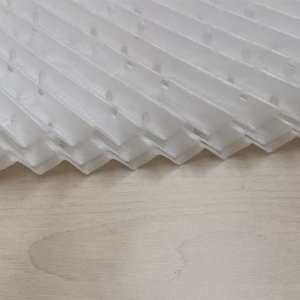
Engineered for low pressure drop absorption, gas scrubbers, and vacuum rectifications requiring maximum phase contact area.
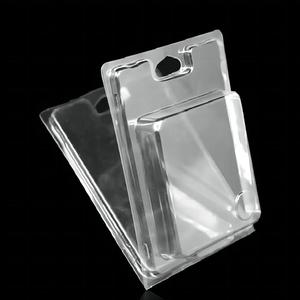
Precision thermoformed industrial blister packaging, custom shipping trays, and protective packing solutions for sensitive internals.
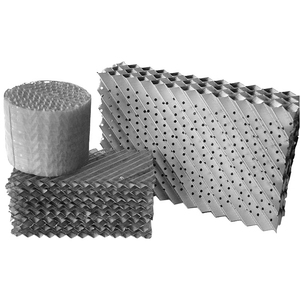
Heavy-duty austenitic stainless steel corrugated mesh sheets providing superior wettability, low HETP, and thermal endurance.
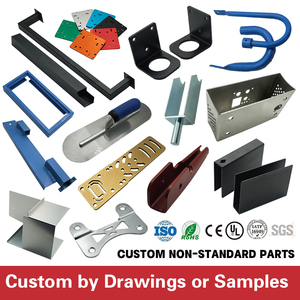
CNC laser-cut and stamped tray valves, clamps, liquid distribution pans, and custom brackets held to strict dimensional tolerances.
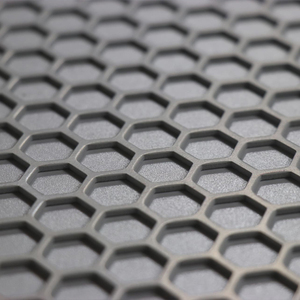
Engineered corrugated perforation profile for acoustic baffling, column vapor baffles, screening, and architectural panel systems.
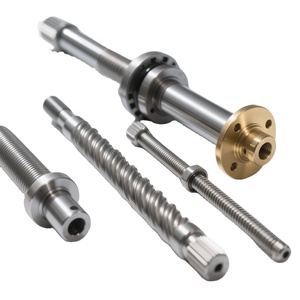
Seamless deep-drawn bubble caps, cups, and distributor nozzles constructed via progressive dies without welded seams for 100% leak-proof reliability.
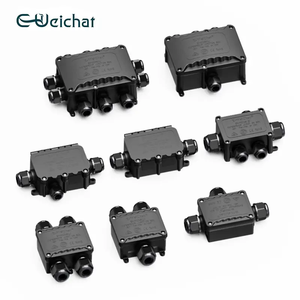
Heavy-duty weather-sealed outdoor electrical housing designed for column sensor instrumentation, transmitters, and automated control nodes.
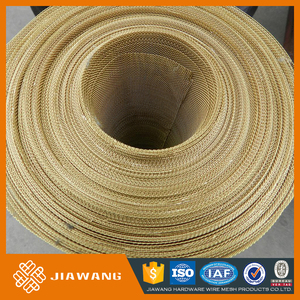
High-density woven filtration wire cloth manufactured for catalyst retaining screens, demister mist eliminators, and fine particulate straining.
Absorption columns (gas scrubbers, packed contactors, and reactive strippers) represent critical unit operations across the petrochemical, sour gas sweetening, ammonia processing, and carbon capture (CCUS) sectors. In an absorption system, the physical or chemical mass transfer rate is governed by the two-film theory: achieving high interfacial surface contact area ($a$), maintaining uniform liquid distribution across the entire bed radius, and minimizing hydrodynamic gas pressure drop ($\Delta P/Z$) are vital parameters determining separation efficiency.
Selecting the optimal configuration between random packing, structured wire gauze packing, and multi-pass valve trays depends on liquid viscosity, working pressure, fouling propensity, and corrosion severity. Chinese and global manufacturing engineering standards have transitioned from generic stamping toward precision hydraulic modeling, finite element stress testing, and CNC multi-axis tooling to resolve notorious column issues including maldistribution, channel channeling, spray entrainment, and premature hydraulic flooding.
| Internal Configuration | Specific Surface Area ($m^2/m^3$) | Pressure Drop Range | Turndown Ratio | Fouling Resistance | Primary Industrial Use Cases |
|---|---|---|---|---|---|
| Metal Wire Gauze Structured | 500 - 750 | Ultra-Low (< 0.5 mbar/stage) | High (> 4:1) | Low (Clean Systems) | Vacuum distillation, isomer separation, fine chemicals |
| Corrugated Sheet Structured | 125 - 500 | Low (1 - 2.5 mbar/stage) | Moderate (~3:1) | Moderate | CO2 capture scrubbers, LNG fractionators, amine absorbers |
| Floating / Fixed Valve Trays | N/A (Geometric Deck) | Moderate (3 - 6 mbar/tray) | Very High (up to 5:1) | Good | Refinery crude units, petrochemical depropanizers |
| Precision Random Rings/Saddles | 100 - 350 | Moderate-Low | Flexible | High | Sour gas stripping, flue gas desulfurization (FGD) |
Our integrated manufacturing facilities deploy full heat-traceable metallurgy, delivering column internals in SS304/304L, SS316/316L, Duplex 2205, Hastelloy C276, Monel 400, Titanium Grade 2, and specialized polymers (PVDF, PTFE, PP). By matching precise alloy chemistry to stream pH and temperature profiles, plant engineers secure maximum equipment lifecycle while suppressing stress corrosion cracking.
Global supply chain directors and EPC procurement executives face changing regulatory baselines and cost pressures. Key purchasing patterns shaping mass transfer procurement include:
Purchasing teams are shifting from evaluating individual part costs to measuring Total Cost of Ownership (TCO). Procurement contracts prioritize manway-sized pre-assembled internal packages that reduce turnaround downtime by up to 35% during turnaround turnouts.
EPC contractors are cutting out trading intermediaries. Sourcing directly from certified Chinese and Asian manufacturers provides transparent EN 10204 3.1 material test certifications, verified ultrasonic weld reports, and custom CFD flow simulation verification.
Global carbon capture utilization & storage (CCUS) projects and blue hydrogen production plants require giant column diameters (>8 meters). This drives demand for high-capacity multi-chordal liquid distributors and corrugated high-wettability surface treatments.
Process intensification is reshaping mass transfer equipment design. These technological shifts are actively entering production floors:
Advanced porous 3D open-cell metal foams and selective laser melting (SLM) are overcoming traditional capillary liquid spreading limits, creating unprecedented vapor-liquid shear interfaces without hydraulic choking.
Direct fiber-laser surface etching on stainless sheets changes surface tension dynamics, driving continuous liquid film propagation even at low irrigation rates ($< 0.2\text{ m}^3/\text{m}^2\cdot\text{h}$), eliminating dry zones.
Next-generation column distributor troughs feature wireless differential pressure tabs and guided wave radar liquid level transducers, transmitting real-time bed profile metrics through IP68 secure communication housings.
Combining decades of precision engineering with ISO-certified production lines to supply column hardware to plants across 20+ countries.
Direct supply partnerships with tier-one primary steel mills guarantee authentic raw material stock. Every lot is verified via Optical Emission Spectrometry (OES) with complete MTRs and heat number tracking per EN 10204 3.1 standards.
Equipped with high-tonnage progressive stamping presses, precision CNC fiber lasers, and deep drawing stations, we manufacture complex components without relying on sub-tier fabricators, preserving schedule predictability.
Pre-assembly alignment trials, dimensional coordinate verification, and liquid distributor water testing prior to shipment. Packed in IPPC-fumigated seaworthy reinforced wooden crates with tagged component tagging for quick site installation.
Technical and commercial clarifications address common inquiries from plant designers, process consultants, and procurement managers.
Wire gauze structured packing provides superior capillary wetting, yielding extremely low HETP values ideal for vacuum systems, heat-sensitive APIs, and fine isomer separations. Corrugated sheet packing offers higher mechanical rigidity, increased liquid capacity, and better resistance to particulate fouling, making it the standard choice for high-pressure scrubbers, natural gas sweetening, and atmospheric amine absorbers.
Our plant operates under ISO 9001:2015 and international mass transfer fabrication codes. Tray deck panels are pressed to a flatness tolerance within ±2 mm, and liquid distributor discharge orifice diameters are punched via CNC servo systems with an accuracy of ±0.05 mm, ensuring a coefficient of liquid maldistribution ($C_v$) under 5% across the entire active area.
Yes. Revamp engineering is a core capability. We manufacture one-to-one replacements for obsolete or damaged internals from major process licensors. By reviewing nozzle orientations, support ring weld tabs, and existing manway clearances, we supply modular sections that pass easily through standard 18" to 24" (450mm-600mm) shell manways without on-site cutting.
Quality assurance includes PMI (Positive Material Identification) via handheld XRF analyzers, dye penetrant weld inspection, complete dimensional layout audits, liquid spray pattern flow verification, and destructive tensile testing on raw coil samples. Third-party inspection agencies such as SGS, TÜV, and BV are regularly hosted for on-site witness inspections.
To prepare an accurate quotation, please provide the vessel internal diameter (ID), tangent-to-tangent shell height, mass/energy balance process datasheet (vapor/liquid volumetric rates, operating densities, viscosity, and surface tension), designated alloy grade, design pressure/temperature, and manway dimensional limitations.