
Engineered Separation Media
Precision Metallic Filter Cartridges & Cylinders
Custom-crafted porous mesh, diffusion-bonded multi-layers, and high-collapse continuous slot screen tubes designed for extreme thermal and corrosive industrial processes.
25+
Years Industry Expertise
1000+
Global Clients Served
20+
Export Destinations
100%
Heat-Traceable Alloys
Technical Engineering Whitepaper
Structural Metallurgy & Porous Filtration Mechanics
A rigorous examination of diffusion bonding, pressure drop optimization, and micro-aperture geometry across harsh chemical, refining, and subsea fluid dynamics.
Diffusion Bonded Sintering
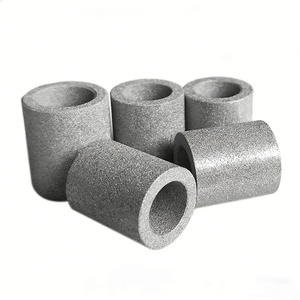
By applying high vacuum and metallurgical compression without binder fluxes, atomic diffusion merges woven mesh layers into an integrated composite. This process completely eliminates wire migration, retains fixed pore geometry under severe cyclic pulsating pressure, and guarantees absolute particulate cutoffs down to 0.5 microns.
V-Wire Wedge Slot Integrity
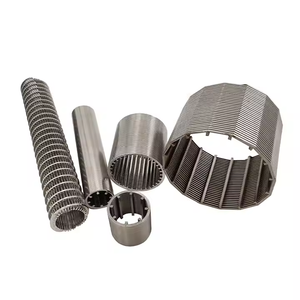
Fabricated through precision resistance welding on longitudinal support rods, our wedge wire continuous-slot tubes yield a distinct inward-widening profile. This triangular geometry creates a two-point contact boundary that inherently prevents particulate blinding, enhances cake discharge during automated backwash cycles, and withstands extreme collapse pressures in deep extraction wells.
Corrosion-Resistant Alloys
Beyond baseline AISI 304 and 316L, we engineer solutions in high-nickel superalloys including Hastelloy C-276, Monel 400, and Inconel 625. These metals offer unmatched resistance to wet chloride stress corrosion, caustic sour gas pitting, and dynamic sulfuric/hydrochloric acid exposure under operating temperatures spanning cryogenic to 900°C.
| Filter Tube Architecture | Filtration Rating Range | Differential Pressure (ΔP) | Mechanical Crush Resistance | Primary Process Applications |
|---|---|---|---|---|
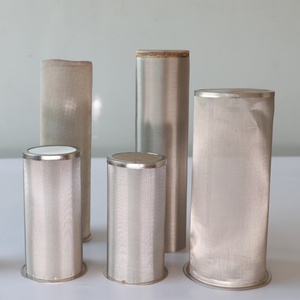
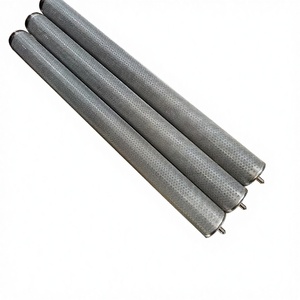
| Multi-Layer Diffusion Sintered Mesh | 0.5 μm – 60 μm (Absolute) | Medium – High (Porous tortuosity) | High (Internal perforated core) | Polymer melts, API pharmaceuticals, gas flame arrestors |
| Continuous Wedge Wire (V-Profile) | 20 μm – 3000 μm (Nominal) | Very Low (Continuous open area) | Extreme (Engineered rod pitch) | Subsea sand control, water intake, resin retention |
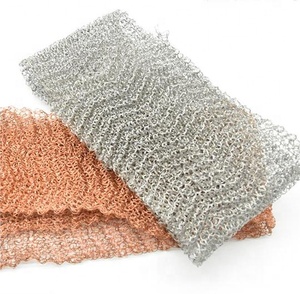
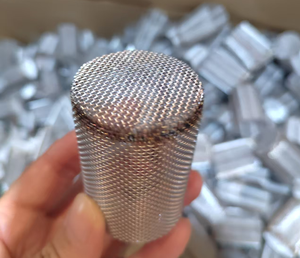
| Knitted SS & Copper Gas-Liquid Cartridge | 50 μm – 150 μm (Interlocking) | Ultra-Low (High void ratio >90%) | Moderate (Flexible dampening) | Demister mist elimination, compressor crankcases, vibration traps |
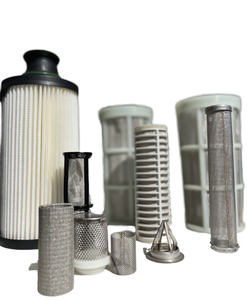
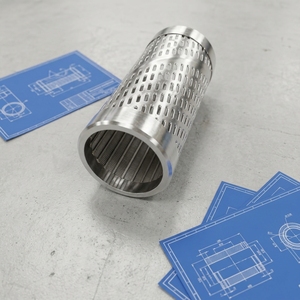
| Perforated Core + Twill Woven Sleeve | 10 μm – 250 μm (Surface capture) | Low – Medium | High (Rigid structural backing) | Hydraulic suction systems, engine lube oil, marine fuel piping |
Strategic Procurement Intelligence
Future Sourcing & Industrial Trends (2025–2030)
Key technological and market shifts reshaping industrial separation, clean energy filtration, and high-efficiency procurement.
Green Hydrogen & CCUS
Electrolyzer architectures require non-leaching, porous titanium and 316L gas diffusion filter tubes capable of sustained high-pressure deoxygenation and corrosive electrolyte balance without degradation.
Automated Self-Cleaning Systems
Global refineries are transitioning toward continuous automated backpulse processes. This shift demands precise, non-deforming V-slot tolerances to maintain predictable hydrodynamic flushing cycles.
Standardized PMI Traceability
Procurement teams increasingly require full positive material identification (PMI) and end-to-end heat numbers to mitigate galvanic contamination and meet strict insurance standards.
High-Entropy Alloy Meshes
Emerging chemical syntheses operating above 800°C drive demand for custom diffusion-bonded porous matrices built from specialized intermetallics and ultra-fine metal foams.
Enterprise Manufacturing Capabilities
Why Tier-1 EPCs Partner With Our Supply Chain
Combining end-to-end metallurgical fabrication, certified cleanroom welding, and comprehensive export testing under one integrated system.
Mill-Sourced Traceability
Every tube is produced using prime coil and wire stock with complete EN 10204 3.1 certification. Full chemical assays and physical property records accompany every production run.
Integrated CNC Machining
Our facility houses high-precision tooling, deep drawing presses, automated plasma welding stations, and multi-axis CNC lathes to fabricate complex end fittings, flanges, and threaded connectors in-house.
Rigorous Quality Auditing
We perform bubble point integrity verification per ISO 4003, hydraulic burst resistance validation, and slot optical micrometer inspections before packaging to guarantee tight operational tolerances.
Global Export Packaging
Our team prepares heavy-gauge seaworthy wooden crates, anti-corrosive desiccant liners, and individual tube sleeving, supported by complete customs documentation across more than 20 destination countries.
Procurement & Engineering FAQ
Frequently Asked Questions by Industrial Sourcing Teams
Clear, direct answers regarding fabrication limits, cleaning procedures, burst limits, and custom engineering parameters.
What parameters define absolute versus nominal filtration in metal filter tubes?
Absolute ratings describe the largest spherical hard particle able to pass through the pore structure under standardized bubble point tests (ISO 4003), typical of sintered multi-layer meshes. Nominal ratings indicate an approximate percentage retention (e.g., 90–95% of particulate mass), commonly used for woven and wedge wire geometries operating in variable process streams.
How do sintered mesh tubes compare with perforated wedge wire screens during backwashing?
Continuous wedge wire provides an unobstructed, two-point particle contact slot that releases filtered cake quickly during hydrodynamic backpulsing with minimal volume loss. Sintered mesh tubes trap particles throughout their tortuous pore network, delivering finer absolute retention but requiring higher pressure reverse flow or periodic ultrasonic cleaning to restore base differential pressure.
What data points are required to engineer a custom metallic filter cylinder?
Key design inputs include: operating and peak system temperatures, working fluid viscosity, chemical composition (including chloride, sulfide, and acid concentrations), differential pressure limits (ΔP clean vs. dirty), particulate loading distribution, target flow rate, and connection specs (such as DOE, NPT, or custom flanged collars).
Can damaged or clogged metal filter tubes be regenerated for re-use?
Yes. Stainless steel (304/316L) and nickel alloy cartridges withstand thermal burn-off, chemical solvent flushing, high-temperature calcination, and ultrasonic wash cycles. Unlike polymeric filter media, rigid all-welded metallic filter cylinders can be regenerated repeatedly, lowering ongoing operational replacement costs over multi-year duty cycles.
Plan Your Next Separation Project With Technical Specialists
Send us your process operating parameters, equipment drawings, or target micron ratings. Our engineering group will review your hydrodynamic requirements and deliver a competitive technical quotation.