- +91-9930498858Call / WhatsApp
- [email protected]Email Us
Engineered through vacuum diffusion sintering, precision stamping, laser profiling, and cold deep drawing. Explore our core standard specifications and bespoke assemblies.
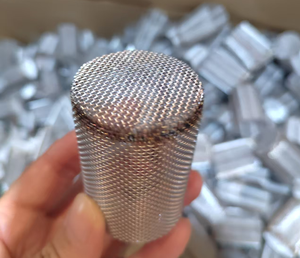
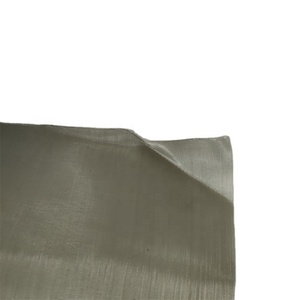
Sintered mesh laminate represents the gold standard in modern mechanical separation, fluidization, and boundary gas diffusion. Unlike conventional single-layer wire cloth or mechanically crimped mesh screens—which are susceptible to wire migration, pore aperture shifting, and premature pressure fatigue—diffusion-bonded laminates form an inseparable metallurgical structure. Produced under controlled thermal vacuum environments (often exceeding 1150°C under 10⁻³ Pa high-vacuum conditions), atomic diffusion occurs at all cross-wire contact points without the introduction of low-melting-point brazing alloys.
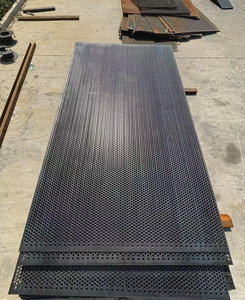
Standard architectural laminates typically combine up to 5 or 6 specialized layers: the protective outer boundary layer, the precision functional control mesh, a fine drainage dispersion layer, and multiple progressively coarse reinforcing backing meshes. When bonded with an integrally formed, crack-free perforated plate, these composite panels withstand intense backwash pressures exceeding 5 MPa while maintaining a fixed pore aperture geometry across years of continuous duty cycles.
| Layer Architecture | Typical Mesh Count / Pattern | Primary Functional Role | Standard Alloy Grade |
|---|---|---|---|
| Layer 1: Protective Cover | 12–64 Mesh (Plain Weave) | Surface abrasion defense, debris interception, mechanical guard | AISI 316L / Hastelloy C-276 |
| Layer 2: Filtration Boundary | 100–2800 Mesh (Dutch / Twill) | Precise pore exclusion, fluid rating (0.5μm–200μm) | AISI 316L / Inconel 600 |
| Layer 3: Flow Dispersion | 60–100 Mesh (Plain Weave) | Even hydraulic distribution, channeling prevention | AISI 304 / 316L |
| Layer 4 & 5: Support Skeleton | 12–20 Mesh (Square Weave) | Flexural rigidity, tensile support during reverse blowback | AISI 304 / SS 316 |
| Reinforcement Substrate | Perforated Sheet (1mm–3mm) | Structural load bearing up to 10+ MPa differential pressure | Custom Carbon / Stainless Steel |
The global shift toward green hydrogen production, supercritical carbon capture, and high-temperature polymer processing has fundamentally altered procurement requirements for industrial mesh laminates. Plant engineers and procurement officers no longer buy off-the-shelf wire cloth based purely on mesh count; acquisition strategies have pivoted around long-term Total Cost of Ownership (TCO) and multi-stress resilience.
Standard austenitic 304/316L alloys are being systematically supplemented by Hastelloy C-22, Inconel 625, and Monel 400 to prevent chloride stress corrosion cracking (SCC) in harsh marine and offshore petrochemical processing systems.
Procurement teams demand bubble-point verification complying with ISO 4003 alongside certified scanning electron microscopy (SEM) pore characterization, ensuring zero bypassing in sterile pharmaceutical filtration.
Minimizing circumferential welded joints via custom deep drawing and continuous stamping reduces weak seam zones in reactor fluidizing cones, enhancing mechanical endurance under severe harmonic vibrations.
As China's leading specialized exporter, our engineering facilities have pioneered progressive vacuum diffusion algorithms. Traditional sintering methods frequently suffered from localized delamination, non-uniform wire embrittlement, or pore closure caused by excessive roll-reduction forces. Today, by integrating multi-stage thermal cycle ramps with hydraulic isostatic pressing (HIP), we guarantee atomic bonding without altering the wire's pristine internal microstructure.
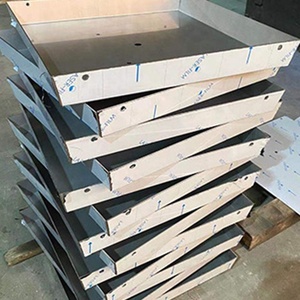
Furthermore, our deep integration of secondary processing—including burr-free laser profiling, automatic longitudinal argon-arc seam welding, ultrasonic immersion degreasing, and electrochemical polishing—ensures that every finished element is cleanroom-ready. This eliminates particulate shedding in critical aerospace hydraulic controls and zero-tolerance semi-conductor gas distribution lines.
Over 25 years of metallurgical innovation, end-to-end manufacturing control, and fully documented international quality compliance.
100% heat-number raw material traceability from prime mills. Every dispatch includes EN 10204 3.1 Material Test Reports, PMI chemical checks, and bubble-point porosity validation certificates.
We eliminate subcontractor delays. From vacuum sintering ovens, precision wire weaving, and deep drawing presses to 10kW fiber laser cutters and cleanroom welding, all operations reside under one roof.
Exporting to over 20 nations across North America, Europe, Australia, and the Middle East. Robust ISPM-15 export wooden crates ensure zero moisture ingress or transport deformation.
Essential technical and commercial considerations for sourcing sintered porous media.
Sintered mesh laminate is formed from precisely woven wire screens, giving it predictable directional pore geometries, superior tensile strength, and exceptional backwash regeneration efficiency. Sintered powder lacks tensile plasticity, is more brittle, and has irregular internal tortuosity, making it prone to deep fouling during high-solid liquid loading.
Yes. Because diffusion bonding forms a true metallurgical alloy bridge, sintered laminates behave similarly to solid sheet metal. They can be sheared, folded, rolled into cylinders, pleated into cartridges, and TIG welded to custom-machined flanges without delamination or wire separation along the seams.
Depending on the contaminant, sintered mesh elements can be regenerated using reverse liquid backwash, high-pressure ultrasonic bath cleaning, solvent vapor degreasing, dilute chemical clean-in-place (CIP) pickling, or high-temperature pyrolysis burn-off (up to 480°C in standard atmospheres).
Please provide your targeted filtration rating (micron), operating operating temperature, process medium chemistry (to identify chloride or acid corrosion risks), flow velocity, differential pressure thresholds, and dimensional drawings or CAD files for custom formed geometries.
Whether you need rapid-delivery replacement sintered discs, custom fluidization plates, or high-pressure gas diffuser tubes, our technical sales team provides full design verification, CAD support, and competitive export quotations within 24 hours.