China Top Twill Weave Mesh Manufacturer & Exporter

Precision-Woven SS304/316, Hastelloy, Monel & Nickel Alloys: High-Efficiency Separation, Distillation Packing & Sub-Micron Industrial Filtration

Engineered Product Showcase

Engineered Separation & Industrial Mesh Solutions

Manufactured under strict ISO 9001:2015 process controls, our high-precision twill weave meshes, structured packing gauzes, and deep-drawn metal components serve rigorous separation applications worldwide.

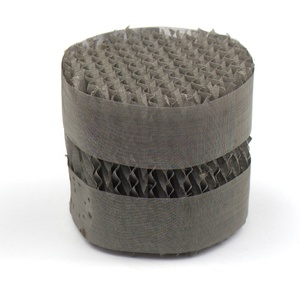
SS304 316 Metal Wire Mesh Gauze Structured Packing for Distillation Tower

SS304 316 Metal Wire Mesh Gauze Structured Packing

Precision-corrugated woven gauze designed for ultra-low pressure drop and maximum vapor-liquid mass transfer efficiency.
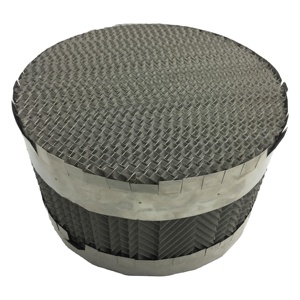
Ss304 BX500 ZWF Wire Gauze Structured Packing for Air Separation

SS304 BX500 ZWF Wire Gauze Structured Packing

High-specific surface area (500 m²/m³) ideal for cryogenic air separation units (ASU) and high-purity chemical refining.
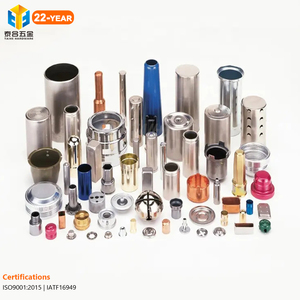
Customized OEM Sheet Metal Progressive Deep Drawn Stamped Parts Aluminum Brass Deep Drawing Forming Tube Cylinder Shell

Custom Progressive Deep Drawn Stamped Parts

Seamless filter housings, shell cylinders, and progressive stamped components in stainless steel, brass, and aluminum.
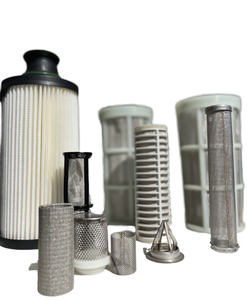
Stainless Steel Perforated Woven Liquid Filter Tube High Efficiency Rectangular/Round/Square Industrial Mesh Pump Engine

Stainless Steel Perforated Woven Filter Tubes

Multi-layer composite filter cylinders combining twilled woven wire mesh with perforated outer support sleeves.
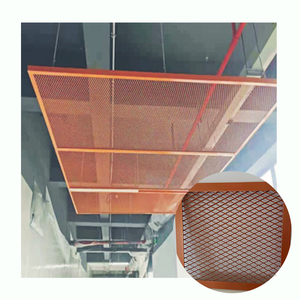
Decorative Customization Aluminum Expanded Metal Mesh Suspended Ceiling

Decorative Aluminum Expanded Metal Mesh

Architectural grade, lightweight expanded mesh for suspended ceilings, modern facade cladding, and acoustic baffles.
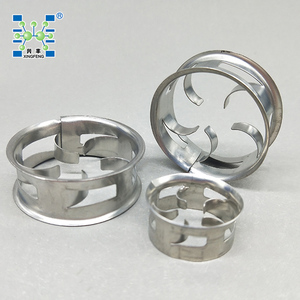
SS 304 304L 316 316L 410 Metal Cascade Mini Ring Chemical Random Tower Packing

SS 304/316 Metal Cascade Mini Ring Packing

Aerodynamically optimized random packing rings providing low resistance, high throughput, and fouling resilience.
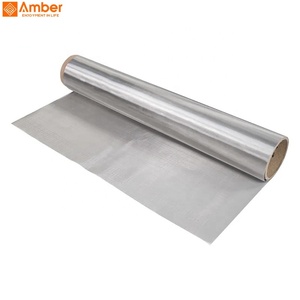
Durable Aluminum Alloy Woven Wire Mesh High Strength Filter Cloth for Industrial Liquid and Oil Filtration

High Strength Aluminum Alloy Filter Cloth

Precision twilled weave delivering exceptional tensile integrity for hydraulic fluids, petroleum, and turbine oil filtration.
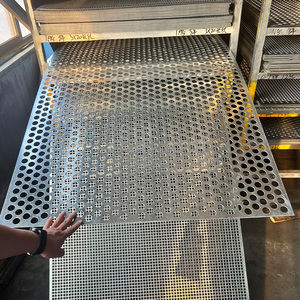
Modern Coated Aluminum Perforated Panels for Wind Erosion Control & Dust Suppression Walls Decorative Port Windbreak Nets

Coated Perforated Windbreak Panels

Engineered aerodynamic open-area panels for dust suppression walls, harbor terminals, and industrial boundary protection.
25+
Years Manufacturing Heritage
1,000+
Global Industrial Clients
20+
Export Destination Countries
100%
Traceable Mill Certification

Engineering Authority: Micro-Mechanics and Geometry of Twill Weave Wire Mesh

In high-differential pressure filtration and demanding chemical mass transfer, wire mesh geometry dictates critical performance variables including hydrodynamic boundary layers, retention cut-off, and tortuous resistance. As China's leading specialist in advanced metallurgical weaving, our manufacturing infrastructure utilizes automated heavy-duty rapier looms capable of producing uniform twill weave mesh ranging from coarse 20 mesh down to ultra-fine 635 mesh (20 microns nominal aperture) and Twilled Dutch Weaves (TDW) achieving absolute 1-micron liquid filtration.

The Structural Distinction: Plain Weave vs. Twill Weave Mechanics

While plain weave utilizes a standard 1/1 alternation where each weft wire crosses alternately over and under consecutive warp wires at 90-degree angles, it encounters geometric lockup when wire diameter exceeds the pore dimension. Twill weave overcomes this limitation by implementing a 2/2 or 2/1 staggered diagonal weave pattern. In a 2/2 twill weave, each warp wire passes over two successive weft wires and under the next two. This reduces the severe bending angle (crimp angle) imposed on individual wire strands, allowing the insertion of significantly thicker wire diameters relative to the opening size.

Mechanical Advantage of Twill Weaving: By distributing internal flexural stress across two intersecting nodes rather than one, twill weave exhibits superior plasticity and resistance to cyclic mechanical fatigue under pulsating hydraulic flow, vibration, and thermal expansion. It offers up to 35% higher tensile bursting strength than plain weave of equivalent mesh count, making it the preferred media for high-viscosity polymer melt filtration and subsea wellhead fluid screening.
Weave Pattern Aperture Range (μm) Relative Flow Resistance Mechanical Rigidity Primary Industrial Utility
Plain Square Weave 63μm – 2500μm Minimal (Straight-through) Moderate Particle sorting, vibratory screening, architectural grilles
Twill Square Weave 20μm – 250μm Low–Moderate High Polymer extrusion, catalytic support beds, centrifuges
Plain Dutch Weave (PDW) 15μm – 300μm Moderate Very High Fuel filtration, pre-coat pressure leaf filters
Twilled Dutch Weave (TDW) 1μm – 65μm Moderate–High Extreme (Double-wire packing) Aerospace hydraulics, cryogenic liquid de-aeration, API pharma
Reverse Twilled Dutch (RTDW) 10μm – 80μm Moderate Maximum Hoop Strength Continuous screen changers, plastic recycling melt filtration

Metallurgical Selection and Alloy Matrix Integrity

Selecting the correct metallurgical chemistry is vital to preventing pitting, crevice corrosion, and chloride-induced stress corrosion cracking (SCC) in industrial columns and filter vessels. Our facility maintains an unbroken supply chain of traceable austenitic, duplex, nickel-base, and reactive alloy wire rods:

Austenitic Stainless (SS304L / SS316L / 904L)

SS316L contains 2.0–3.0% Molybdenum, mitigating localized pitting attack in mildly chlorinated waters, pharmaceutical solvent purification, and food-grade hygienic processing.

  • PREN Rating: 23 – 35
  • Max Operating Temp: 650°C
  • Compliance: ASTM A580 / DIN 17440

Nickel Superalloys (Hastelloy C-22 / Monel 400)

Hastelloy C-22 offers unmatched resistance to wet chlorine gas, ferric chlorides, and formic acid, while Monel 400 (Ni-Cu) thrives in hydrofluoric acid alkylation units and marine seawater.

  • PREN Rating: > 45 (Hastelloy)
  • Hydrofluoric & Chloride Immune
  • ASME Section VIII Certified

Titanium & Specialty Refractory Alloys

Grade 1 and Grade 2 Titanium wire meshes are tailored for chlor-alkali membrane cells, offshore brine desalination systems, and lightweight aerospace bleed air filtering systems.

  • Density: 4.51 g/cm³
  • Zero Pitting in Seawater
  • Passivated Oxide Layer Integrity

Strategic Outlook: 2025–2030 Global Procurement Trends for Industrial Wire Mesh

The global procurement landscape for precision wire mesh, distillation internals, and fine filtration screens is undergoing a massive transformation driven by carbon neutrality mandates, hydrogen energy infrastructure, and ultra-purity chemical processing. EPC procurement executives and MRO buyers must evaluate suppliers based on emerging operational vectors:

1. Sintered Multi-Layer Laminates

Demand is accelerating for diffusion-bonded composite laminates combining fine twill weave filter cloth with coarse protective square mesh and heavy perforated plates, eliminating wire displacement under high reverse pressures.

2. Green Hydrogen & Electrolyzer Mesh

Alkaline and PEM water electrolysis call for nickel 200/201 and platinum-coated titanium twill weave gas-diffusion layers with microscopic pore uniformity and ultra-low internal electrical resistance.

3. Automated Optical Quality Auditing

Procurement specifications now strictly demand machine-vision optical flaw detection across 100% of the woven roll length, replacing manual batch checks to eliminate weft skipping, localized aperture distortion, and oily residues.

4. Full Lifecycle Scope 3 Decarbonization

Multinational industrial end-users prioritize manufacturers operating with lower carbon intensity, utilizing recycled stainless scrap with verifiable heat numbers and green-electricity powered wire annealing furnaces.

Development Roadmap: Micro-Weaving Innovation & Anti-Fouling Surface Engineering

State-of-the-art wire mesh manufacturing is advancing beyond basic metallurgical selection into precision surface functionalization. Our R&D engineering hub incorporates electro-polishing, chemical passivation (ASTM A967), and atomic layer deposition (ALD) coatings to deliver hydrophobic and oleophobic mesh interfaces. In cryogenic distillation columns (e.g., argon and oxygen fractionation) and high-viscosity crude oil desanding, modified twilled mesh surfaces prevent foulant adhesion, asphaltene deposition, and biofilm scaling, directly extending operational campaign lengths between turnaround maintenance by over 40%.

Manufacturing Capabilities

Enterprise Strengths: Why Global EPC Contractors Trust Our Supply Chain

Backing our international export footprint are three decades of metallurgical processing capability, robust testing facilities, and comprehensive fabrication infrastructure.

Rigorous Quality Assurance & PMI Verification

Every consignment undergoes handheld XRF positive material identification (PMI), bubble point pore size verification (ASTM E128), and tensile elongation testing. Full EN 10204 3.1 Mill Test Certificates accompany all dispatches.

Full In-House Fabrication & Tooling Integration

From progressive deep drawing, high-speed stamping, and CNC slitting to laser cutting and micro-plasma welding, we convert raw wire mesh rolls into turnkey filter candles, demister pads, and column trays under one roof.

Seaworthy Packaging & Fast Global Export

Custom heavy-duty fumigated wooden crates, vapor corrosion inhibitor (VCI) paper wrapping, and desiccated vacuum lining ensure zero moisture degradation during sea transit across Europe, the Americas, Australia, and the Middle East.

Procurement Intelligence

Frequently Asked Questions: Technical Sourcing of Twill Weave Mesh

Key technical answers compiled by our application engineers to assist procurement managers and plant designers.

What is the principal engineering advantage of twill weave over plain weave in fine mesh counts?
Twill weave allows for a substantially heavier wire diameter to be woven at a given mesh count compared to plain weave. Because the wire passes over two and under two wires (2/2 weave), the individual crimp deformation angle is lessened. This delivers greater mechanical stability, higher burst resistance under differential pressure, and superior wear life in heavy filtration duties without blinding.
How do you calculate nominal aperture and open area percentage for twill weave mesh?
Nominal aperture (w) is calculated using the formula: w = (25.4 / Mesh Count) - d, where d is the wire diameter in millimeters. The Percentage Open Area (A0) is calculated as: A0 = (w / (w + d))² × 100%. For Twilled Dutch Weaves (TDW), where warp and weft wires have different diameters and touch intimately, the pore size represents a triangular tortuous path determined empirically through capillary bubble point testing (ASTM E128).
Which stainless steel grade is optimal for coastal chemical plants: SS304 or SS316L?
SS316L is strongly recommended for marine or coastal environments. The addition of 2.0% to 3.0% Molybdenum in SS316L prevents pitting and crevice corrosion caused by atmospheric chlorides, whereas SS304 is prone to rapid micro-pitting in salt-spray atmospheres. Furthermore, the lower carbon content of SS316L (≤ 0.03%) prevents chromium carbide precipitation during welding, preserving corrosion resistance along weld seams.
Can you supply customized slitted rolls, discs, or formed filter cylinders?
Yes. Our processing plant features high-precision CNC slitting lines capable of narrow strip widths down to 10mm with burr-free edges, high-speed rotary die cutters for round/oval stamping discs, progressive deep-drawing presses, and micro-plasma and ultrasonic seam welders to fabricate cylindrical filter cartridges, leaf filters, and structured packing gauze components.
What documentation and inspection protocols accompany export shipments?
Every shipment includes an EN 10204 Type 3.1 inspection certificate indicating exact chemical heat analysis, mechanical yield and tensile data, positive material identification (PMI) logs, bubble point test reports for micron rating verification, dimensional check sheets, and official fumigation certificates for export wooden packaging.

Accelerate Your Engineering Procurement with Precision Mesh

Connect with our senior technical engineering team today for comprehensive hydraulic simulations, custom weave specifications, or immediate RFQ quotations for your upcoming plant overhaul.

Get Catalog