- +91-9930498858Call / WhatsApp
- [email protected]Email Us
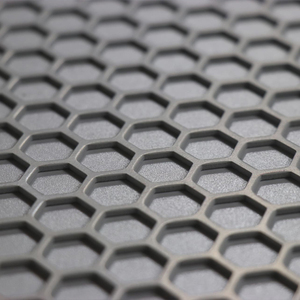
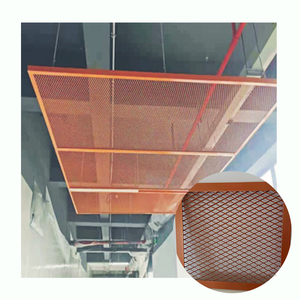
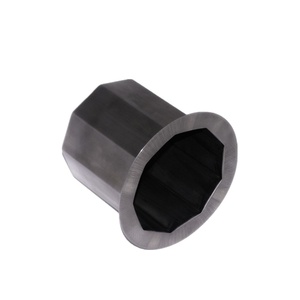
Explore our comprehensive fabrication portfolio encompassing Dutch weave wire cloth, perforated acoustic façades, precision deep-drawn canisters, and engineered process internals designed for demanding industrial operations.
Years Manufacturing Legacy
Global Enterprise Clients
Destination Export Countries
Precision Product Geometries
A comprehensive assessment of weave kinematics, micron retention thresholds, differential pressure management, and quality control systems in critical fluid separation.
In high-pressure solid-liquid and gas-solid industrial filtration, conventional square mesh reaches a physical boundary where fine aperture openings require thin wires, sacrificing tensile integrity and burst resistance. As an authoritative China wholesale Dutch weave mesh manufacturer, our manufacturing infrastructure utilizes specialized heavy-duty shuttleless looms designed to resolve this hydraulic paradox through anisotropic geometric weaving.
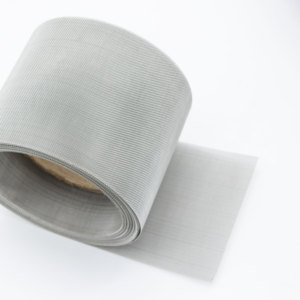
The engineering topology of Dutch weave wire cloth relies on an asymmetric yarn count. In a Plain Dutch Weave (PDW) configuration, heavier warp wires are spaced widely apart across the longitudinal axis, while fine weft wires are driven together under intense mechanical battening. This forms a zero-line open structure where triangular, tortuous fluid passages replace straight perpendicular apertures. The resulting barrier provides an absolute micron rating ranging from 300 μm down to approximately 10 μm, maintaining high mechanical stiffness suitable for filter leaves, centrifuge baskets, and precoat support partitions.
When sub-micron particle containment is required under intense mechanical stress, Twilled Dutch Weave (TDW) becomes essential. In this system, each weft wire alternates over two and under two warp wires, enabling double the compaction density of the fill wires. The resulting micro-pore network creates a staggered depth-filtration mechanism that retains particles down to 1 μm nominal rating while withstanding substantial differential operating pressures (ΔP > 50 bar) without pore migration or dimensional yield. Conversely, Reverse Dutch Weave (RDW) reverses the wire diameter relationship: a higher count of heavier warp wires is packed tightly together, interlocked with thinner weft wires. This orientation delivers exceptional tensile strength along the roll length, making it ideal for automatic screen changers, high-speed polymer melt extruders, and coiled filter ribbons subjected to high axial tension.
| Weave Designation | Standard Mesh Count (Warp × Weft) | Nominal Aperture (μm) | Typical Wire Alloy | Primary Fluid / Thermal Dynamic Purpose |
|---|---|---|---|---|
| Plain Dutch (PDW) | 12 × 64 to 24 × 110 | 250 μm – 70 μm | AISI 304L, 316L, Duplex 2205 | Centrifugal dewatering, vacuum drum filters, upstream sand exclusion |
| Plain Dutch (Fine) | 50 × 250 to 80 × 700 | 60 μm – 20 μm | AISI 316L, Hastelloy C-276 | Aviation fuel filtration, hydraulic system fluid scavenging |
| Twilled Dutch (TDW) | 165 × 800 to 325 × 2300 | 25 μm – 2 μm | 316L, Alloy 400 (Monel), Inconel 600 | High-pressure polymer extrusion, pharmaceutical slurry purification |
| Reverse Dutch (RDW) | 72 × 15 to 132 × 17 | 150 μm – 45 μm | AISI 304, 316, Pure Nickel 200 | Continuous melt screen changers, auto-backwash sea-water intake |
| Broad Mesh Twilled | 20 × 250 to 30 × 400 | 100 μm – 35 μm | Titanium Gr 2, Phosphor Bronze | Electrochemical cell anodes, desulfurization catalyst beds |
Understanding micro-filtration requires analyzing the hydrodynamic boundary layer across tortuous channels. In standard sieve apertures, particulate matter quickly causes surface blinding, driving up head loss exponentially. In precision Dutch weave media, fluid dynamics are dictated by a serpentine trajectory that decelerates fluid velocity through narrow internal constrictions, transforming superficial inertial drag into laminar flow distributions.
When high-viscosity resins, corrosive hydrocarbons, or pharmaceutical active ingredients pass through a Twilled Dutch matrix, suspended particulate cakes form evenly across the exterior face. The interior micro-wedges act as dynamic fluid channels that resist irreversible depth-fouling. Consequently, clean-in-place (CIP) regimens, steam sterilization, and supersonic backwash pulses can reverse cake adherence with minimal residual hysteresis, prolonging continuous operation in downstream processing facilities.
How supply chain dynamics, stricter decarbonization policies, and advanced alloy metallurgy are transforming bulk sourcing decisions for global plant operators.
Global operators are transitioning from standard AISI 304/316 stainless steels to corrosion-resistant alternatives such as Monel 400, Hastelloy C-22/C-276, and Inconel 625. These alloys maintain yield strength and crack-propagation resistance in hot sour crude, chlor-alkali environments, and high-temperature flue streams.
Enterprise procurement teams require documented material integrity. Modern supplier evaluations now require full spectroscopic heat-number traceability, optical micrometer pitch certification, and PMI (Positive Material Identification) mapping to comply with pressure equipment directives.
Instead of processing raw master rolls on-site, EPC firms and equipment OEMs now specify pre-calendered, laser-cut, and ultrasonic-welded elements. Prefabricated circular discs, multi-layer sintered packs, and cylindrical cartridges reduce assembly scrap, protect aperture integrity, and speed up turnarounds.
The intersection of micro-metallurgy, automated weaving sensors, and surface engineering in high-durability Dutch weave mesh.
By pairing Dutch weave wire cloth with coarse square protective layers and perforated plates in high-vacuum sintering furnaces, thermal molecular fusion bonds wire contact intersections. This eliminates weft displacement under reverse pulses and yields rigid, abrasion-resistant filter elements.
Controlled mechanical calendering compresses wire thicknesses to stabilize internal pore channels and create ultra-smooth sheet surfaces. Combined with electrochemical pickling, it removes micro-burrs and enriches surface chromium oxide, improving release characteristics in high-tack resin separation.
Modern CNC shuttleless looms use continuous optoelectronic monitoring to check weft wire tension and count in real time. This immediate feedback eliminates loose wefts, double picks, and internal pitch variations over roll lengths exceeding 500 meters.
Drawing on over two decades of metallurgical experience, precision tooling, and end-to-end manufacturing to ensure repeatable, reliable quality in critical separation systems.
All production uses certified raw material sourced from Tier-1 mills. Comprehensive Mill Test Certificates (MTCs), raw material chemical analyses, and heat-lot tracking numbers accompany every shipment to ensure straightforward site acceptance.
Our workshops handle the full production sequence in-house: high-density wire weaving, CNC laser cutting, turret stamping, deep drawing, rolling, and TIG/plasma seam welding. This centralized setup maintains tight dimensional tolerances without third-party outsourcing delays.
Every lot undergoes bubble-point testing (ASTM E128) to confirm pore-size distribution, optical microscopy for mesh-count verification, and dimensional gauge profiling. Third-party testing with agencies like SGS, Bureau Veritas, or DNV is routinely accommodated.
We supply clients across more than 20 countries, including the UAE, Saudi Arabia, the United States, Australia, and Canada. Mesh rolls and components are treated with vapor-corrosion inhibitors (VCI), sealed in moisture-barrier film, and crated in treated, ISPM-15-compliant timber cases.
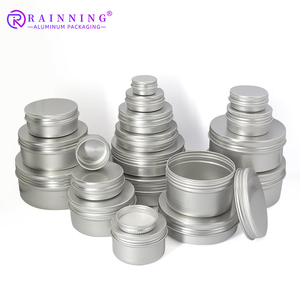
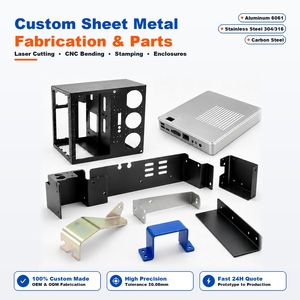
Beyond specialized wire cloth, we manufacture distillation column trays, structured packing, perforated windbreaks, deep-drawn metal canisters, and custom sheet brackets. This broad range allows EPC engineers to source complete column internals and auxiliary filtration packages from a single supplier.
Essential guidance to help project managers and procurement officers review specifications, tolerances, and logistics before issuing requests for quotation.
The absolute micron rating reflects the diameter of the largest spherical hard particle that can pass through the mesh under defined test methods (such as glass-bead or bubble-point tests per ASTM E128). It represents the maximum pore opening. The nominal rating indicates the particle size at which a set percentage (typically 90% to 95%) is retained during operational depth filtration. In critical hydraulic, aerospace, and pharmaceutical processes, specifying absolute ratings prevents bypass of oversized contaminants.
Plain Dutch weave uses a single over-under weft sequence, which balances straightforward cleanability, moderate pressure drops, and solid burst strength. It is well-suited for medium-viscosity separation down to roughly 20 μm. For high-viscosity polymer melts, resins, and heavy lubricants requiring retention below 20 μm, Twilled Dutch mesh provides much tighter packing of fine weft wires. This structure creates a compact multi-layered micro-pore matrix that withstands high differential pressures without pore enlargement.
While AISI 316L performs reliably in general chemical environments, fluids with high chloride concentrations, sour gas (H2S), or acidic seawater can cause pitting and stress corrosion cracking. For these conditions, we recommend Hastelloy C-276, Monel 400, or Inconel 625. For offshore subsea screens and brackish intake lines, Monel 400 offers strong resistance to biofouling and de-alloying. Hastelloy C-276 provides reliable protection against high-temperature hydrochloric and hydrofluoric acid streams.
Yes. In addition to standard master rolls (typically 1 m, 1.22 m, or 1.5 m wide by 30 m long), our fabrication facility supplies custom round discs, pleated cylinders, sintered multi-layer laminate plates, and continuous edge-bound screen ribbons. Edge options include ultrasonic slitting, plasma fused-rim finishes, or wrapped stamped metal borders to match your filter housing specifications.
To help our engineering team prepare a tailored technical quotation, please provide the required weave designation (PDW, TDW, or RDW), warp and weft mesh counts, wire diameters, alloy grade, and the required physical form (cut panels, rolls, or fabricated discs). If the mesh count is unknown, sharing your target micron rating, operating temperature, differential pressure, fluid viscosity, and volumetric flow rate allows our team to recommend a suitable weave configuration.