
- +91-9930498858Call / WhatsApp
- [email protected]Email Us
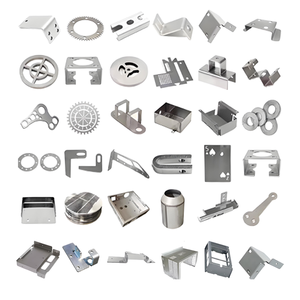
Engineered for mission-critical industrial applications, achieving tolerances within ±0.02 mm across deep-drawn, perforated, sintered, and progressive-stamped configurations.
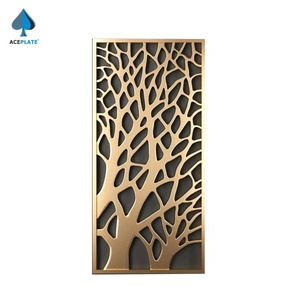

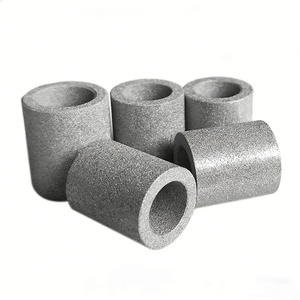
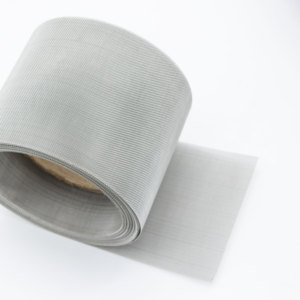
A comprehensive technical framework detailing metallurgy, mold life cycles, tonnage calculation, and quality verification protocols for high-volume exports.
Progressive die tooling governs high-speed volume stability. By integrating multi-station operations—such as blanking, piercing, bending, coining, and deep drawing—into a unified hardened tool steel system (SKD11, DC53, or tungsten carbide inserts), cycle speeds reach 120–450 strokes per minute while preserving edge squareness and minimal burr clearance (<5% sheet thickness).
Cold-rolled austenitic stainless steels (SUS304, 316L), aluminum alloys (5052-H32, 6061-T6), brass (C2680), and specialized superalloys demand acute accounting for sheet rolling direction. Bending perpendicular to the grain orientation avoids micro-fissures along outer radii, mitigating structural fatigue under cyclic vibrational stress in automotive and filtration applications.
High-tensile sheet materials exhibit significant elastic recovery (springback) post-forming. Through finite element simulation (FEA) and dynamic bottom-dead-center coining corrections, our die engineering counters yield-point deviations, achieving repeatable dimensional fidelity within ±0.02 mm across multi-ton production lots without secondary manual straightening.
| Stamping Methodology | Optimal Production Volume | Achievable Tolerance | Material Thickness Range | Primary Industrial Use-Case |
|---|---|---|---|---|
| Progressive Die Stamping | > 50,000 units/annum | ±0.02 mm – ±0.05 mm | 0.10 mm – 3.50 mm | Automotive terminals, micro-brackets, sensor shields |
| Deep Drawn Fabrication | > 15,000 units/annum | ±0.03 mm – ±0.08 mm | 0.25 mm – 4.00 mm | Seamless cylindrical housings, filter cans, valve shells |
| Transfer Die Stamping | 10,000 – 50,000 units | ±0.05 mm – ±0.10 mm | 0.80 mm – 6.00 mm | Large structural enclosures, heat exchanger headers |
| Compound Die Blanking | 5,000 – 30,000 units | ±0.015 mm – ±0.03 mm | 0.20 mm – 2.50 mm | High-flatness shims, perforated discs, Dixon rings |
Analyzing key shifts across geopolitical nearshoring, ESG scrap reduction, and automation technologies shaping sourcing over the next decade.
Traditional post-run batch inspection is rapidly yielding to 100% in-line optical telecentric imaging and laser triangulation sensors mounted directly inside the press throat. Defective parts with micro-burrs or hole drifts are flagged and ejected autonomously in real time, preventing full-batch quarantine issues at port of entry.
With stringent global carbon accounting (CBAM and Scope 3 disclosures), procurement executives prioritize suppliers implementing nested blank strip algorithms. Maximizing raw coil yield beyond 88% alongside dedicated high-grade scrap segregation directly lowers the embedded carbon footprint of exported metal parts.
Volatile supply demand and leaner just-in-time inventory strategies mandate smaller run flexibility. Exporters leveraging hydraulic clamp QDC frameworks compress setup changeovers from 4 hours down to under 25 minutes, empowering cost-efficient production across varied SKU variants without imposing prohibitive MOQ requirements.
Consolidating precision machining, high-tonnage stamping, specialized filtration fabrication, and international shipping protocols under one roof.
Every coil, bar, and billet is sourced directly from tier-1 mills. Mill Test Certificates (MTC) according to EN 10204 3.1 accompany every single export shipment, validating chemical spectrometry and tensile limits.
Featuring multi-axis Wire-EDM, precision CNC surface grinders, and specialized heat-treatment ovens. Maintaining tool fabrication internally accelerates DFM cycles from CAD sign-off to first article inspection (FAI) in 14 days.
Equipped with coordinate measuring machines (CMM), optical profile projectors, and surface roughness profilometers to verify critical characteristics (CpK > 1.67) and guarantee absolute adherence to customer GD&T drawings.
Engineered anti-corrosive VCI wrapping, desiccated vacuum barrier foil, and heavy-duty ISPM-15 compliant treated wooden crates protect metal finishes against maritime saline humidity and transatlantic transit stresses.
Targeted engineering solutions addressing tooling life, surface coatings, defect mitigation, and international logistics.
Send your CAD drawings and operational data sheets to our engineering staff. Benefit from professional DFM optimization, rapid prototype turnarounds, and competitive high-volume wholesale pricing directly from source manufacturing facilities.