- +91-9930498858Call / WhatsApp
- [email protected]Email Us
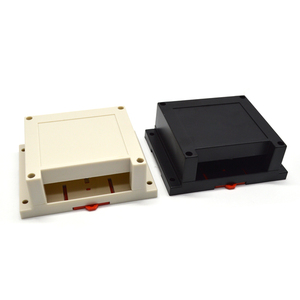
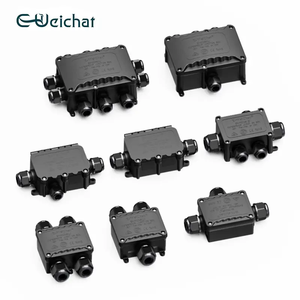
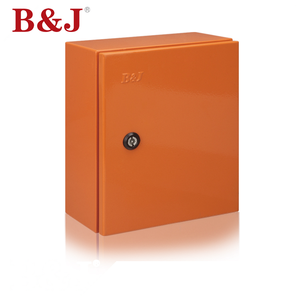
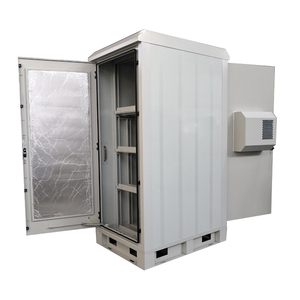
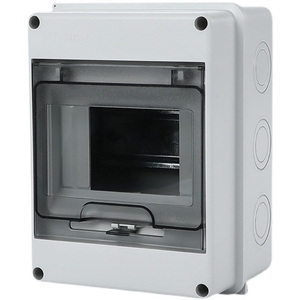
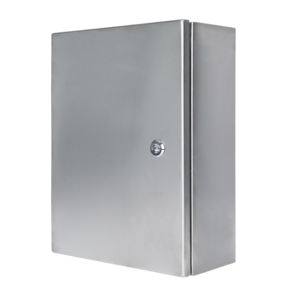
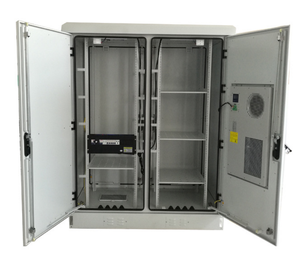
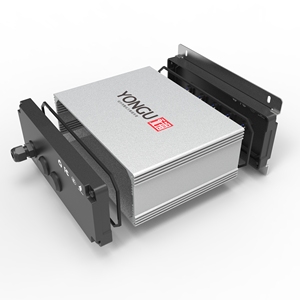
Browse our turnkey manufacturing range encompassing seamless hydro-mechanical deep drawn cans, IP66-IP68 rated junction systems, weatherproof battery cabinets, and modular DIN-rail terminal enclosures engineered for mission-critical deployments.
Since 1998, our comprehensive manufacturing capabilities integrate high-tonnage hydraulic drawing presses, laser cutting, CNC punching, precision stamping, and automated surface treatment to deliver high-integrity mechanical protection.
We transform flat metal blanks into seamless, three-dimensional cylindrical, rectangular, or irregular shells without weld seams. Eliminating longitudinal and base welds yields exceptional internal burst pressure ratings, zero leak paths, and structural rigidity ideal for cryogenic vessels, hermetic sensor bodies, and hazardous location (Ex) electronics.
Leveraging direct mill relationships with industry giants, we process traceable deep-draw quality (DDQ) stainless steels (SS304, SS304L, SS316, SS316L), aluminum alloys (5052-H32, 6061-O), brass, copper, and specialty corrosion alloys like Monel, Inconel, and Hastelloy. Complete EN 10204 3.1 chemical and physical test certificates accompany every production batch.
Equipped with internal CNC machining centers, slow-wire EDM, and automated surface grinders, our tool-and-die department develops custom progressive dies, reverse draw transfer dies, and hydroform tool setups. This in-house vertical integration accelerates prototype turnover to 10-15 business days while holding dimensional tolerances within ±0.02 mm.
Beyond primary shell forming, our workshop executes automated flange trimming, multi-axis laser piercing, side-wall blanking, CNC bead rolling, precision thread tapping, and projection stud welding. Customers receive installation-ready subassemblies designed to match their internal PCB mounts and external gland patterns without post-processing.
Our QA testing protocols evaluate enclosure integrity through CMM dimensional validation, helium mass spectrometer leak detection, optical profile projectors, salt-spray corrosion chambers (ASTM B117 exceeding 1,000 hours), and automated IPX6/IPX7/IPX8 water immersion test tanks to guarantee uncompromised ingress ratings.
Shipping precision engineered hardware to over 20 nations across North America, Europe, Australia, and the GCC region, we implement vapor-corrosion inhibitor (VCI) protective wrapping, engineered high-density foam dunnage, and fumigated ISPM-15 compliant export crates that eliminate transit damage and preserve critical sealing surfaces.
Selecting the appropriate production method requires evaluating raw material utilization, corner strength, ingress sealing continuity, and unit economics across target batch volumes.
| Engineering Parameter | OEM Deep Drawn Enclosure | Fabricated Sheet Metal (Fold & Weld) | Die-Cast Aluminum Enclosure |
|---|---|---|---|
| Corner & Seam Integrity | Seamless single-piece structure; zero corner welds, high hoop strength | Multiple seam welds required; potential heat-distortion & leak risks | Seamless monolithic structure; susceptible to internal porosity |
| Ingress Protection (IP Rating) | Up to IP68 / IP69K effortlessly maintained via uniform continuous flanges | IP65 typical; higher ratings demand continuous precision grinding | IP66–IP68 supported; gasket seating can degrade under stress cracking |
| Wall Thickness Uniformity | Controlled thinning (10–18%) with engineered work-hardening | Uniform gauge throughout; heavier structural mass | Variable wall thickness with necessary draft angles |
| Weight-to-Strength Ratio | Superior strength due to strain-hardening; allows thinner material | Standard base material strength; heavier to resist deflection | Higher mass density; brittle failure modes under impact shock |
| Tooling Cost & Amortization | Moderate-to-high initial tooling; extremely low piece cost at scale | Minimal tooling cost; high labor content per individual unit | Very high initial casting mold cost; moderate cycle cost |
| Economic Volume Threshold | Highly cost-effective for batch runs exceeding 1,000 units/year | Optimal for rapid prototypes and small runs (< 500 units) | Optimal for ultra-high volume production (> 10,000 units) |
As OEM equipment designs face aggressive miniaturization, elevated thermal dissipation requirements, and stringent environmental compliance, procurement dynamics are rapidly evolving.
The proliferation of energy storage systems (BESS), electric vehicle sub-modules, and renewable inverters has spurred demand for deep drawn, lightweight aluminum and mild steel battery canisters and controller cans. OEM procurement teams prioritize cold-formed seamless geometries over folded cabinets to prevent thermal runaway gas venting along weld seams and eliminate internal dielectric breakdown.
High-frequency industrial IoT transmitters and radar sensing modules demand enclosures that mitigate electromagnetic interference. Procurement contracts increasingly specify continuous deep drawn copper, mu-metal, or deep-drawn tin-plated cold-rolled steel cans. The monolithic seamless wall design provides uninterrupted 360-degree shielding attenuation exceeding 90 dB across multi-gigahertz spectra.
Corporate ESG mandates drive tier-1 suppliers toward near-net shape cold forming. Deep drawing boasts raw material yield rates exceeding 85%, significantly outperforming subtractive CNC machining from solid billet which routinely wastes 60-70% of material. Buyers are increasingly auditing recycled alloy content (such as Green Steel and circular aluminum scrap programs) across their supply chain.
Modern metal stamping has transitioned from empirical craft to deterministic computational science. Key technical advancements include:
Utilizing non-linear explicit solver software (such as AutoForm and Dynaform), our tooling engineers map forming limit diagrams (FLD), calculate blank holding pressure curves, and predict thinning, wrinkling, or strain-induced fracture before cutting die steel. This slashes prototyping iterations and optimizes draw radius transitions for maximum fatigue life.
Replacing traditional mechanical flywheels with CNC servo-driven rams enables real-time stroke velocity control, bottom-dead-center dwell profiling, and multi-step pulsing. Controlling punch speed during deep drawing suppresses heat buildup and prevents micro-tearing in work-hardening stainless steels and heat-treatable alloys.
To bridge the gap between metal housing shells and rigorous IP67/IP68 ingress performance, we integrate automated 6-axis polyurethane and liquid silicone dispense systems. Applying seamless elastomer beads directly into deep drawn perimeter retention channels produces permanent, low-compression-set seals resistant to UV and chemical aggression.
Technical, commercial, and operational guidance addressing core concerns during custom tooling kick-off and production scale-up.
The Limiting Draw Ratio (LDR = Blank Diameter / Punch Diameter) typically ranges between 1.8 and 2.2 in a single draw operation using deep-drawing quality austenitic stainless steel (SS304 DDQ) or ductile aluminum (5052-O). For deep cylindrical cans or tall rectangular housings requiring an aspect ratio (depth-to-width) greater than 1:1, we execute multi-stage progressive redraws paired with intermediate protective vacuum annealing to relieve cold strain-hardening without intergranular oxidation.
Conventional deep drawing utilizes rigid male punches and female dies, making it exceptionally fast (up to 30-60 strokes per minute on transfer presses) and cost-efficient for mass volumes exceeding 2,500 units. Sheet hydroforming substitutes the rigid female die with a pressurized hydraulic fluid bladder. While hydroforming minimizes surface tooling marks on complex organic geometries and reduces initial tooling costs, its cycle time is significantly slower (1-3 minutes per cycle), making mechanical drawing the clear winner for series OEM procurement.
Yes. Because a deep drawn shell has a seamless monolithic structure with zero welded joints, porosity, or cold shut seams, leak risk through the housing body is zero. Waterproof integrity is established entirely at the mating perimeter interface. By incorporating an integrated formed flange with a recessed gasket groove, paired with continuous Form-in-Place Foam Gasketing (FIPFG) or vulcanized silicone O-rings, our enclosures routinely achieve verified IP67 (submersion at 1m for 30 minutes) and IP68 (continuous immersion under specified head pressure) compliance.
We require 3D CAD models (STEP, IGES, or Parasolid) alongside fully dimensioned 2D engineering drawings (PDF/DWG) detailing critical datums, corner radii, and punch-to-flange relationships. Standard commercial stamping tolerances are held to ISO 2768-m (typically ±0.1 mm to ±0.2 mm on overall dimensions). For precision internal mounting features and ground gasket landing faces, in-house secondary machining operations can hold tight tolerances down to ±0.02 mm.
Depending on base alloy selection, we supply an extensive array of surface passivations and coatings. For stainless steel, electropolishing removes surface iron contamination and creates a chromium-rich passive oxide film compliant with ASTM A967. For aluminum components, Type II sulfuric and Type III hard-coat anodizing provide electrical isolation and wear resistance. Mild and galvanized steel housings receive multi-stage zinc phosphate pre-treatment followed by TGIC electrostatic polyester powder coating, passing 1,000+ hours of ASTM B117 neutral salt spray exposure.