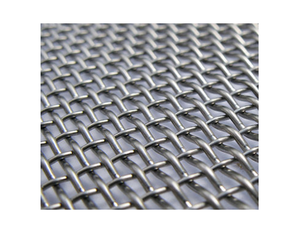
Plain Woven Stainless Steel Wire Mesh Filter Screen
Square-aperture stable weave fabricated with uniform pore geometry, designed for chemical dewatering, particulate classification, and sanitary screening lines.

From sub-sieve micron filter cloth to heavy-duty perforated plates and random tower packing, inspect our standard and tailor-engineered product specifications built for rigorous industrial service.
Square-aperture stable weave fabricated with uniform pore geometry, designed for chemical dewatering, particulate classification, and sanitary screening lines.
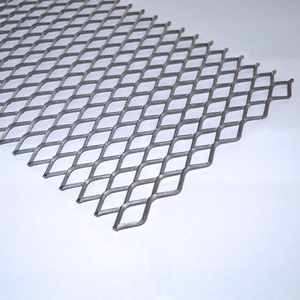
Heavy-gauge carbon steel, stainless steel, and aluminum sheets sheared and stretched to maximize structural stability in high-flow core strainers.
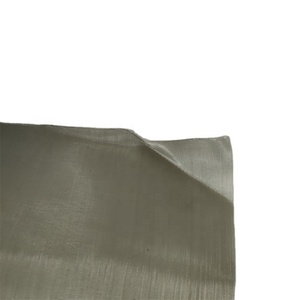
Micro-calibrated 304, 316, and 316L Dutch and Twill wire mesh configured for sterile pharmaceutical filtration, aviation fuel processing, and hydraulic units.
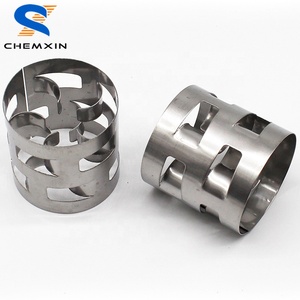
16mm and 25mm punched geometric cylinders optimizing mass-transfer boundary layers, low pressure drop, and exceptional liquid redistribution.
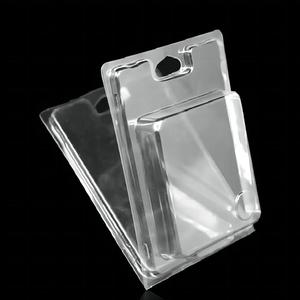
Precision thermoformed protective barrier packaging designed for high-value fine wire mesh discs, spinneret packs, and delicate laboratory sieves.
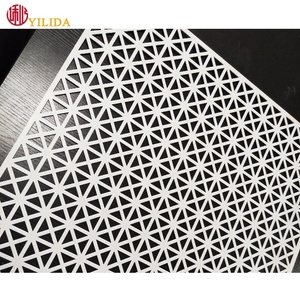
Acid-resistant CNC-punched aluminum facades and protective grates with integrated edge finishing for high-end outdoor enclosures and architectural accents.
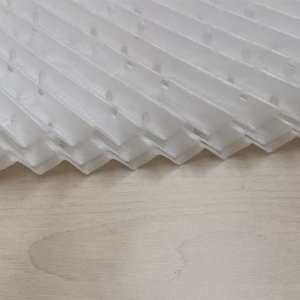
Specialized low-temperature scrubber and absorption tower internals configured to balance minimal vapor friction with exceptional interfacial wetted area.

Advanced hydraulic cold-pressed screen plates featuring continuous micro-tolerance perforations that avoid work-hardening fractures in demanding vibratory sifters.
Years Manufacturing Heritage
Enterprise Clients Served
Export Nations Covered
Proprietary Mesh Profiles
Modern separation engineering requires micro-aperture tolerance control, zero contamination risk, and metallurgical stability in extreme operating environments.
In fine filtration applications (from 100 micron down to 5 micron), pore geometry directly controls laminar velocity and flow uniformity. Traditional weaves often deform under pressure variations. Modern OEM manufacturing integrates automated ultrasonic shuttleless rapier looms with computerized warp-tension regulation, guaranteeing pore stability across large roll dimensions.
While austenitic stainless steel grades (304, 304L, 316, 316L) remain standard workhorses, petrochemical and sour-gas refineries increasingly require nickel-chromium-molybdenum alloys like Hastelloy C-276, Monel 400, and Inconel 625. These alloys resist chloride stress-corrosion cracking and localized pitting in severe operating media.
Combining fine woven wire mesh layers with protective perforated structural backing through high-temperature vacuum sintering produces filter media with both sub-micron separation efficiency and high mechanical crush strength. These assemblies run without external support frames in high-differential-pressure lines.
Use this technical comparison matrix to match internal media geometries and alloys to plant operating temperatures, mechanical loads, and chemistry profiles.
| Configuration Style | Primary Alloy Options | Effective Filtration / Area | Mechanical Resilience | Target Applications |
|---|---|---|---|---|
| Plain Woven Mesh | SS304, SS316L, Brass, Copper | 20 Mesh to 400 Mesh (15µm+) | Moderate lateral stability | Chemical sieving, architectural screening, EMI/RFI shielding cages |
| Twill Dutch Weave | SS316L, Hastelloy C-22, Monel | 5 Micron to 80 Micron | Very high burst pressure | Aviation fuel clarification, polymer melt filtration, vacuum leaf filters |
| Metal Pall Rings (Random) | 304L, 316L, Duplex 2205, Titanium | Specific Area: 110 - 220 m²/m³ | High radial crushing resistance | Acid gas absorbers, carbon capture stripping towers, refinery vacuum splitters |
| Wire Gauze Structured | SS316L, Inconel 600, PTFE/PP | Specific Area: 250 - 750 m²/m³ | Engineered modular bundles | Vacuum distillation, isomeric separation, high-purity pharmaceutical APIs |
| Integrally Formed Perforated | AISI 316L, 430, Aluminum 5052 | Apertures from 0.4mm to 20mm | Maximum structural rigidity | Vibrating dewatering decks, acoustic dampening panels, centrifuges |
Procurement teams are moving away from single-source distributors toward vertically integrated factories capable of providing full metallurgical certification, custom secondary fabrication, and standardized packaging.
Global supply chain managers now bypass broker layers to partner directly with primary OEM factories. Integrating in-house CNC wire drawing, weaving, stamping, and annealing minimizes scrap rates, locks in alloy-index pricing, and secures end-to-end quality control.
High-reliability processing plants require EN 10204 Type 3.1 Material Test Reports (MTRs) with verified melt heats for every square meter of alloy mesh. This documentation prevents metallurgical mix-ups and early failure in corrosive environments.
Buyers increasingly demand ready-to-mount assemblies over raw rolls. Our facility cuts lead times with in-house ultrasonic wash lines, laser blanking, calendering, edge hem welding, and deep drawing under unified ISO-calibrated quality procedures.
Founded in 1998, we operate integrated metal manufacturing and fabrication facilities in India, supplying high-performance process hardware to global EPCs and production facilities.
Every wire coil and sheet comes with original test records and confirmed chemical composition down to ppm trace elements.
Comprehensive stamping, deep drawing, laser slicing, and automatic roll-slitting lines run under one roof to maintain production schedules.
Our quality teams provide bubble-point testing, optical microscopy, and PMI alloy verification before parts leave the facility.
We routinely ship to the UAE, USA, Australia, Canada, and Saudi Arabia with compliant documentation and ISPM-15 export-grade packaging.
Engineers assess your fluid dynamics, pressure constraints, and operating chemistry to recommend the right mesh or column internal profile.
Direct answers to technical and supply chain questions from plant engineers and international sourcing directors.
Plain weave uses an over-one, under-one warp-and-weft wire arrangement, making it ideal for standard square apertures down to roughly 63 microns (230 mesh). Twill weaves step wires over two and under two, accommodating heavier wires within tighter pitches for improved mechanical endurance. Dutch weaves pack heavy warp wires alongside dense micro-weft wires, forming wedge-shaped or triangular aperture pathways. This configuration enables surface cake filtration down to 2–5 microns, holding exceptional burst strength under high pressure.
Every raw alloy master batch undergoes incoming inspection via handheld X-ray Fluorescence (XRF) Positive Material Identification (PMI) to confirm elemental nickel, chromium, and molybdenum percentages. Weave geometries are monitored on the production floor with calibrated computer-aided optical projection microscopes that check wire diameter, pitch deviation, and aperture counts in compliance with ASTM E2016-20 and ISO 9044 industrial wire cloth standards.
The choice depends on operating pressure and fouling rates. For vacuum service or heat-sensitive products requiring minimal pressure loss, corrugated wire gauze structured packings provide high theoretical stage separation efficiency (HETP). For columns with heavier particulate loads or fouling risks, random packings like SS316 Pall Rings or movable valve trays deliver robust turndown ratios without premature liquid hold-up or vapor bridging.
Yes. Our Indian factory combines deep-drawing mechanical presses, precision multi-axis laser cutting, resistance seam-welding, and spot-welding machinery. We supply continuous raw rolls, clean-cut filter discs, circular rim-bound extruder screens, deep-drawn strainer shells, and multi-layer sintered screen tubes per CAD or technical drawings.
To prepare an engineering quotation, share the base material grade (such as 304L, 316L, or Hastelloy), mesh count per linear inch or target aperture in microns, wire diameter, weave structure, and required panel, disc, or roll dimensions. For column trays and structured packing, provide tower diameter, operating fluid densities, design flow rates, and operating pressures.
Connect directly with our engineering team for detailed technical catalogs, alloy compatibility consultations, and formal factory quotations.