- +91-9930498858Call / WhatsApp
- [email protected]Email Us
Seamlessly integrating precision wire drawing, continuous loop interlocking, deep drawing, and enclosure stamping to satisfy high-specification global requirements.
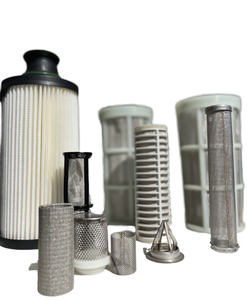
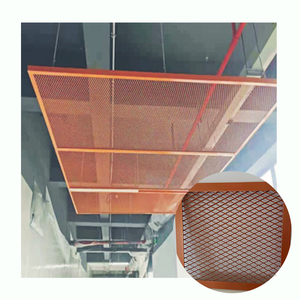
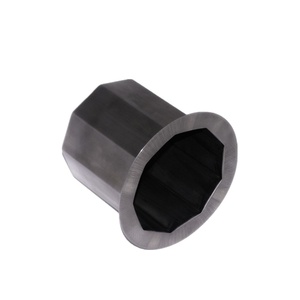
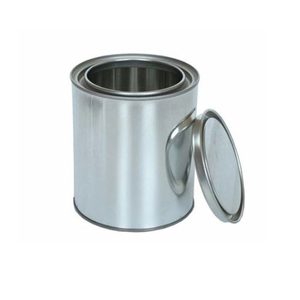
Knitted wire mesh distinguishes itself from traditional woven or welded wire fabrics through its unique structural morphology: an asymmetric array of interlocking, mutually supporting loops. Rather than running in perpendicular straight lines (warp and weft), wire knitted on circular reciprocating machinery possesses high mechanical compliance, multidirectional tensile distribution, and variable bulk density. In separation, filtration, and insulation systems, this geometry creates a tortuous pathway that maximizes vapor-droplet impingement while maintaining open void fractions between 92% and 98.5%.
When operating as entrainment separators or mist eliminator demister pads, gas streams laden with liquid micro-droplets flow perpendicularly across the knitted layers. As momentum prevents aerosol particles (typically > 3–5 µm) from following fluid streamlines around the fine curved wires, inertial impaction occurs. Droplets coalesce along wire nodes, build mass, and trickle downward counter-current to gas flow under gravitational forces. The inherent two-way stretchability of knitted filaments also allows pre-forming into dense compressions, cylindrical ring seals, vibration dampers, and EMI attenuation gaskets that maintain structural integrity across broad operational thermal ranges (-200°C to +1100°C depending on the base alloy).
Selecting the optimal mesh configuration depends on operating pressure, gas-liquid momentum (Souders-Brown velocity coefficient), corrosive chemistry, and mechanical stress profile.
Engineered using multi-filament knitted SS304/316L or nickel alloys layered into defined wave crimps. Designed for fractionating towers, knock-out drums, and scrubbers requiring 99.9% separation efficiency for aerosol droplets above 3 microns with negligible system pressure loss (< 25 mm H2O).
High-density knitted mesh compressed inside high-tonnage precision dies into exact toroidal, cylindrical, or rectangular shapes. Serves as extreme-temperature exhaust decoupling rings, catalytic converter cushions, and shock-damping mounts capable of absorbing cyclic mechanical stress without work-hardening failure.
Monel 400, copper, or beryllium copper wire knitted over elastomer silicone or neoprene cores. Delivers low contact resistance, continuous electromagnetic shielding performance up to 100 dB across GHz frequencies, and simultaneous air/water barrier integrity for aerospace and defense avionics.
Compare baseline mechanical, corrosion, and fluidic metrics to specify knitted wire mesh across critical chemical and thermal operating environments.
| Alloy Grade | Primary Microstructure | Max Operating Temp | Typical Density Range | Corrosion & Acid Resistance Profile | Primary Industry Domain |
|---|---|---|---|---|---|
| AISI 304 / 304L | Austenitic Stainless | 550°C / 1022°F | 120 – 240 kg/m³ | Standard organic acids, water, neutral atmospheres | Food, Brewery & General Chemical |
| AISI 316 / 316L | Mo-Stabilized Austenite | 650°C / 1202°F | 130 – 280 kg/m³ | Superior resistance to chlorides, pitting & sulfurous vapors | Petrochemical Refining & Marine Strippers |
| Hastelloy C-276 | Ni-Mo-Cr Superalloy | 1000°C / 1832°F | 150 – 320 kg/m³ | Immunity to wet chlorine, hypochlorite & strong oxidizers | Flue Gas Desulfurization (FGD) & Agrochemicals |
| Monel 400 | Nickel-Copper Solid Solution | 500°C / 932°F | 140 – 300 kg/m³ | Exceptional in hydrofluoric acid, caustic alkalis & sea brine | Offshore Oil & Gas, Marine Filtration |
| Inconel 625 | Nb-Mo Hardened Nickel | 1100°C / 2012°F | 160 – 350 kg/m³ | Extreme oxidation, carburization & creep resistance | Aerospace Thrust Reversers, Power Generation |
Key procurement shifts shaping how engineering leads and supply chain executives source knitted wire mesh and structural metal assemblies worldwide.
Enterprise procurement teams are turning away from separate component vendors. The rising trend demands single-source suppliers capable of managing raw alloy casting, precision wire knitting, structural sheet-metal framing, and deep-drawn cylindrical enclosures within one verified quality ecosystem to eliminate assembly tolerances.
With corporate ESG targets tightening in North America and the EU, buyers prioritize exporters utilizing clean electric annealing, low-scrap continuous stamping tools, and verifiable recycled content in stainless coils and wire stock accompanied by ISO 14044 Life Cycle Assessment (LCA) declarations.
Modern global logistics require digital EN 10204 3.1 certification, ultrasonic weld-integrity logs, and Positive Material Identification (PMI) spectrometer validation directly linked via QR codes on seaworthy wooden crates for instant customs and field verification.
How cutting-edge alloy development, composite integration, and computer modeling are pushing knitted mesh into harsh, high-efficiency environments.
Weaving metal filaments simultaneously with multi-strand polymers (PTFE, ETFE, PEEK) produces heterogeneous knitted pads. The metallic strand delivers rigid volumetric spacing and structural recovery, while the synthetic polymer fine filament increases droplet coalescing efficiency for fine sub-micron aerosols.
Novel high-porosity titanium and pure nickel knitted wire meshes are becoming essential as gas diffusion layers (GDL) and liquid-vapor extractors within PEM electrolyzers, high-capacity industrial carbon capture columns, and cryogenic liquefaction trains.
Advanced Eulerian-Lagrangian multiphase simulations now direct our proprietary mesh crimp spacing, producing non-uniform gradient densities that elevate breakthrough velocity limits by up to 34% without increasing vessel diameter.
Exporting to 20+ countries, our integrated Indian manufacturing facility balances cost advantage with uncompromising metallurgical accuracy.
Wire drawing, continuous loop knitting, CNC stamping, deep drawing, and automated argon welding operate in a unified facility for total dimensional and timeline governance.
Raw coil and wire feeds are procured from Tier-1 mills (including Jindal Stainless) accompanied by EN 10204 3.1 inspection certificates, spectroscopic chemical checks, and physical tensile testing.
Our tool design department engineers high-precision dies and progressive forming equipment, ensuring seamless compliance across complex geometry deep-drawn cups and mesh gaskets.
Delivering across North America, the Middle East, and Australia in certified fumigated wooden crates with vapor-phase corrosion-inhibitor (VCI) linings to guarantee pristine delivery.
Engineering responses addressing specification constraints, minimum order runs, lead times, and global shipping standards.