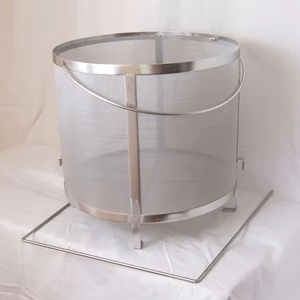
300-400 Micron SS Basket Strainer Industrial Filter
Precision-woven plain weave stainless steel wire cloth engineered for liquid clarification, pipeline protection, and continuous industrial solid-liquid separation.

Direct factory-floor manufacturing under stringent ASME, ASTM, and ISO testing protocols. We design, tool, and fabricate high-efficiency mass transfer hardware and deep-drawn assemblies engineered to your exact chemical stream characteristics and process data sheets.
Precision-woven plain weave stainless steel wire cloth engineered for liquid clarification, pipeline protection, and continuous industrial solid-liquid separation.
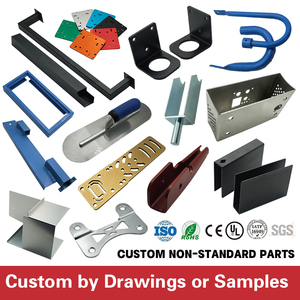
High-precision OEM sheet metal components stamped, laser-cut, and custom bent from corrosion-resistant alloys for demanding distillation trays and support frames.
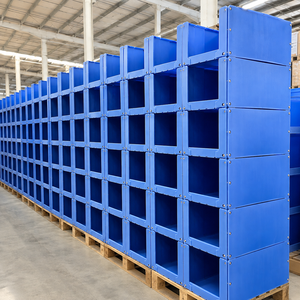
High-density polypropylene corrugated bins engineered for structural durability, component staging, and damage-free hardware storage during major plant turnarounds.
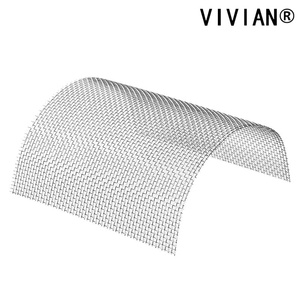
Rigid diamond-pattern structural expanded mesh deployed in tower bed retainers, catalyst holding grids, column walkways, and protective plant architecture.
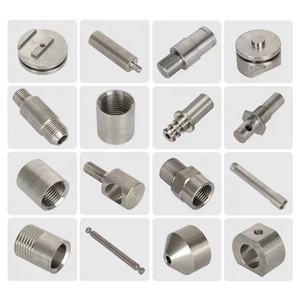
Ultra-smooth seamless drawn enclosure manufactured from high-purity alloy sheets for high-pressure fluid valves, analytical sensors, and sanitary instruments.
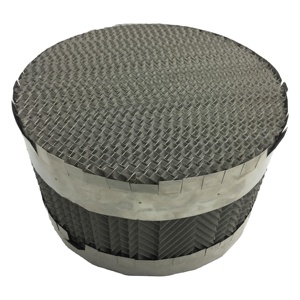
High-performance wire gauze offering extensive surface contact and exceptionally low pressure drop per theoretical stage, optimized for cryogenic air separation.
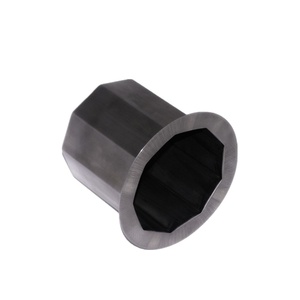
Monolithic deep-drawn stainless steel cylinders with zero longitudinal seam defects, suited for process equipment distributors and severe pneumatic duty.
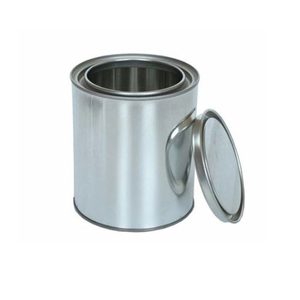
Industrial-grade airtight tinplate and steel containers engineered for chemical reagent transport, catalyst preservation, and leak-proof solvent sampling.
In modern separation trains, maximizing product throughput while curbing parasitic pressure drop is the defining engineering challenge. The integration of precision tower packing and purpose-engineered internals directly dictates energy overhead, operating boundaries, and plant uptime.
Initial liquid distribution across the bed profile dictates mass transfer performance. Even a 5% liquid maldistribution can degrade column fractionation efficiency by up to 30%, causing early local flooding and unevaporated bypass across the packed cross-section.
For thermally labile monomers, vacuum crude towers, and bio-fractionation lines, minimizing bottom temperature through structured gauze packing (such as BX500) reduces reboiler duties, prevents polymer fouling, and ensures stable operability under tight temperature regimes.
Corrosive, sour, or halide-bearing wash streams necessitate exact alloy matching. Sourcing verified mill coils in Stainless 304L, 316L, Monel 400, Hastelloy C276, and Inconel 625 prevents pitting and localized stress-corrosion cracking in continuous production campaigns.
| Equipment Configuration | Ideal Application Scenario | Relative Turndown Ratio | Pressure Drop (ΔP) | Fouling Resistance | HETP / Capacity Index |
|---|---|---|---|---|---|
| Wire Gauze Structured Packing (BX500) | Vacuum fractionation, fine chemicals, air separation | 10:1 (Exceptional) | Ultra-Low (<0.3 mbar/stage) | Low (Clean fluids required) | Highest Efficiency (HETP 150-250mm) |
| Sheet Corrugated Structured Packing | Refinery crude revamps, atmospheric distillations | 6:1 to 8:1 (High) | Very Low (0.5-1.0 mbar/stage) | Moderate to Fair | High Efficiency / High Capacity |
| Floating Valve Trays | Fluctuating vapor/liquid feeds, light hydrocarbons | 4:1 to 5:1 (Flexible) | Moderate (4-8 mbar/tray) | Moderate | Standard Separation Capacity |
| Fixed Valve / Vane Sieve Trays | Petrochemical wash towers, moderate fouling services | 3:1 (Consistent) | Moderate | High Fouling Tolerance | Robust Structural Capacity |
| Bubble Cap Trays | Reactive synthesis, minimum weepage at near-zero rates | >10:1 (Uncompromised) | High (6-12 mbar/tray) | Lower (Susceptible to build-up) | Maintains Positive Hydraulic Seal |
| Engineered Random Packing (Rings/Saddles) | Acid gas scrubbers, stripping, aggressive scrubbing | 3:1 to 4:1 (Standard) | Low to Moderate | High Tolerance to Heavy Slurries | Economical Shell Utilization |
As the global processing industry pivots toward decarbonization, strict energy reduction, and agile supply frameworks, enterprise purchasing agents are redefining their procurement criteria.
Large-scale amine absorbers for post-combustion CO2 capture require ultra-low-pressure-drop packings with tailored surface energy treatments. Facilities demand materials that optimize surface wetting without accelerating solvent degradation over multi-year cycles.
Procurement teams are shifting away from generic catalog parts. Tier-1 EPC contractors require custom fabrication validated against 3D hydraulic fluid dynamics, downcomer area optimization, and certified vapor distribution profiles before releasing fabrication POs.
Stringent compliance frameworks in Europe, the Middle East, and North America mandate end-to-end heat-number traceability, positive material identification (PMI), and mechanical certs to prevent catastrophic down-hole failures in sour gas environments.
Operating continuously since 1998, we bridge the gap between process equipment design and heavy industrial metal manufacturing, delivering cost efficiencies directly to plant operators and EPC contractors.
Every sheet, coil, and wire product is sourced from reputable primary steelmakers. We provide complete EN 10204 3.1 test certs, chemical breakdowns, and mechanical impact properties with each shipment.
From in-house precision tooling, high-tonnage deep drawing, and CNC laser cutting to automatic wire mesh weaving and TIG welding, we retain 100% control over quality, dimensional tolerances, and delivery schedules.
Our facilities accommodate third-party inspection agencies (SGS, Bureau Veritas, DNV, TÜV) and client QA inspectors, conducting hydrostatic, dimensional, dye-penetrant, and ultrasonic testing before packaging.
Internals, trays, and delicate wire gauze packs are secured in ISPM-15 heat-treated seaworthy wooden crates, complete with vapor-barrier lining, tagged manway diagrams, and full export clearance documentation.
Clear answers to technical, commercial, and logistics questions commonly raised by process engineers, project managers, and enterprise procurement specialists.
Consult with our process engineers to review hydraulic models, specify alloy internals, or discuss custom deep drawing and wire mesh requirements. Get a verified proposal built directly around your operational data.