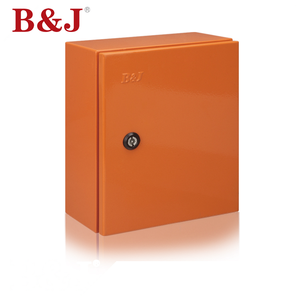
B&J Outdoor IP66 Waterproof Wall Mount Metal Cabinet
Heavy-gauge laser welded electrical enclosure engineered for corrosive outdoor sites, chemical process plants, and high-vibration power generation facilities.

In aggregate separation, chemical processing, thermal drying, and architectural safety systems, selecting a dependable crimped wire mesh manufacturer and exporter directly dictates operational uptime and equipment longevity. Crimped wire mesh is manufactured by pre-crimping individual metallic wires before loom weaving, guaranteeing exact dimensional stability, consistent aperture squareness, and high tensile structural resistance under severe impact. Drawing from over 25 years of global fabrication and supply experience across 20+ countries, this technical guide provides plant engineers and procurement executives with an objective evaluation of tier-one manufacturing capabilities, next-generation metallurgical trends, and precision-engineered metal products.
Explore our export-certified mass transfer internals, precision wire cloth, perforated structural solutions, and deep drawn components.
Heavy-gauge laser welded electrical enclosure engineered for corrosive outdoor sites, chemical process plants, and high-vibration power generation facilities.
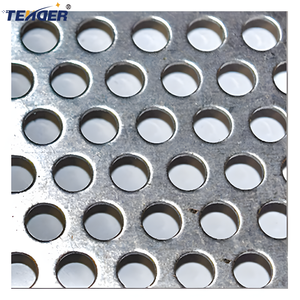
Architectural exterior facade panels delivering exceptional strength-to-weight performance, tailored open-area ratios, and reliable UV corrosion protection.
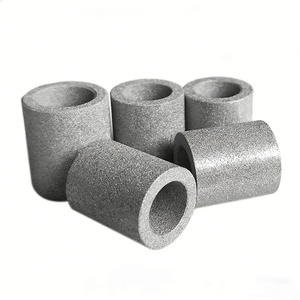
High-temperature multi-layer sintered porous metal cartridge providing positive flashback prevention, precise micro-filtration, and structural integrity.
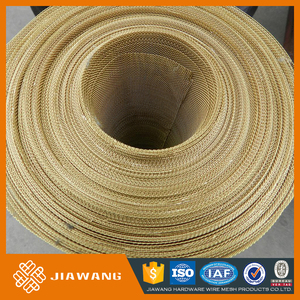
Corrosion-resistant marine grade stainless steel wire cloth in standardized 100-foot rolls for environmental exclusion and architectural ventilation.
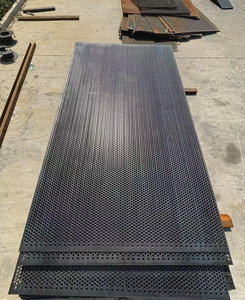
Integrally formed heavy plate screen engineered without micro-fractures, tailored for severe impact screening in aggregate, mining, and bulk mills.
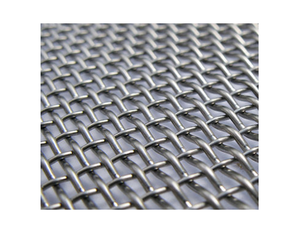
Ultra-precise wire positioning and zero mesh slippage for liquid-solid separation, pharmaceutical grading, and pressure screening circuits.
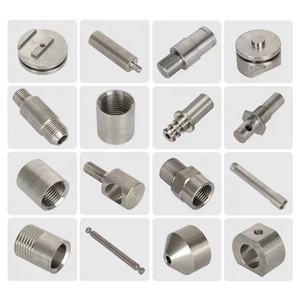
Seamless stainless steel and alloy canisters manufactured with zero welding seams for medical device instruments, pressure vessels, and sensors.
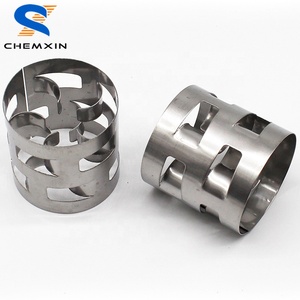
Industry-standard mass transfer random packing offering superior hydraulic throughput, low operational pressure drop, and exceptional fouling resistance.
Procurement teams evaluating international suppliers for vibrating screen cloth, pre-crimped architectural grilles, and heavy industrial demister pads must look beyond standard pricing. The difference between an average supplier and a premier global manufacturing facility is measured in metallurgical certification, automated crimping tolerances, and quality management systems.
World-class crimped wire mesh factories exhibit key core capabilities:
Premier factories deploy automated, CNC-controlled crimping gears. Whether fabricating double crimp, intermediate crimp, lock crimp, or flat-top weave styles, pitch uniformity must not deviate by more than ±0.5% across a 30-meter production roll to eliminate wire drift under dynamic loading.
From workhorse carbon spring steels (65Mn, high-carbon wire) to corrosion-grade Stainless Steel 304/316L, Hastelloy, Monel, and Titanium, true leaders enforce mill-test heat number tracking to ensure tensile strength ratings meet ASTM E2016 and ISO 9044 specifications.
Tier-one exporters prepare custom edge preparation—including round-edge hooks, shrouded plates, canvas-reinforced hems, and welded flanges. This guarantees fast drop-in alignment into aggregate screening decks and petrochemical mass transfer columns without tearing.
Selecting the optimal weave profile minimizes blinding, extends screen wear life, and improves particle throughput.
| Weave Profile | Mechanical Structure | Primary Industrial Applications | Abrasion & Fatigue Life | Anti-Blinding Capability |
|---|---|---|---|---|
| Double Crimp (Plain Crimp) | Wires are crimped at each cross-point; equal warp and weft corrugation. | Fine to medium separation, general screening, light animal cages, protective enclosures. | Moderate (best for low-impact steady state feeds) | Standard |
| Intermediate Crimp | Extra corrugations between intersections to increase stability with lighter wire. | Large opening screens requiring lightweight wire, drying trays, architectural partitions. | Moderate-High rigidity at reduced weight | Good in dry screening |
| Lock Crimp (Scale Crimp) | Deep ridges press wires firmly into fixed knuckle joints, locking apertures rigidly. | Heavy-duty vibrating screens, mining gravel, quarry sorting, asphalt plants. | Exceptional resistance to wire displacement and shear | Very High |
| Flat-Top Crimp | All surface knuckles are offset downward, resulting in a smooth, plane top surface. | High-friction sorting, chute liners, industrial filter mesh backing, food conveyor belts. | Maximum abrasion life; material slides freely without catching | High; prevents edge pegging |
How automation, advanced metallurgy, and lifecycle sustainability are reshaping the global procurement landscape.
Chemical processing, green hydrogen production, and flue gas desulfurization systems increasingly require specialized alloys. Procurement is moving from basic 304 towards Hastelloy C-276, Monel 400, Inconel 625, and high-purity Nickel to survive aggressive sour-gas and chloride stress corrosion cracking.
Modern plants employ high-speed laser optical micrometer inspection during weaving. Continuous scanning verifies wire diameter consistency and aperture rectangularity across thousands of meters, eliminating manual calibration errors and premature batch rejection.
Global engineering, procurement, and construction (EPC) firms prioritize wear life and maintenance cycles over initial purchase cost. Switching to premium 65Mn spring steel or nitrogen-alloyed stainless wire reduces downtime frequency, delivering higher ROI in high-tonnage mining circuits.
Combining heavy manufacturing capacity, rigorous metallurgical testing, and turnkey export operations.
Operational since 1998, Ambani Metals brings over a quarter-century of technical mastery in mass transfer columns, precision wire mesh, deep drawn components, and perforated sheets for petrochemical, refinery, and mining sectors.
All raw wire and coil stocks are procured from tier-one steel producers with comprehensive EN 10204 3.1 chemical and mechanical inspection certificates provided with every export shipment.
Serving over 20 export destinations including the United States, Australia, UAE, Canada, Saudi Arabia, and Qatar with humidity-proof palletized packaging, tagged part numbers, and customs-ready logistics handling.
Essential guidance on tolerances, alloy selection, specifications, and international trade compliance.
Partner with an established manufacturer and exporter delivering precision metallurgy, certified tolerances, and dependable worldwide delivery. Contact our technical team today for engineering support or an RFQ response.