- +91-9930498858Call / WhatsApp
- [email protected]Email Us
Explore our industrial range of tight-tolerance micro-perforated plates, expanded metal matrices, deep-drawn enclosures, and column separation media engineered for harsh operating environments.
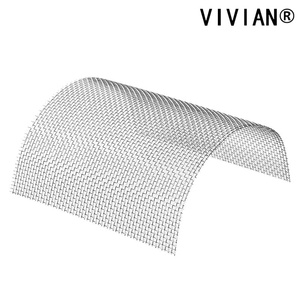
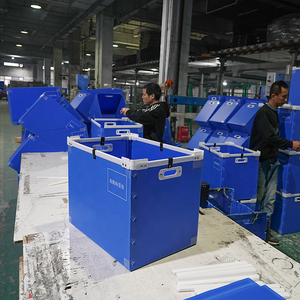
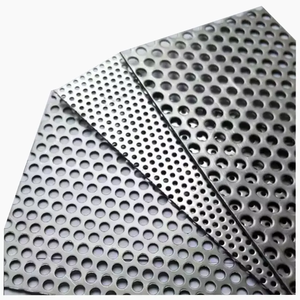
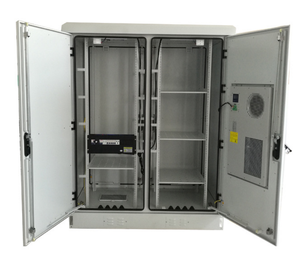
Micro-perforated sheets represent an advanced class of precision porous screens defined by aperture diameters equal to or smaller than the sheet thickness ($d \le t$), typically spanning from 0.05 mm (50 microns) to sub-1.0 mm geometries. Unlike traditional perforated plates where mechanical punching forces punch diameters twice that of the gauge, true micro-perforation demands specialized manufacturing approaches: micro-mechanical punching with tungsten carbide pin-matrices, ultra-fast fiber laser micro-drilling, photochemical etching (PCM), and high-frequency electron beam lithography.
From an applied physics perspective, micro perforated metal sheets serve two mission-critical thermodynamic and aerodynamic functions: non-fibrous acoustic attenuation (Micro-Perforated Panel / MPP absorbers) and micro-filtration under differential hydraulic pressure. In acoustic architectures, when sound waves encounter sub-millimeter pores, the boundary layer within each micro-aperture causes viscous friction dissipation, converting acoustic vibrational energy into heat without needing porous synthetic fibers that shed particles in sterile environments like aerospace cabins, surgical cleanrooms, or high-velocity turbomachinery ducts.
Technical Information Gain Insight: The efficiency of a micro-perforated panel operates on Maa's Acoustic Impedance Theory. For an aperture diameter $d$ under 1 mm, acoustic resistance is predominantly determined by viscous air drag inside the hole channel rather than inertial turbulence at the orifice mouth. This enables predictable, broadband sound attenuation with zero fiber contamination risk.
When selecting raw metal grades, process engineers must balance tensile ductility against corrosion degradation. Industrial applications utilize AISI 316L and 304 austenitic stainless steels for food processing and marine water desalinators, while aggressive petrochemical columns, hydrogen electrolyzers, and sour gas separators necessitate nickel superalloys like Hastelloy C-276, Inconel 625, Monel 400, and Grade 1/2 Titanium. Ensuring burr-free aperture profiles and uniform pitch distribution is mandatory to prevent localized boundary layer eddies and stress-induced crevice corrosion.
Procurement directors and plant engineering specialists require verified benchmarks across production capability, metallurgy range, minimum hole diameter, open area percentage, and ISO quality management. Below is the comparative authority audit of the leading global manufacturers dominating the micro-perforated sheet ecosystem in 2025.
| Manufacturer / Supplier | Headquarters | Core Manufacturing Method | Min Aperture (ø) | Key Metal Alloys | Specialization Focus |
|---|---|---|---|---|---|
| Ambani Metals OEM Top Pick | India | High-Precision Punching, Etching & Deep Draw | 0.15 mm | SS 304/316L, Hastelloy, Monel, Inconel, Ti | Mass transfer internals, filter cores, industrial custom stamping |
| Veco B.V. | Netherlands | Electroforming & Photochemical Etching | 0.02 mm | Nickel, Stainless Steel, Copper | Semiconductor, ultra-fine screen printing, micro-sieves |
| RMIG Group | Denmark | High-Speed Mechanical CNC Punching | 0.50 mm | Galvanized Steel, Stainless Steel, Aluminum | Architectural facades, acoustic ceiling panels, bulk grain sorting |
| Graepel Perforators | Germany | Cold Mechanical Forming & Punching | 0.40 mm | Structural Steel, Stainless Steel, Brass | Commercial vehicle ventilation, industrial machine safety guards |
| Accurate Perforating | USA | Mechanical Punching & Laser Cutting | 0.60 mm | Carbon Steel, Aluminum, Austenitic SS | HVAC diffusers, decorative architectural sheets, OEM chassis |
| Ferguson Perforating | USA | Rotary & High-Tonnage Cluster Punching | 0.25 mm | Stainless Steel, Monel, Inconel, Titanium | Centrifuge screens, sugar processing baskets, aerospace silencers |
| Locker Group | United Kingdom | Precision Perforating & Woven Integration | 0.30 mm | Mild Steel, 316L SS, Phosphor Bronze | Acoustic cladding, marine water intakes, petrochemical filters |
| Perforated Tubes Inc. | USA | Micro-Perforated Welded Tube Forming | 0.45 mm | Hastelloy, Carbon Steel, 304/316 SS | Oil & gas well screen liners, nuclear fluid strainers |
| Hendrick Manufacturing | USA | CNC Mechanical & Profiling | 0.50 mm | Aluminum Alloys, Copper, Stainless Steel | Architectural design screens, food grading trays, speaker grilles |
| Cadence Inc. | USA | Laser Ablation & Micro-Machining | 0.05 mm | Medical Nitinol, 316LVM, Platinum/Iridium | Surgical device filtration, microfluidic chips, diagnostics |
Founded in 1998 with over 25 years of specialized metallurgical expertise, Ambani Metals bridges high-capacity industrial production with microscopic tolerances. Supplying chemical, petrochemical, oil & gas, and pharmaceutical plants in over 20 countries, they fabricate distillation column internals, precision perforated sheets, expanded metals, and seamless deep-drawn enclosures in standard austenitic steels and exotic alloys like Inconel, Monel, and Hastelloy with 100% heat-number traceability.
Veco stands as a global market benchmark for sub-50 micron apertures created via high-precision additive electroforming and PCM. Their micro perforated sheets cater predominantly to razor foils, optical encoders, inkjet print heads, and sugar centrifuge sieves that demand absolute edge smoothness and zero burr tolerances.
As one of the world's largest perforation conglomerates, Denmark-based RMIG excels in architectural claddings, soundproof linings, and heavy industrial screening. They provide wide-coil processing for sheet thicknesses ranging from 0.5 mm to 3.0 mm, excelling in rapid delivery across European civil projects.
For more than two decades, Ambani Metals has solved complex fluid separation, acoustic damping, and OEM component challenges by integrating end-to-end tooling, stamping, and metallurgical manufacturing under one roof.
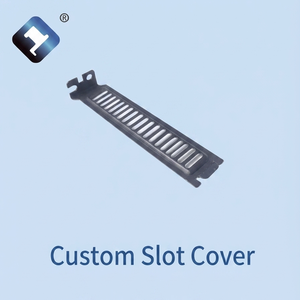
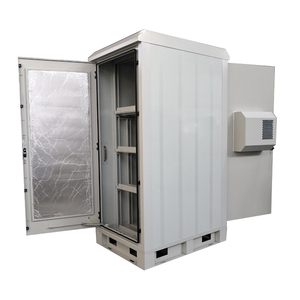
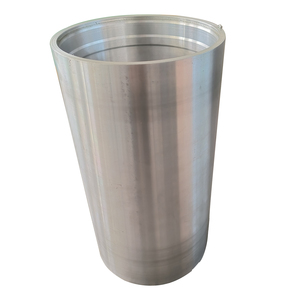
Unlike standard sheet distributors, Ambani Metals maintains in-house tooling, progressive CNC punch dies, and hydraulic deep draw presses capable of shaping complex cylindrical shells, seamless drawn cans, and custom chassis without outsourcing risk.
Expert processing of corrosion-resistant and extreme-temperature alloys including Hastelloy C-22/C-276, Inconel 600/625, Monel 400, Titanium Grade 2, and phosphor bronze. Complete EN 10204 3.1 Mill Test Certificates (MTC) accompany every batch.
We deliver complete engineered packages: distillation column trays (sieve, valve, bubble cap), structured packings, demister pads, perforated filter cylinders, and expanded diamond meshes to EPC contractors across the UAE, USA, Australia, and Gulf markets.
Selecting the optimal perforation process dictates minimum hole diameter, open area percentage, edge burr levels, and overall production expenditure. The four prevailing processes are compared below:
The global procurement market for micro-perforated sheets is witnessing dramatic structural shifts driven by decarbonization, green hydrogen production, and strict industrial noise mandates. Procurement leaders must track these major trends:
Proton Exchange Membrane (PEM) and AEM electrolyzers are transitioning from porous carbon paper to ultra-thin titanium and 316L micro-perforated sheets coated with platinum-group catalysts. Sub-100 micron apertures allow uniform gas-liquid bubble transport while withstanding operating pressures above 30 bar.
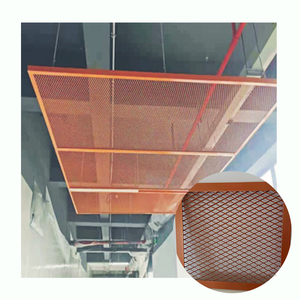
Commercial building regulations (LEED v4, WELL standard) and hospital cleanrooms are banning traditional fiberglass and rockwool sound absorbers due to particulate shedding and moisture absorption. Micro-perforated aluminum and stainless acoustic ceiling panels provide NRC ratings exceeding 0.85 when paired with air cavities, without any fibrous backing.
Standard 60-degree staggered hole patterns are increasingly replaced by non-uniform, graded pitch layouts optimized by CFD. Variable open-area micro-perforated trays dynamically balance vapor velocity across column diameters, preventing entrainment flooding and maximizing tray turndown ratios.
When creating a technical requisition for micro-perforated plates, project engineers must quantify five geometric parameters: sheet thickness ($t$), aperture diameter ($d$), center-to-center pitch ($p$), hole pattern layout (60° staggered, 45° staggered, or straight square), and margin zones.
Open Area (%) Formula for 60° Staggered Round Holes:
$$\text{Open Area (\%)} = \left(\frac{d^2}{p^2}\right) \times 90.69$$
Where $d$ is hole diameter and $p$ is pitch distance between centers. For micro-perforation, open area typically ranges between 1.0% to 15.0% for acoustic panels, and 20% to 45% for high-throughput filtration media.
Key quality and dimensional tolerance checklists to specify before issuing a Purchase Order:
Whether you require standard micro-perforated sheets, deep-drawn precision enclosures, column trays, or specialty alloy filter meshes, our engineering team is ready to analyze your drawings and process specifications.