
- +91-9930498858Call / WhatsApp
- [email protected]Email Us
Precision CNC punched, laser-cut, corrugated, and profiled aluminum sheets designed for architectural façades, filtration engineering, acoustic dissipation, and extreme environmental durability.
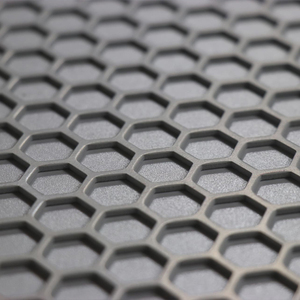
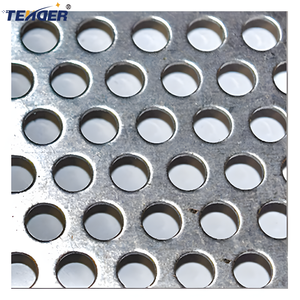
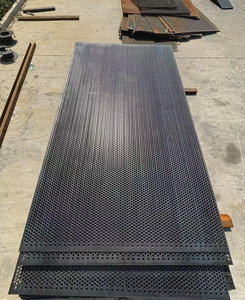
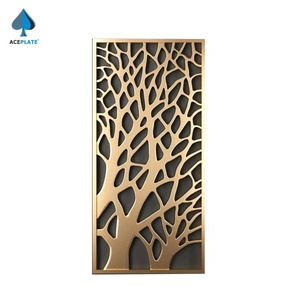
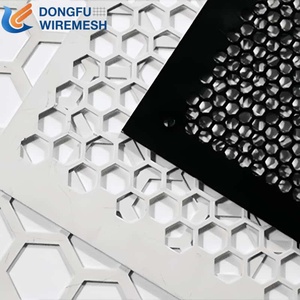
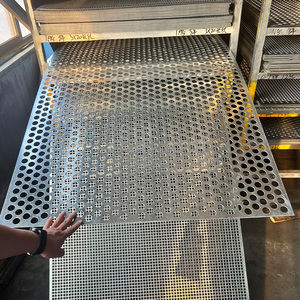
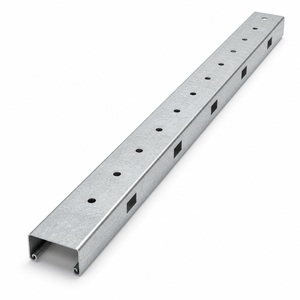
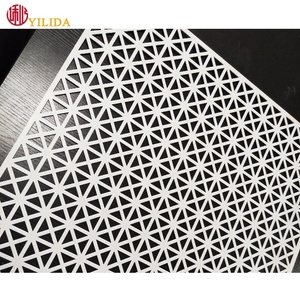
A technical guide for EPC engineering contractors, architectural façade consultants, and OEM industrial procurement heads seeking audited tier-1 manufacturing partners.
The global perforated aluminum sheet industry has experienced an aggressive technological evolution over the past five years. Once categorized merely as standard punched screening plates, modern perforated aluminum panels are now deployed as multi-functional building envelopes, precision separation mediums in petrochemical scrubbers, aerodynamic environmental baffles, and tuned acoustic dissipation assemblies. When evaluating the Top 10 Perforated Aluminum Sheet Exporter & Exporters globally, international procurement organizations must look past gross output volumes and examine advanced parameters such as alloy metallurgical purity, residual stress relief through precision roller leveling, microcrack avoidance along blanking radii, and high-spec architectural finish durability including PVDF Kynar 500 fluoropolymer and Class I anodic coatings.
Across key industrial clusters in India, East Asia, Western Europe, and North America, leading perforated sheet manufacturers are distinguished by their ability to maintain tight punching tolerances (ASTM E323 and ISO 7806) while executing deep secondary fabrications. Fabricating perforated aluminum presents distinctive mechanical challenges compared to standard carbon or stainless steel. Aluminum's lower modulus of elasticity, coupled with localized thermal expansion during punching cycles, introduces high risks of sheet warping, edge curling, and center oil-canning if internal metallurgical stress is improperly balanced. Therefore, the world's premier exporters maintain closed-loop CNC punching lines, in-line leveling cassettes with automated hydraulic deflection correction, and laser cutting capabilities capable of generating complex parametric aperture geometries without thermal edge oxidation.
| Evaluation Parameter | Tier-1 Exporters (e.g., Ambani Metals Criteria) | Secondary Regional Processors | Standard Commercial Trading Hubs |
|---|---|---|---|
| Alloy Specialization | 1050, 1060, 3003-H14, 5052-H32 (Marine Grade), 6061-T6 | Primarily 1000 and 3000 series soft commercial tempers | Re-badged mixed scrap-sourced aluminum coils |
| Leveling Technology | Multi-roll precision roller leveling (19 to 23 rolls) under tension | Basic 7-roll mechanical flattener (residual stress remains) | Manual hand hammering or unflattened coil-bow |
| Perforation Tolerances | Pitch: ±0.05 mm; Hole Diameter: ±0.03 mm; Margins: ±0.5 mm | Pitch: ±0.25 mm; Margins: ±2.0 mm | Standard commercial coarse tolerance (> ±1.5 mm) |
| Secondary Forming | Seamless deep drawing, CNC folding, welded corrugation, framing | Basic 90-degree press brake without perimeter stiffeners | No internal fabrication; outsourced subcontracting |
| Surface Protection | AAMA 2605 3-Coat PVDF, 25μm Anodizing, Salt Spray > 3,000 hrs | Standard industrial powder coat (ASTM D3363 2H hardness) | Mill finish with mill oil residue and surface scuff marks |
| Export Packaging | Fumigated ISPM-15 wooden cases, anti-static vapor barrier, interleaf paper | Simple open pallets strapped with basic plastic wrap | Bare bundles vulnerable to transit scratching & water stain |
How digital fabrication, closed-loop sustainability, and parametric façades are transforming technical specifications for architectural and industrial perforated metal.
Global procurement teams in Europe and North America increasingly mandate Environmental Product Declarations (EPDs). Demand is pivoting toward post-consumer recycled alloys (such as Hydro CIRCAL 75R equivalents) guaranteeing less than 4.0 kg CO2 per kg of raw aluminum while preserving superior tensile elongation properties during severe punching operations.
Architectural engineering is moving rapidly away from uniform round or staggered square patterns. Next-generation envelopes require custom graduated open areas (varying from 15% to 65% across a single elevation) calculated by building information modeling (BIM) engines to dynamically regulate interior solar heat gain coefficients (SHGC) while maintaining daylight lux thresholds.
Industrial infrastructure projects—including coastal bulk handling ports, desert solar parks, and rail corridors—require heavy-gauge (1.5mm–3.0mm) corrugated perforated windbreak systems. Fluid-structure interaction (FSI) simulations dictate customized opening ratios that break laminar wind energy, preventing erosion and material dusting up to 85% efficiency.
Procurement departments are eliminating sub-tier machining contractors. Global buyers require single-source manufacturing partners who punch, laser trim, bend on 6-axis tandem CNC press brakes, weld structural fixing cleats, and apply certified Kynar 500 fluorocarbon finishes in one audited production stream, ensuring seamless site installation.
Major EPC organizations across the UAE, USA, Australia, and GCC are re-evaluating single-region dependencies. India's metal processing corridors have emerged as the premier manufacturing alternative, providing high engineering compliance, English-fluent documentation, direct container port connections, and preferential trade lane tariffs.
Automated optical inspection (AOI) utilizing high-speed line-scan cameras now scans continuous perforated webs in real time. Systems automatically flag missing holes, burrs exceeding 0.08mm, sheet camber, and pitch drift, providing clients with automated, heat-numbered verification dossiers before sea shipment dispatch.
Combining 25+ years of metallurgical prowess, rigorous testing protocols, and complete export handling for mission-critical industrial applications.
Drawing on an industrial heritage dating back to 1998, our engineering and metal processing operations have served over 1,000 discerning clients in more than 20 countries—spanning the United Arab Emirates, Saudi Arabia, the United States, Australia, Canada, Qatar, and Western Europe. While ordinary punching shops operate standard standalone machinery, our integrated facility provides an end-to-end engineering ecosystem encompassing mass transfer equipment, precision column internals, wire mesh filtration weaves, deep drawn seamless shells, and high-precision perforated aluminum sheets.
Our operational superiority is rooted in strict raw material selection. Aluminum ingots and master coils are procured exclusively from top-tier primary producers with full chemical spectroscopy validation. For architectural projects facing high-UV and coastal saline atmospheres, we process alloy 5052-H32 and 3003-H14 with strict magnesium limits to guarantee intergranular corrosion immunity. Our in-house tooling division engineers custom hardened tool-steel punch dies (D2 and tungsten carbide inserts), ensuring zero edge burrs, razor-sharp aperture geometry, and crack-free integrity during downstream folding, rolling, and corrugated forming operations.
Every sheet is backed by EN 10204 3.1 certification verifying tensile strength, yield, elongation, and chemical composition.
High-speed multi-axis CNC turret punching and fiber laser cutting delivering pitch precision down to ±0.05 mm across large formats.
In-house 400-ton press brakes, roll benders, and deep drawing machines for integrally formed corrugated wave profiles and cassette pans.
Export-grade seaworthy crating with moisture-barrier film and desiccant packs, shipping CIF/DDP smoothly into key global ports.
In-depth answers addressing structural integrity, alloy grades, surface finishing, acoustic absorption, and international logistics.
Consult directly with our engineering department for CAD layout assistance, wind load deflection calculations, custom die tooling, and factory-direct volume quotations.