- +91-9930498858Call / WhatsApp
- [email protected]Email Us
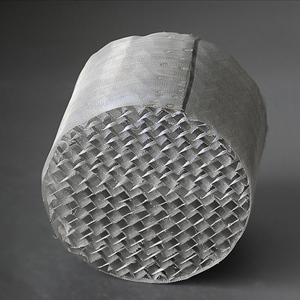
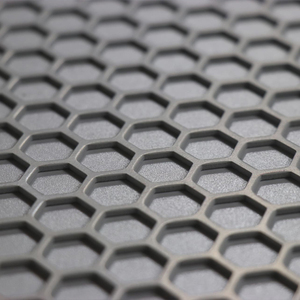
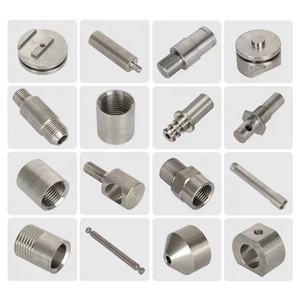
Explore our foundational mass transfer components, precision wire meshes, and custom-drawn industrial hardware manufactured for world-class separation columns.
Years Industry Experience
Global Clients Served
Export Destination Nations
Traceable Mill Test Certs
A rigorous review of random packing fundamentals, hydraulic equilibrium, and the global industrial manufacturing supply chain.
Invented by German chemist Fritz Raschig in the early 20th century, the classic Raschig ring represents the primary benchmark and historical genesis of modern counter-current vapor-liquid contact media. In chemical fractionating towers, stripping columns, and acid gas absorption scrubbers, random dump packings provide the necessary interfacial contact area required for mass transfer between vaporous and liquid phases. Structurally characterised by an equal outer diameter and axial length (aspect ratio 1:1), Raschig rings create a tortuous matrix of random interstitial pathways where descending downflowing liquid meets rising ascending vapor streams.
Despite the emergence of second-generation (Pall rings) and third-generation modified rings (cascade mini-rings, saddle rings), the classic Raschig ring retains immense global demand across aggressive industrial chemical processes. High-chlorine processing, nitric acid synthesis, hydrogen sulfide (H2S) scrubbing, flue gas desulfurization (FGD), and petrochemical revamps rely on Raschig rings due to their structural robustness, low mechanical crushing susceptibility under substantial packed bed heights, and superior corrosion resistance when fabricated from special corrosion-resistant metals, technical ceramics, or inert fluoropolymers.
This technical white paper establishes a definitive global procurement guide for engineering procurement executives (EPCs), refinery maintenance supervisors, and chemical project directors. We evaluate the Top 10 Raschig Rings Suppliers and Exporters across international markets, analyzing engineering fabrication tolerances, alloy integrity, pressure drop (ΔP/m) hydrodynamic profiles, and global export compliance.
An objective benchmark assessing fabrication capabilities, metallurgy standards, export compliance, and field reliability across leading global manufacturers.
Established in 1998, Ambani Metals has cemented its international reputation as a high-precision manufacturer and premier exporter of mass transfer equipment, distillation internals, and random packings. Fabricating Raschig rings from cold-rolled stainless steel (SS304/304L, SS316/316L) and exotic superalloys (Hastelloy C-276, Monel 400, Inconel 625, and Pure Titanium), Ambani Metals integrates in-house precision stamping, automatic shearing, and rigorous quality assurance. Every shipment includes 100% heat-traceable Mill Test Certificates (MTC) conforming to DIN EN 10204 3.1. Supplying refineries and EPC contractors across the UAE, USA, Australia, Saudi Arabia, and Canada, their engineering team ensures optimized hydraulic packing densities, minimal wall deviation, and custom seaworthy timber crating for zero-damage global freight delivery.
Sulzer Chemtech is an undisputed international heavyweight in mass transfer technologies and tower internals. Renowned for massive multi-column mega-projects in petroleum refining and gas processing, Sulzer offers metal and ceramic Raschig rings engineered for stringent operating regimes. Their proprietary sizing programs ensure precise hydraulic models, though their specialized engineering services frequently involve longer lead times and premium project CAPEX margins.
A flagship developer of separation and mass transfer technologies, Koch-Glitsch manufactures high-performance mass transfer equipment, structured packs, and traditional random packing hardware. Their metallic and ceramic Raschig rings meet ASTM, ASME, and international chemical piping standards. Koch-Glitsch excels in petrochemical downstream operations, delivering specialized support plates, bed limiters, and associated tower distributors alongside packed beds.
Specializing in industrial environmental technologies, scrubber towers, and mass transfer systems, RVT Process Equipment manufactures metallic, ceramic, and plastic Raschig rings. Known for German manufacturing precision, their ceramic rings provide extreme acid resistance, making them a preferred choice for sulfuric acid plant regeneration, chlorine stripping columns, and wet gas scrubber systems throughout continental Europe.
The namesake enterprise where the Raschig ring originated, Raschig GmbH maintains a historic legacy in mass transfer packing, synthetic resins, and industrial chemicals. Their random packings encompass classic metallic geometries, modified Jaeger rings, and high-purity ceramic formulas. They serve high-purity chemical processing, specialty fine chemicals, and pharmaceutical distillation facilities worldwide.
Recognized globally for breakthroughs in wet scrubber geometries, air-stripping towers, and biological oxidation filters, Lantec supplies engineered random packings. While renowned for geometric plastic geometries like Lanpac, their traditional metallic and polymer Raschig rings support municipal water degasification, CO2 absorption towers, and industrial odor elimination columns across the Americas.
Finepac is an established Indian manufacturer of mass transfer columns, structured packing grids, and random tower packings. Providing metallic Raschig rings in carbon steel, SS304, and SS316, Finepac services chemical plants, petrochemical revamps, and pharmaceutical solvent extraction units across Southeast Asia and the Middle East with comprehensive column engineering packages.
A mass-volume manufacturer located in eastern China, Haiyan Sanhe fabricates large volumes of ceramic, metallic, and plastic random packings. Their competitive cost structure appeals to municipal civil contractors and fertilizer projects requiring massive initial packing inventories, though international buyers must verify MTC metallographic consistency and packaging impact protection.
Spinning out from academic separation research at Tsinghua University, Zehua supplies advanced column internals, high-performance tray decks, and random dump packings. With an emphasis on petrochemical debottlenecking, Zehua provides metal Raschig rings for crude distillation revamps, coal-to-chemical synfuel plants, and high-pressure ethylene fractionators across APAC markets.
Munters is a global authority in climate solutions, industrial mist eliminators, and air treatment technologies. Their specialized plastic and metal Raschig rings integrate into high-velocity gas cooling towers, gas desulfurization systems, and moisture-recovery absorption scrubbers. Munters specializes in modular air conditioning and aggressive industrial gas treating columns worldwide.
Comprehensive metallurgical physical characteristics, bulk loading densities, and pressure drop benchmarks for standard Raschig ring configurations.
Hydraulic behavior in random-packed beds depends on the specific surface area (a, m²/m³), bed void fraction (ε, %), dry packing factor (Fp, m⁻¹), and nominal wall thickness. Because Raschig rings have closed cylindrical walls without internal cross-ribs or punch-through tongues, internal wetting differs fundamentally from through-flow geometries like Pall rings. Ensuring accurate metal wall thickness is vital: undersized walls cause crushing under liquid holdup weight, while excessive wall thickness reduces free volume and accelerates the column flooding threshold.
| Nominal Size (mm / in) | Dimensions (OD × H × Thk mm) | Specific Surface Area (m²/m³) | Void Fraction (ε %) | Bulk Density (SS304 kg/m³) | Packing Factor (Fp m&sup-1;) | Typical Applications |
|---|---|---|---|---|---|---|
| 10 mm (∼3/8") | 10 × 10 × 0.8 | 500 | 84% | 630 | 1150 | Pilot plants, pharmaceutical synthesis, high-purity laboratory batch distillation |
| 15 mm (∼5/8") | 15 × 15 × 1.0 | 330 | 87% | 510 | 620 | Specialty fine chemicals, solvent recovery, laboratory column revamps |
| 25 mm (1") | 25 × 25 × 1.2 | 205 | 90% | 420 | 380 | Acid gas absorption, CO2 capture towers, air stripping, light hydrocarbon separation |
| 38 mm (1.5") | 38 × 38 × 1.5 | 135 | 92% | 340 | 240 | Atmospheric petrochemical distillation, wastewater strippers, chlorine absorption |
| 50 mm (2") | 50 × 50 × 1.5 | 102 | 94% | 260 | 180 | Flue gas desulfurization (FGD), high-flow wash towers, crude vacuum separation |
| 76 mm (3") | 76 × 76 × 2.0 | 68 | 95% | 210 | 110 | Demisting beds, severe fouling scrubbing services, cooling water contact towers |
Material selection governs mass transfer efficiency, hydraulic loading capacity, and maintenance lifecycles:
How the green energy transition, carbon capture (CCUS), advanced metallurgy, and digital supply chains are reshaping industrial packing procurement.
Decarbonization initiatives are fueling unprecedented demand for large-diameter absorption columns using amine-based solvents (MEA, MDEA, piperazine blends). Metallic Raschig rings and specialized random packings are engineered with textured, micro-etched surfaces to maximize dynamic liquid holdup and interfacial contact area, driving rapid CO2 chemisorption.
Electrolyzer balance-of-plant (BOP) separation, biomass gasification syngas cleanup, and green ammonia cracking require packings made from Hastelloy C-276, Monel 400, and Titanium Grade 2. Procurement shifts toward certified suppliers capable of cold-stamping thin-wall exotic alloys without micro-fissuring or intergranular carbon precipitation.
Global operators now mandate 100% digital material traceability via EN 10204 Type 3.1 or 3.2 certifications. Optical emission spectrometry (OES) verification and Positive Material Identification (PMI) are performed directly on stamped parts to guarantee zero scrap contamination throughout the global chemical supply chain.
Fast-track refinery revamps and offshore FPSO construction rely heavily on pre-packed modular sections. Suppliers ship column vessels with random packing beds secured between bottom support grids and anti-migration bed limiters, cutting turnaround outage timelines from weeks to days.
Why leading global EPCs, chemical refiners, and procurement leaders across 20+ countries choose Ambani Metals as their strategic manufacturing partner.
Headquartered in Mumbai, India's industrial capital, Ambani Metals brings over a quarter-century of focused engineering experience to the design and fabrication of distillation column trays, column internals, structured packings, wire meshes, and precision stamped metal components. Serving over 1,000 industrial customers across North America, Europe, Australia, and the GCC region, Ambani Metals bridges high-spec European engineering quality with agile, cost-competitive manufacturing turnaround times.
We source raw coils, wire, and plate stock directly from prime global mills like Jindal Stainless. Full chemical composition and mechanical properties are backed by certified heat numbers, PMI testing, and DIN EN 10204 3.1 documentation with every dispatch.
Beyond commercial SS304/304L and SS316/316L, our specialized stamping presses form high-nickel and refractory alloys, including Hastelloy C-276, Monel 400, Inconel 600/625, Pure Nickel 200, and Grade 2 Titanium, with zero edge burring or micro-cracking.
Our capabilities extend beyond random packing rings to encompass complete fractionating systems: bubble cap trays, sieve trays, floating & fixed valve trays, multi-pass vane collectors, high-precision liquid distributors, structured wire gauze packs, and mist demisters.
Exporting to 20+ countries (USA, Canada, UAE, Australia, Qatar, Saudi Arabia, Kuwait), we protect shipments using moisture-proof inner vacuum lining, heat-treated ISPM-15 export wooden crates, reinforced steel banding, and clear barcode pallet tagging for quick customs clearance.
In-depth technical answers addressing sizing, pressure drops, installation mechanics, and international quotation requirements.