- +91-9930498858Call / WhatsApp
- [email protected]Email Us
Engineered to stringent metallurgical tolerances and international pressure vessel specifications, our production lines deliver high-precision mass transfer, deep drawn components, and industrial filtration assets for critical environments.
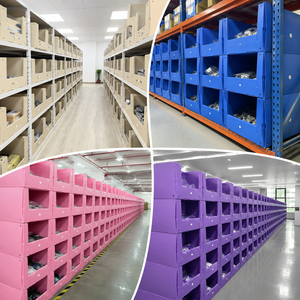
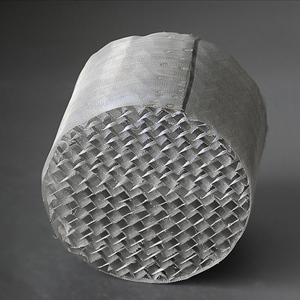
Sintered wire mesh represents the technological pinnacle of porous metal depth media. Unlike standard woven wire cloth, where cross-wire friction and warp-shute mechanical interlocks are susceptible to pore migration, pore enlargement under high differential pressures, and particulate shredding, sintered wire mesh undergoes solid-state diffusion bonding. Under high vacuum levels (exceeding 10⁻⁴ Torr) and precise thermal management just beneath the base alloy's liquidus line (typically 1150°C to 1250°C for austenitic grades), metallurgical necks form across every wire contact point. This transforms a multi-layered assembly of distinct woven meshes into an integrated, rigid porous plate characterized by fixed pore geometry, exceptional tensile and compressive strength, and predictable laminar permeability.
Standard industrial laminates typically utilize a 5-layer design consisting of a fine control mesh, protective screening, dual-sided drainage strata, and coarse structural backing mesh. In severe operating envelopes—such as corrosive chlorinated hydrocarbon distillation columns, subsea hydraulic intervention pods, or high-temperature steam blowdown units—specialty fabrications expand to include perforated plate reinforcement, chemical vapor deposition coatings, or exotic superalloys including Hastelloy C-276, Monel 400, Inconel 625, and high-purity Titanium.
| Structure Layer Design | Standard Layer Thickness | Primary Function & Hydrodynamics | Standard Material Metallurgy | Pore Stability Under ΔP |
|---|---|---|---|---|
| Layer 1: Protective Shield | 0.15 mm – 0.35 mm | Guards inner control layer against mechanical impact & coarse particulate erosion | AISI 316L / Hastelloy C-276 | Exceeds 50 bar without surface deformation |
| Layer 2: Precision Filter Layer | 0.08 mm – 0.25 mm | Determines absolute micron retention (1μm – 200μm), Dutch/Plain weave | Ultra-Clean Vacuum Drawn SS316L | Non-shedding, fixed aperture micron stability |
| Layer 3: Cushion & Drainage | 0.15 mm – 0.30 mm | Distributes effluent laminar flow and eliminates localized delta-P shear spikes | AISI 316 / Monel 400 | Maintains 38% - 45% interstitial void ratio |
| Layer 4: Support Medium | 0.50 mm – 0.85 mm | Provides cross-sectional rigidity and structural bridge to heavy backing mesh | AISI 304 / 316L / Inconel 600 | Resists flow pulsing and mechanical back-pulsing fatigue |
| Layer 5: Reinforcing Base Plate | 1.00 mm – 2.00 mm | Coarse heavy wire mesh or perforated sheet carrying system hydraulic load | AISI 304 / 316L / Duplex 2205 | Resists continuous hoop stress and axial line deflection |
Evaluated by vacuum sintering furnace capacity, non-destructive bubble point test compliance (ASTM E128), ISO 9001:2015 quality assurance protocols, and custom alloy sintering expertise.
A world-renowned leader in metallic transformation and advanced coatings. Bekaert engineers highly engineered Bekipor® metallic fiber sintered media for ultra-clean gas turbine emissions, high-molecular polymer melt filtration, and green hydrogen electrolyzer gas diffusion layers (GDL).
GKD (Gebr. Kufferath AG) specializes in precision technical weaves and multi-layer sintered laminate panels (Trimetric, Poromelt, and Gebron). Renowned for cutting-edge computerized weaving looms, micro-gap acoustic attenuators, and aerospace cabin fluid separation elements.
Celebrated for porous powder and diffusion-bonded mesh technology. Mott supplies critical flow restrictors, high-purity semiconductor spargers, chromatography frits, and sub-micron barrier filtration packages serving NASA, major wafer fabs, and petrochemical crackers.
Haver & Boecker integrates traditional wire weaving with high-tech vacuum diffusion laminates under the brand POROSTAR®. Widely specified in fluid-bed dryer distributors, pharmaceutical Nutsche filters, and solid-liquid centrifugation baskets across EMEA and APAC.
A Danaher operating company, Pall produces Rigimesh® and PMM® sintered wire mesh and woven metal laminates. Tailored for continuous process filtration in jet fuel systems, petrochemical resin clarification, and high-temperature steam sterilization systems.
A primary engineering hub for Poromesh® sintered composite filters. Purolator designs multi-layer diffusion bonded cylinders and cone filters for aerospace flight control manifolds, military ordnance, and nuclear cooling circuit safety strainers.
Renowned for Naslon® fine metal fiber and ultra-precision stainless steel sintered media. Dominates the high-end Asian semiconductor gas distribution sector, optical glass fiber pulling lines, and high-purity chemical reagent separation plants.
Swiss precision weaving and sintering mastery. Bopp fabricates specialized laminates, micro-welded filter candles, and filter discs utilizing proprietary calendering techniques prior to vacuum sintering for exact aperture symmetry and absolute micron ratings down to 1μm.
Engineers Sinterflo® sintered metal mesh and fiber media. Porvair is heavily integrated into aerospace fuel tank inerting systems, chemical synthesis gas purification, and radioactive waste liquid concentration units.
Established in 1998 with over 25 years of specialized metallurgical and mass-transfer manufacturing excellence, Ambani Metals bridges high-capacity precision vacuum diffusion bonding with end-to-end tower internals and deep-drawn metal engineering. Holding mill-direct partnerships (including Jindal stainless raw stocks), Ambani Metals supplies custom 5-layer and multi-layer sintered laminates, bubble-cap and valve column trays, corrugated structured packing (250AX, 500BX, 700CY), and specialty alloy porous elements in SS 304L, 316L, Hastelloy C-276, Monel 400, Inconel 625, and Nickel 200. Operating with full heat-number PMI certification, third-party inspection compliance (TÜV, Lloyd's, DNV), and dedicated seaworthy export crating for the USA, UAE, Australia, Canada, and Saudi Arabia.
Strategic supply chain shifts, sustainability mandates, and metallurgical innovations defining the next decade of capital equipment acquisition.
The accelerated buildout of Proton Exchange Membrane (PEM) and Alkaline water electrolysis units is driving unprecedented demand for sintered titanium and high-purity nickel diffusion-bonded meshes. Buyers are mandating micro-pore tolerances (<15μm) with sub-millimeter thickness uniformity to ensure optimal interfacial contact resistance without impinging electron transport or hydrogen bubble evacuation kinetics.
CCUS infrastructure requires sintered multi-layer contact matrices capable of withstanding aggressive amine cycling and thermal swing desorptions. Procurement frameworks are prioritizing high voidage structured wire gauze packings and sintered demister pads that drastically suppress amine droplet carryover, maintaining liquid loading efficiency while preventing downstream compressor salt fouling.
Global industrial facilities are systematically replacing consumable micro-glass, polypropylene, and ceramic cartridges with cleanable sintered wire mesh elements. While initial CapEx is 3x to 5x higher, ultrasonic and chemical back-flush cleanability extends operational lifespan beyond 8–10 years, drastically mitigating hazardous solid waste disposal liabilities and unplanned shutdown overheads.
Next-generation micro-metallurgy, additive manufacturing convergence, and computerized pore verification technologies.
The boundary between additive 3D metal printing and vacuum diffusion-bonded wire cloth is blurring. Advanced fabricators now print structural housing manifolds directly onto the outer flanges of multi-layer sintered panels, entirely eliminating thermal stress concentration zones, micro-heat affected zones (HAZ), and post-weld corrosion pitting common in manual TIG/plasma seam welding.
Surface functionalization via atomic layer deposition (ALD) enables sintered mesh plates to operate as phase-selective separation barriers. By modifying the surface energy of 316L and Inconel laminates, these elements achieve coalescing efficiencies exceeding 99.8% in water-in-fuel emulsion splitting without adding static head loss.
State-of-the-art sintering lines now integrate localized acoustic emission (AE) sensor arrays during the furnace cooling phase. By analyzing resonance wave dissipation across the porous sheet, technicians instantaneously detect minute delamination faults or incomplete atomic neck formation long before destructive shear testing or ASTM bubble point verifications occur.
Over two decades of precision fabrication, rigorous metallurgical inspection, and seamless export compliance delivering mission-critical mass-transfer and porous media hardware globally.
Founded in 1998, Ambani Metals brings over 25 years of specialized metallurgical and precision forming expertise, serving more than 1,000 corporate clients across 20+ countries worldwide.
Strategic mill procurement with immediate stock access to genuine Jindal stainless steel plates, sheets, and specialty alloy coils ensures chemical purity and batch-to-batch structural integrity.
Every batch undergoes strict dimensional verification, ultrasonic thickness profiling, ASTM E128 bubble point testing, and PMI spectrometer alloy verification prior to factory dispatch.
From single sintered wire mesh discs to full fractionating column revamps—including valve trays, vane collectors, structured packing, and deep-drawn medical shells—all managed under one roof.
Technical answers to critical questions commonly encountered by engineering, procurement, and construction (EPC) professionals.
Nominal ratings refer to an arbitrary commercial metric indicating the percentage of particles retained (often 60%–80%). Absolute rating, determined via ISO 4003 or ASTM E128 bubble point testing, measures the pressure required to force an air bubble through liquid-saturated pores, identifying the single largest pore opening where 100% of spherical particles will be retained mechanically.
Yes. Because vacuum diffusion bonding solidifies all contact nodes metallurgically, the material can be sheared, folded, rolled into cylinders, or deep drawn without unraveling or distorting aperture geometry. Longitudinal seams are typically completed using micro-plasma or precision TIG welding with matching filler alloys under continuous argon shielding.
Delamination occurs when vacuum sintering temperatures are insufficient, dwell time is curtailed, surface oxide layers are not fully reduced, or mechanical calender rolling applies uneven localized compressive pressure. Top factories employ multi-stage vacuum cycles with precise thermal soak plateaus and hydraulic platen presses that guarantee uniform cross-sectional diffusion.
AISI 316L is ideal for benign-to-moderate corrosive duties, clean steam, and food-grade operations up to 400°C. However, in environments with wet chlorine, hypochlorites, hot hydrochloric acid, or high-velocity seawater where pitting resistance equivalent numbers (PREN) must exceed 40, nickel-molybdenum-chromium alloys such as Hastelloy C-276 or Inconel 625 become essential to prevent stress corrosion cracking.
Purchasing specifications should strictly require EN 10204 Type 3.1 Inspection Certificates specifying ladle heat analysis, mechanical tensile limits, and corrosion test performance. Additional validations include Positive Material Identification (PMI via XRF/OES spectrometers) and non-destructive bubble point test certificates for each manufactured batch.
Sintered mesh supports high-energy physical and chemical regeneration methods impossible with polymeric media. Standard maintenance protocols involve ultrasonic bath agitation in dilute nitric or citric acid passivating solutions, counter-current pressurized back-flushing, or controlled pyrolytic burnout in burn-off ovens for heavy carbonaceous and polymer residues.
Consult with our metallurgical engineering team. We supply bespoke 5-layer laminates, perforated composite plates, and complete distillation internals globally.