
Bac Pvc Cooling Tower Fill pp Fills Packing Cooling Tower Cooling Tower Filter Filling

Product Description

Cooling Tower Fill Overview
Cooling Tower Components
Cooling Fill Profiles
Cooling Tower Fill Material
Industrial Fill Media

Types of Fills in Cooling Tower

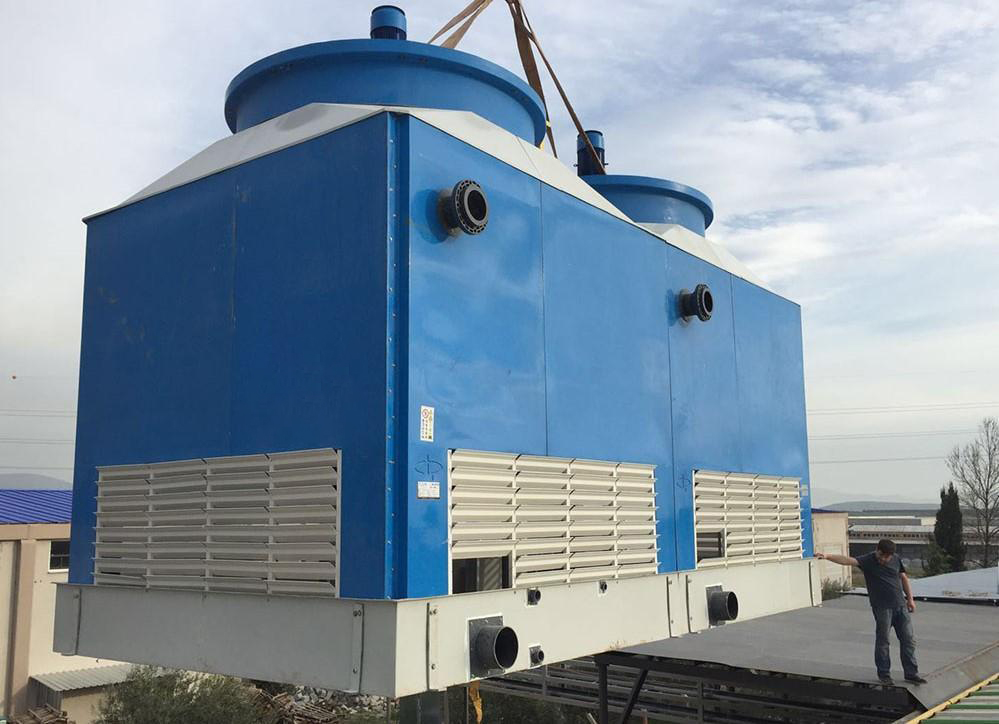
The performance of a cooling tower is determined by many factors among which, cooling tower fill is of great importance. The fills types and quality decide whether a cooling tower is able to transfer heat efficiently or not. By choosing the right type of cooling tower fill, water will flow in much more surface area and the hot water will be cooled quickly. There are two common types of fill media, splash fill and film fill.

Splash Fill

Splash fill consists of layers of horizontal bars or slats. When the warm water hits the surface of these bars, it spreads, breaks, and forms small droplets. As more droplets are formed, the contact between air and water flow is increased, which as a result accelerates the rate of cooling and evaporation.

Splash fill media were traditionally made from wood, but modern cooling tower fill material is made from PVC. PVC is more efficient as it facilitates better heat transfer. A big advantage of splash fill is that it’s very forgiving of insufficient initial water distribution, since the splashing activity redistributes the water at each level of splash bars. Because of this, a cooling tower with splash fill effectively handles water containing debris. Maintenance is also easier, because its open nature offers easy visual inspection of the water flow pattern and the condition of the fill.

Film Fill

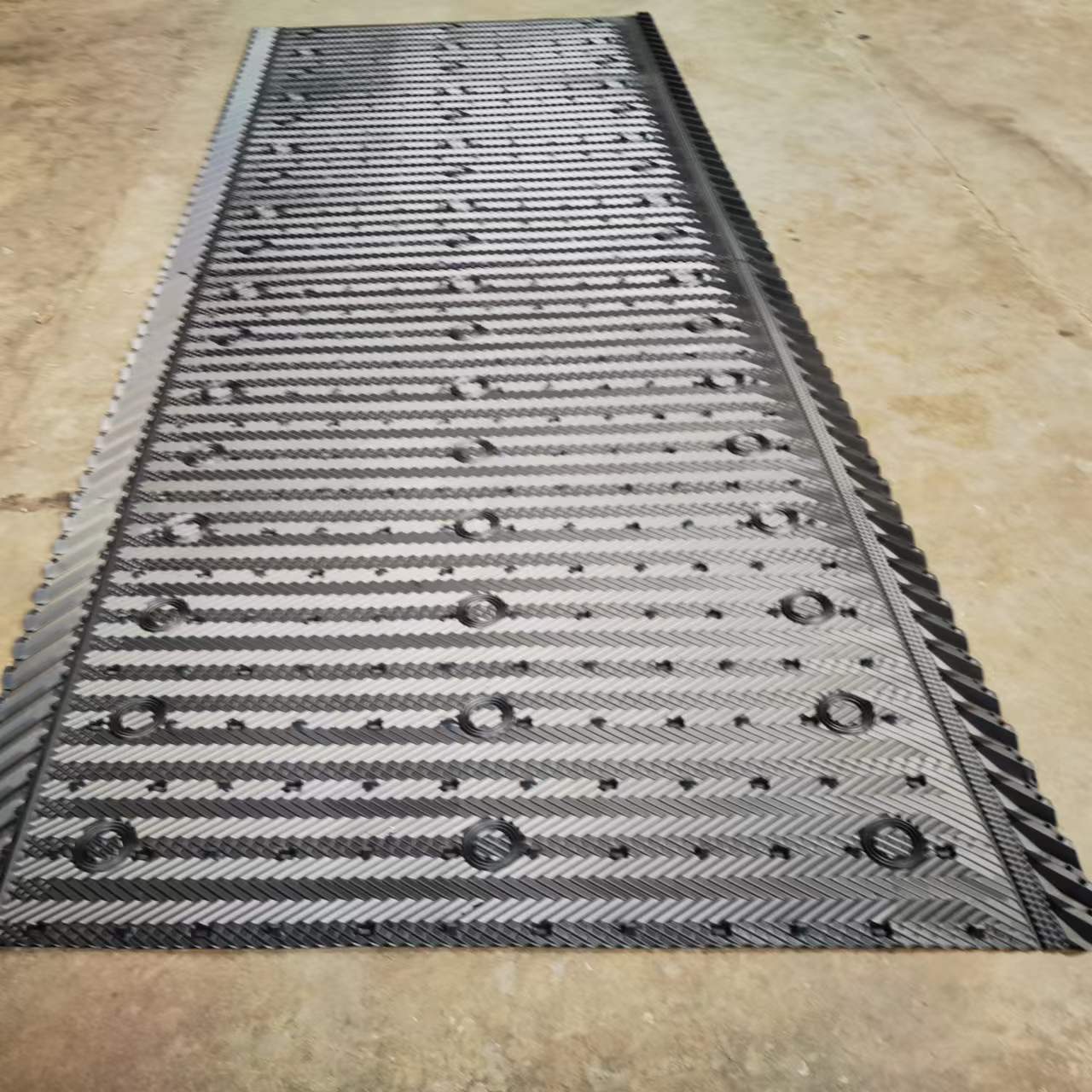
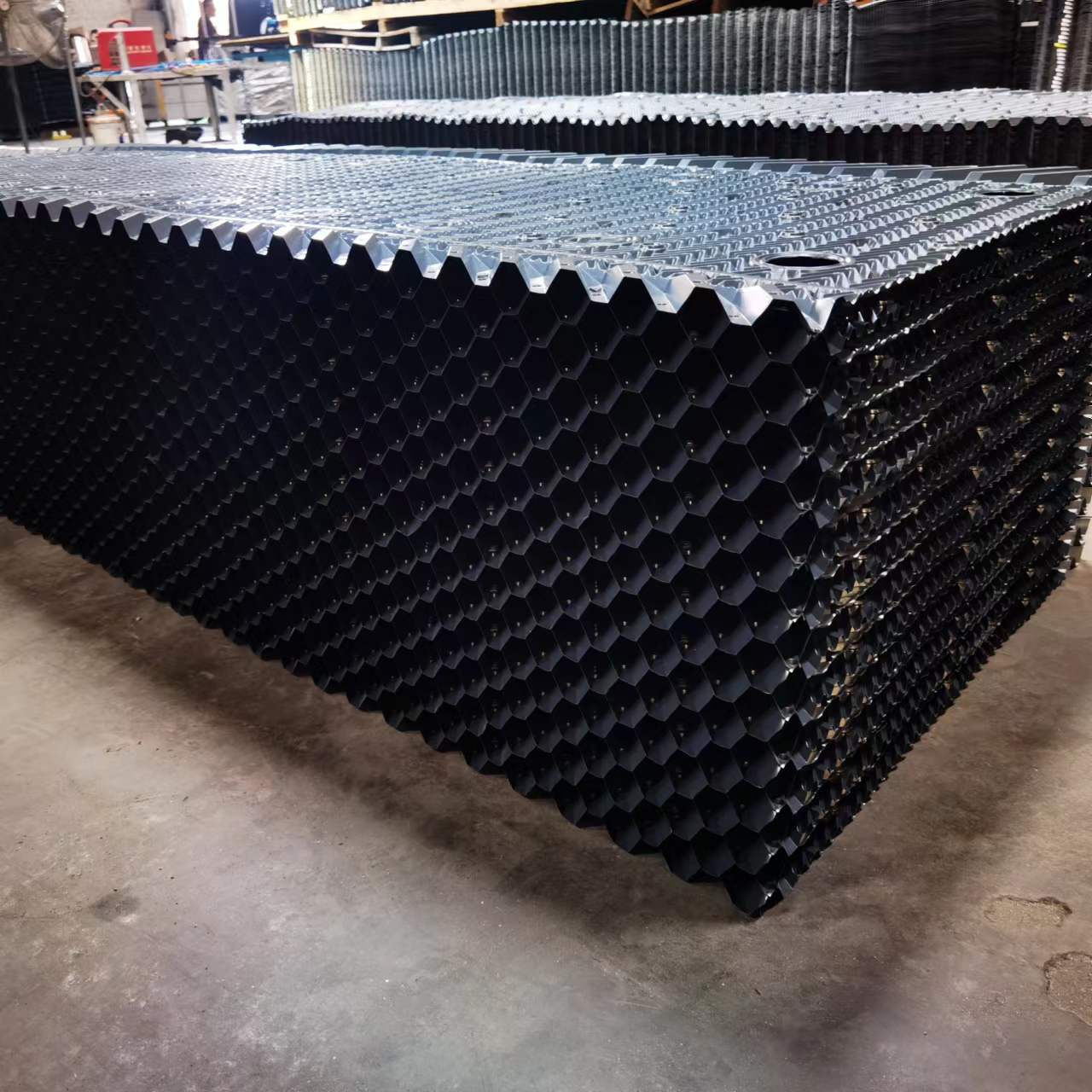
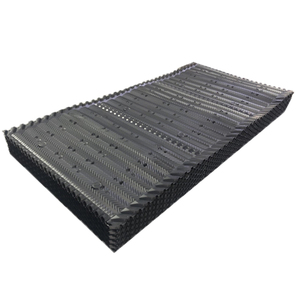
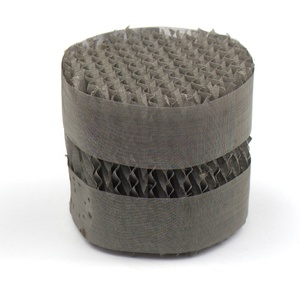
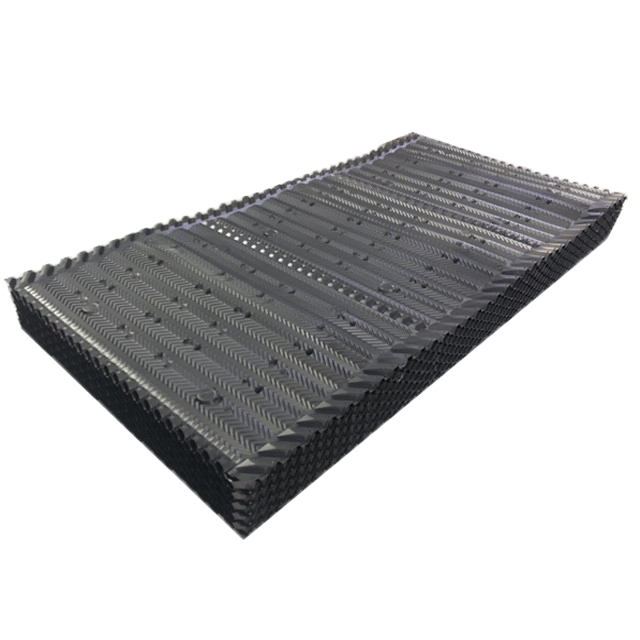
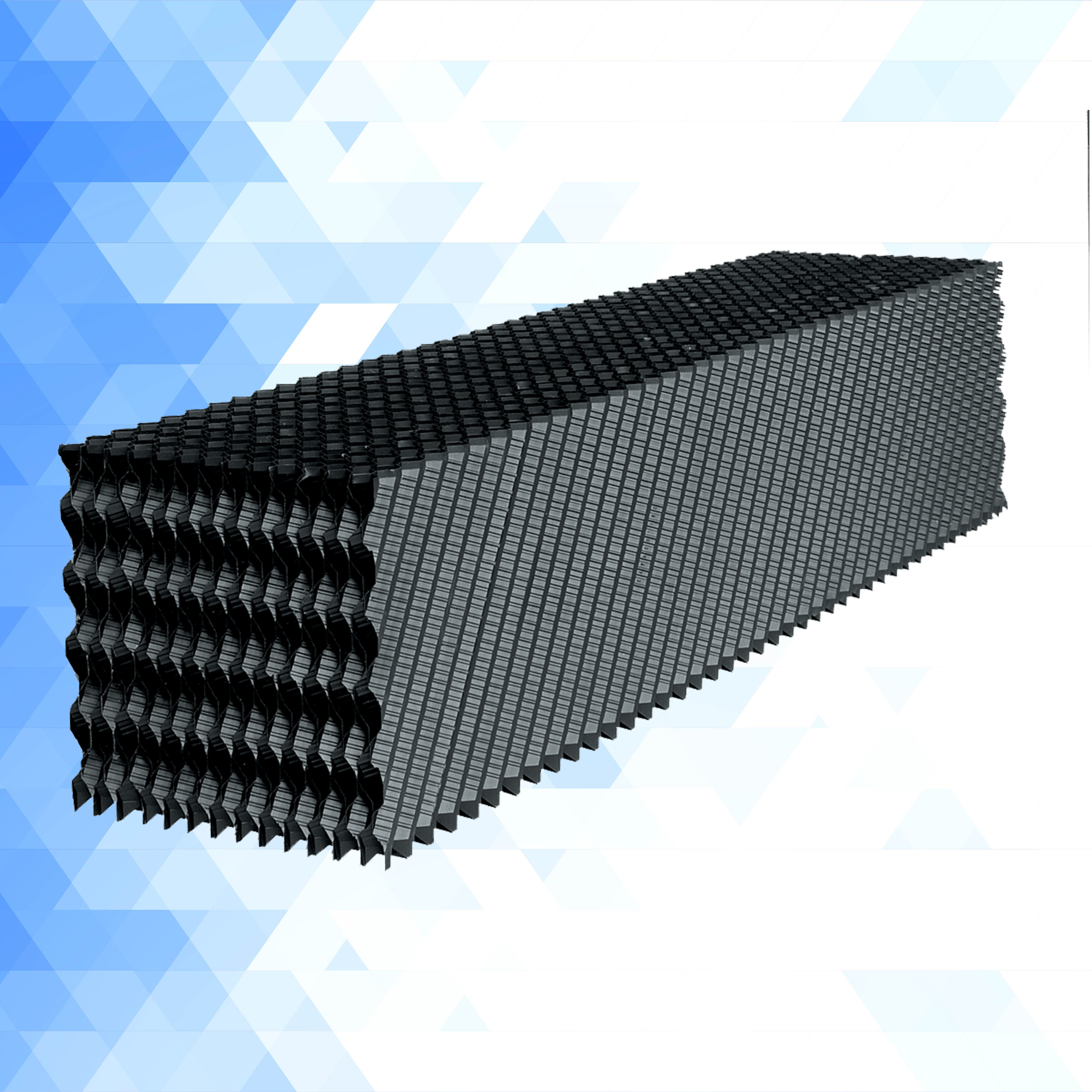
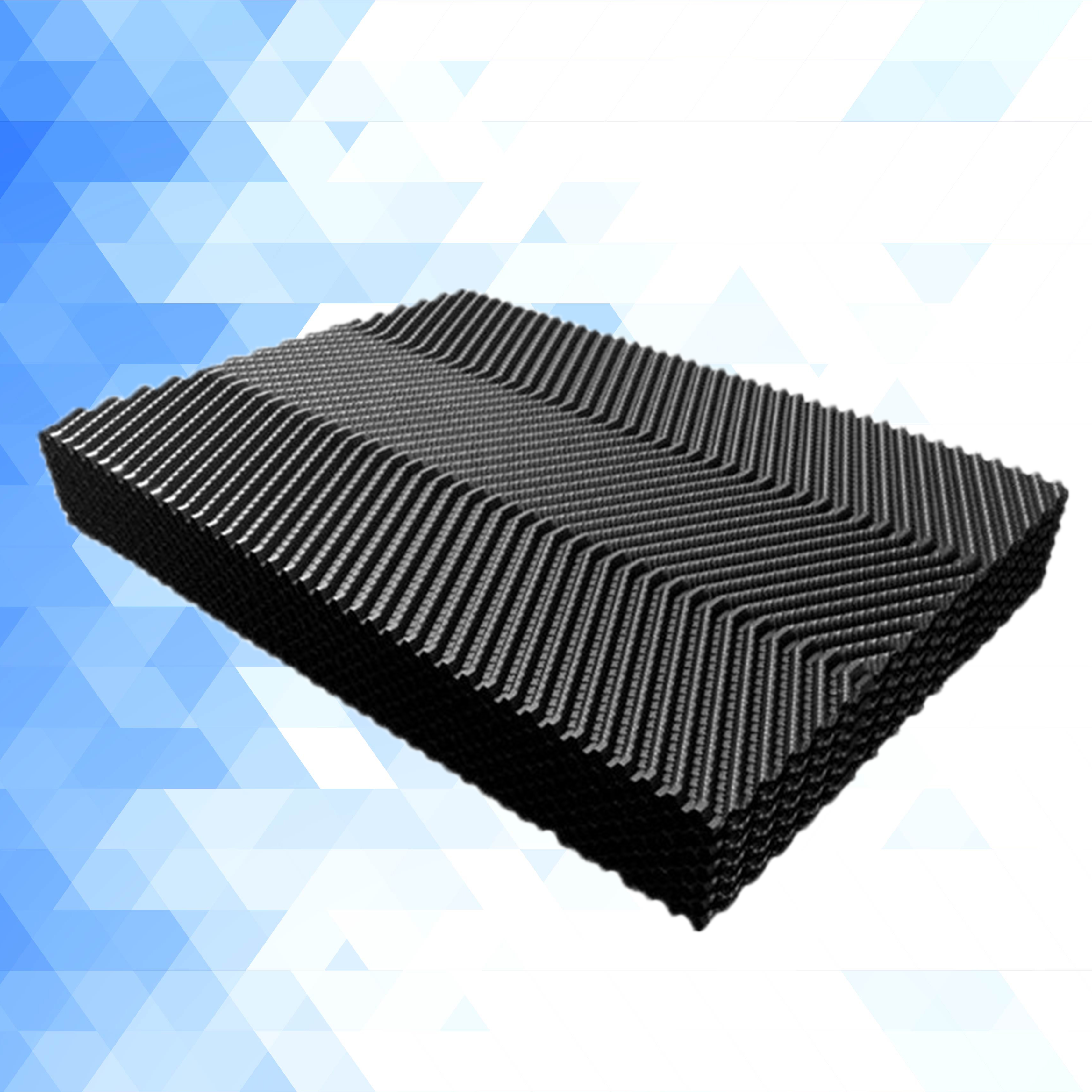
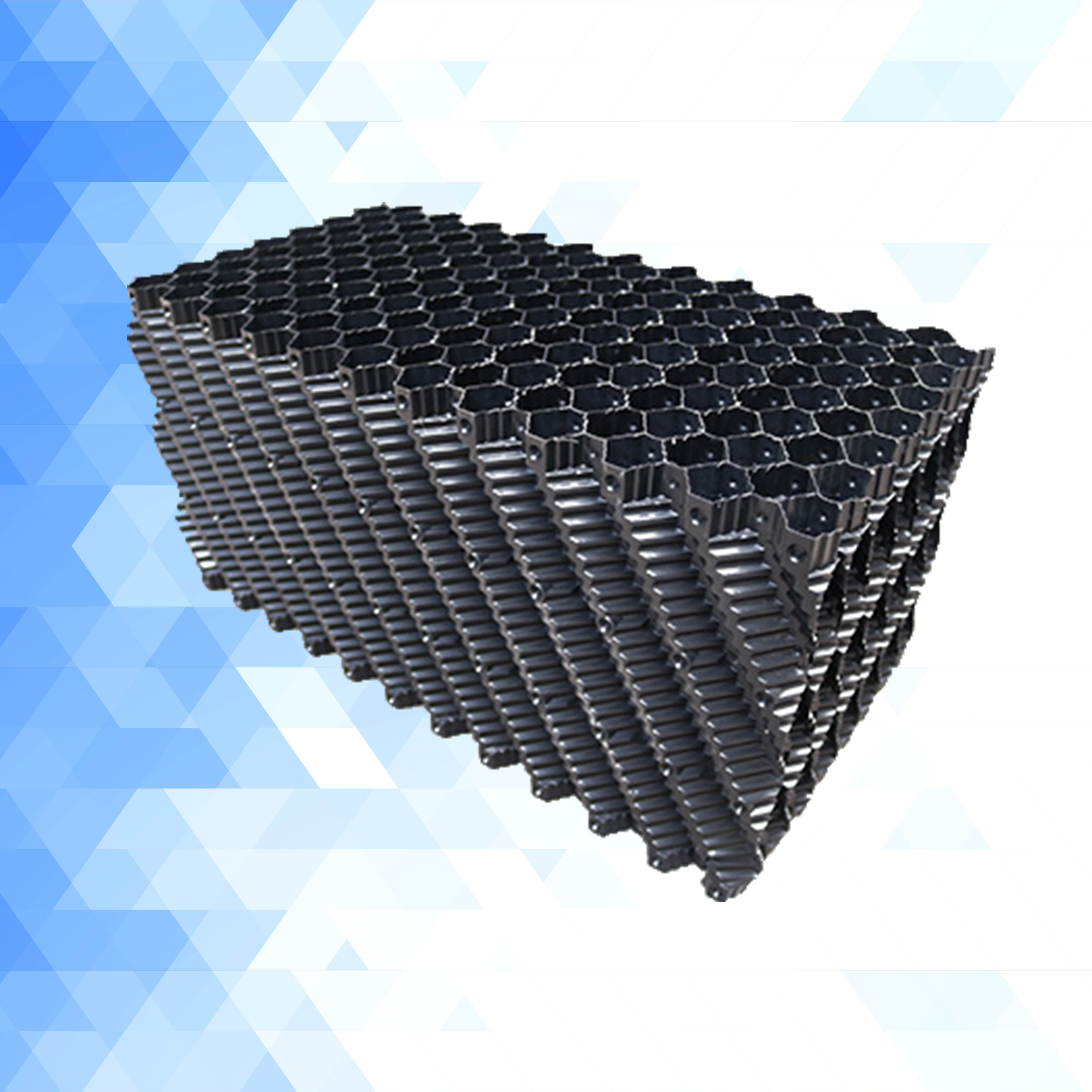
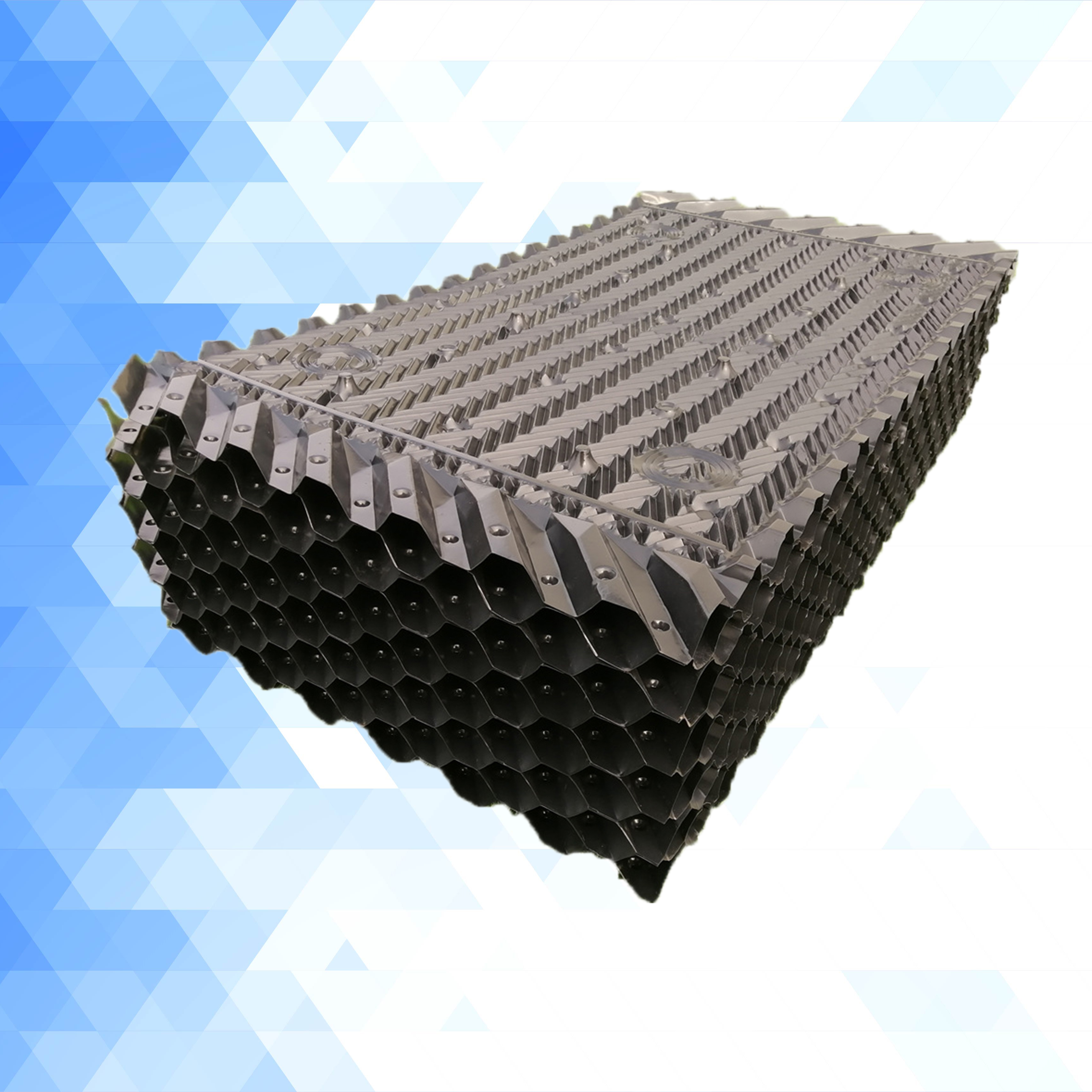
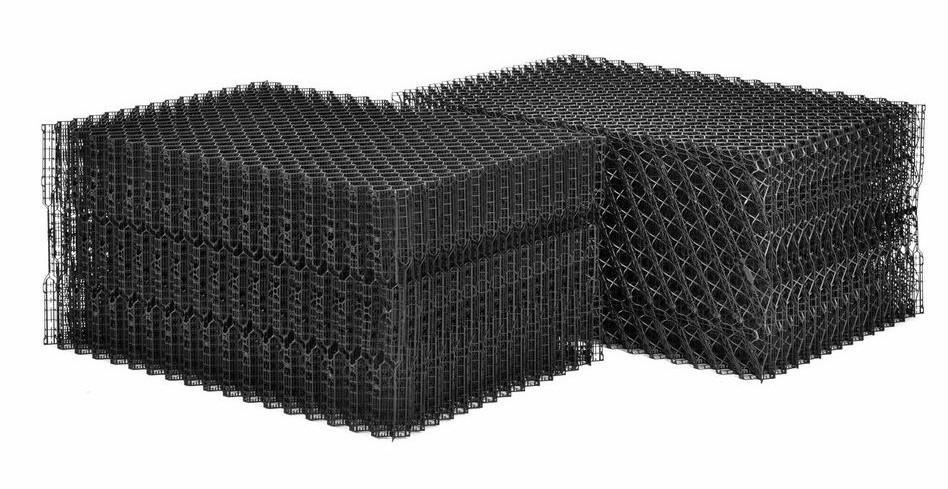
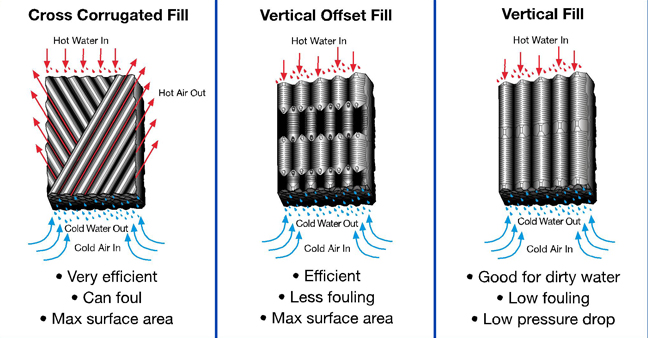
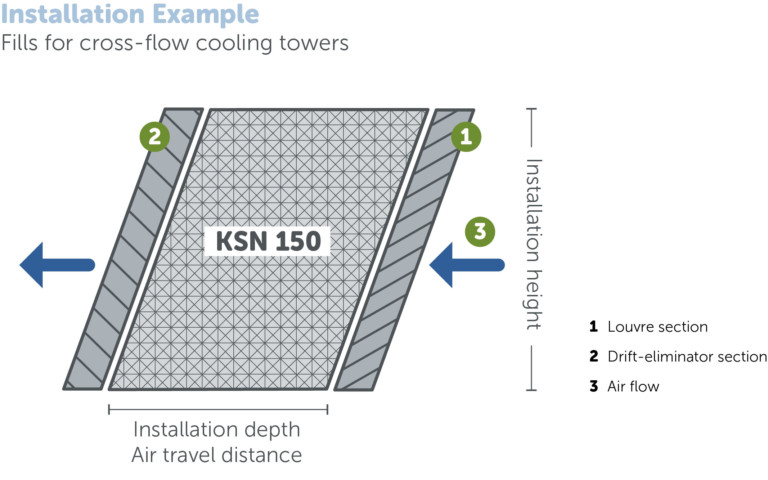
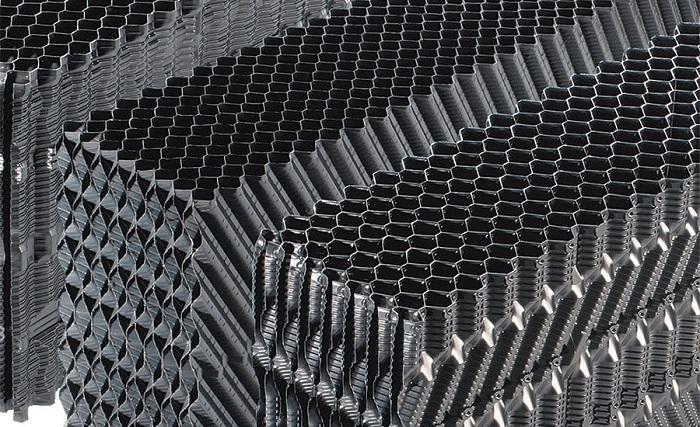
Film fill provides sheets of material that are shaped into a corrugated pattern for the water to travel across. It can be combined and stacked into blocks, to create various thicknesses and heights to fit individual cooling towers.

Despite the advantage of splash fill in water distribution, film fill is by far the more popular type of fill, mainly due to its ability to expose greater water surface within a given packed volume.

Cooling Tower Fill Structure
Cooling Media Sheet
Corrugated Cooling Tower Fill
Fill Block Assembly
Fill Installation View 1
Fill Installation View 2
Fill Installation View 3
Cooling Tower Grid Assembly
Cooling Media Texture
Tower Fill Pack
PVC Sheet Detail
Cooling Module Structure
Cooling Fill Specimen 1
Cooling Fill Specimen 2
Cooling Fill Specimen 3
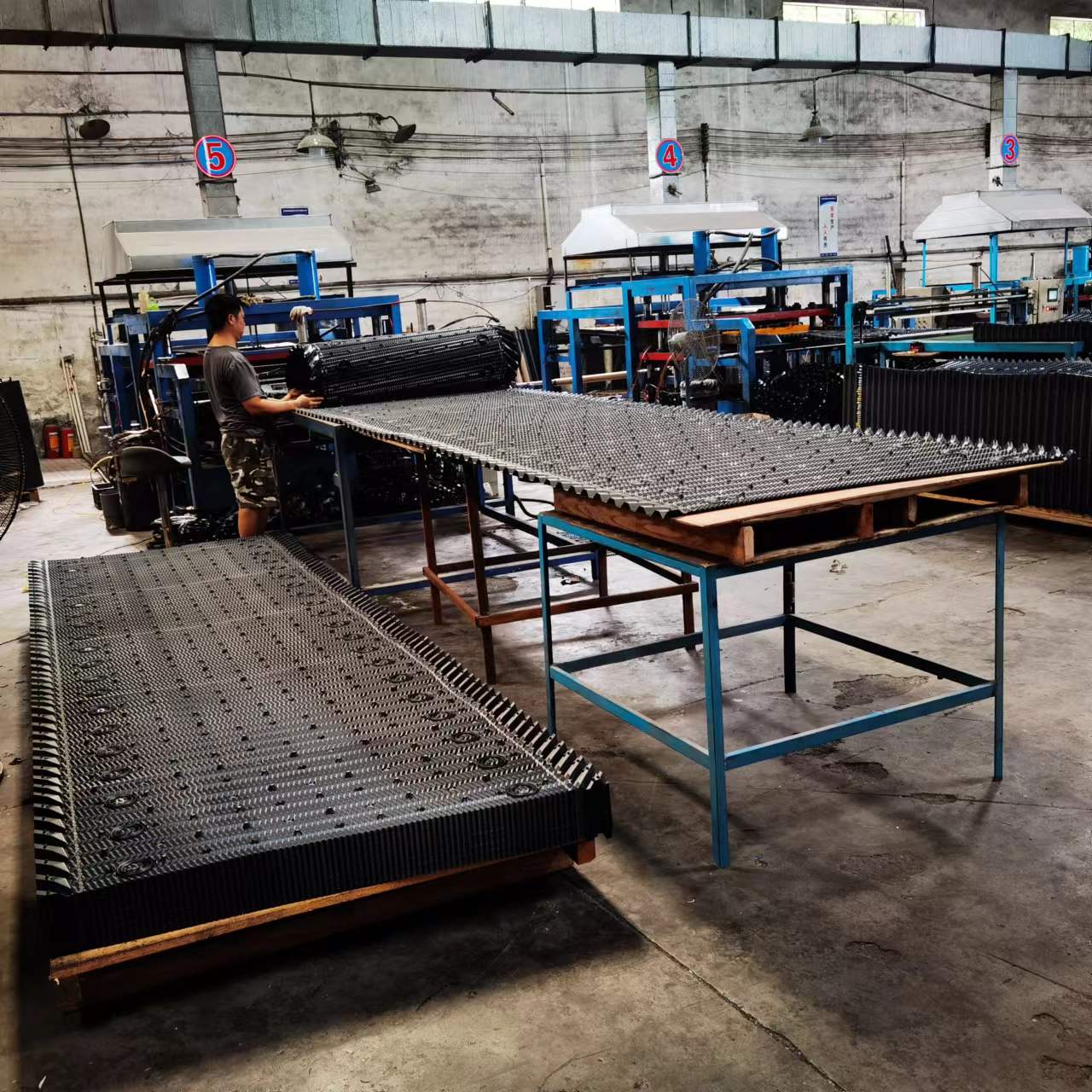
Production Process
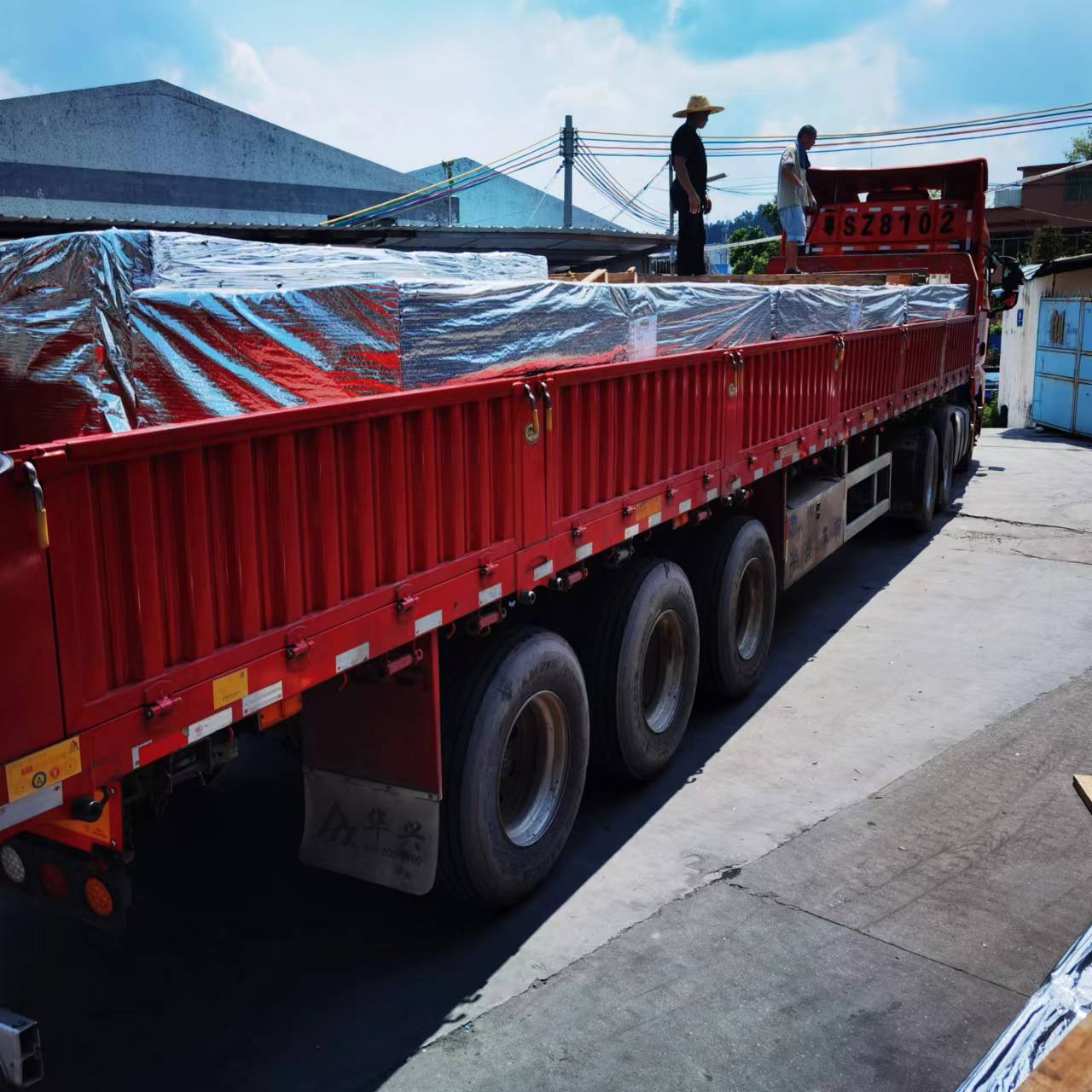
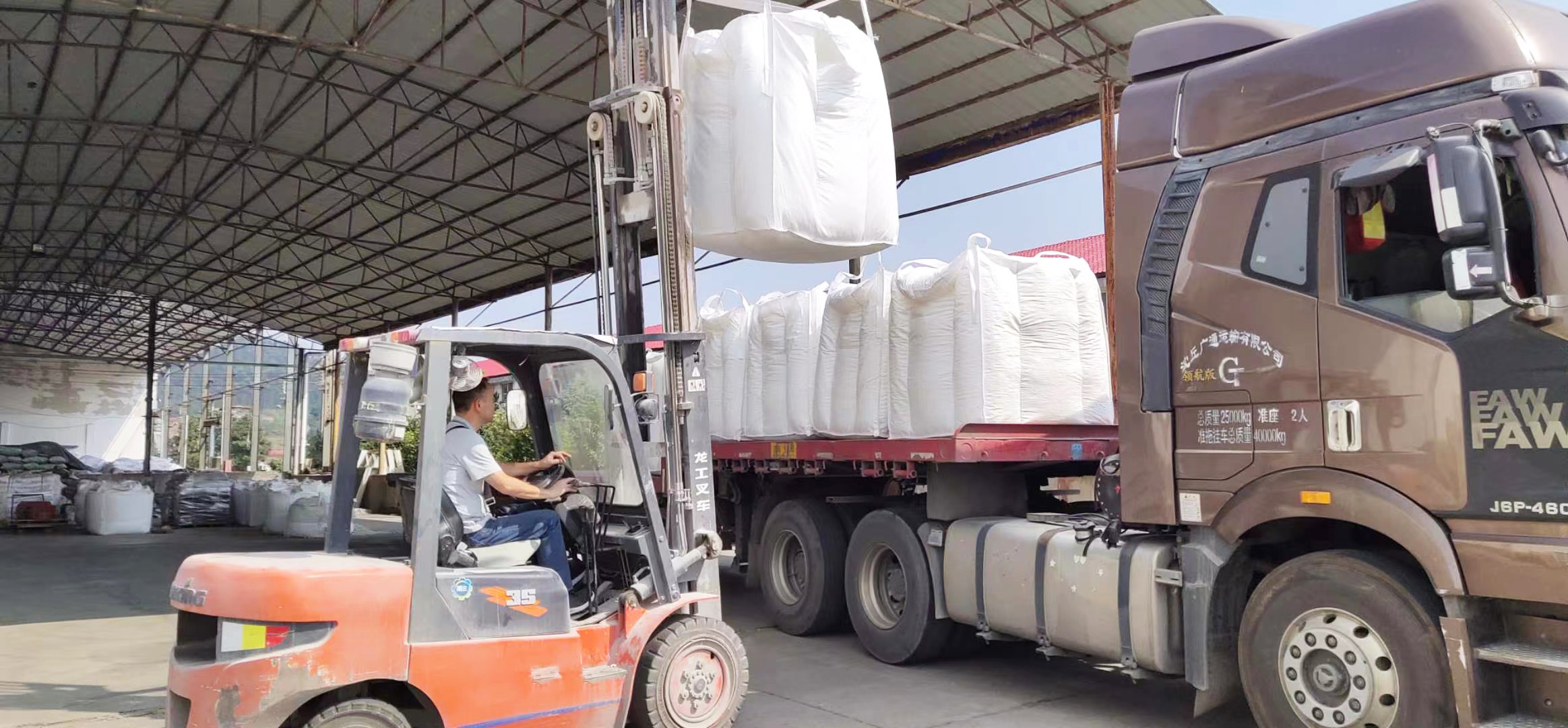
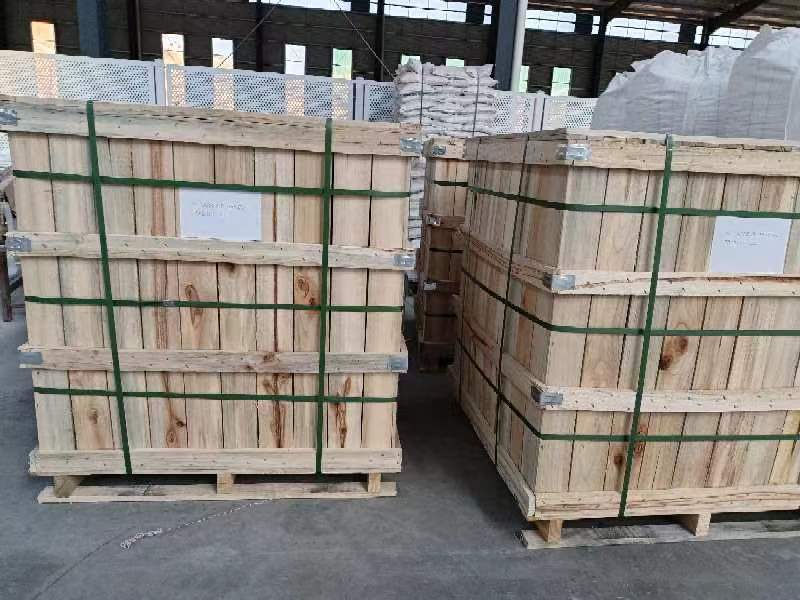
Warehouse and Shipping

Frequently Asked Questions

Q Why is fill media crucial in cooling tower performance?
Cooling tower fill increases the surface area of circulating water, allowing maximum contact between air and water flow. This surface expansion dramatically speeds up the evaporation and heat dissipation rate.
Q What is the fundamental difference between splash fill and film fill?
Splash fill breaks falling water into small droplets across horizontal bars, whereas film fill directs water to flow as a continuous thin liquid sheet over closely spaced corrugated surfaces.
Q Why has PVC replaced wood in modern splash fills?
Modern PVC provides significantly higher heat transfer efficiency, greater durability, chemical resistance, and lower weight compared to traditional treated wood slats.
Q Which fill type is better suited for poor water quality with debris?
Splash fill is ideal for water containing solids and debris. Its open structure prevents clogging and permits visual inspection and straightforward routine maintenance.
Q Why is film fill more widely used in industrial cooling systems?
Film fill provides significantly more heat transfer surface area within a compact volume, making the cooling tower design much more compact and thermally efficient.
Q Can film fill modules be customized for different tower sizes?
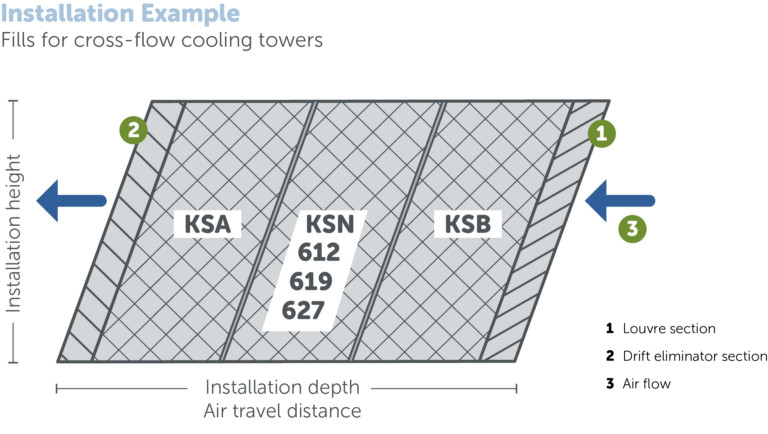
Yes, film fill sheets can be assembled and cut into blocks of various heights, depths, and thicknesses to match the precise internal dimensions and requirements of different cooling towers.

Related Products